Why Getting 220 Volt Hot Tub Wiring Right Matters More Than You Think
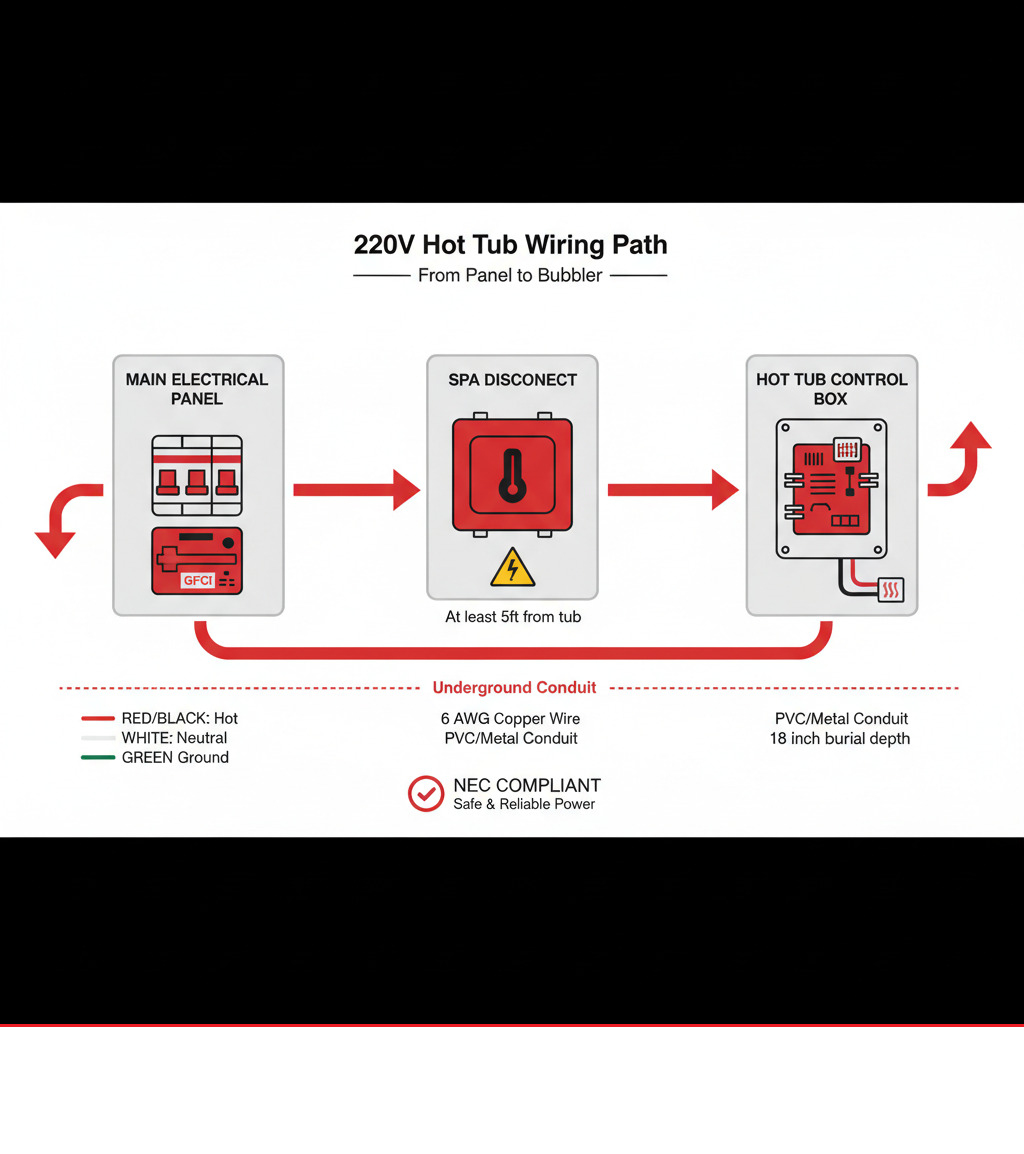
220 volt hot tub wiring requires a dedicated 220-240V circuit, a double-pole GFCI breaker (50 or 60 amps), a weatherproof disconnect panel, and 6 AWG copper wire run through conduit — all installed to National Electrical Code (NEC) standards.
Here’s a quick overview of what the job involves:
- Breaker: 50-amp or 60-amp double-pole GFCI breaker in your main panel
- Wire: 6 AWG copper (THHN/THWN insulation) for 50-amp circuits; 4 AWG for 60-amp
- Wiring type: 4-wire system — two hot wires, one neutral, one ground
- Disconnect: Weatherproof spa disconnect panel, at least 5 feet from the tub and in line of sight
- Conduit: PVC or rigid metal, buried at least 18 inches underground
- Protection: GFCI protection required throughout the circuit
I’m Randy Harmuth, master electrician and owner of Harmony Electric here in Denver. I’ve wired a lot of hot tubs over the years, and the one thing homeowners are always surprised by is how involved the electrical side really is.
It’s not like wiring a dryer. A hot tub sits outside, often near a wood deck, and it’s full of water. The stakes are higher. Done right, it’s completely safe and reliable. Done wrong, it’s a real hazard.
The good news? Once you understand what’s actually happening — from your main panel all the way out to the spa — the whole thing makes a lot more sense.
This guide walks you through every step.
Relevant articles related to 220 volt hot tub wiring:
Understanding the Basics of 220 Volt Hot Tub Wiring
When we talk about 220 volt hot tub wiring, we are usually referring to a system that provides between 220 and 240 volts. In the electrical world, these terms are often used interchangeably. Your home receives 240V from the utility, which is then split into two 120V legs for your standard outlets. For a high-powered appliance like a spa, we use both legs to get the full 240V “push.”
Most modern hot tubs require a dedicated circuit. This means nothing else — no porch lights, no garage outlets, no shed power — can be on that same breaker. Depending on the size of your tub and the number of pumps it has, you’ll typically need either a 50-amp or 60-amp circuit.
Why go through the trouble of hardwiring a 220V system instead of just using a 110V “plug-and-play” model? It comes down to performance. A 110V tub usually has a 1kW heater. A 220V tub jumps that up to 4kW or even 6kW. That means your water heats up four to six times faster, and more importantly, it stays hot even when the jets are on full blast during a snowy Denver night.

| Feature | 110V Plug-and-Play | 220V-240V Hardwired |
|---|---|---|
| Heating Power | ~1 kW | 4 kW to 6 kW |
| Heat Recovery | Slow (loses heat with jets on) | Fast (heats while jets run) |
| Installation | Standard outlet | Hardwired dedicated circuit |
| Amperage | 15–20 Amps | 50–60 Amps |
Before you buy your spa, check out our Hot Tub Amperage Guide to see exactly what your model might require.
Choosing the Right Wire for 220 Volt Hot Tub Wiring
The wire is the “highway” for your electricity, and for a hot tub, you need a big highway. For a 50-amp circuit, 6 AWG copper wire is the industry standard. If your tub requires 60 amps, we step up to 4 AWG.
We always use copper wire for hot tubs. While aluminum is sometimes used for main service lines because it’s cheaper, it expands and contracts more than copper. In a high-vibration environment like a spa with heavy pumps, aluminum connections can loosen over time, leading to heat buildup or failure.
You also need the right insulation. We use THHN/THWN wire. The “W” stands for “wet,” which is vital because even though the wire is inside a conduit, moisture and condensation are inevitable outdoors.
One thing I often see in Castle Rock or Centennial homes is a hot tub placed far away from the house. If your wire run is over 100 feet, we have to calculate “voltage drop.” Just like water pressure drops at the end of a long hose, electricity loses some of its “push” over long distances. In these cases, we might use a thicker wire than the manual suggests just to make sure the equipment doesn’t burn out prematurely.
Determining if Your Panel Can Handle the Load
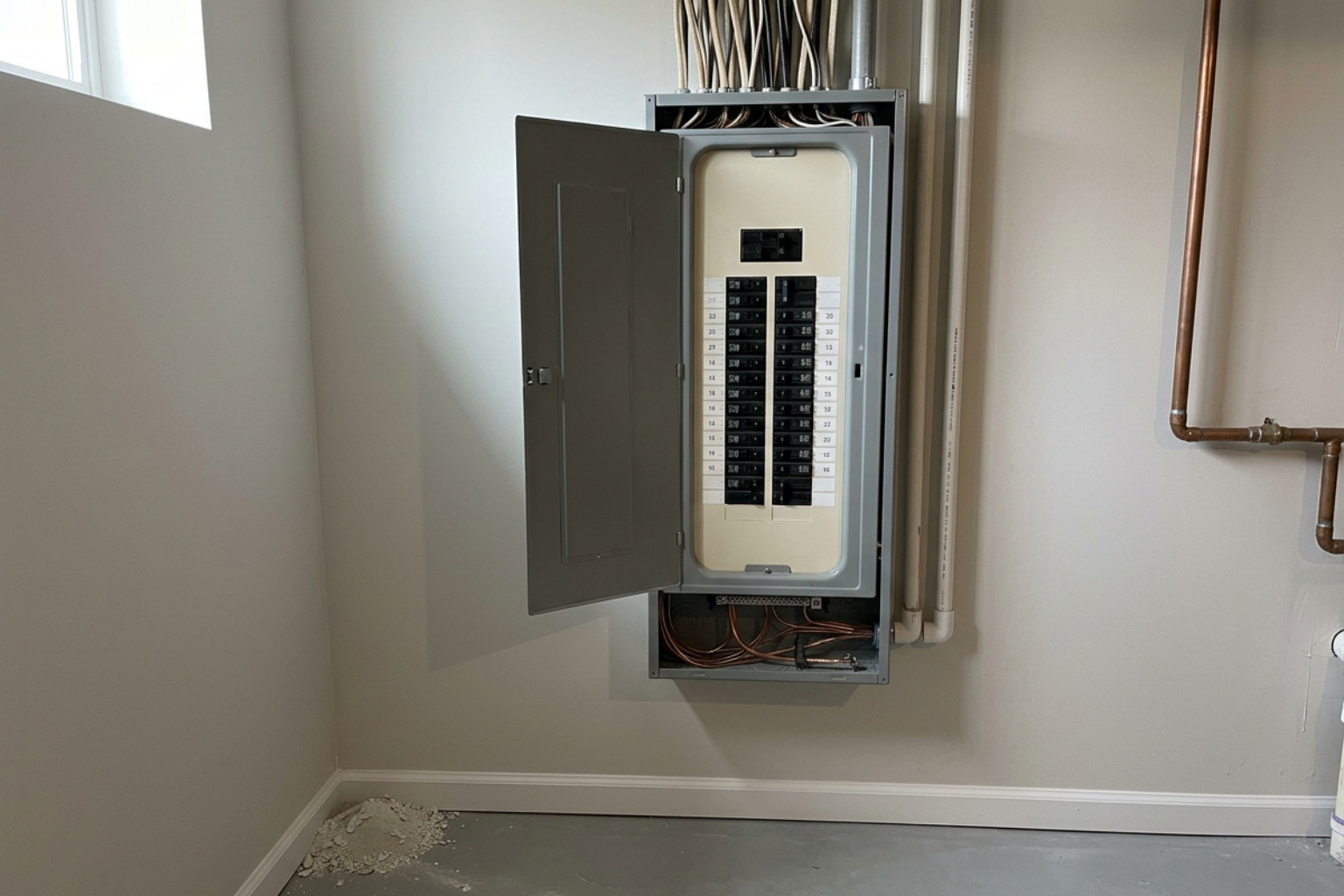
Before we even pull a permit, we have to look at your main electrical panel. Most modern homes in the Denver Metro area have 150-amp or 200-amp service, which is usually plenty. However, if you live in an older neighborhood with a 100-amp panel, adding a 50-amp hot tub might be pushing it.
We perform a “load calculation.” We look at your electric range, AC unit, EV charger, and dryer. If the total demand is too high, adding a hot tub could trip your main breaker. If you’re wondering, “Can My Existing Electrical Panel Handle a Hot Tub?,” the answer usually depends on how many other high-draw appliances you’re running. Sometimes, a panel upgrade is necessary to do the job safely.
Essential Components and NEC Requirements
The National Electrical Code (NEC) isn’t just a book of rules; it’s a safety manual designed to prevent fires and shocks. For 220 volt hot tub wiring, there are two big requirements: GFCI protection and a manual disconnect.
A Ground Fault Circuit Interrupter (GFCI) is a super-sensitive safety switch. It monitors the current flowing out on the hot wires and returning on the neutral. If even a tiny bit of electricity “leaks” (perhaps through a person into the water), the GFCI trips in a fraction of a second. You can read more about why this is non-negotiable at Hot Tub Electrical Code GFCI.
Modern spas use a 4-wire system:
- Two Hot Wires (usually Black and Red): These provide the 240V power.
- One Neutral Wire (White): This allows the tub to run 120V components like the control panel and lights.
- One Ground Wire (Green): This is your safety path for “stray” electricity.
Some older tubs used a 3-wire system, but those are largely obsolete. If you’re working with an older setup, check out our Hot Tub Wiring Simplified Your 3 Wire GFCI Guide to understand the differences.
Mounting the Disconnect and Final 220 Volt Hot Tub Wiring Connections
The “spa panel” or disconnect box is a small weatherproof box that houses your GFCI breaker. Per the NEC, this box must be located at least 5 feet away from the water’s edge. Why? So you can’t be sitting in the tub and touch the electrical box at the same time.
It also needs to be in “line of sight.” If a technician is working on the tub, they need to be able to see the disconnect to ensure no one accidentally flips the power back on while their hands are in the machinery. We have a detailed guide on choosing the right Electrical Box for Hot Tub for your specific backyard layout.
When it comes to the final connections, we also have to talk about “bonding.” This is different from grounding. Bonding connects all the metal parts of the spa (and sometimes nearby metal fences or rails) together with a solid copper wire. This ensures that everything is at the same “electrical potential,” so you don’t get a “tingle” or a shock when stepping in or out. For a visual aid, see our Power Up Safely Your 50 Amp Hot Tub GFCI Wiring Diagram.
Step-by-Step: Running the Power to Your Spa
Once the plan is in place, the physical work begins. This usually involves digging.
- The Trench: If we are running wires underground, we typically use PVC conduit. In most of Colorado, this trench needs to be 18 inches deep. This protects the pipe from lawnmowers, shovels, and the freeze-thaw cycles we get in the Highlands Ranch and Parker areas.
- Conduit Choice: We use Schedule 40 or 80 PVC for burial. For the sections that come up out of the ground and attach to the house or the spa, we use rigid conduit or “liquid-tight” flexible conduit to handle the transition.
- Pulling the Wire: We use a “fish tape” to pull the 6 AWG wires through the pipe. It’s a bit of a workout! We always leave about 3 feet of extra wire at each end to make sure we have plenty of room for clean connections.
- Permits: Don’t skip this. A Hot Tub Permit Colorado ensures that a city inspector looks at our work. It’s an extra set of eyes that guarantees your family’s safety.
For a more granular look at the physical hookup, see our post on Hooking Up 220v Hot Tub.
Common Mistakes and Safety Precautions
I’ve seen a lot of DIY attempts over the years, and while I admire the spirit, electricity and water are a dangerous mix. Here are the most common DIY Hot Tub Wiring Mistakes I encounter:
- Loose Terminals: If a wire isn’t tightened down perfectly, it creates resistance. Resistance creates heat. Heat melts wires and starts fires.
- The “Neutral-Ground” Mix-up: In the spa panel, the white neutral wire MUST go to the neutral terminal on the GFCI breaker, not the ground bar. If you hook it to the ground bar, the GFCI will trip every single time you turn it on.
- Wrong Wire Size: Using 8-gauge wire for a 50-amp tub is a fire hazard. The wire will get hot because it can’t handle the “flow” of electricity the tub demands.
- No Professional Inspection: Even if it “works,” it might not be safe. There are many Common Problems When Installing a Hot Tub Without a Licensed Electrician, ranging from code violations that hurt your home’s resale value to actual life-safety risks.
Frequently Asked Questions about Hot Tub Wiring
Can I use my existing welder outlet for a hot tub?
I get this question a lot in places like Lone Tree and Centennial. Usually, the answer is no. Most welder outlets are 3-wire (two hots and a ground). Modern hot tubs require a 4-wire system (two hots, a ground, and a neutral). Without that neutral wire, your spa’s 120V electronics won’t work. Plus, a hot tub requires a GFCI breaker, which your welder outlet likely doesn’t have.
Does the ground wire need to be insulated?
Yes. Per NEC Article 680, which covers pools and spas, the equipment grounding conductor must be an insulated green wire when it’s run in conduit outdoors. This protects the copper from corrosion in wet environments and ensures a solid safety path for decades to come.
How far can I run the wire before needing a larger gauge?
As a rule of thumb, once you cross the 100-foot mark from your main panel to the spa, we start looking at “upsizing” the wire. For a 50-amp tub at 125 feet, we might move from 6 AWG to 4 AWG copper. This prevents voltage drop, which can cause your pumps to run hot and fail early. It’s cheaper to buy a slightly thicker wire now than to replace a $600 pump in two years.
Conclusion
Wiring a hot tub isn’t just about making the bubbles work; it’s about creating a safe environment where you can truly relax. Between the trenching, the load calculations, and the specific NEC requirements for GFCI protection, there is a lot to get right.
At Harmony Electric, we take the stress out of the process. Whether you are in Castle Pines, Centennial, or right here in Denver, we handle the permits, the digging, and the precision wiring. We believe in doing the job right the first time — that’s why our hot tub installations are backed by a lifetime workmanship guarantee.
If you’re ready to get your backyard oasis up and running, check out our Hot Tub Installation services. We’d be happy to help you power up safely. Give us a call, and let’s get those bubbles going!