Is a 240 Volt Charging Station Installation Worth It? Here’s the Short Answer
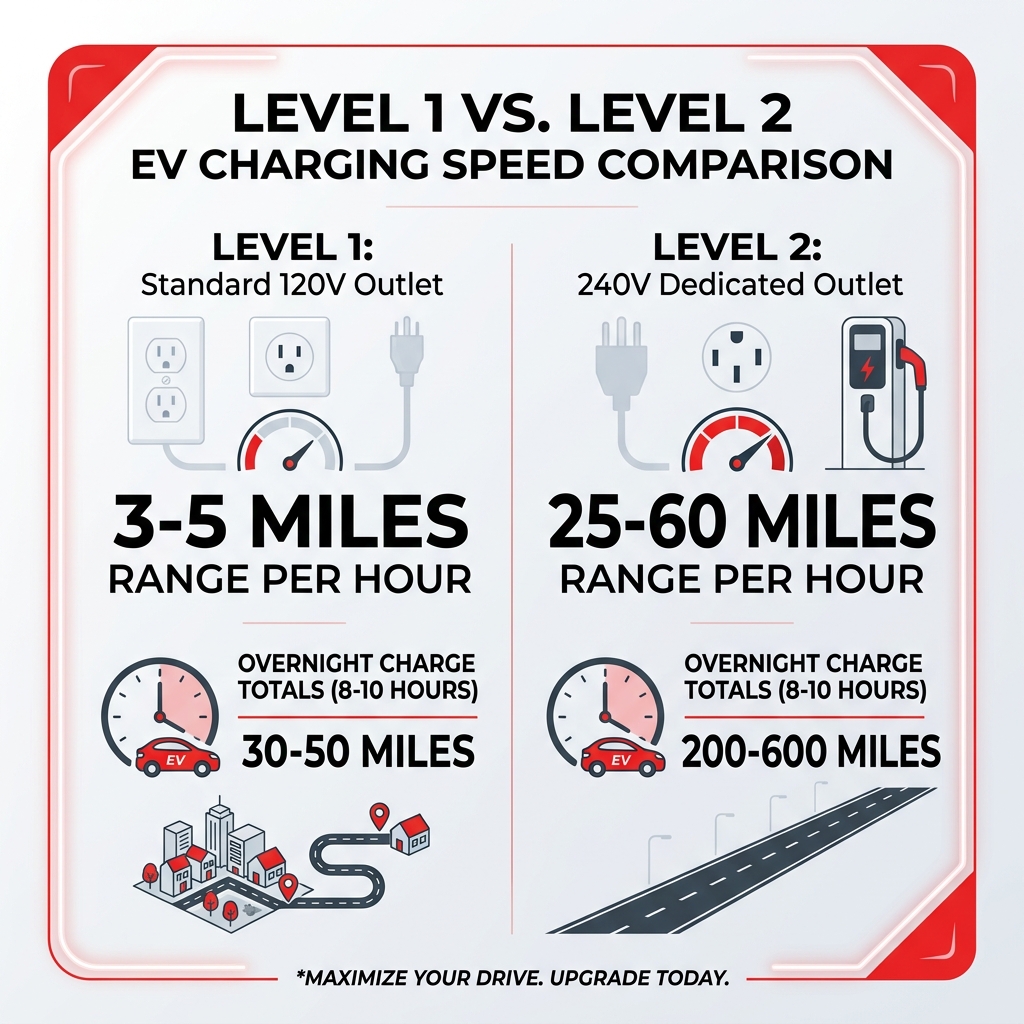
240 volt charging station installation is the single best upgrade you can make as an EV owner. A standard 120V wall outlet charges your car at roughly 3-5 miles of range per hour. A 240V Level 2 charger delivers 25-60 miles per hour. That’s the difference between waking up with a full battery and waking up still waiting.
Here’s a quick overview of what’s involved:
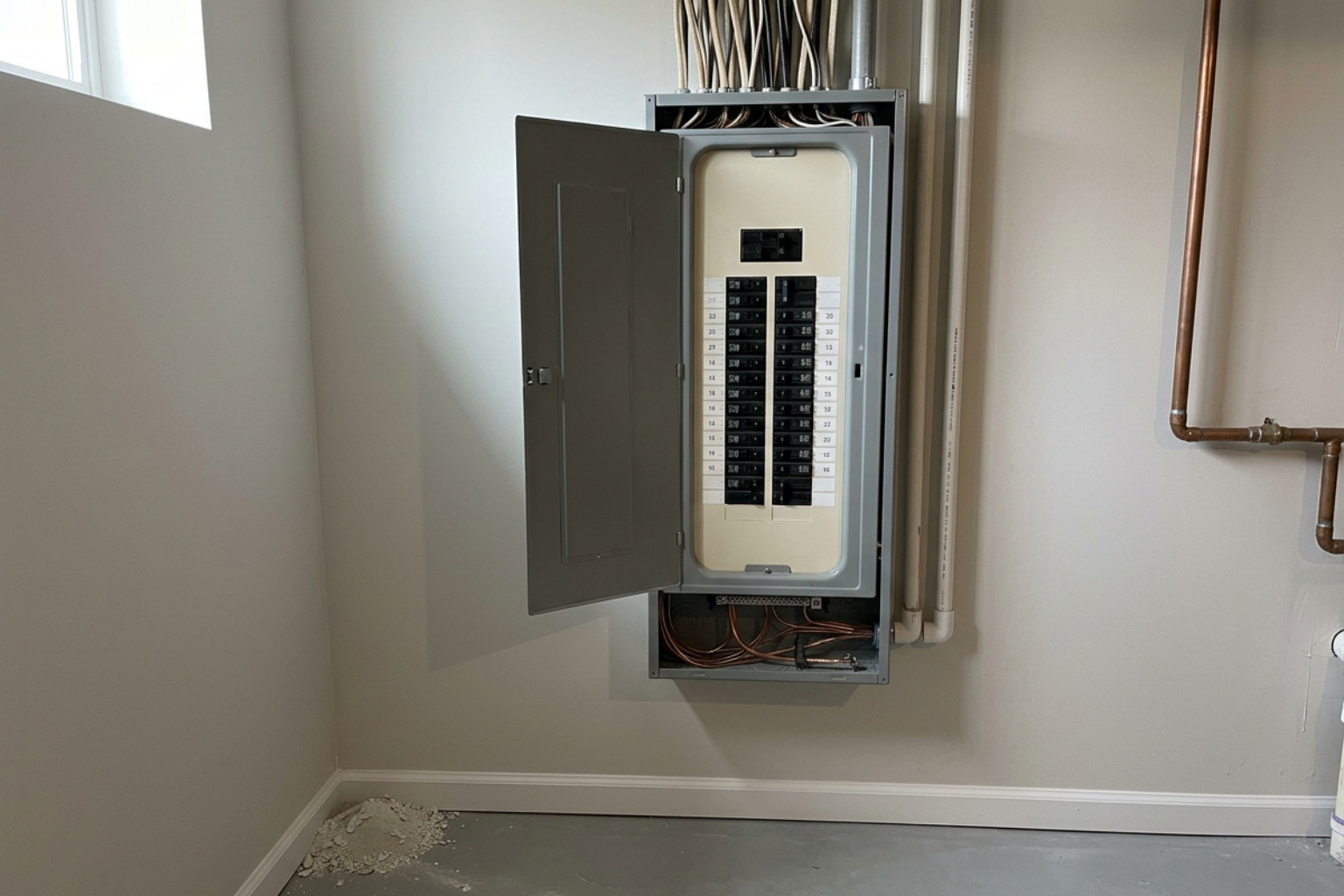
- Check your electrical panel – You need enough capacity (ideally 200-amp service) and an open slot for a double-pole breaker.
- Choose your setup – Hardwired charger or a NEMA 14-50 outlet. (More on this below.)
- Pull a permit – Required in most areas, including Denver. Your electrician handles this.
- Run a dedicated 240V circuit – Correct wire gauge, proper conduit, dedicated breaker.
- Mount and test – The charger goes in, power comes on, you verify it works.
- Pass inspection – A quick visit from the local inspector signs everything off.
Total time from start to finish? Most straightforward installs take 2-4 hours on the day itself.
Over 80% of EV charging happens at home. And yet most people drive their first electric car home, plug into a regular outlet, and immediately feel that low-grade anxiety of watching the battery creep up overnight. I see it constantly with homeowners around Denver.
The fix isn’t complicated. But it does need to be done right – correct wiring, the right breaker size, a permit, and a proper inspection. Cut corners here and you’re looking at anything from a tripped breaker to a melted outlet.
This guide walks you through the whole process, start to finish.
Learn more about 240 volt charging station installation:
Why a 240 Volt Charging Station Installation Changes Everything
When I talk to folks in Castle Rock or Highlands Ranch about their new EVs, the conversation usually starts with “Level 1” charging. That’s just a fancy way of saying you’re using the standard 120-volt outlet in your garage. While it’s fine for a golf cart, it’s painfully slow for a modern car.
Upgrading to a Level 2 setup—which requires a 240 volt charging station installation—is like switching from a garden hose to a fire hose. You’re moving from 1.4 kW of power to anywhere between 7.2 kW and 11.5 kW.
This speed doesn’t just save time; it eliminates “range anxiety.” You can come home with a nearly empty battery at 8:00 PM and be 100% ready to go by 6:00 AM. Plus, Level 2 charging is actually more efficient. Because the car spends less time “awake” and running its cooling systems during the charge, you actually waste less electricity.
If you want to dig deeper into the different speeds, check out our EV charger levels guide home.
Sizing Up Your 240 Volt Charging Station Installation Needs
Not all 240V setups are the same. Most homeowners find that a 40-amp or 48-amp charger is the “sweet spot.”
Here is a rule of thumb I always share: the National Electrical Code (NEC) requires us to follow the 80% rule. Since an EV charger is a “continuous load” (meaning it runs for hours at a time), you can only use 80% of the circuit’s capacity.
- If you want to charge at 32 amps, you need a 40-amp circuit.
- If you want to charge at 40 amps, you need a 50-amp circuit.
- If you want the fastest home charging at 48 amps, you need a 60-amp circuit.
Most people are perfectly happy with a 40-amp circuit. It provides plenty of juice to fill up any EV overnight without putting too much strain on a typical home’s electrical system.
Checking Your Home’s Readiness for a 240V Outlet
Before we ever pick up a drill, we have to look at your “fuel tank”—the electrical panel. Most modern homes in Centennial or Parker have 200-amp service, which is usually plenty for an EV. However, if you live in an older part of Denver with a 100-amp or 125-amp panel, things get a bit tighter.
We perform what’s called a load calculation. We look at your big power users—AC, electric stove, dryer, hot tub—and see how much “room” is left for a car. If your panel is full, we might need to perform electrical panel upgrades to handle the new load safely.
You’ll also need two adjacent empty slots in your panel to fit a double-pole breaker. This is what allows us to pull 240 volts instead of the standard 120.
Choosing the Right Spot for Your 240 Volt Charging Station Installation
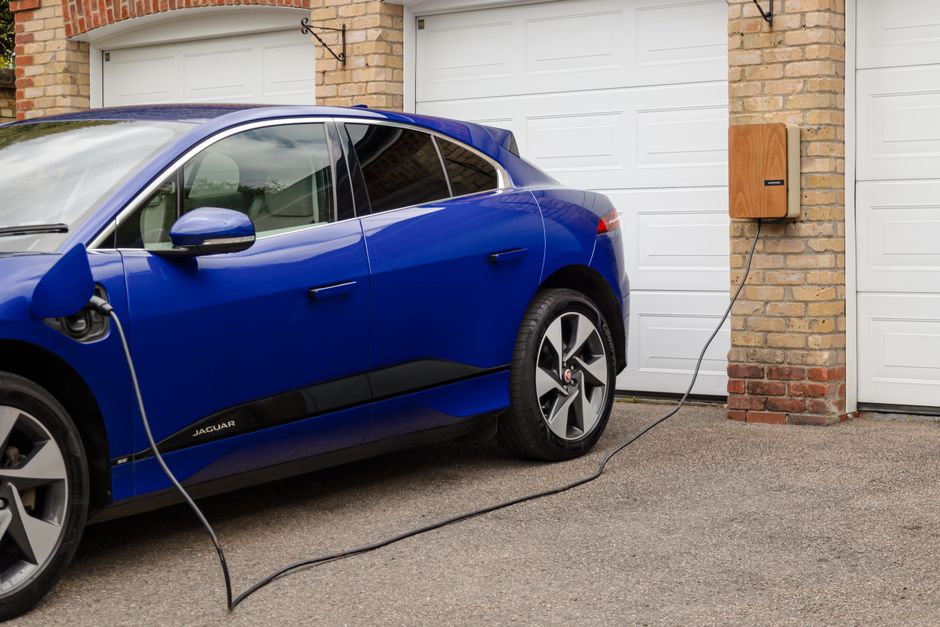
Location is everything. I usually suggest mounting the charger near the garage door. That way, if you park in the driveway one day, the cable can still reach the car.

- Garage vs. Outdoor: Most chargers are rated for outdoor use (look for a NEMA 4 rating), but if you can keep it in the garage, the equipment will stay cleaner and last longer.
- Cable Reach: Most charger cables are 15 to 25 feet long. You don’t want to be stretching it like a rubber band every night.
- Height: We typically mount the outlet or hardwired unit between 18 and 48 inches off the ground to keep it accessible but safe from accidental bumps.
Hardwired vs. Plug-in: Which 240V Setup is Best?
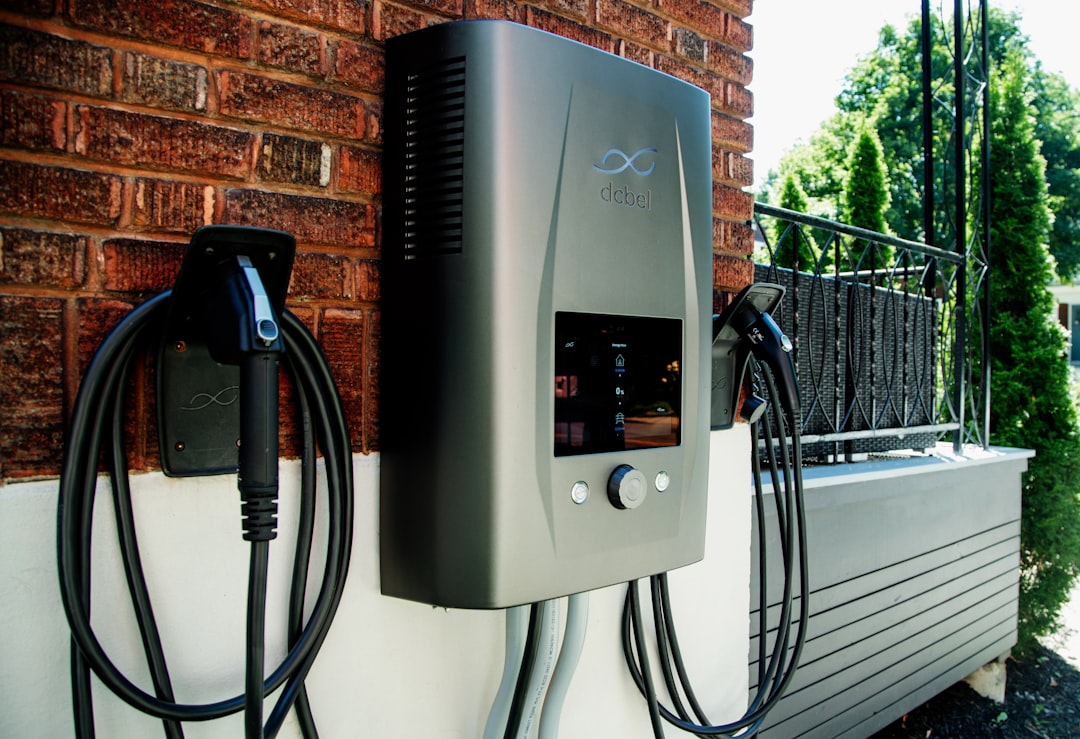
This is a big debate in the EV community. A “plug-in” setup uses a NEMA 14-50 outlet (like a heavy-duty dryer plug), while a “hardwired” setup connects the charger directly to your home’s wiring.
In my experience as a Master Electrician, hardwiring is almost always better. Why? Because EV charging is a massive, sustained power draw. Standard “consumer-grade” outlets weren’t really designed to be pushed to their limit for 10 hours every night.
There have been many reports of melted outlets when using cheap receptacles for EV charging. Hardwiring removes that “plug” failure point entirely. It’s also the only way to get the fastest 48-amp charging speeds, as plug-in outlets are capped at 40 amps.
If you’re still deciding which plug style fits your life, read our guide on picking your perfect plug.
Step-by-Step Guide to Installing a 240V EV Circuit
While I don’t recommend this as a DIY project—240 volts can be lethal and fire risks are real—it helps to know what your electrician is doing.
- The Permit: In Denver and surrounding suburbs, a permit is a legal requirement. It ensures a third-party inspector checks the work for your safety.
- Power Down: We shut off the main breaker. Safety first, always.
- The Run: We install conduit (protective piping) from your panel to the charger location. We don’t just “staple” wires to the wall; the wire needs protection from physical damage.
- The Wire: For a 50-amp circuit, we typically use 6 AWG wire. We prefer individual THHN conductors because they handle heat better than standard Romex cable.
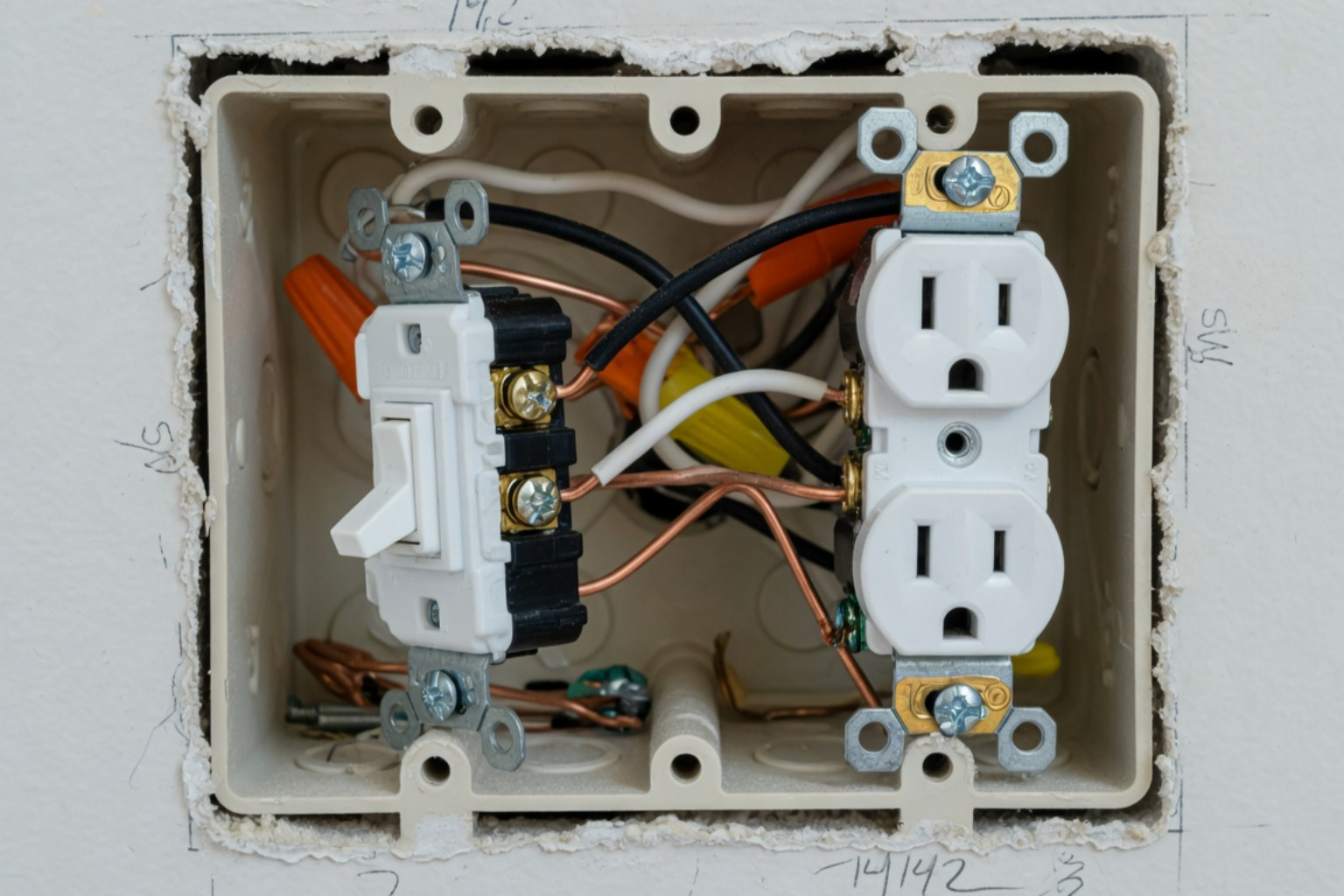
- Connections: We install the double-pole breaker and secure the wires. Loose connections are the #1 cause of electrical fires, so we torque everything to the manufacturer’s exact specs.
- Testing: We use a multimeter to verify we have a clean 240V signal before you ever plug in your expensive car.
For those who love the technical details, you can see the standards we follow in the National Electrical Code.
Safety Standards and NEC Article 625
The NEC has a specific section (Article 625) just for EV charging. It covers things like:
- GFCI Protection: Most modern chargers have this built-in, but local codes may require it at the breaker too.
- Ventilation: Most modern EVs don’t need it, but older lead-acid systems did.
- Accessibility: We follow ADA guidelines for mounting heights to ensure anyone can use the charger comfortably.
Costs, Rebates, and Professional Help
The big question: “What’s this going to cost me?”
For a standard 240 volt charging station installation where the panel is in the garage and has plenty of room, you’re looking at roughly $800 to $1,500. If we have to run wire across the whole house or upgrade your panel, that price goes up.
The good news? There are massive incentives available right now:
- Federal Tax Credit: You can often claim 30% of the hardware and install cost (up to $1,000) on your federal taxes.
- Utility Rebates: Xcel Energy and other local Colorado utilities often offer rebates ranging from $200 to $1,300 for installing “smart” chargers.
| Feature | DIY Installation | Professional Installation |
|---|---|---|
| Safety | High risk of fire/shock | Guaranteed safe & code-compliant |
| Permits | Homeowner must navigate | Electrician handles everything |
| Warranty | None; may void car warranty | Lifetime workmanship guarantee |
| Cost | $200 – $500 (Materials) | $800 – $2,500 (Total) |
| Insurance | May deny claims if unpermitted | Fully covered |
Check out our detailed breakdown on home EV charger installation expenses for more info.
Frequently Asked Questions about 240V EV Charging
Can I use my existing dryer outlet to charge my EV?
Technically, yes, if the outlet is in the right spot. However, most dryer outlets are 30-amp circuits, which means you can only charge at 24 amps. It’s better than a standard wall plug, but it’s much slower than a dedicated 50-amp EV circuit. Also, you should never use a splitter to run both at once.
How long does a typical 240V charger installation take?
Once we are on-site with the permit in hand, a straightforward install takes about 2 to 4 hours. If we are doing a full panel upgrade, plan for a full day (6-8 hours).
Do I need a permit for a 240V outlet installation?
Yes. Every municipality we serve—from Castle Pines to Lone Tree—requires a permit for a new 240V circuit. Skipping this can lead to issues when you try to sell your home, or worse, an insurance company denying a claim if something goes wrong.
Getting Your Home EV-Ready with Harmony Electric
At Harmony Electric, we’ve done hundreds of these installs across the Denver Metro area. I’m Randy Harmuth, and as a Master Electrician, my goal is to make sure your 240 volt charging station installation is the last thing you have to worry about.
We don’t do “cookie-cutter” work. We look at your home’s specific needs and give you an honest recommendation. If you don’t need a panel upgrade, we won’t sell you one. If we think a certain location will save you money on wiring, we’ll tell you.
Plus, we stand behind our work. Select installations, including EV chargers, come with a lifetime workmanship guarantee and a three-year material warranty. Whether you’re in Centennial, Highlands Ranch, or right here in Denver, we’re here to help you get powered up.
Ready to stop waiting and start driving? Schedule your EV charger installation with us today.
Related Reading: