What Does Commercial Electric Car Charger Installation Actually Cost?
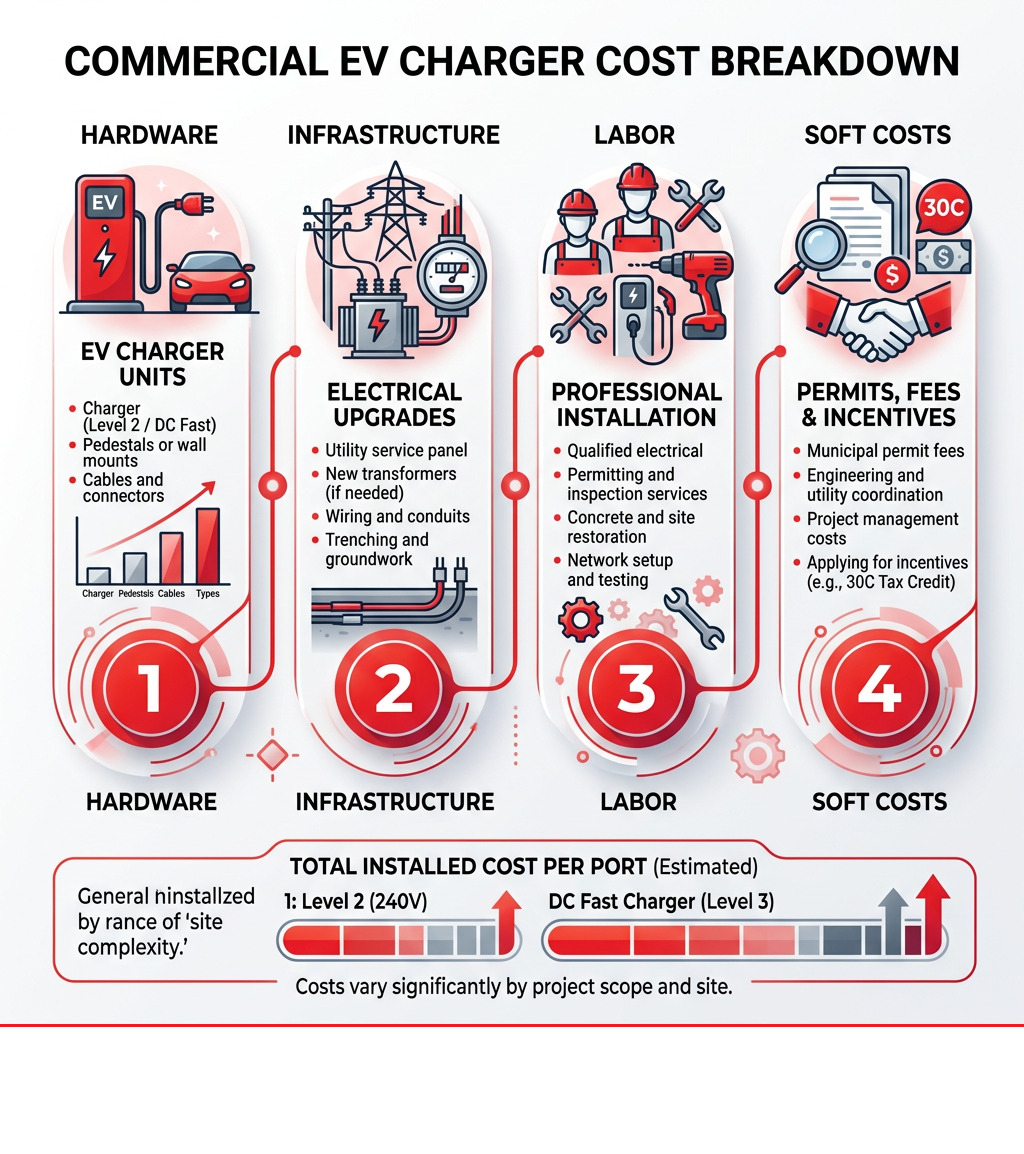
Commercial electric car charger installation cost typically falls into these ranges, depending on charger type and site complexity:
| Charger Type | Hardware Cost | Total Installed Cost Per Port |
|---|---|---|
| Level 2 (240V) | $600 – $10,000 | $3,500 – $15,000 |
| DC Fast Charger (Level 3) | $10,000 – $200,000+ | $18,000 – $350,000+ |
A few key things that move the number up or down:
- Electrical upgrades (panel, transformer, new service line): $2,000 – $60,000+
- Permitting and inspections: $500 – $5,000+
- Site work (trenching, concrete pads, signage): $2,000 – $40,000+
- Federal 30C tax credit: covers up to 30% of costs (up to $100,000 per port)
Here in Denver and surrounding communities, I get this question a lot. Business owners have heard that EV chargers are a smart investment — and they are — but the price range online is all over the place. $5,000? $100,000? What’s going on?
The honest answer is: both numbers can be right. It all depends on what your site already has in place.
A small office adding two Level 2 chargers to a parking lot with modern electrical service is a very different project from a retail center installing a bank of DC fast chargers that need a new transformer and 200 feet of trenching. Same general goal, wildly different scope.
This guide breaks it all down in plain language — hardware, labor, infrastructure, incentives, and ongoing costs — so you can walk into any conversation with a contractor knowing exactly what you’re looking at.
Commercial electric car charger installation cost word list:
- EV charger installation company
- EV charger installation guide
- average cost of ev charger installation
Breaking Down the Commercial Electric Car Charger Installation Cost
When we sit down to look at a project in Highlands Ranch or Parker, we don’t just look at the price tag on the charger itself. That’s only one piece of the puzzle. To understand the total commercial electric car charger installation cost, you have to look at four main buckets: hardware, labor, site prep, and those “soft costs” like permits.
Hardware Components
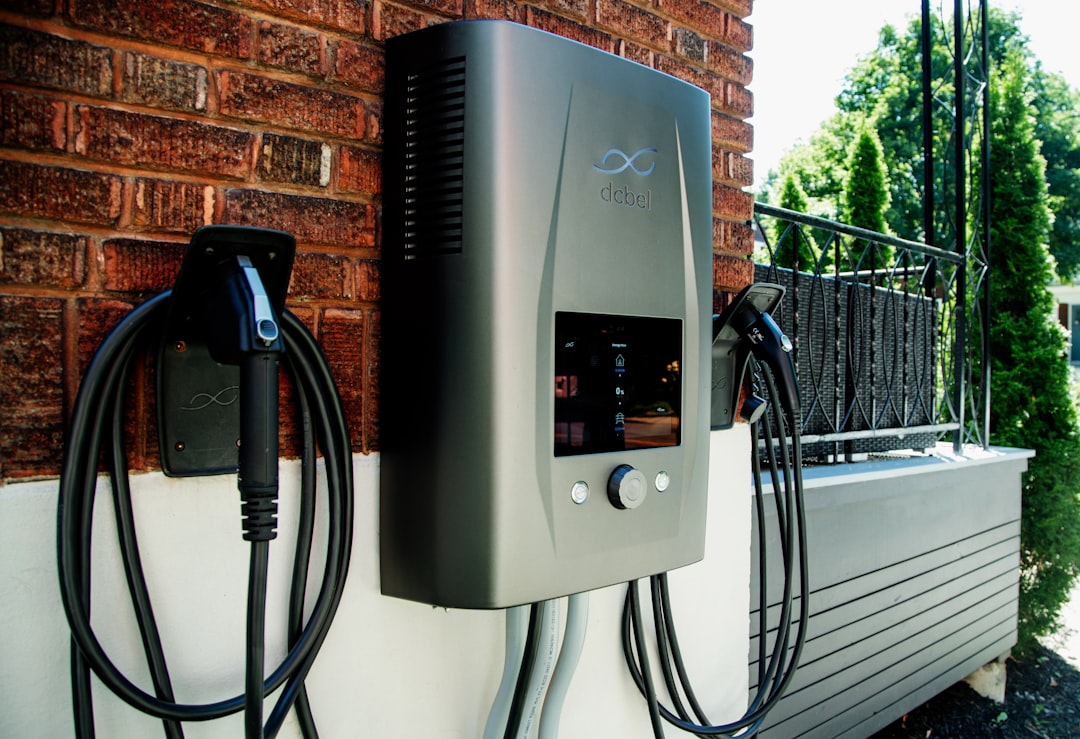
This is the physical unit you see standing in the parking lot. For commercial use, these aren’t just glorified extension cords. They are ruggedized, weather-proofed machines. Many include credit card readers, cellular connections for software updates, and heavy-duty cables designed to be handled by hundreds of different people. High-quality Level 2 hardware usually runs between $1,000 and $10,000 depending on whether it’s a single or dual-port unit.
Labor Rates
Labor isn’t just about bolting the unit to the ground. It involves a licensed electrician running heavy-gauge wire through conduit, connecting to your main electrical system, and ensuring everything is grounded and safe. In the Denver Metro area, labor can account for 40% to 70% of the total project cost, especially if the run from the electrical panel to the parking spot is long.
Site Preparation
This is where costs can surprise people. If we have to cut through asphalt, dig a trench across your lot, and pour a new concrete pad, the price goes up. We also have to think about striping the parking spot and adding the right signage to keep non-EVs from blocking the chargers.
Permitting Fees
Every municipality from Castle Pines to Lone Tree has its own rules. You’ll need electrical permits and, in some cases, building permits. These fees generally range from $500 to $1,500 for standard installs but can climb higher for massive DC fast-charging hubs.

If you’re curious about how this differs from a home setup, check out our guide on Beyond the Home: Commercial EV Charger Installation.
Choosing the Right Charger for Your Property’s Needs
Not every business needs the fastest charger on the market. In fact, overspending on speed you don’t need is the fastest way to blow your budget. The goal is to match the charger to “dwell time”—how long people usually stay at your property.
Level 2 commercial electric car charger installation cost per port
Level 2 chargers are the “sweet spot” for most Denver businesses. They use 240V power (similar to a commercial clothes dryer or oven) and add about 25 to 40 miles of range per hour.
- Best for: Offices, apartment buildings, hotels, and gyms where people stay for 2+ hours.
- Hardware pricing: Expect $2,000 to $8,000 for a quality commercial unit.
- Total cost per port: Usually lands between $3,500 and $15,000.
Many businesses opt for dual-port units, which allow two cars to charge from one pedestal, often saving money on the physical installation and trenching. As of late 2023, there are over 192,000 publicly available EV charging ports nationwide, and the vast majority are these reliable Level 2 units.
Total cost range for DC Fast (Level 3) stations
DC Fast Chargers (DCFC) are the heavy hitters. They don’t use your building’s standard AC power; they convert it to high-voltage DC right in the unit to shove power into the battery at incredible speeds.
- Best for: Gas stations, rest stops, and retail centers right off I-25 where people want to be in and out in 30 minutes.
- The Catch: They require massive amounts of power. Most commercial buildings in Centennial or Parker aren’t “make-ready” for this. You’ll almost certainly need a new utility transformer.
- Total cost range: These projects rarely cost less than $80,000 and can easily top $250,000 per port for ultra-fast units.
| Feature | Level 2 Charging | DC Fast Charging (Level 3) |
|---|---|---|
| Voltage | 208V / 240V AC | 480V+ DC |
| Miles per Hour | 25 – 40 miles | 100 – 300+ miles |
| Typical Hardware Cost | $1,000 – $10,000 | $25,000 – $150,000+ |
| Ideal Dwell Time | 2 – 8 hours | 20 – 45 minutes |
Infrastructure and Site Factors That Impact the Bottom Line
What I usually see in Denver commercial projects is that the “invisible” work costs more than the chargers. If your electrical room is 200 feet away from the parking spots, we have to get power from Point A to Point B.
Trenching and Concrete
Trenching through dirt is one thing; cutting through six inches of reinforced concrete or asphalt is another. We have to dig down, lay conduit, and then patch the surface back up so it looks professional. This can add $10 to $50 per linear foot to your bill.
Transformer and Panel Upgrades
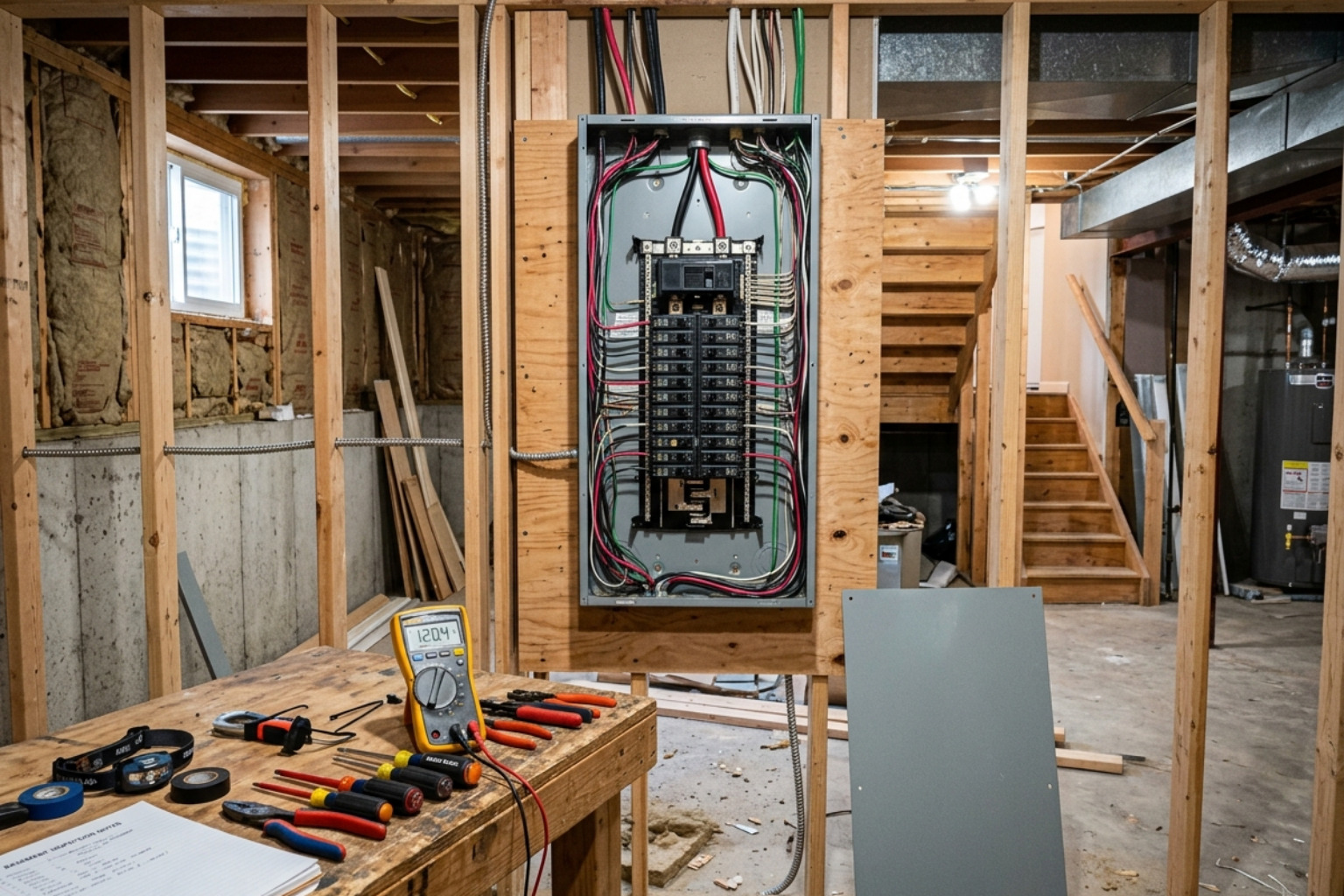
Your building’s electrical panel is like a pie—it only has so many slices. If your current “pie” is already full with HVAC, lighting, and computers, we need to make the pie bigger. This might mean a Commercial Panel & Circuit Upgrade or even calling the utility company to drop a new transformer on the property.
ADA Compliance
This is a big one that people forget. In many jurisdictions, a certain percentage of your EV spots must be van-accessible. This means wider stalls and specific path-of-travel requirements to the building entrance. If we have to regrade a sidewalk to make it ADA-compliant, that affects the commercial electric car charger installation cost.
For more details on the heavy-duty side of things, you can explore our Commercial Electrical Services page.
Leveraging Incentives to Offset Your Investment
The sticker price of an EV project can be intimidating, but you should never pay full price. Between federal, state, and utility programs, we can often cut the total cost by 30% to 80%.
Federal tax credits and the 30C program
The big one is the Alternative Fuel Vehicle Refueling Property Credit, also known as 30C.
- The Credit: It can cover 30% of the total project cost, up to $100,000 per port.
- The Requirement: To get the full 30%, you usually have to meet “prevailing wage and apprenticeship” requirements during installation. If you don’t, the credit drops to 6%.
- Location Matters: This credit is now targeted toward “eligible census tracts” (rural or low-income areas). We can help you check if your Denver or Castle Rock business qualifies.
State and utility rebates
Xcel Energy and other local utilities often have “make-ready” programs. This is where the utility company pays for everything up to the charger—the transformer, the wiring, and the conduit—leaving you only responsible for the hardware and the final hookup. In some cases, these rebates can be worth $5,000 to $15,000 per port.
Ongoing Expenses and Revenue Potential
Once the chargers are in the ground, they aren’t “set it and forget it.” You need to budget for the long term, but you also have the chance to make some of that money back.
Network Software
If you want to charge people for using the electricity, you need “smart” chargers. These require a software subscription, usually ranging from $15 to $30 per month, per port. This software handles the billing, monitors the health of the unit, and lets you set different rates for employees versus the public.
Maintenance and Repairs
Like any outdoor equipment, chargers can get bumped by snowplows or worn down by Colorado’s sun and hail. I recommend budgeting about $200 to $800 per port annually for a maintenance contract. This ensures someone is checking the cables and cooling systems regularly.
Electricity Demand Charges
This is a “hidden” cost many businesses miss. If you have five cars all fast-charging at once, your building’s power usage spikes. Utilities often charge a “demand fee” based on that highest peak. Using smart software to “load balance”—sharing the power so it doesn’t all hit at once—can save you thousands in utility bills.
If you are running high-power equipment, it’s always a good idea to ensure you have a Dedicated Circuit for Commercial Equipment to prevent tripping breakers for the rest of your business.
Frequently Asked Questions about Commercial EV Charging
How long does a typical commercial installation take?
For a standard Level 2 setup in a place like Centennial, the actual on-site work usually takes 1 to 3 days. However, the entire process—from site assessment and permitting to utility coordination—usually takes 3 to 6 months. DC Fast Charging projects take longer because the utility company almost always has to get involved with the grid connection.
What are the best locations for installing commercial EV charging stations?
You want them visible but close to your electrical room. Installing them right next to the front door is great for marketing, but if your electrical panel is at the back of the building, you’ll pay a fortune in trenching. I usually recommend finding a spot that balances visibility with a shorter wire run. Also, consider “future-proofing”—if you want two chargers now, let us run enough conduit for ten so you don’t have to dig again later.
How can businesses lower the overall cost of installation?
The best way is to take advantage of utility “make-ready” programs. Also, consider installing Level 2 chargers instead of DC Fast Chargers unless your business model specifically requires a 20-minute turnaround. Finally, bundling the work with other needed electrical upgrades can save on labor and permitting fees.
Conclusion
Installing EV chargers is no longer just a “green” perk; it’s a strategic move that attracts high-value customers and helps you keep your best employees. At Harmony Electric, we’ve seen 80% of employers report that adding charging stations helped them attract and retain talent. People park at work more than anywhere else besides home—providing that juice is a huge benefit.
Whether you’re looking to install a couple of ports at an office in Castle Rock or a full charging hub in downtown Denver, we’re here to help you navigate the complexity without the fluff. We focus on doing the job right the first time, backed by a lifetime workmanship guarantee.
Ready to see what a commercial electric car charger installation cost looks like for your specific property? We’d love to come out, take a look at your panel, and give you an honest, clear recommendation.
For more information on getting started, visit our EV charger installation services page or give us a call. We’ll help you make sense of the incentives and the infrastructure so you can make a smart investment for your business.