More Than Just Flipping a Switch
Hot tub breaker wiring is the dedicated electrical setup that safely powers your spa. Here’s what you need for a typical 240V hot tub installation:
Essential Components:
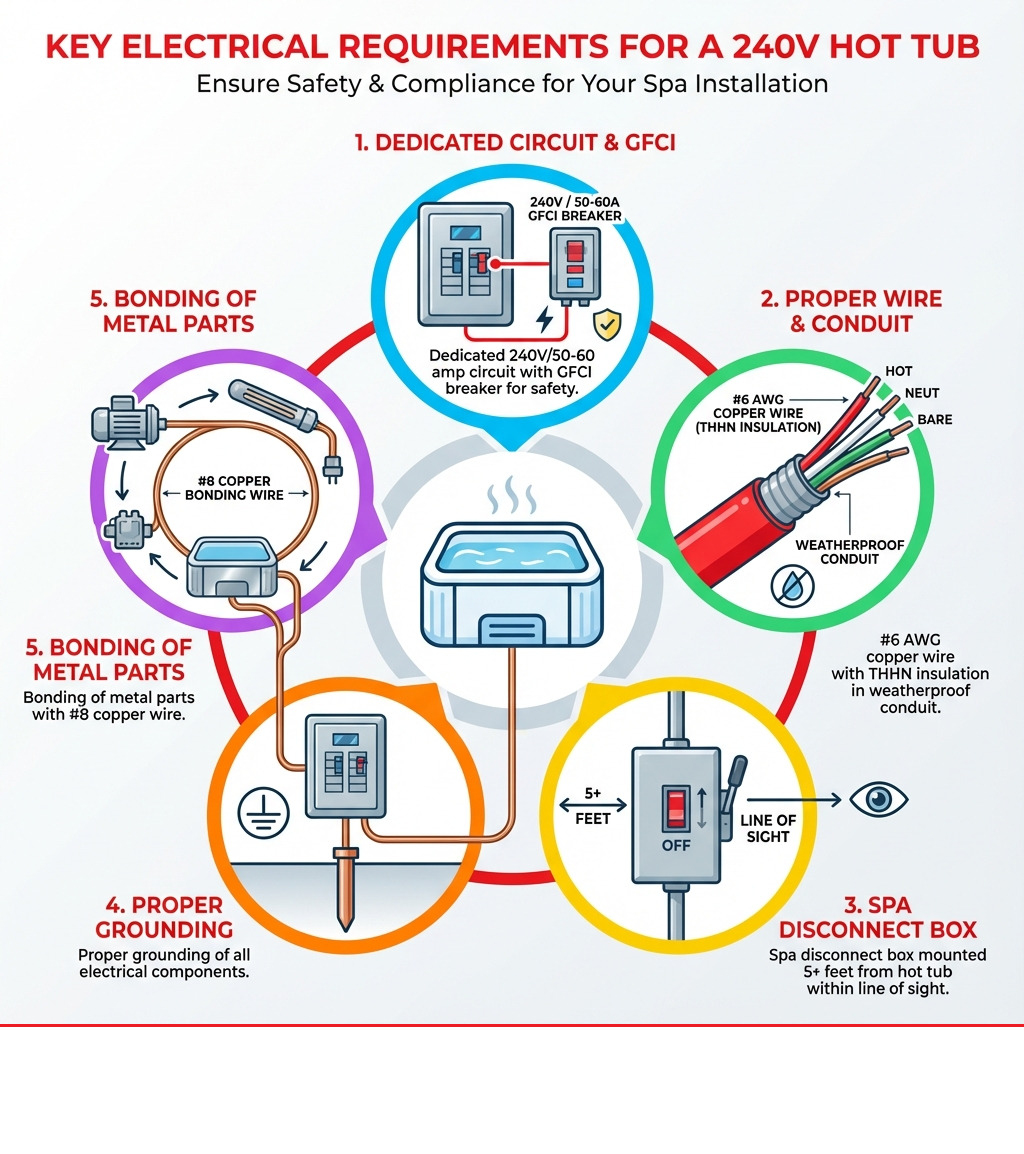
- Dedicated 240V circuit with a 50-60 amp GFCI breaker
- #6 AWG copper wire (4 wires: two hot, one neutral, one ground)
- Weatherproof spa disconnect box (5+ feet from tub, within sight)
- Proper grounding and bonding of all metal components
- THHN/THWN rated wire running through approved conduit
I’ve installed a lot of hot tubs in Denver backyards over the years. The excitement when a customer finally gets that spa delivered is real. But before you can enjoy those jets, there’s one crucial step that can’t be skipped: getting the electrical connection right.
This isn’t like plugging in a lamp or even wiring a ceiling fan. Hot tubs combine two things that don’t naturally mix well — water and electricity. That’s why the National Electrical Code has strict requirements for how these systems get wired.
The good news? Once it’s done right, you won’t have to think about it again. You’ll just enjoy your hot tub safely, knowing the electrical system is protecting you and your family.
In this guide, I’ll walk you through what proper hot tub breaker wiring actually looks like. You’ll learn about dedicated circuits, GFCI breakers, disconnect boxes, wire sizing, and why each piece matters. Whether you’re planning to hire an electrician or just want to understand what you’re paying for, this information will help you make smart decisions.
The Two Main Types of Hot Tub Power: 120V vs. 240V
When it comes to hot tubs, you generally have two main choices for how they get their power: 120-volt or 240-volt systems. This choice profoundly impacts everything from heating speed to jet power, and ultimately, your overall enjoyment.
Most smaller, portable hot tubs, often called ‘plug-and-play’ models, operate on 120V. This is the same voltage as your standard household outlets. On the other hand, traditional, larger hot tubs, like most of the Master Spas models I’ve wired around the Denver Metro Area, require a 240V connection.
The big difference comes down to performance. A 240V system can deliver much more power, which means faster heating and the ability to run all your jets and the heater simultaneously without a hiccup. In Colorado, where winter temperatures can drop pretty low, faster heating and consistent performance are usually big priorities for homeowners. That’s why most people I work with opt for the more robust 240V setup.
‘Plug-and-Play’ 120V Tubs: What You Need to Know
These hot tubs are designed for convenience. They usually come with a power cord that you can plug directly into a standard 120-volt, 15-amp, or 20-amp household outlet. Many even have a built-in GFCI (Ground Fault Circuit Interrupter) on the cord for immediate safety.
While they’re easy to set up, there are some limitations. Because they draw less power, plug-and-play tubs typically heat up slower, especially in colder climates like ours. You might also find that you can’t run all the jets at full power while the heater is on; the system has to choose between heating and jet operation.
Even for these smaller models, I always recommend a dedicated circuit. While they might seem simple, sharing an outlet with other appliances can lead to nuisance tripping of your house breaker. It’s much better to give your hot tub its own dedicated line to prevent interruptions and ensure stable power. For more details on what your hot tub might need, check out my Hot Tub Amperage Guide.
The Gold Standard: Hard-Wired 240V Tubs
When you’re serious about your hot tub experience – powerful jets, quick heating, and overall energy efficiency – a hard-wired 240V system is the way to go. These tubs typically require a dedicated 50-amp or 60-amp GFCI-protected circuit. For instance, many Master Spas hot tubs specifically require a 50-amp/240-volt connection.
This setup allows your hot tub’s heater and pumps to run at full capacity, providing that deep, therapeutic massage and keeping your water toasty warm even on the chilliest Colorado nights. Wiring a hot tub with 240V is also generally more efficient and cost-effective for heating than a 120V system because it draws less current to produce the same amount of heat.
Getting this kind of system installed isn’t a DIY job. It requires careful planning and adherence to the National Electrical Code (NEC) to ensure safety and proper function. This is where a licensed electrician, like myself, comes in to ensure everything is connected safely and correctly.
The Anatomy of a Safe 240V Hot Tub Breaker Wiring Setup
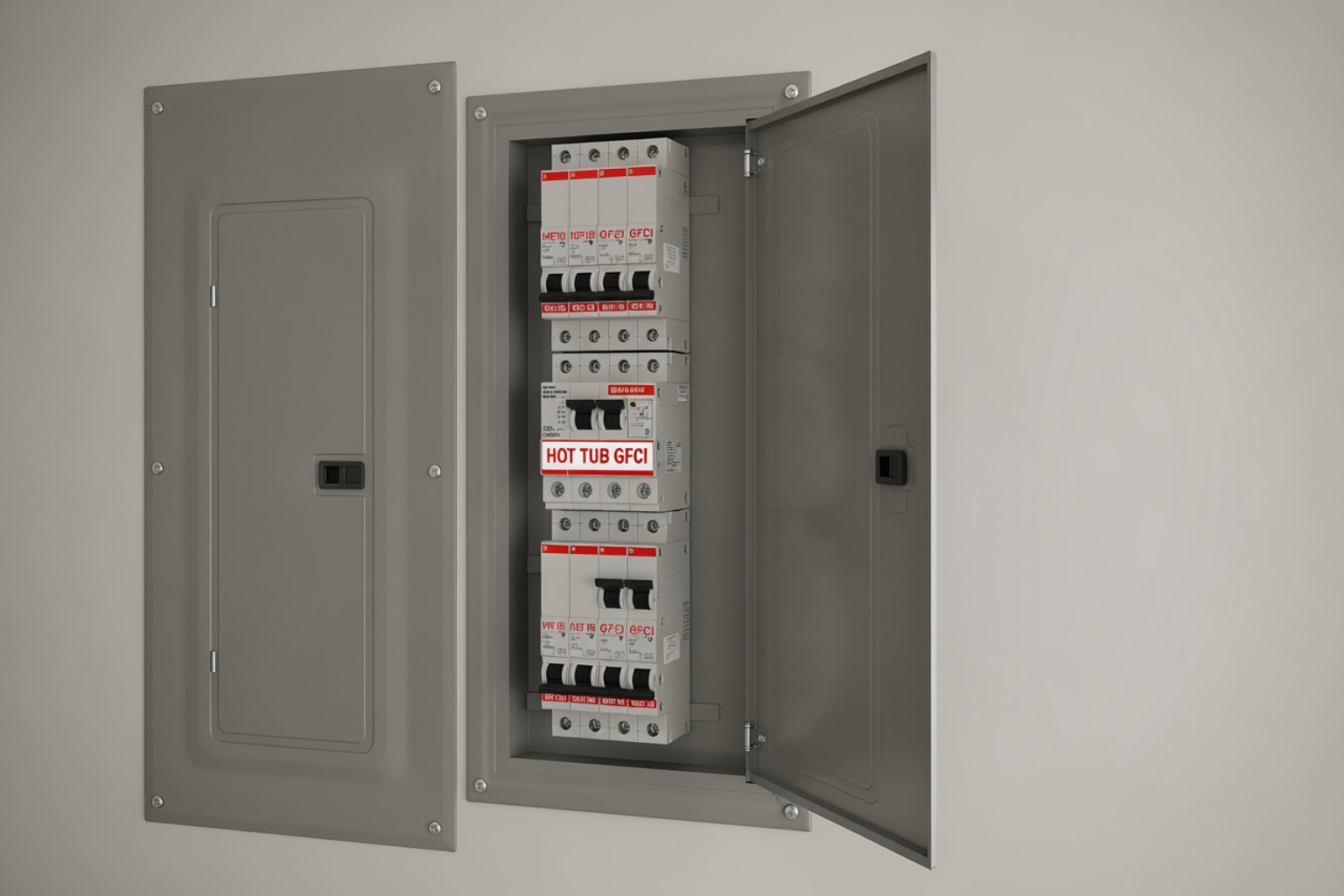
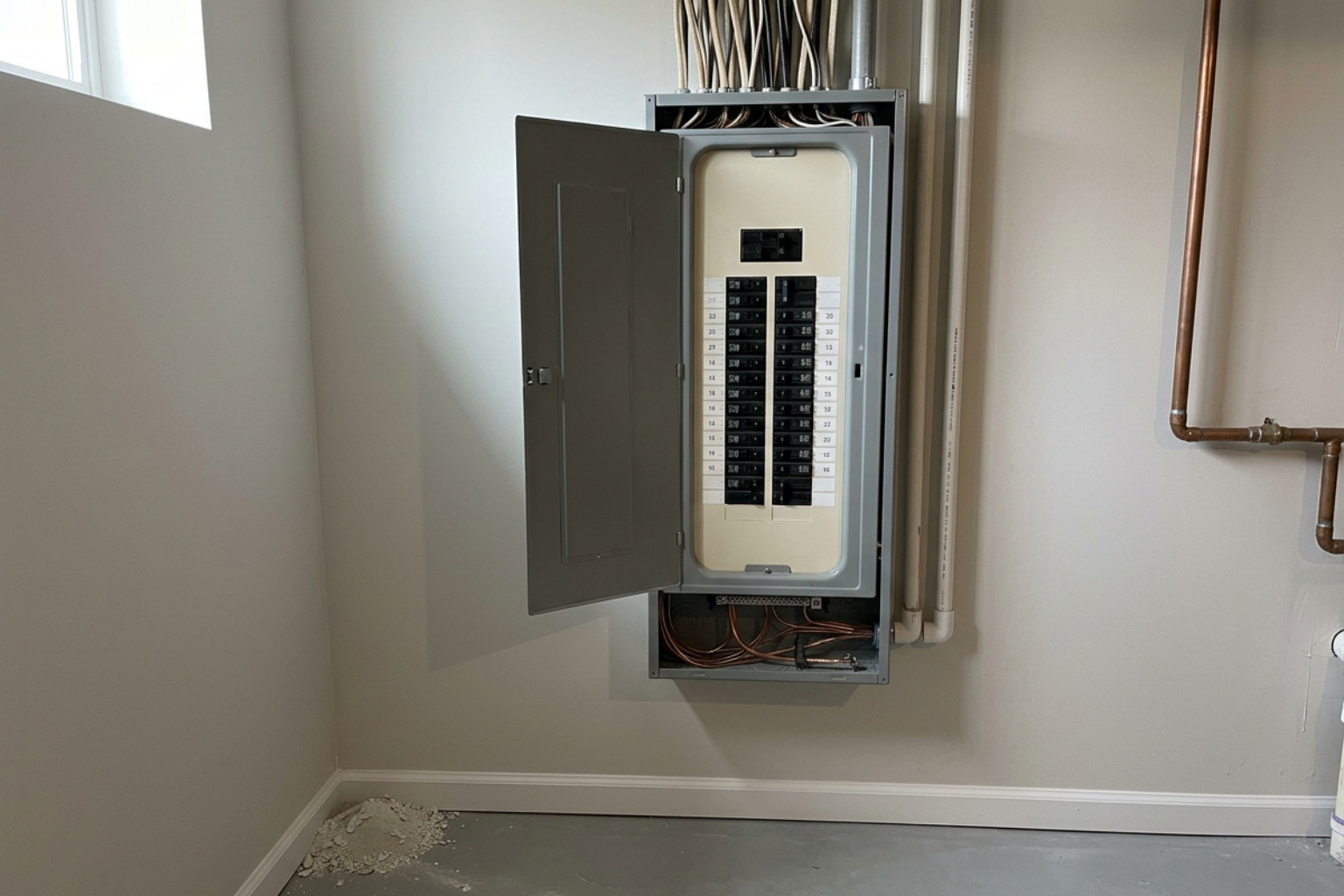
When we talk about hot tub breaker wiring, we’re really talking about building a robust, safe electrical pathway from your home’s main electrical panel to your hot tub. This isn’t just about making it work; it’s about making it safe. Every component in this system plays a critical role in protecting you and your family.
The foundation of any safe hot tub installation is a dedicated circuit. This means your hot tub has its own direct line from the main electrical panel, ensuring it receives consistent power without overloading other household circuits. The National Electrical Code (NEC) sets the standards for these installations, and believe me, they’re there for a reason. Safety is always my top priority, and the NEC helps ensure that.
The Heart of Protection: The GFCI Breaker
At the very core of your hot tub’s electrical safety is the GFCI breaker. GFCI stands for Ground Fault Circuit Interrupter. Think of it as a super-fast electrical safety guard. It constantly monitors the flow of electricity. If it detects even a tiny imbalance – meaning electricity is escaping the circuit, perhaps through water or a person – it trips, cutting off power in a fraction of a second. This quick response is vital for preventing serious electric shocks.
The NEC absolutely requires GFCI protection for all hot tub installations. It’s non-negotiable. This device is specifically designed to reduce the risk of shock by cutting power if it detects a ground fault, which is a common hazard around water.
Because GFCIs are so critical, I recommend testing yours monthly. Most GFCI breakers have a “TEST” button. Just press it, and the breaker should trip. Reset it, and you’re good to go. If it doesn’t trip, that’s a sign it needs to be replaced. For more information on these crucial safety devices, you can read my article on Hot Tub Electrical Code GFCI.
The Emergency Stop: The Spa Disconnect Box
Another essential safety component is the spa disconnect box, often called a spa panel. This is a weatherproof manual power shut-off switch that must be installed between your home’s electrical breaker panel and the hot tub itself.
Its main purpose is to give you (or an emergency responder) a quick and easy way to cut all power to the hot tub without having to run back to the main breaker panel in your house. This is incredibly important for safety during maintenance, repairs, or in any emergency situation.
The NEC requires this disconnect switch to be visible from the hot tub and located at least 5 feet (or 1.5 meters) away, but no more than 15 feet. This distance ensures you can access it quickly without being too close to the water, which is a smart safety measure.
The Lifelines: Your Hot Tub Breaker Wiring and Conduit
Now let’s talk about the actual wires that carry the power. For most 240V hot tubs, we use #6 AWG copper wire. AWG stands for American Wire Gauge, and a lower number means a thicker wire, capable of safely carrying more current. For a standard 240-volt hot tub installation, this typically means four wires: two hot wires (usually black and red), one neutral wire (white), and one ground wire (green or bare copper).
I only use copper wiring for hot tubs. While aluminum wire can be used in some applications, it’s less conductive than copper, requires larger gauge sizes for the same load, and is more prone to corrosion in damp environments – which is exactly what you have around a hot tub. Using copper simply offers better safety and reliability, especially given the high amperage involved.
All these wires need protection, especially when they’re running outdoors or underground. That’s where conduit comes in. Conduit is essentially a protective tubing that encases the electrical wires. For outdoor hot tub wiring, we typically use rigid PVC conduit due to its durability and moisture resistance. Underground conduits usually need to be buried at least 18 inches deep to protect them from damage.
The wires themselves also have special insulation. We use THHN (thermoplastic high heat nylon) or THWN (thermoplastic heat and water resistant nylon) insulated wires. These are outdoor-rated wires designed to withstand the elements and provide long-lasting, safe service.
Grounding and Bonding: The Unsung Safety Heroes
These two terms might sound similar, but they have distinct and equally critical roles in hot tub safety. Think of them as your electrical system’s backup plan.
Grounding is about providing a safe path for electricity to go if there’s a fault. Every electrical circuit has a ground wire. If a hot wire accidentally touches the metal casing of an appliance (or a hot tub component), the ground wire immediately carries that stray current back to the electrical panel. This surge of current then causes the GFCI breaker to trip, cutting off power and preventing a shock. It’s the system that makes your GFCI work its magic.
Bonding, on the other hand, is about connecting all the separate metal parts around your hot tub (like the tub’s metal frame, nearby metal fences, or even pool ladders if applicable) with a bare copper wire, typically #8 gauge. This creates an “equipotential plane.” Imagine it like this: if one metal part accidentally becomes energized, bonding ensures that all other nearby metal parts also become energized to the exact same voltage. This prevents a dangerous voltage difference between them, eliminating the risk of shock if you touch two different metal objects simultaneously. It’s a crucial layer of protection, especially when dealing with water.
The Big Question: Should You Wire a Hot Tub Yourself?
I get it. A lot of homeowners in Denver are handy, and there’s a certain satisfaction that comes with a good DIY project. But when it comes to hot tub breaker wiring, I have to be crystal clear: this is not a typical DIY project.
From my experience as a Master Electrician, the risks far outweigh any perceived rewards. This isn’t just about following instructions; it’s about understanding electrical loads, voltage drop, local code variations specific to Colorado, and intricate safety protocols that only years of training and experience can teach.
The truth is, hot tub wiring involves high voltage, proximity to water, and complex grounding and bonding requirements. One small mistake can have devastating consequences. I’ve seen the Common Problems When Installing a Hot Tub Without a Licensed Electrician, and they’re not pretty.
The Real Risks of Improper Hot Tub Breaker Wiring
When hot tub wiring is done incorrectly, the consequences can be severe and long-lasting. It’s not just about an inconvenience; it’s about real danger.
- Electrocution and Fire Hazards: This is the biggest and most terrifying risk. Water and electricity are a deadly combination. Incorrect wiring, improper grounding, or a faulty GFCI can lead to electrocution. Overloaded circuits or loose connections can generate excessive heat, sparking electrical fires.
- Damaging Your New Hot Tub: Incorrect voltage, amperage, or wiring can instantly fry your hot tub’s delicate control panel, heater, or pumps. What was supposed to be a relaxing investment quickly turns into a very expensive repair, sometimes even requiring a full replacement.
- Voiding the Warranty: Hot tub manufacturers are very clear: improper electrical installation will void your warranty. If something goes wrong due to bad wiring, you’ll be on the hook for all repair costs.
- Failing a Home Inspection: If you ever sell your home, an inspector will flag non-code-compliant hot tub wiring. This can delay your sale and require costly fixes by a licensed professional anyway.
- Nuisance Tripping: While not as dangerous, frequent tripping of your GFCI breaker is incredibly frustrating and indicates an underlying electrical issue that needs to be addressed. Often, it’s due to a miswired neutral wire or a faulty component.
What a Licensed Electrician Handles for You
When you hire a licensed electrician for your hot tub installation, you’re not just paying for someone to connect wires; you’re investing in expertise, safety, and peace of mind. Here’s what I, as a Master Electrician at Harmony Electric, ensure for every hot tub wiring job:
- Assessing Your Home’s Electrical Panel: Before anything else, I’ll examine your existing electrical panel to determine if it can safely handle the additional load of a hot hot tub. Many homes in older Denver neighborhoods might need an electrical panel upgrade to accommodate the new dedicated circuit. You can learn more about this in my article, Can My Existing Electrical Panel Handle a Hot Tub?.
- Reading the Manufacturer’s Specs: Every hot tub model has specific electrical requirements. I always consult your owner’s manual and the spa’s data plate to ensure the exact voltage, amperage, and wiring configuration are met.
- Pulling the Correct Permits: Electrical work, especially for something as significant as a hot tub, almost always requires permits from local authorities in Colorado. I handle all the necessary paperwork and ensure your installation passes inspection. Check out my insights on Hot Tub Permit Colorado.
- Professional Installation and Testing: I ensure all wiring is properly sized, protected by conduit, correctly grounded and bonded, and connected to a dedicated GFCI breaker. After installation, I carefully test the entire system to confirm it’s working flawlessly and safely, meeting all NEC and local codes.
What Factors Influence the Installation Cost?
The cost to wire a hot tub can vary, typically ranging from $500 to $2,000, but it really depends on a few key factors. When I give you a quote, I’m looking at:
- Distance from Panel to Tub: The further your hot tub is from your main electrical panel, the more wire and conduit will be needed, which increases material and labor costs.
- Trenching and Conduit Runs: If the wiring needs to go underground, there’s the added cost and labor for digging a trench and installing buried conduit. This is common in many Denver backyards.
- Your Current Electrical Panel’s Capacity: As I mentioned, if your existing panel can’t handle the new dedicated circuit, an upgrade will be necessary, which adds to the overall cost.
- Labor and Materials: These are pretty straightforward. The cost of copper wire, conduit, the GFCI breaker, and the disconnect box, plus the electrician’s time and expertise.
For a more detailed breakdown, you can visit my page on Hot Tub Installation Pricing. I believe in clear communication and honest recommendations, so you’ll always know exactly what you’re paying for.
Frequently Asked Questions About Hot Tub Breakers
Why does my hot tub breaker keep tripping?
This is one of the most common questions I get, and it’s definitely frustrating when your relaxation gets cut short. There are several reasons why your hot tub’s GFCI breaker might be tripping:
- Incorrect GFCI Wiring (especially the neutral wire): This is by far the most frequent culprit, especially if the hot tub trips immediately upon energizing. The white neutral wire from the hot tub must go directly into the GFCI breaker, not into the neutral bar. If it’s miswired, the GFCI sees an imbalance and trips instantly.
- A Failing Component (Heater, Pump, or Ozonator): Hot tub components work hard. Over time, heaters can develop leaks, pumps can draw too much current, or an ozonator might short out. Any of these can create a ground fault that triggers the GFCI.
- Moisture in the Connections: Even with weatherproof components, sometimes moisture can get into the wiring, a connection point, or even the hot tub’s control pack, causing a ground fault. This is more common after heavy rain or if seals are compromised.
- A Worn-Out GFCI Breaker: Like any electrical device, GFCIs don’t last forever. They’re constantly monitoring current, and over many years, they can become more sensitive or simply fail internally, leading to nuisance trips.
- Overloaded Circuit: While less common with a properly installed dedicated circuit, if other devices somehow share the hot tub’s line, it could lead to an overload and trip.
If your hot tub breaker is tripping, my first advice is always to call a licensed electrician. Don’t keep resetting it without investigating the cause. It’s a safety device doing its job, and it’s telling you there’s a problem. For more on this, check out my article on Hot Tub Breaker Colorado.
How do I know what my specific hot tub needs?
The very best place to find the exact electrical requirements for your hot tub is in your owner’s manual. This document is your go-to source for everything from voltage and amperage to specific wiring diagrams.
You’ll also find crucial information on the spa’s data plate, which is usually located on the side of the hot tub cabinet or near the control pack. This plate typically lists the required voltage, maximum amperage draw, and sometimes even the recommended breaker size.
Before I start any hot tub wiring project, I always review these documents. It ensures that the installation is perfectly matched to your specific hot tub model, guaranteeing safe and efficient operation. It’s a critical step to get right, and it’s something I cover in my guide on Wiring a Home Hot Tub.
Can I use an extension cord for my hot tub?
Absolutely not, especially for a 240V hard-wired hot tub. Let me be very clear: using an extension cord for a 240V hot tub is a major fire and safety hazard and is strictly against electrical codes.
Extension cords are not designed to handle the continuous high current draw of a hot tub. They can overheat, melt, and cause electrical fires. They also don’t provide the necessary grounding and GFCI protection that a dedicated, hard-wired circuit does.
Even for 120V plug-and-play tubs, while they come with a cord, using an additional extension cord is strongly discouraged. It can cause voltage drop, leading to poor performance, slow heating, and potential damage to your hot tub’s components. The best practice, even for 120V tubs, is to have a dedicated, permanent outlet installed by an electrician. The bottom line is, your hot tub needs a permanent, dedicated circuit installed by a professional.
Getting It Done Right in Your Denver Home
So, we’ve covered a lot about hot tub breaker wiring, from the different types of power to the critical safety components like GFCI breakers, disconnect boxes, proper wire sizing, and grounding. The recurring theme, I hope, is clear: safety isn’t just a suggestion; it’s the absolute foundation of enjoying your hot tub.
The value of a professional, guaranteed installation can’t be overstated. This isn’t just about avoiding a tripped breaker; it’s about protecting your investment, your home, and most importantly, your family.
At Harmony Electric, my approach is simple: no shortcuts, just safe, reliable work. As a Master Electrician serving Denver and the surrounding communities, I bring years of experience and a commitment to doing every job right the first time. I stand behind my work with a lifetime workmanship guarantee on hot tub wiring installations, so you can relax knowing your electrical system is sound.
For a safe and reliable connection that lasts, it’s best to have a professional handle your Hot Tub Installation. Give me a call at Harmony Electric; I’d be happy to discuss your hot tub wiring needs and ensure you can enjoy your backyard oasis with complete peace of mind.