Why Understanding Car Charger Installation Cost Matters Before You Buy
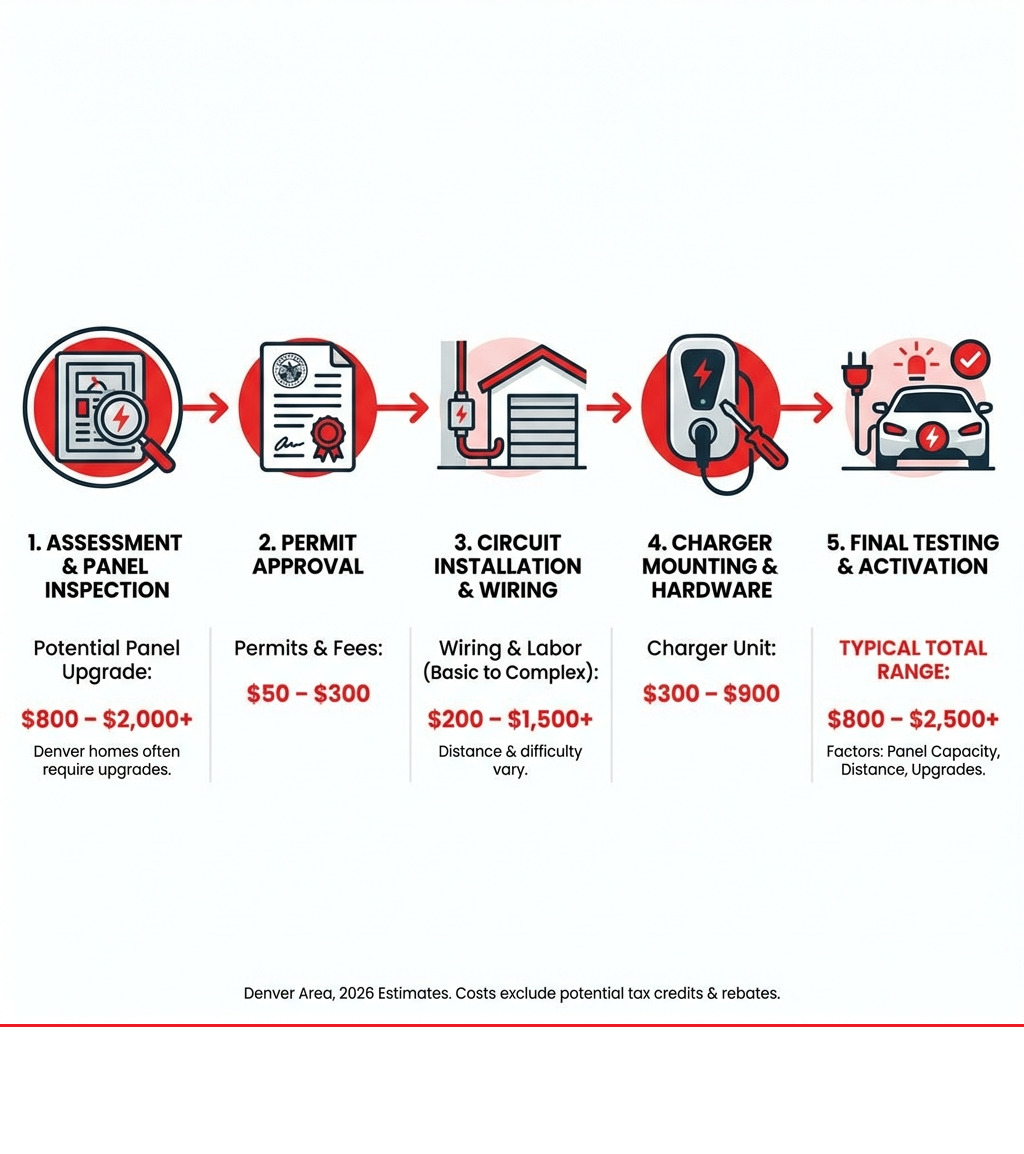
Car charger installation cost typically ranges from $800 to $2,500 for most homeowners, depending on your electrical panel’s capacity, the distance from your panel to the charger location, and whether you need any upgrades to your home’s electrical system.
Here’s what you can expect:
Quick Cost Breakdown:
- Level 1 (120V outlet): $0–$300 (uses existing outlet, very slow)
- Level 2 (240V, most common): $800–$1,600 for basic install
- Level 2 with panel upgrade: $1,500–$3,000+
- Outdoor or complex installations: $2,000–$3,500
Main Cost Factors:
- Charger hardware: $300–$900
- Basic electrician labor: $200–$800
- Permits and inspection: $50–$300
- Panel upgrade (if needed): $800–$2,000
- Long wire runs or trenching: +$500–$1,500
I’m Randy Harmuth, a master electrician here in the Denver area, and I’ve installed about 150 home chargers over the years. The question I hear most often isn’t “Can you install this?” — it’s “How much is this going to cost me?”
That’s a smart question. Because while the charger itself might run you $400 to $800, the installation can vary wildly based on what your home’s electrical system can handle.
A lot of older Denver homes have 100-amp panels that are already running close to capacity. Add a 50-amp EV charger, and you’re looking at a panel upgrade before we even talk about running wire to your garage.
The good news? Once you understand what drives the cost, you can budget accurately and avoid surprises. Even better, federal tax credits and local utility rebates can knock $500 to $1,500 off your final bill.
Let’s break down exactly what we’ll pay and why.
Car charger installation cost terms to remember:
Breaking Down the Average Car Charger Installation Cost
When we talk about the car charger installation cost, it helps to look at it in two pieces: the equipment you buy and the work we do to get it running safely. Most folks end up spending somewhere between $1,200 and $2,500 for a solid, high-quality setup that lasts for years.
The hardware itself usually runs between $500 and $900 for a good Level 2 charger. You can find “budget” options for $300, but in my experience, they often lack the safety certifications (like UL listing) or the durability to handle Colorado winters. On the other end, premium units with extra-long cables or advanced energy tracking can push $1,000 or more.
Labor is where we see the most variation. A basic installation—where the electrical panel is right in the garage and has plenty of room—might only cost $500 to $800 in labor and materials. However, if we’re running conduit across a finished basement or through an attic, that labor can climb to $1,500 or $2,000.
Permits and inspections are non-negotiable for us. In the Denver Metro Area, including places like Castle Rock and Parker, permit fees usually range from $50 to $300. This ensures a third-party inspector verifies the work is safe, which is vital for your home insurance and your family’s safety.
| Charger Type | Equipment Cost | Installation Labor | Charging Speed |
|---|---|---|---|
| Level 1 | Included with car | $0 – $300 | 3-5 miles per hour |
| Level 2 | $300 – $1,000 | $500 – $2,500+ | 20-44 miles per hour |
| Level 3 (DC Fast) | $10,000 – $50,000 | $10,000+ | 60-80% in 30 minutes |
For a deeper dive, check out our Average Cost of EV Charger Installation page.
Understanding the Level 2 Sweet Spot
Most of our customers quickly realize that Level 1 charging—just plugging into a standard wall outlet—isn’t enough. It only adds about 3 to 5 miles of range per hour. If you have a long commute from Highlands Ranch to downtown Denver, you might not even recover your daily mileage overnight.
Level 2 is the “sweet spot.” It uses a 240-volt circuit, similar to what your dryer or oven uses. This allows the charger to add 25 to 30 miles of range per hour. For almost everyone, this means your car is fully charged and ready to go every single morning, regardless of how much you drove the day before.
You can learn more about which charger is right for your property in our EV charger levels guide.
Why Professional Labor Matters
I’ve seen some scary “DIY” attempts at EV charging. We’re talking about a continuous electrical load that runs for hours at a time. It’s one of the most demanding things your home’s electrical system will ever do.
A licensed electrician ensures everything meets NEC Article 625, which is the specific part of the National Electrical Code for EV charging. We perform load calculations to make sure we aren’t going to melt your main lugs or trip your main breaker while you’re sleeping. Plus, at Harmony Electric, we back our work with a lifetime workmanship guarantee. We want you to sleep soundly knowing the “juice” is flowing safely.
Key Factors That Drive Your Total Bill
Every home is a little different. In newer developments in Castle Pines, the panels are often modern and located conveniently. In older parts of Denver, we might have to get more creative.
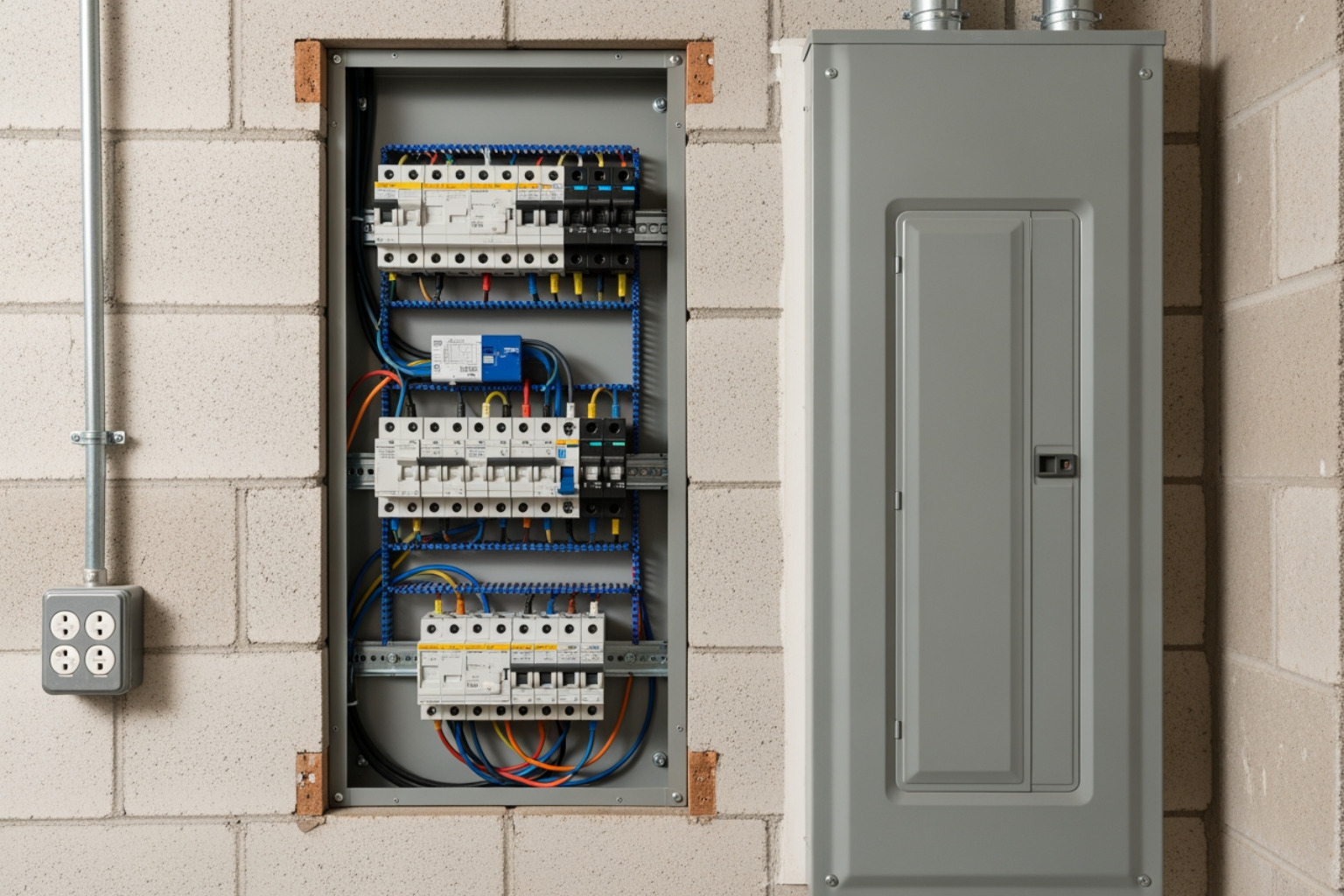
The biggest driver of your car charger installation cost is the distance from your main electrical panel to where you park your car. Copper wire is expensive, and running it isn’t always easy.
- Wall Access: If we can run conduit along the surface of the garage wall, it’s much cheaper than “fishing” wire through finished drywall or ceilings.
- Trenching: If you want your charger on a pedestal at the end of a driveway, we might need to dig a trench. This can add $1,000 to $2,000 to the bill.
- Indoor vs. Outdoor: Indoor garage installs are generally the most affordable ($800–$1,500). Outdoor installs require weatherproofing and often more expensive materials ($800–$2,500).
Interestingly, Realtor.com research shows that homes with EV chargers tend to sell faster and often at a premium. It’s not just a utility; it’s a home improvement.
How Distance Affects Your Car Charger Installation Cost
We usually tell folks to expect an extra $5 to $10 for every foot of distance beyond a “basic” 20-foot run. This covers the heavy-gauge copper wire and the conduit needed to protect it.
If your panel is in the basement on the opposite side of the house from the garage, we have to steer around HVAC ducts, plumbing, and structural beams. This takes time and more materials, which naturally increases the price. We also have to account for “voltage drop”—if the run is too long, we have to use even thicker wire to make sure the charger gets the power it needs.
Weatherproofing for Outdoor Setups
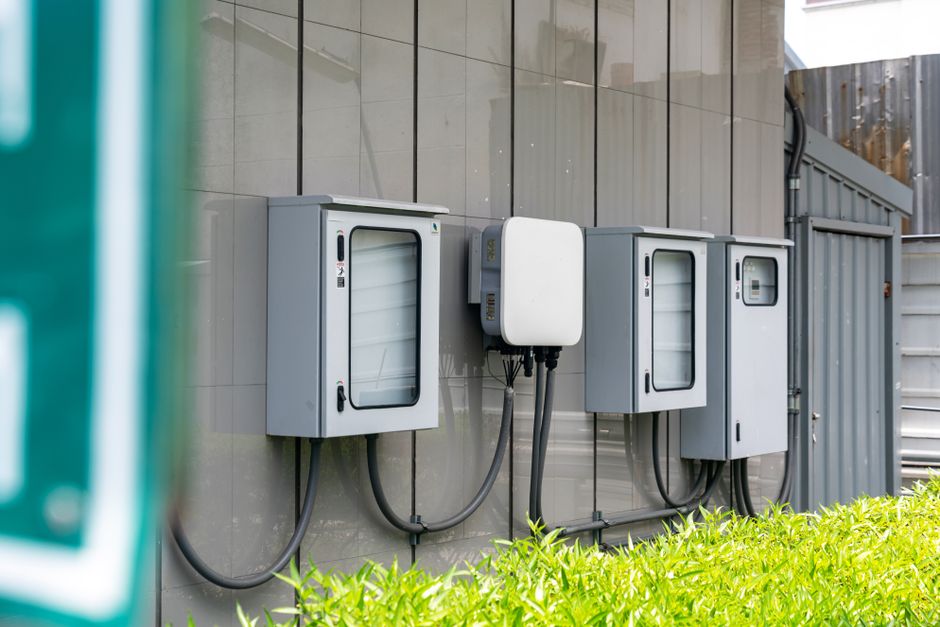
If you don’t have a garage, don’t worry—we install plenty of outdoor units. However, we have to use NEMA 4 rated enclosures to keep out the Colorado snow and rain. We also ensure the circuit has GFCI (Ground Fault Circuit Interrupter) protection to keep you safe when plugging in on a wet day.
Outdoor pedestals are a great option if you park in a driveway, but the pedestal itself can cost $300 to $500, plus the cost of the concrete pad we use to secure it.
Electrical Upgrades: When Your Home Needs More Power
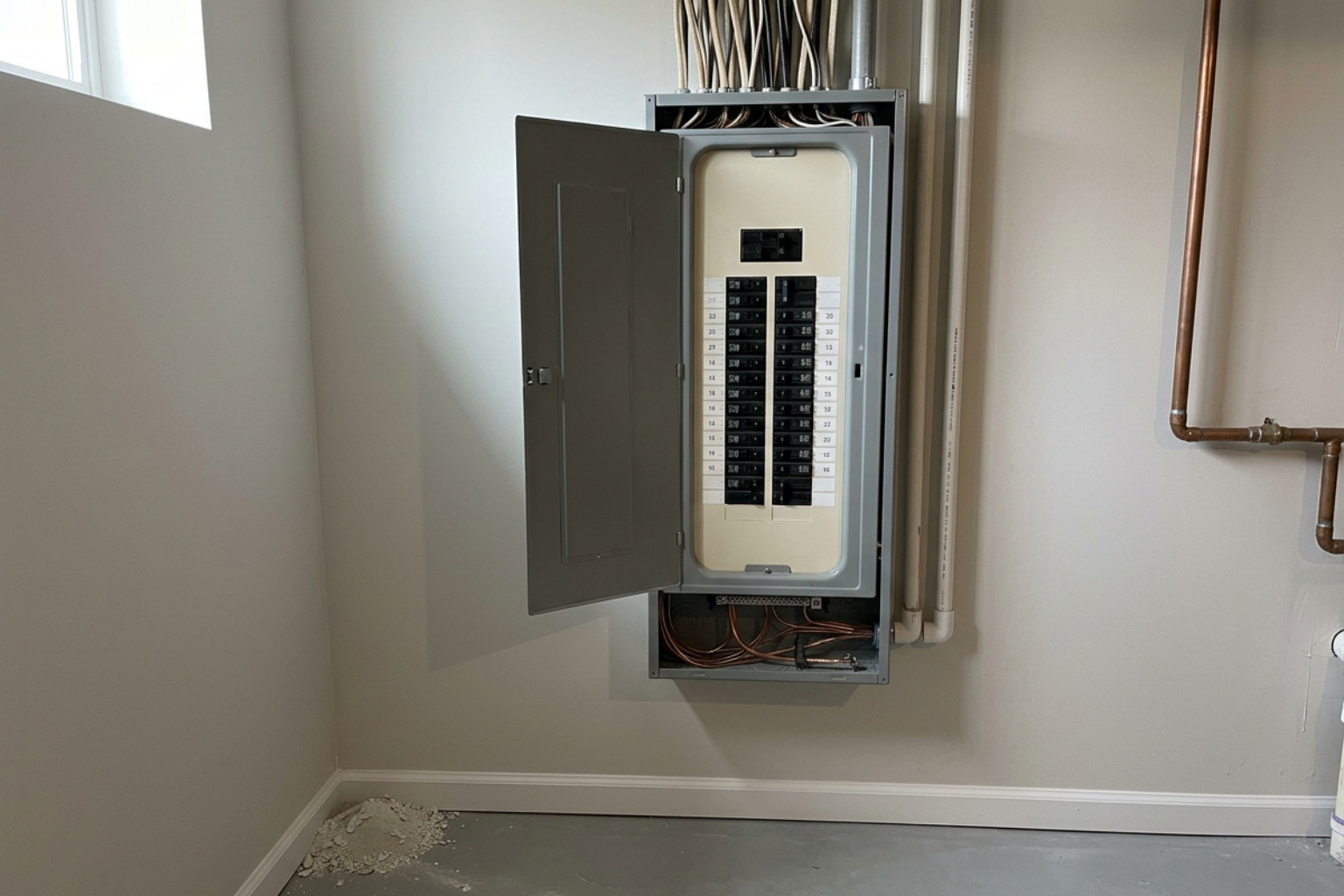
This is the “hidden” cost that surprises many homeowners. Your electrical panel is like a pie—there’s only so much to go around. If your panel is 100 amps and you have an electric range, AC, and a hot tub, there might not be enough “pie” left for a 50-amp car charger.
Upgrading to a 200-amp service is a common project for us in older Denver neighborhoods. This typically costs between $1,500 and $3,000. While it adds to the car charger installation cost, it also modernizes your home and makes it ready for future upgrades like solar or heat pumps.
You can find more details on our residential EV charger installation pricing page.
Identifying an Overloaded Panel
How do you know if you’re at capacity? We look at a few things:
- Service Amperage: Is your main breaker labeled 100, 125, 150, or 200?
- Physical Space: Are there empty slots for a new double-pole breaker?
- Load Calculation: We follow NEC Article 220 to calculate your home’s “peak demand.”
If you’re right on the edge, we can sometimes use “load shedding” devices. These smart gadgets can temporarily pause your car charger if the AC and dryer both kick on at the same time, preventing a main breaker trip.
The Cost of Adding a Dedicated Circuit
Even if your panel has the power, we still have to install a dedicated circuit. This means a new breaker and a direct line of wire that serves only the car charger.
For a Level 2 charger, we’re usually installing a 50-amp or 60-amp breaker. This requires heavy-duty 6-gauge or 8-gauge wire. If you’re looking for state-specific laws on these installations, the U.S. Department of Energy is a great resource.
Hardwired vs. Plug-In: Choosing Your Connection
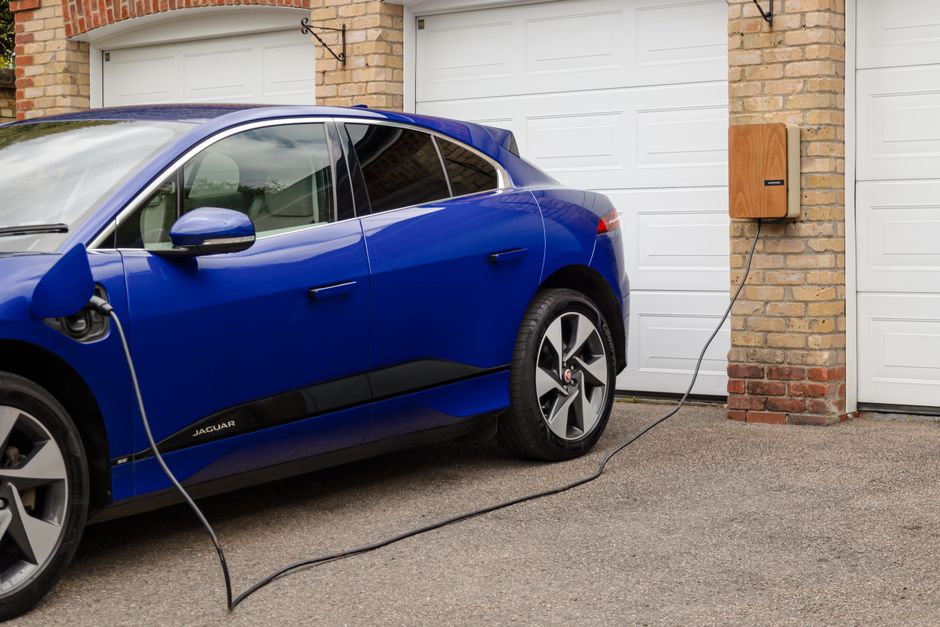
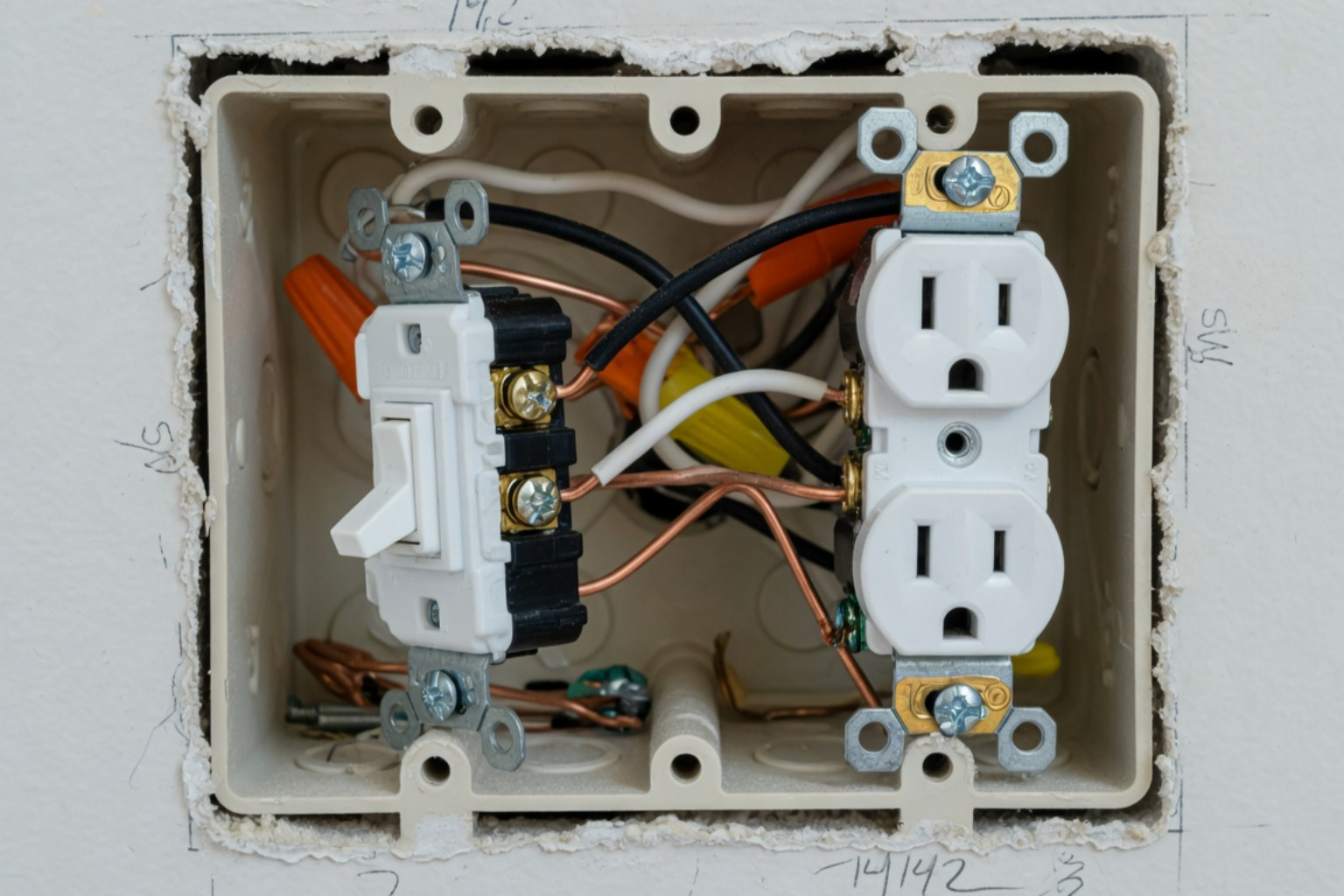
You have two main choices for how the charger connects to your house: we can hardwire it directly into a junction box, or we can install a heavy-duty 240V outlet (NEMA 14-50) for you to plug the charger into.
Hardwiring is my personal recommendation for most folks. It’s a cleaner look, and it’s more reliable. Hardwired units can also handle higher speeds—up to 48 or 50 amps—whereas plug-in units are legally capped at 40 amps of continuous draw.
Plug-in setups offer portability. If the charger breaks or you move, you can just unplug it. However, the industrial-grade outlets required for this (you don’t want the cheap $10 ones from a big-box store) can add $50 to $100 to the material cost.
Check out our guide on picking your perfect plug for more info.
Comparing Connection Types for Your Car Charger Installation Cost
A NEMA 14-50 outlet installation usually costs between $250 and $800, depending on the distance. Hardwiring usually falls in a similar labor range, but you save the cost of the outlet and the expensive GFCI breaker that is often required for outlets by modern code.
In the long run, hardwiring is often the most cost-effective and dependable choice. It eliminates a “point of failure” (the plug/outlet connection) that can get hot over years of heavy use.
Saving Money with Rebates and Tax Credits
Don’t let the “sticker shock” get to you. There are some fantastic ways to lower the net car charger installation cost.
- Federal Tax Credit: Under the Inflation Reduction Act, you can often claim 30% of the total cost (hardware + installation) up to $1,000 on your federal taxes.
- Xcel Energy: For our neighbors in Denver and Centennial, Xcel Energy often offers rebates. I’ve seen them offer up to $1,300 for certain installations and “wiring-ready” setups.
- Off-Peak Rates: Many utilities offer lower rates if you charge between 11 PM and 6 AM. Some smart chargers can track this for you, paying for themselves in energy savings within a year or two.
We always suggest stacking these. If you play your cards right, a $1,500 installation might only cost you $500 out of pocket after all the incentives come back. You can find more tips in our article about installing an EV charger at home.
Frequently Asked Questions about EV Charging
Can I install a Level 2 charger myself to save money?
I strongly advise against it. We’re dealing with high voltage and high amperage for long durations. A loose wire or an undersized breaker can lead to a fire. Furthermore, unpermitted work can void your home insurance. In the Denver Metro area, “DIY” electrical work on major circuits like this often fails inspection because homeowners aren’t aware of the specific local code requirements.
How long does the typical installation take?
For a straightforward job in a garage, we’re usually in and out in 2 to 4 hours. If we’re doing a full panel upgrade or a long, complex wire run, it might take a full day. We always aim to be prompt and leave your home cleaner than we found it.
Will a home charger really increase my property value?
Absolutely. As more people switch to EVs, having a “fuel station” in the garage is becoming as desirable as a finished basement. It’s an investment in the “future-readiness” of your home. Many buyers in tech-forward areas like Lone Tree or Centennial specifically look for “EV-ready” homes.
Conclusion
Budgeting for your car charger installation cost doesn’t have to be a guessing game. By understanding the hardware, the labor complexity, and the potential need for electrical upgrades, you can plan your transition to electric driving with confidence.
At Harmony Electric, we take pride in helping our neighbors in Denver, Castle Rock, and the surrounding areas make sense of their home’s power needs. We won’t upsell you on things you don’t need, and we’ll make sure the job is done right the first time—guaranteed.
Ready to get your home ready for the electric revolution? Contact us today for a clear, honest assessment of your residential EV charger installation. We’ll help you find the best way to get that “juice” flowing without breaking the bank.