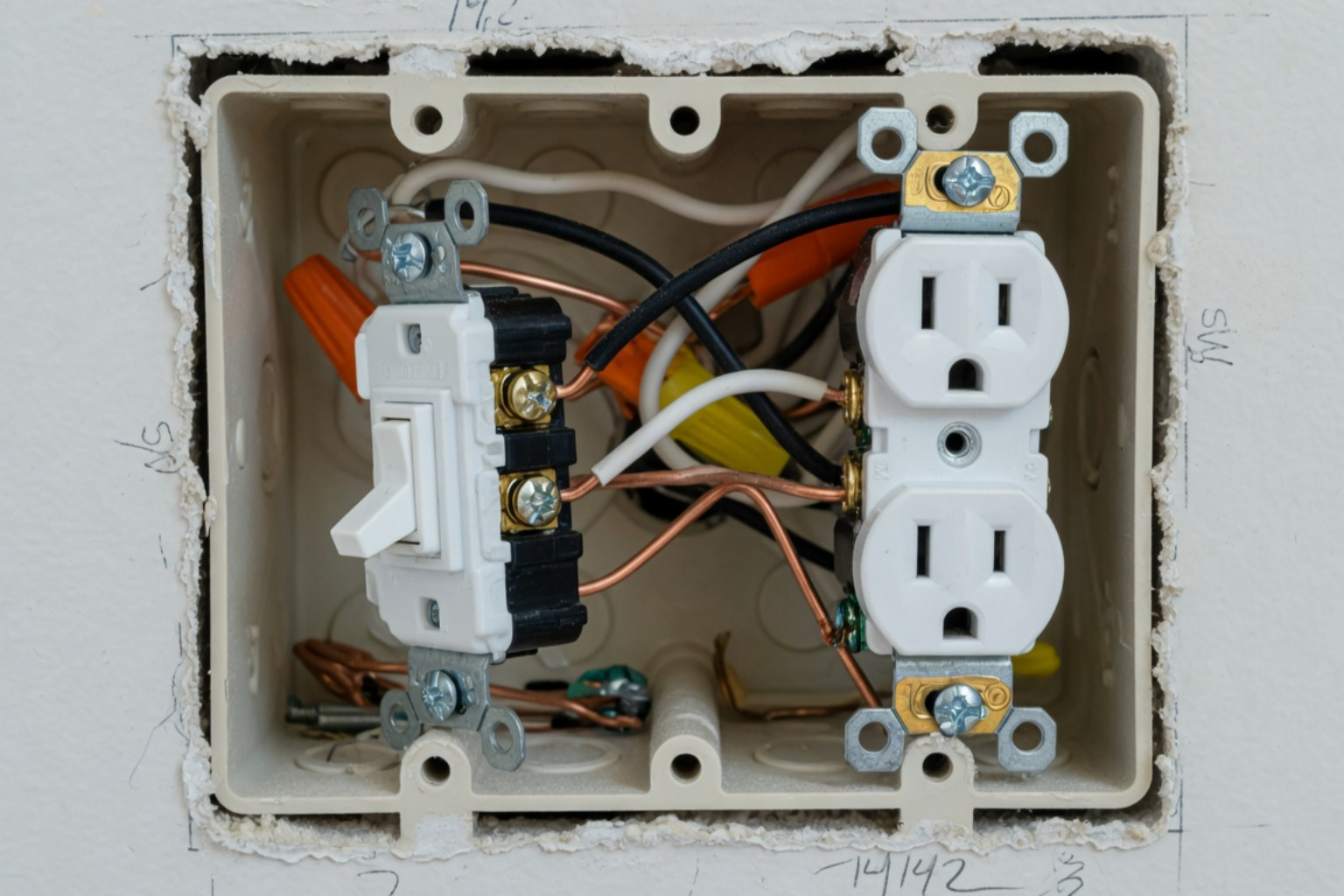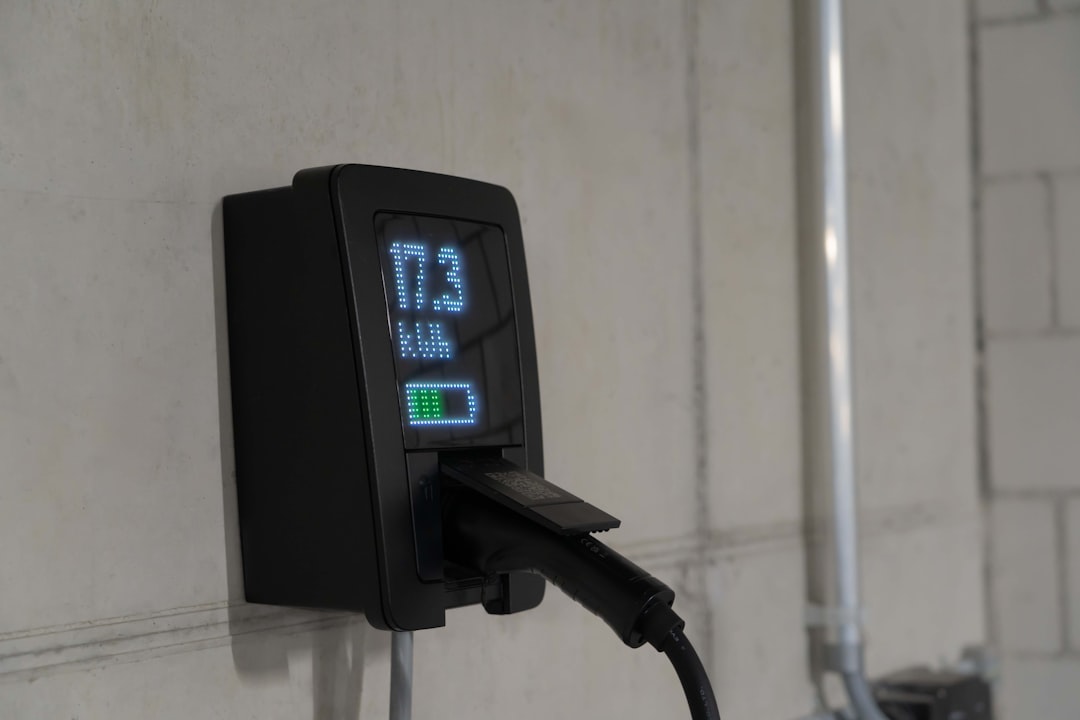
Why Your Home Charging Setup Matters
A level 2 EV charger is a 240-volt home charging station that charges your electric vehicle 6-8 times faster than a standard outlet, delivering 10-75 miles of range per hour. Here’s what makes it the best option for home use:
Key Benefits of Level 2 Charging:
- Faster charging: Full charge overnight instead of days
- Convenient: Wake up to a full battery every morning
- Cost-effective: Charge at home for about one-third the cost of public stations
- Professional installation: Requires a dedicated 240V circuit and licensed electrician
Common specs: 240V power, 40-50 amp circuit, 7-19 kW output
I’ve been installing EV chargers in Denver-area homes for years now, and the most common thing homeowners tell me is how much they underestimated the convenience of Level 2 charging at home.
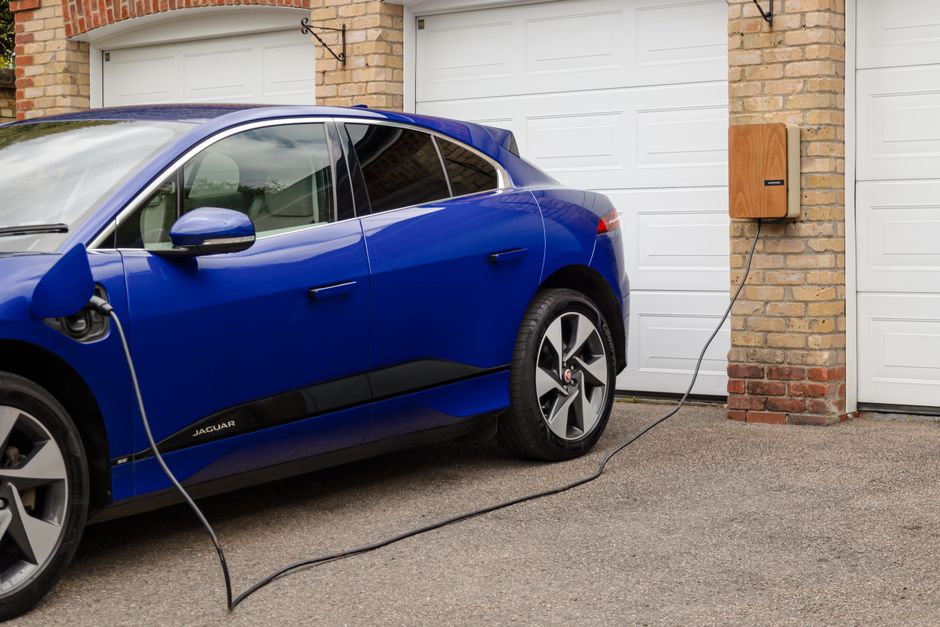
You plug in when you get home from work, just like you charge your phone at night. By morning, your car is ready to go. No more planning trips around charging stations or sitting in parking lots waiting for your battery to fill up.
But here’s what most people don’t realize before they call: Not every home is ready for a Level 2 charger right out of the box. Your electrical panel needs enough capacity, you’ll need a dedicated 240-volt circuit (the same type that powers your dryer), and the installation has to meet specific safety codes.
Some homes around Denver and Aurora need a service upgrade first. Others just need a new circuit run to the garage. A few are ready to go as-is.
The good news? Once it’s installed correctly, you’ll wonder how you ever managed without it. The cost of charging at home is significantly lower than public stations, and you’ll never have to reroute your day around finding a charger.
This guide walks you through everything you need to know about Level 2 chargers—how they work, what your home needs, how to choose the right one, and what the whole process actually costs in the Denver area.

The Basics: Understanding EV Charger Levels
When we talk about EV charging, we often hear about different “levels.” These levels simply describe how quickly your electric vehicle can charge, mostly determined by the voltage and amperage of the power source. Understanding these differences helps us see why a level 2 EV charger is usually the perfect fit for home use.
EV chargers deliver electricity to your car’s battery. The grid supplies AC (Alternating Current) power, but your car’s battery stores DC (Direct Current). For Level 1 and Level 2 charging, your vehicle has an “onboard charger” that converts the AC power from the wall into DC power for the battery. With Level 3, the charging station itself does this conversion, which is why it’s so much faster.
What is a Level 1 Charger?
A Level 1 charger is the simplest way to charge an EV. It uses a standard 120-volt household outlet, the kind you plug your toaster or lamp into. Most electric vehicles come with a Level 1 charger right out of the box.
- Charging Speed: Very slow. It typically adds only 3-5 miles of range per hour.
- Best Use: Great for plug-in hybrids with smaller batteries, or for topping off a fully electric car if you don’t drive much each day. It’s also handy as an emergency backup.
- Convenience: Just plug it into any standard outlet. No special installation needed.
- Limitations: For a fully electric vehicle, charging from empty to 80% could take 40-50+ hours. That means if you drive a lot, a Level 1 charger alone won’t keep up with your daily needs. We also always advise against using extension cords with Level 1 chargers, as this can be a fire hazard.
What is a Level 2 EV Charger?
This is where home charging really shines! A level 2 EV charger uses a 240-volt power supply, similar to what your electric clothes dryer or oven uses. This higher voltage allows for significantly faster charging.
- Charging Speed: Much faster than Level 1, typically adding 10-75 miles of range per hour. It can charge a battery electric vehicle (BEV) from empty to 80% in 4-10 hours. It’s roughly six to eight times faster than Level 1 setups.
- Best Use: This is the standard for home charging. It allows you to fully recharge your EV overnight, ensuring you wake up to a full battery every morning. We install these in homes across Denver, Aurora, and Castle Rock.
- Installation: Requires professional installation by a licensed electrician. We run a dedicated 240-volt circuit from your electrical panel to where you want the charger.
- Commonality: Level 2 EV chargers are the most common type of charger installed globally, and you’ll find them in homes, workplaces, and public spaces.
For a deeper dive into the different levels, you can check out our EV Charger Levels Guide: Home.
What is Level 3 (DC Fast Charging)?
Level 3 chargers, also known as DC Fast Chargers (DCFC), are the fastest option available. However, they’re not for home use.
- Charging Speed: Extremely fast. They operate at much higher voltages (400-800 volts) and directly supply DC power to your car’s battery, bypassing the car’s onboard charger. They can add 100-250 miles of range in just 30-45 minutes, often charging a BEV to 80% in under an hour.
- Best Use: Public charging stations, particularly along highways or in commercial areas where you need a quick top-up during a long trip.
- Installation: Requires very specialized and expensive infrastructure. You won’t find these in residential settings.
- Limitations: Not all EVs can use Level 3 chargers, and charging speed slows significantly after about 80% to protect the battery.
Here’s a quick overview of how the levels compare:
| Charger Level | Voltage (US) | Typical Power Output | Range Added Per Hour | Typical Charging Time (BEV 0-80%) | Typical Location |
|---|---|---|---|---|---|
| Level 1 | 120V AC | 1.4 – 2.4 kW | 3-5 miles | 40-50+ hours | Home |
| Level 2 | 208/240V AC | 3 – 19.2 kW | 10-75 miles | 4-10 hours | Home, Workplace, Public |
| Level 3 (DCFC) | 400-800V DC | 50 – 350 kW | 180-240 miles | 20-60 minutes | Public (highway, commercial) |
Getting Ready for a Level 2 EV Charger Installation
Installing a level 2 EV charger isn’t as simple as plugging in a new appliance. It involves your home’s electrical system, and that means safety and proper planning are paramount. We always start with a thorough assessment to make sure everything is set up correctly.
Electrical Requirements for Your Home
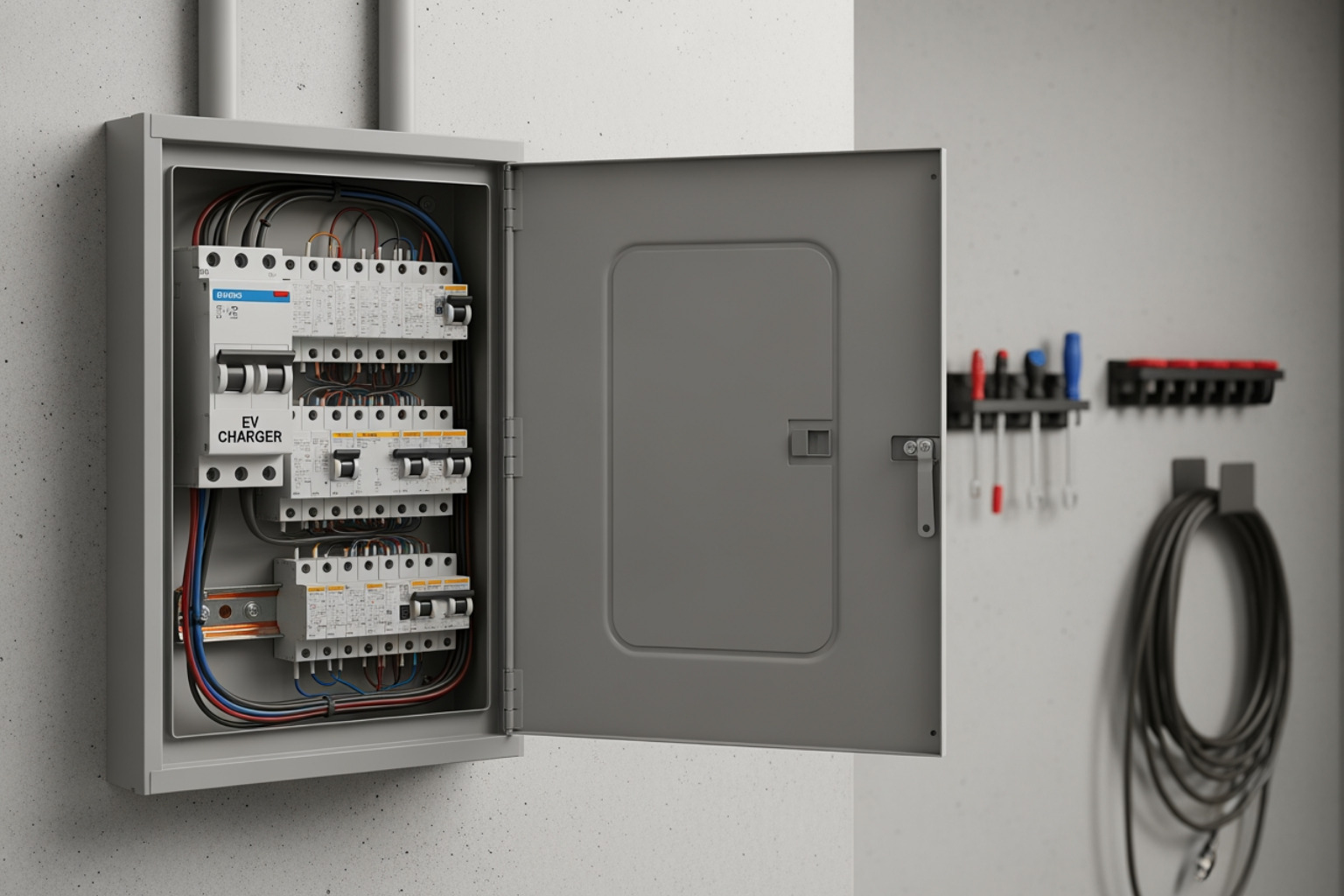
The biggest consideration for a level 2 EV charger is your home’s electrical panel. These chargers need a dedicated 240-volt circuit, usually protected by a 40-amp or 50-amp breaker. This is the same kind of circuit that powers big appliances like electric ranges or clothes dryers.
- Dedicated Circuit: This means the circuit is solely for the EV charger, preventing overload and ensuring consistent power delivery.
- Panel Capacity: Your electrical panel needs enough spare capacity to handle the additional load. In a lot of older houses around Denver, Castle Rock, and Highlands Ranch, we often find panels that are already near their maximum capacity.
- Load Calculation: Before we do anything, we perform a load calculation. This helps us understand how much electricity your home currently uses and how much is available for a new charger. If there isn’t enough capacity, we might need to suggest a panel upgrade.
- Safety Codes: All installations must comply with the National Electrical Code (NEC Article 625 specifically for EV chargers) and local Denver codes. This isn’t just about passing inspection; it’s about keeping your home and family safe.
If you’re curious about the installation process, our EV Charger Installation page has more details.
Hardwired vs. Plug-In Chargers
When choosing your level 2 EV charger, you’ll generally encounter two main installation types: hardwired and plug-in. Both have their advantages.
- Hardwired Chargers:
- Pros: These units are permanently connected to your home’s electrical system. They often offer a cleaner, more integrated look and can typically deliver higher amperages (up to 80 amps, or 19.2 kW, for the fastest Level 2 charging).
- Cons: Less flexible if you ever want to move it.
- Plug-In Chargers:
- Pros: These chargers plug into a 240-volt outlet, typically a NEMA 14-50 (common for RVs and electric stoves) or NEMA 6-50. They offer more flexibility if you need to move the charger or take it with you. They’re also easier to replace if the unit fails.
- Cons: The outlet itself still needs to be professionally installed on a dedicated 240-volt circuit. They are generally limited to 50-amp circuits (delivering up to 40 amps continuously, or 9.6 kW).
We can help you decide which option makes the most sense for your garage or driveway in Castle Pines or Lone Tree.
Safety and Location Considerations
Safety is our top priority. When we install a level 2 EV charger, we’re not just thinking about getting power to your car; we’re thinking about the long-term safety and reliability for your entire home.
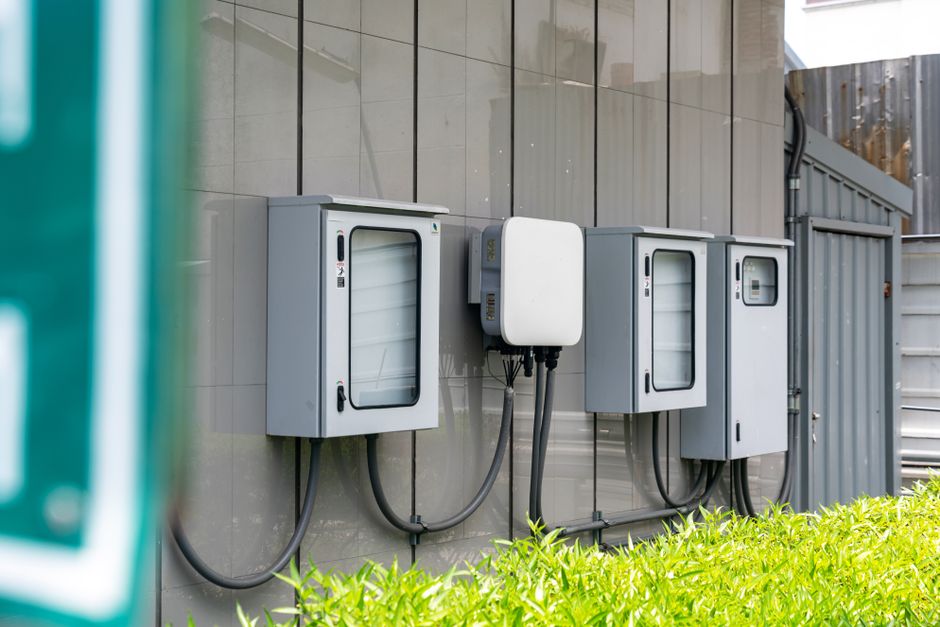
- Outdoor-Rated Chargers: If you plan to install your charger outside your garage or in a carport, it absolutely must be rated for outdoor use. Look for NEMA 3R or NEMA 4X ratings, which indicate protection against rain, snow, ice, and dust.
- GFCI Protection: Ground Fault Circuit Interrupter (GFCI) protection is crucial. This safety device can detect electrical faults and quickly cut power, preventing shocks and fires.
- Proper Wiring: Using the correct gauge wire for the amperage and distance, along with proper conduit and connections, is fundamental to preventing overheating and fire risks.
- Location: Most homeowners install their chargers in the garage, but outdoor installations are common. We help you pick the best spot, considering factors like proximity to your electrical panel, vehicle parking, and protection from the elements.
Electrical work is not a DIY job for a level 2 EV charger. It’s complex, requires specific knowledge of codes, and involves high voltage. For any residential electrical needs, including EV charger installations, our Residential Electrician Services are here to help.
How to Choose the Right Level 2 Charger for Your Home
Once we’ve figured out your home’s electrical readiness, the fun part begins: picking out the actual level 2 EV charger. With so many options out there, it can feel a bit overwhelming. But by focusing on a few key features, we can narrow down the choices to find your perfect plug.
Key Features to Look For
Different chargers offer different perks. What’s important to one homeowner in Centennial might be less so for another in Parker.
- Smart Chargers: Many modern level 2 EV chargers come with Wi-Fi connectivity and smartphone apps. This lets you:
- Monitor charging status and energy usage.
- Schedule charging during off-peak hours (when electricity is cheaper).
- Receive notifications.
- Some even offer “load management,” which monitors your home’s overall electrical draw and temporarily lowers the charger’s output if needed to prevent exceeding your house’s capacity. This can sometimes avoid the need for a costly panel upgrade.
- Cord Length and Management: Think about where your car will usually be parked relative to the charger. Standard cords are often 18-25 feet. A longer cord offers more flexibility, but you’ll want good cable management to keep your garage tidy and prevent tripping hazards.
- Outdoor Durability: As mentioned, if your charger will be outside, ensure it has an appropriate outdoor rating (NEMA 3R or 4X, or IP66/IP67).
- “Dumb” Chargers: These are simpler, more affordable units without smart features. They just plug in and charge. If you don’t need all the bells and whistles, a reliable “dumb” charger can be a great option.
Understanding Connectors: J1772 vs. NACS
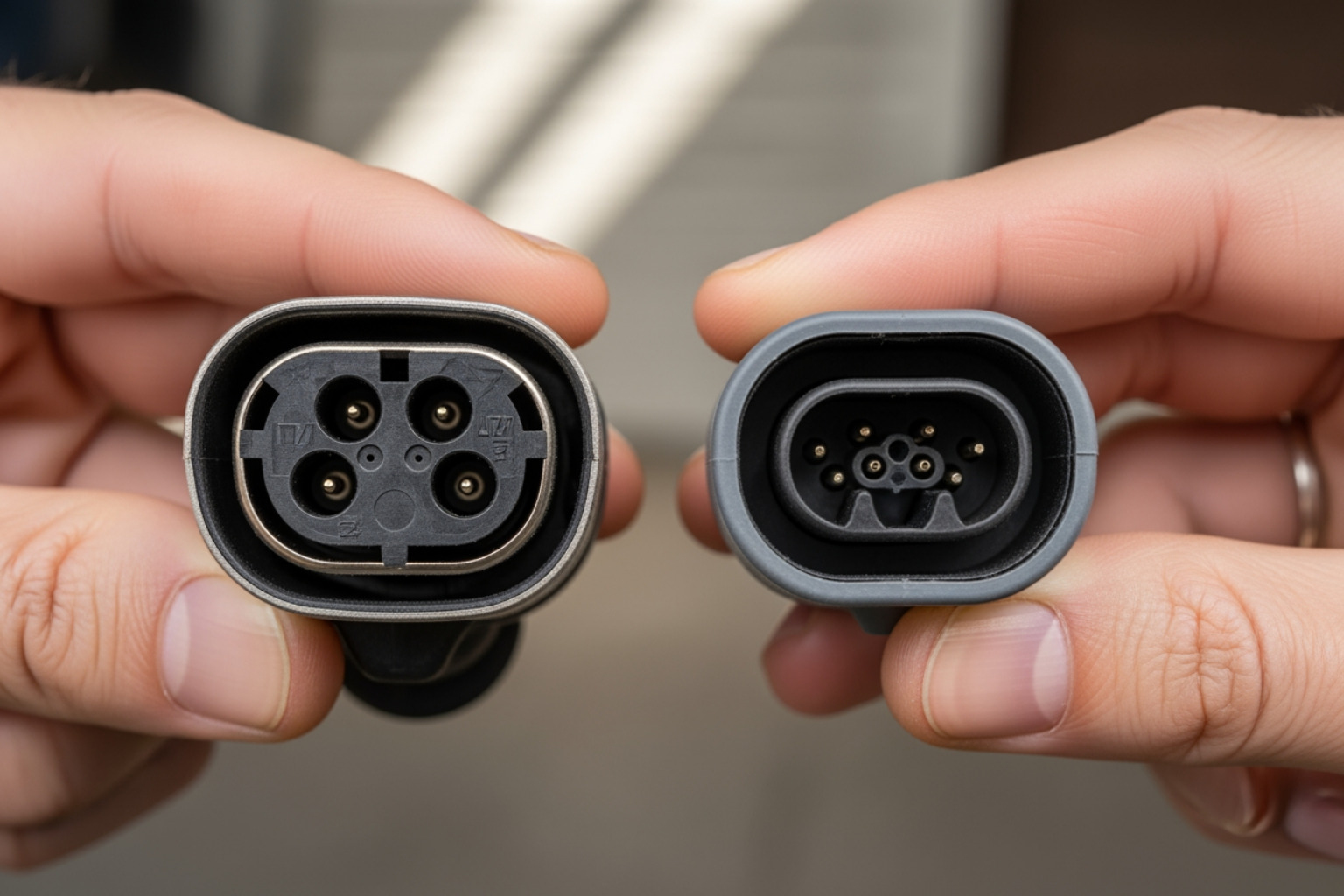
The connector is the part that plugs into your car. For level 2 EV chargers in North America, there are two main types you’ll encounter:
- J1772: This is the universal standard connector for almost all electric vehicles (non-Tesla) in North America. If you drive a Chevy Bolt, Ford Mustang Mach-E, Hyundai Ioniq 5, or virtually any other EV, this is your plug.
- NACS (North American Charging Standard): This is Tesla’s proprietary connector. Historically, Tesla vehicles used this, and only Tesla chargers had it. However, the industry is rapidly shifting, with many major automakers now adopting NACS for their future vehicles.
What does this mean for you?
- If you have a non-Tesla EV, you’ll need a J1772 charger.
- If you have a Tesla, it comes with an adapter to use J1772 chargers. Tesla also sells its own NACS-connector home chargers.
- To future-proof, some chargers (like Tesla’s Universal Wall Connector) now come with a built-in adapter to switch between J1772 and NACS. Adapters are also widely available if your charger has one type and your car needs the other.
We recommend considering the NACS standard for future compatibility, especially if you plan to keep your charger for a long time or might get another EV down the road.
How Power and Battery Size Affect Your Charging Time
The actual time it takes to charge your EV at home with a level 2 EV charger depends on three main things:
- Charger Output (kW): This is how much power the charger can deliver. Most home Level 2 chargers range from 7 kW to 11.5 kW, with some capable of up to 19.2 kW.
- EV Battery Size (kWh): This is how much energy your car’s battery can hold. Common battery sizes range from 40 kWh to over 100 kWh. A larger battery takes longer to fill.
- Onboard Charger Limitations: This is crucial. Your car has an onboard charger that converts AC to DC. This component has a maximum acceptance rate (e.g., 7 kW, 11 kW), and your car can only charge as fast as its onboard charger allows, even if your home charger has a higher output. The vehicle’s onboard charger is the limiting factor for AC charging speed.
Calculating Charge Time:
To get a rough idea, divide your battery’s usable capacity (kWh) by the charger’s effective output (kW). For example, a 60 kWh battery on an 11 kW charger will take about 5.5 hours to charge from empty to full. That charging speed slows down as the battery gets closer to 100% to protect its health.
For more on how power affects charging, read our article on a 7kW Home Charging Point.
The Financial Side: Costs and Incentives for Your Charger
Investing in a level 2 EV charger for your home is a smart financial move in the long run. While there’s an upfront cost, the convenience and savings on fuel and public charging quickly add up.
Average Cost of a Charger and Installation
The total cost for a home level 2 EV charger setup typically breaks down into two parts: the charger unit itself and the installation.
- Charger Unit Cost: Chargers generally range from $400 to $700 on average. More advanced smart chargers or those with higher power outputs might be a bit more.
- Installation Cost Variables: This is where the price can vary quite a bit, usually from a few hundred dollars to a couple of thousand. Factors that influence installation cost include:
- Distance from electrical panel: The further away the charger is, the more wiring and labor are needed.
- Panel capacity: If your existing electrical panel doesn’t have enough spare capacity, an upgrade might be necessary, which adds to the cost.
- Type of installation: Hardwired vs. plug-in (installing an outlet).
- Complexity: Running conduit through finished walls or concrete is more involved than in an unfinished garage.
- Local regulations: Permitting and inspection fees.
What I usually see in Denver homes is that installation costs can vary widely. Some houses are set up perfectly, and it’s a straightforward job. For others, especially older homes in areas like Castle Rock or Highlands Ranch, we might need to upgrade the main electrical panel to handle the new load. That’s why we don’t give phone quotes without an on-site assessment – we want to make sure we give you an accurate price and avoid “unplanned” changes.
For more detailed information on pricing, you can visit our EV Charger Installation Pricing page.
Rebates, Tax Credits, and Incentives
The good news is that there are often programs available to help offset the cost of your level 2 EV charger and its installation.
- Federal Tax Credit: The Inflation Reduction Act reinstated a federal tax credit of 30% of the total costs (capped at $1,000) for electrical upgrades, wiring, and the charger itself. This credit is set to expire on June 30, 2026, so it’s a good idea to act sooner rather than later.
- Local Utility Rebates: Many local utility companies offer rebates for installing EV charging infrastructure. In the Denver area, Xcel Energy has offered various programs in the past. It’s always worth checking with your specific provider.
- State and Local Programs: Colorado and local municipalities might have their own incentives. These change frequently, so we always recommend checking current programs.
We encourage you to research what’s available in your specific area. A great resource to start with is ChargePoint’s incentive finder: Find local rebates and incentives. Taking advantage of these can significantly reduce your out-of-pocket expenses.
Frequently Asked Questions about Level 2 EV Chargers
We get a lot of questions about level 2 EV chargers, and that’s completely understandable. It’s a significant investment and involves your home’s electrical system. Here are some of the most common things people ask us:
Do I need to upgrade my electrical panel for a Level 2 EV charger?
It depends on your home’s current electrical capacity and usage. Many homes, especially older ones around Aurora or Castle Rock, might have electrical panels that are already running near their maximum capacity. Adding a level 2 EV charger, which draws a lot of power, could overload the system.
- Load Calculation: We always perform a detailed load calculation to determine if your panel has enough spare capacity.
- Options: If an upgrade is needed, we’ll discuss the best options, which might include:
- Panel Upgrade: Replacing your existing panel with a larger one.
- Load Management System: Some smart chargers or separate devices can monitor your home’s total electricity use and temporarily reduce the charger’s power draw if it gets too high. This can sometimes avoid a full panel upgrade.
What I usually see in homes around Aurora and Castle Rock is that a lot of folks are surprised when we tell them their panel is full, but it’s a common issue we can definitely help with. For more information on electrical services in the Aurora area, see our Residential Electrician Services in Aurora.
Can I install a Level 2 charger myself?
Simply put: no. Installing a level 2 EV charger is not a DIY project. It involves working with your home’s main electrical panel, high-voltage wiring, and ensuring compliance with strict electrical codes.
- Safety Risks: Improper installation can lead to electrical fires, shocks, or damage to your home and vehicle.
- Code Compliance: All electrical work must adhere to national and local electrical codes. Without proper permits and inspections, your installation could be deemed unsafe and even need to be removed.
- Insurance and Warranty: Many homeowner insurance policies won’t cover damages from unpermitted or improperly installed electrical work. The charger manufacturer’s warranty might also be voided.
We’re licensed master electricians for a reason. We have the training, tools, and experience to do the job safely and correctly the first time.
What amperage is best for a home charger?
For a level 2 EV charger, the most common circuit amperages we install are 40-amp or 50-amp.
- 40-amp circuit: This typically allows for continuous charging at 32 amps (80% of the circuit’s capacity), delivering about 7.7 kW. This is a great balance of speed and often fits well within existing electrical capacities.
- 50-amp circuit: This allows for continuous charging at 40 amps (9.6 kW). This is faster and often considered a good option for future-proofing, as it can charge most EVs quickly overnight.
The “best” amperage depends on your EV’s onboard charger limit, your daily driving needs, and your home’s electrical capacity. We’ll help you find the sweet spot that provides sufficient charging speed without overtaxing your electrical system. For specific installation needs in Castle Rock, CO, you can visit our EV Charger Installation in Castle Rock, CO.
Getting It Done Right in the Denver Area
Choosing and installing a level 2 EV charger is one of the best upgrades you can make for your electric vehicle experience. It transforms charging from a chore into a seamless part of your daily routine. You get faster charging, ultimate convenience, and significant cost savings over public charging.
But as you can see, getting it installed right is crucial. It’s about more than just plugging in; it’s about integrating a powerful new appliance safely and efficiently into your home’s electrical system. This is where Harmony Electric comes in.
We’ve been serving homeowners and businesses across Denver, Aurora, Castle Rock, Centennial, Highlands Ranch, Parker, and Lone Tree for years. Our approach is simple:
- Safety First: We always prioritize the safety of your home and family.
- Expertise You Can Trust: Led by Master Electrician Randy Harmuth, we ensure every installation meets the highest standards and all local codes.
- No Surprises: We believe in clear communication and honest recommendations. We’ll assess your home’s electrical system and explain everything upfront, so you know exactly what to expect. No upselling, no unnecessary complexity.
- Quality Workmanship: We stand by our work. Select installations, including EV charging stations, are backed by a lifetime workmanship guarantee, along with a three-year material warranty.
If you’re ready to enjoy the convenience and savings of home EV charging, let’s make sure it’s done right.
Contact us for professional electrical services in Denver today. We’re here to help you pick your perfect plug and get you charging with confidence.