Your Guide to Home EV Charging
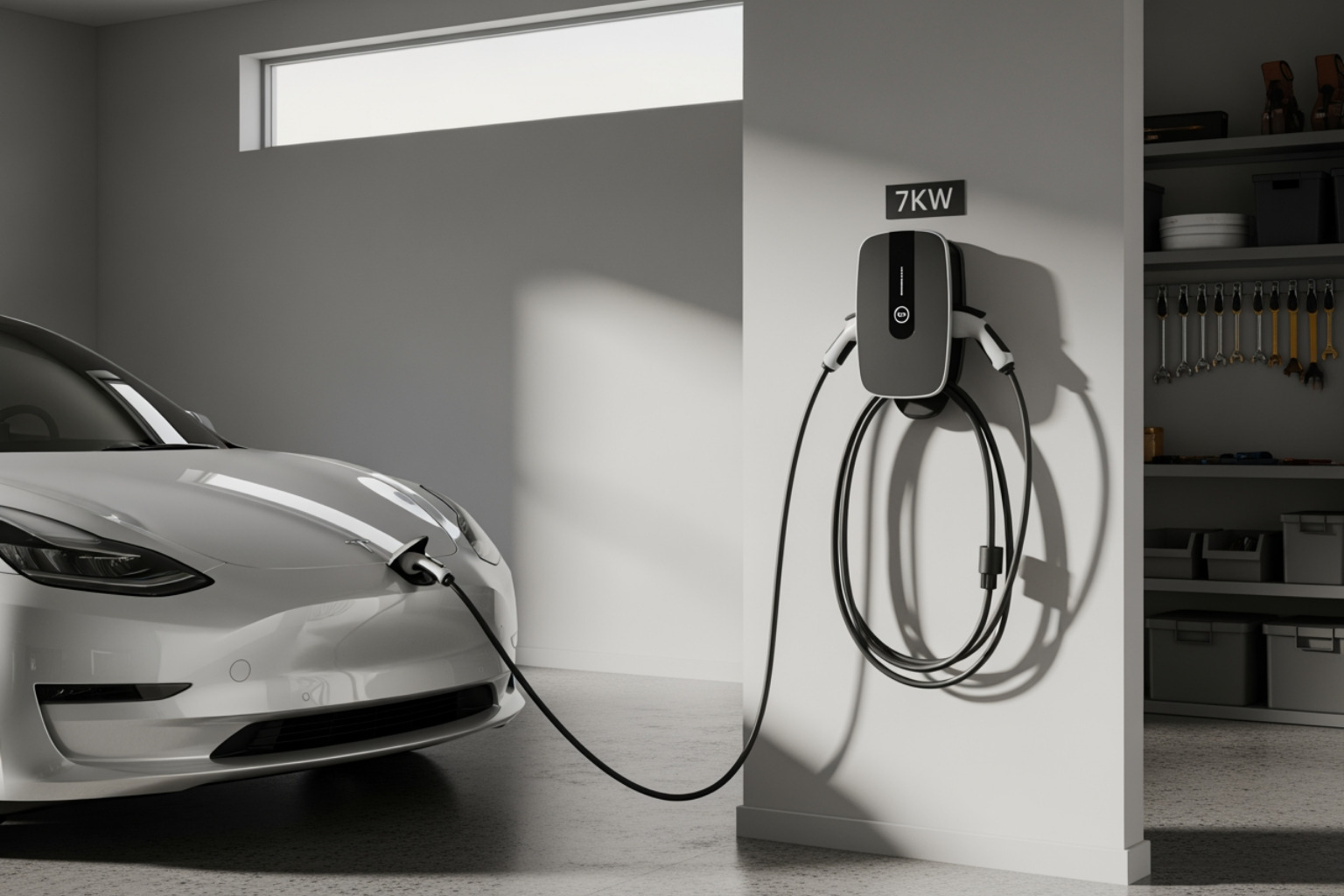
A 7kW home charging point is a Level 2 electric vehicle charger that runs on a 240-volt circuit and adds about 25-30 miles of range per hour to most EVs. It’s the most common choice for residential charging because it fully charges most vehicles overnight without requiring expensive electrical upgrades.
Quick facts about 7kW home chargers:
- Charging speed: 25-30 miles of range per hour (full charge in 8-12 hours for most EVs)
- Power requirement: Dedicated 240V circuit (like your dryer or oven)
- Installation cost: Typically $800-$2,500 including labor, permits, and equipment
- Compatibility: Works with nearly all modern EVs using standard J1772 or NACS connectors
- Best for: Daily home charging, overnight use, single-family homes with off-street parking
If you’re thinking about getting an electric vehicle or just brought one home, you’ve probably realized that charging it with a regular wall outlet takes forever. I’ve had plenty of Denver homeowners tell me they plugged their new EV into a standard 120V outlet and were shocked to find it barely gained any charge overnight.
That’s where a 7kW charger comes in. It’s what we call Level 2 charging. Instead of adding just a few miles of range per hour, you wake up to a fully charged car every morning. For most people, it’s the sweet spot between speed, cost, and what your home’s electrical system can handle without major upgrades.
In this guide, I’ll walk you through everything you need to know about 7kW home charging points. We’ll cover how they work, what installation involves, how much it costs, and whether it’s the right fit for your home and vehicle. No jargon, no sales pitch—just straight answers from someone who’s installed hundreds of these in the Denver area.
What a 7kW Charger Is (and Isn’t)
When we talk about a 7kW home charging point, we’re specifically referring to a Level 2 EV charger. This is the gold standard for home charging, offering a significant upgrade from the basic Level 1 charging you get from a standard wall outlet.
Here’s the simple breakdown:
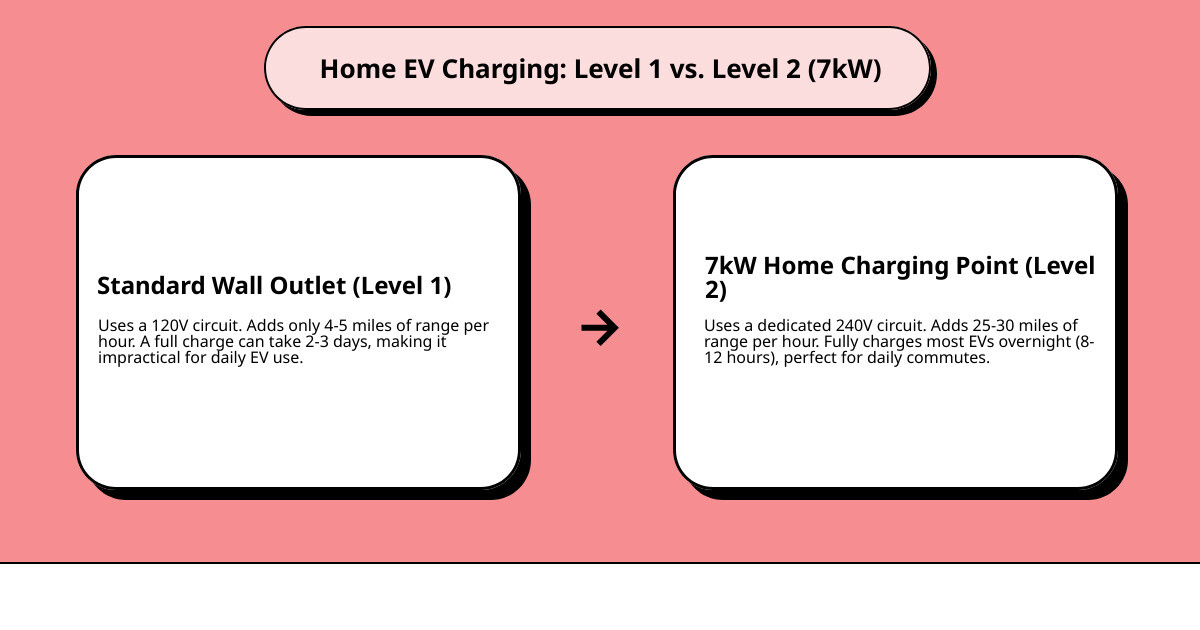
- Level 1 Charging: This is like plugging your phone into a regular wall socket. It uses a standard 120-volt AC outlet and provides about 1 kilowatt (kW) of power. It’s super slow, adding only 3-5 miles of range per hour. While it works in a pinch, it can take two to three days to fully charge a modern EV from empty. We often see folks in older Denver homes using these, but they quickly realize it’s not practical for daily driving.
- Level 2 Charging (7kW Home Charging Point): This is where the magic happens for most homeowners. A Level 2 charger uses a 240-volt AC circuit, similar to what your electric dryer or oven uses. This boost in voltage allows it to deliver much more power—typically between 6 kW and 19 kW. A 7kW home charging point falls right in this sweet spot. It’s fast enough to fully charge most EVs overnight, making it incredibly convenient.
- Level 3 Charging (DC Fast Charging): You’ll find these at public charging stations, often along major highways. They use direct current (DC) power and can deliver anywhere from 50 kW to 350 kW, charging an EV to 80% in as little as 20-30 minutes. While incredibly fast, Level 3 chargers are far too powerful and expensive for residential installation. They require specialized infrastructure that most homes simply don’t have.
So, a 7kW home charging point is a Level 2 AC charger. The “AC” means Alternating Current, which is what comes out of your home’s electrical outlets. Your EV has an “onboard charger” that converts this AC power into Direct Current (DC) to store in its battery. Public fast chargers (Level 3) bypass this onboard conversion, sending DC power directly to the battery, which is why they’re so much faster.
One important safety rule we always follow in electrical work is the “80% rule” for continuous loads. What this means for your EV charger is that it can only operate continuously at 80% of the circuit’s capacity. So, if we install a 7kW home charging point on a dedicated 40-amp circuit, it will actually deliver about 7.7 kW, but for continuous charging, it will safely operate at 32 amps, which is about 7.7 kW. It’s a small detail, but it ensures your electrical system stays safe and performs reliably.
For a deeper dive into the different charging levels, we’ve put together A complete guide to EV charger levels.
How fast will it charge my car?
This is usually the first question I get from folks in Castle Rock, Highlands Ranch, or anywhere in the Denver Metro area. The simple answer is that a 7kW home charging point can add approximately 25-30 miles of range per hour to your electric vehicle. For most EVs, this means you can expect a full charge overnight, typically within 8 to 12 hours.
For example, a common EV like a Tesla Model Y, which has a larger battery, can take around 12 hours to fully charge using a 7kW home charger. Compare that to a standard 120V wall outlet that would take days, and you can see why a 7kW charger is such a game-changer. You plug in when you get home, sleep soundly, and wake up to a fully fueled vehicle ready for your commute to Denver or a weekend trip to the mountains.
While your 7kW home charging point can deliver that much power, the actual charging speed can also depend on your car’s “onboard charger.” Think of your car’s onboard charger as a funnel. Even if you have a powerful hose (your 7kW home charger), the water can only flow as fast as the funnel allows. So, if your EV’s onboard charger can only accept 6.6 kW, that’s the maximum speed you’ll get, even if your home charger is capable of more. Most modern EVs can handle 7kW or more, but it’s always a good idea to check your vehicle’s manual or manufacturer specifications.
Will it work with my electric vehicle?
Good news here! A 7kW home charging point is compatible with virtually all modern electric vehicles. The vast majority of EVs sold in North America use a standard connector called J1772. This is often referred to as the “J-plug.” Chargers come with this connector built-in.
Tesla, for a long time, used its own proprietary connector, but they’ve recently introduced the North American Charging Standard (NACS) connector, which is now being adopted by many other automakers. If you have a Tesla, you might have a charger with the NACS plug, or you can use an adapter with a J1772 charger. If you have a non-Tesla EV, you’ll use a J1772 charger. The good news is that most chargers now come with options or adapters to ensure compatibility.
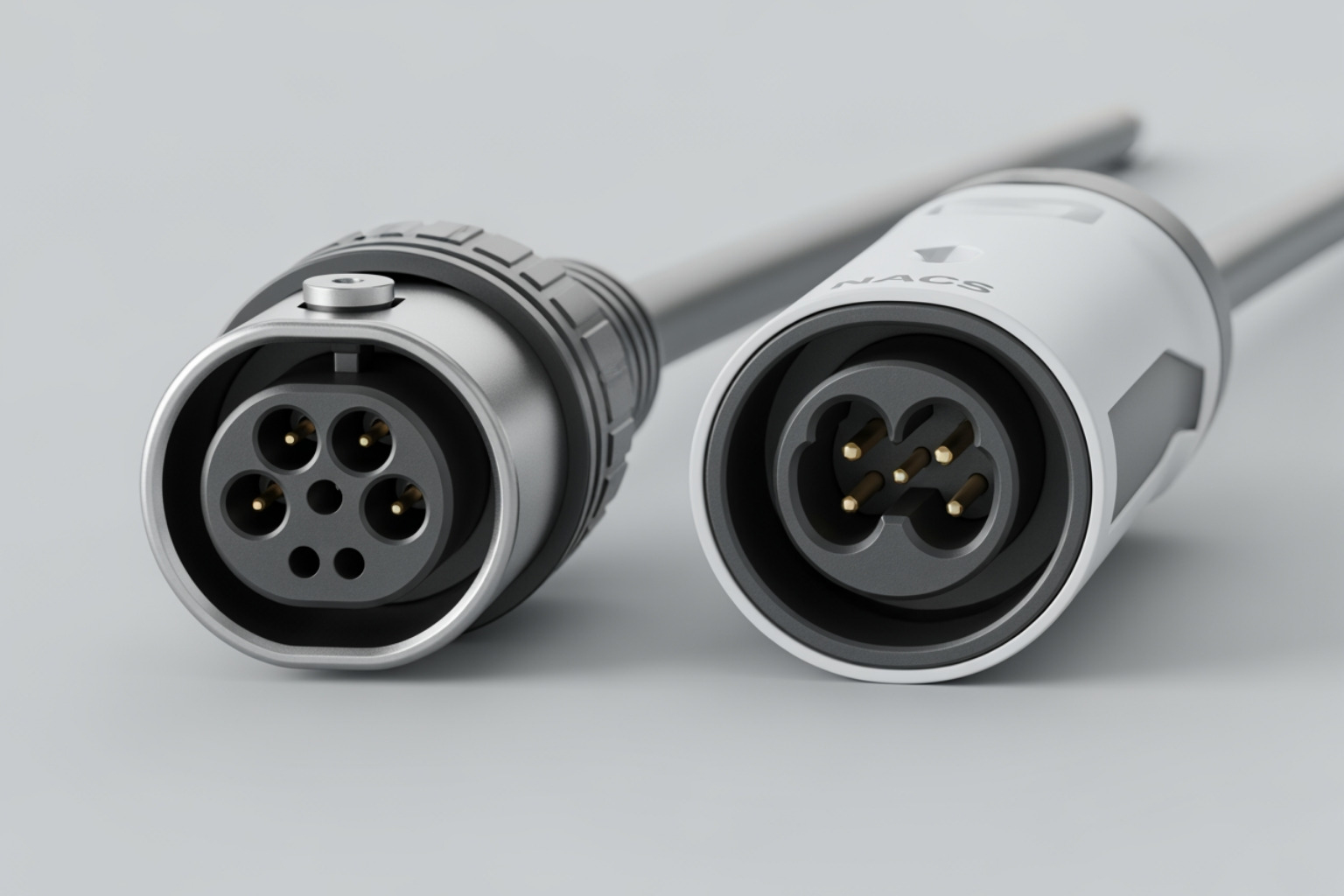
So, whether you drive a Chevy Bolt in Centennial, a Ford Mustang Mach-E in Parker, or a Tesla in Lone Tree, a 7kW home charging point will almost certainly work for you. It’s designed to be a universal solution for convenient home charging.
Getting a 7kW Home Charging Point Installed: What’s Involved?
Installing a 7kW home charging point isn’t just about plugging it into an outlet – it’s a significant electrical upgrade that needs to be done right, especially for safety and reliability. Here at Harmony Electric, we handle the entire process from start to finish, ensuring everything is up to code and perfectly suited for your home in the Denver Metro area.
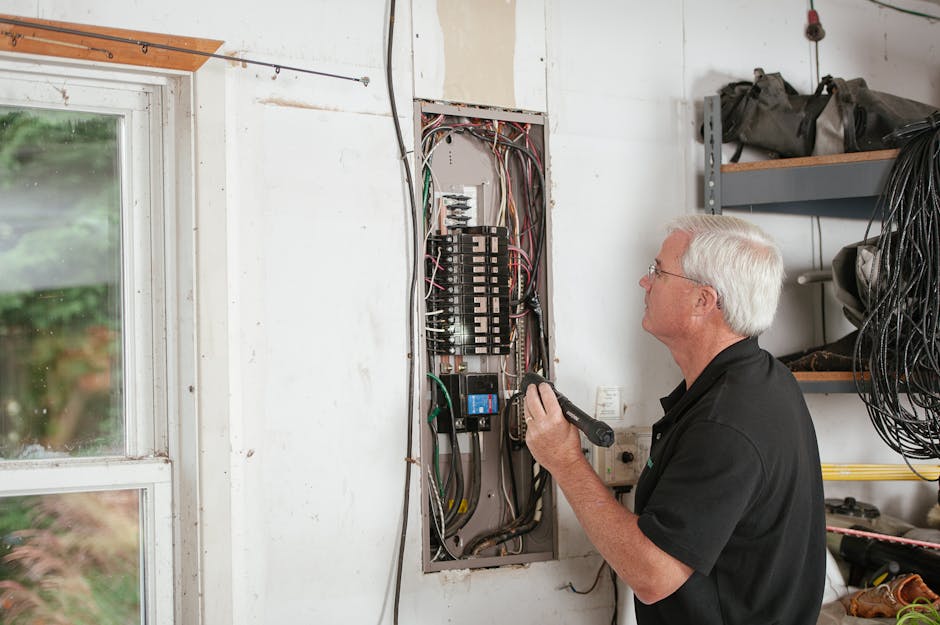
The first step is always a thorough assessment of your home’s electrical system. This is crucial because a 7kW home charging point requires a dedicated 240-volt circuit. This isn’t something you can just tap into an existing line; it needs its own connection directly from your main electrical panel. We’ll look at your panel’s capacity, where the charger will be located, and the best way to safely run the new wiring.
Safety is our absolute top priority. Working with 240-volt electricity is serious business, and improper installation can lead to fire hazards, electrical shocks, and damage to your home’s electrical system or your vehicle. That’s why hiring a licensed electrician is non-negotiable. We’re trained to understand the complex electrical codes (like NEC Article 625, which specifically covers EV charger installations), pull the necessary permits in your city or county (whether it’s Denver, Castle Pines, or Aurora), and ensure every connection is secure and safe.
For more details on how we approach every installation, you can learn about our professional installation process.
Will I need to upgrade my electrical system?
This is a common concern for many homeowners, especially those in older homes around Denver, Castle Rock, or Highlands Ranch. The need for an electrical system upgrade often depends on your existing electrical panel’s capacity and how much power your home already uses.
Think of your electrical panel as the brain of your home’s electrical system. It has a certain maximum capacity, measured in amps (like 100-amp or 200-amp service). When we install a 7kW home charging point, we perform a “load calculation.” This is a fancy way of saying we figure out how much power your home could use if everything were running at once (AC, oven, dryer, lights, etc.) and then see if adding the charger will push you over that limit.
If your panel is older, smaller, or already heavily loaded, we might find that adding a 7kW home charging point would exceed its safe capacity. In these cases, a panel upgrade might be necessary. This involves replacing your existing electrical panel with a new, higher-capacity one. It’s a bigger job, but it ensures your home’s electrical system can safely handle all your modern appliances, including your EV charger.
Sometimes, a full panel upgrade isn’t strictly necessary, or it might be more than you want to invest right away. In certain situations, we can explore “load-shedding devices.” These smart devices monitor your home’s total power usage and can temporarily reduce the power going to your EV charger if other high-demand appliances (like your oven or AC) kick on. It’s a clever way to manage your power without always needing a full panel replacement, though local codes and your specific situation will dictate if this is an option.
What are the installation costs for a 7kW home charging point?
The cost to install a 7kW home charging point can vary, but generally, homeowners in the Denver Metro area can expect to pay anywhere from $800 to $2,500 for most residential installations. This range covers a few key components:
- Charger Unit Cost: The actual charging unit itself typically costs between $400 and $1,200. There are many brands and models out there, each with different features, but they all deliver that 7kW (or close to it) Level 2 charging.
- Labor and Installation Fees: This is where the bulk of the cost comes in, usually ranging from $400 to $1,300 or more. This covers the electrician’s time, running the new 240V dedicated circuit from your panel to the charger’s location, installing the necessary wiring and conduit, and mounting the unit. Factors like the distance between your electrical panel and the charger, the complexity of routing the wiring (e.g., through finished walls versus an unfinished garage), and whether we need to dig a trench for outdoor installation will affect this cost.
- Permitting Costs: In cities like Denver, Castle Rock, Centennial, and Parker, permits are always required for electrical work like this. These fees typically range from $50 to $300 and ensure that the installation meets local safety codes and is inspected by the city. We handle all the permitting for you.
- Potential Panel Upgrade Costs: As we discussed, if your electrical panel needs an upgrade to safely support the new charger, that’s an additional cost, usually between $1,000 and $3,000. This is the main reason why some installations cost more than others.
At Harmony Electric, we believe in transparent pricing. We’ll always provide a detailed quote after a thorough on-site assessment, so you know exactly what to expect. You can find more information about our approach to EV Charger Installation Pricing.
Key Features to Look For in a 7kW Charger
Once you’ve decided a 7kW home charging point is right for you, the next step is choosing the right model. There are a few key features that can really improve your charging experience.
First up is the choice between a tethered or untethered charger:
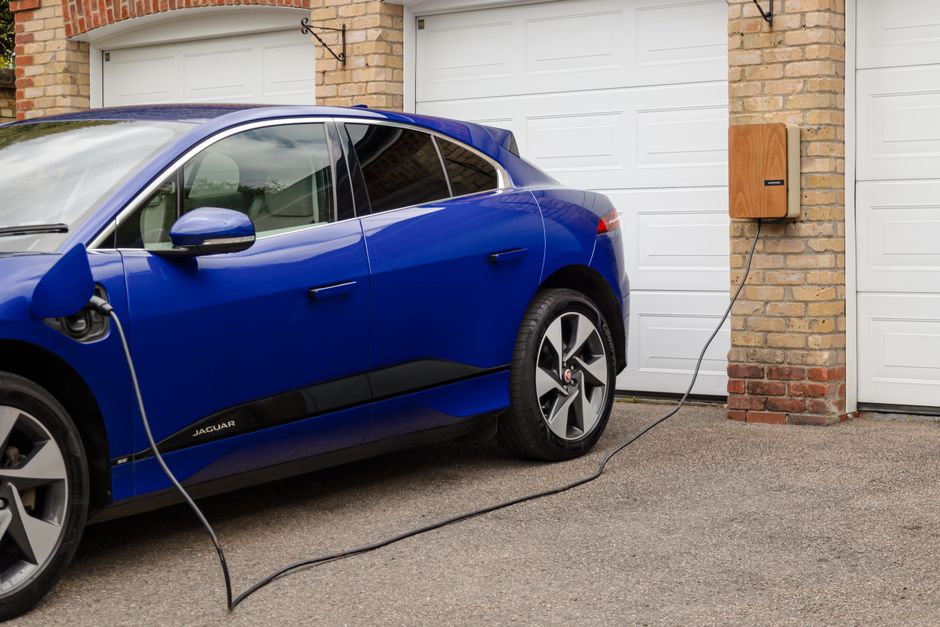
- Tethered Chargers: These come with a charging cable permanently attached to the unit. The main benefit here is convenience – you just grab the cable and plug it into your car. You don’t have to worry about bringing your car’s charging cable out of the trunk every time. The downside is that you’re stuck with that specific cable length and connector type.
- Untethered Chargers: These units have a universal port where you plug in your own charging cable. This offers more flexibility. If you have a longer cable or need different connector types (e.g., an adapter for a friend’s EV), you can easily swap them out. You also might prefer an untethered unit if you often take your charging cable with you on the go.
Another feature we’re seeing more and more of in the Denver area is solar panel integration. If you have solar panels on your home, some 7kW home charging point models can be set up to prioritize charging your EV using only excess solar energy. This means you’re powering your car with clean, free energy directly from your roof! Even if you don’t have solar panels yet, choosing a charger that’s “solar compatible” is a great way to future-proof your home. It ensures that if you decide to add solar later, your charging setup will seamlessly integrate.
What smart features come with a 7kW home charging point?
Modern 7kW home charging point units are much more than just power outlets; they’re smart devices designed to make your life easier and save you money. Here are some of the smart features we often recommend looking for:
- App Control and Wi-Fi Connectivity: Most smart chargers connect to your home Wi-Fi network. This allows you to control and monitor your charging sessions from a smartphone app, whether you’re in your living room in Castle Pines or away on vacation. You can start or stop charging, check your car’s charge status, and get notifications.
- Scheduling for Off-Peak Electricity Rates: This is a big one for saving money. Xcel Energy, our local utility here in Colorado, often has time-of-use rates, meaning electricity costs less during certain “off-peak” hours (usually overnight). With a smart charger, you can easily schedule your EV to charge only during these cheaper times, significantly reducing your electricity bill.
- Energy Monitoring and Cost Tracking: The app will typically show you how much electricity your EV is consuming and, if you’ve entered your electricity rates, how much each charge is costing you. This helps you track your energy usage and understand your savings compared to gasoline.
- Load Balancing: This is a fantastic feature, especially for homes with older or fully loaded electrical panels. Load balancing (sometimes called “load management”) allows the charger to communicate with your home’s main electrical panel. If your home starts drawing a lot of power for other appliances, the charger will automatically reduce the charging speed to prevent overloading your system. This can sometimes help avoid the need for a costly panel upgrade, giving you peace of mind that your home’s electricity is always managed safely.
How does it compare to faster 11kW or 22kW chargers?
We’ve talked about how a 7kW home charging point is the sweet spot for most homeowners, and here’s why it often beats out faster chargers like 11kW or 22kW for residential use.
The main difference comes down to your home’s electrical supply:
- Single-Phase vs. Three-Phase Power: Most homes in the United States, including those in Denver, Highlands Ranch, and Lone Tree, are built with a single-phase electrical supply. This means the power comes into your home through one main line, providing enough juice for all your standard appliances and a 7kW home charging point. Faster chargers, especially 22kW units, typically require a three-phase electrical supply. This is common in commercial buildings or industrial settings but very rare in residential homes.
- The High Cost of Upgrading to Three-Phase: If you wanted to install a 22kW charger, you’d almost certainly need to upgrade your home to a three-phase electrical supply. This is an incredibly expensive and complex undertaking. While specific costs for the Denver area would require a detailed assessment, we can look at examples from other regions to understand the magnitude. For instance, in the UK, upgrading a residential fuse to three-phase can start from £1,500 (around $1,900 USD) but can easily average between £3,500 and £5,500 (around $4,500 – $7,000 USD). In complex cases, it could even reach up to £15,000 (around $19,000 USD). While this is a UK example, it gives you an idea of the significant investment involved in such an upgrade. You can see an example of fuse upgrade costs to understand the scale.
- Is the extra speed necessary? For most EV owners, a 7kW home charging point provides more than enough speed. It can fully charge your car overnight, which is when most vehicles are parked anyway. The added expense and complexity of a three-phase upgrade for a faster charger rarely makes sense for a residential setting. Your car’s onboard charger might not even be able to accept 22kW AC power, meaning you’d be paying for speed you can’t use.
So, while 11kW or 22kW chargers sound impressive, a 7kW home charging point is almost always the more practical, cost-effective, and perfectly adequate solution for home charging in our service areas.
Frequently Asked Questions about 7kW Chargers
Are there any government grants or incentives available?
Absolutely! We always encourage our clients in Denver, Centennial, and surrounding communities to look into available incentives, as they can significantly reduce the cost of installing a 7kW home charging point.
- Federal Tax Credits: The federal government has reinstated a tax credit under the Inflation Reduction Act. This allows you to claim 30% of the total costs for electrical upgrades, wiring, and the charger itself, up to a cap of $1,000. This is a great way to offset some of the installation expenses, but it’s important to note that this credit is set to expire on June 30, 2026. So, if you’re thinking about installing a charger, now is a good time to act.
- Local Utility Rebates in Colorado: Here in Colorado, utilities like Xcel Energy often offer their own rebates for EV charger installations. For example, Xcel Energy has offered rebates of up to $1,300 for residential Level 2 EV charging equipment. These programs can change, so we always recommend checking Xcel Energy’s website or contacting your specific utility provider in your area (whether you’re in Aurora, Castle Pines, or Parker) to see what’s currently available.
We can help you understand the requirements for these incentives, but it’s always best to consult with a tax professional or your utility provider for the most up-to-date and personalized information.
What is the typical lifespan and warranty?
A quality 7kW home charging point is a durable piece of equipment designed to last. You can generally expect a well-installed charger to have a lifespan of 10 years or more.
When it comes to warranties, most manufacturers offer a standard warranty ranging from 3 to 5 years. This typically covers defects in materials and workmanship for the charger unit itself. It’s always a good idea to read the fine print to understand what’s covered.
Here at Harmony Electric, we stand behind our work. That’s why we offer a lifetime workmanship guarantee on all our EV charger installations. This means if there’s ever an issue with how we installed your 7kW home charging point, we’ll fix it. We also provide a 3-year material warranty on the components we use, giving you extra peace of mind. We believe in prompt, professional, and high-quality service from the moment we start working in your Denver, Castle Rock, or Lone Tree home.
Can I install an EV charger myself?
I know it can be tempting to try and save a few bucks by doing things yourself, but when it comes to installing a 7kW home charging point, we strongly advise against a DIY approach. Honestly, please don’t. Working inside an energized electrical panel and with 240-volt circuits is incredibly dangerous.
Here’s why professional installation is crucial:
- Safety Risks: This isn’t like changing a lightbulb. Improper wiring can lead to severe electrical shock, fire hazards, or damage to your home’s electrical system and your expensive EV. Your safety and the safety of your family are paramount.
- Code Compliance and Permitting: In the Denver Metro area, including cities like Centennial, Castle Pines, and Aurora, a permit is always required for EV charger installation. Licensed electricians like us know the local electrical codes (such as NEC Article 625) inside and out and ensure your installation meets all safety standards. Without a permit, your installation could be deemed unsafe or illegal.
- Voiding Warranties and Insurance: Many charger manufacturers require professional installation for their warranty to be valid. More importantly, if an improperly installed charger causes an electrical fire or other damage, your home insurance policy might not cover it if the work wasn’t permitted and done by a licensed professional.
- The Value of Professional Expertise: We perform a load calculation to ensure your panel can handle the new demand, select the correct wiring and circuit breakers, and position the charger in the safest and most convenient location. We’ve seen it all in Denver homes, from straightforward installations to complex scenarios requiring creative solutions.
Trying to do it yourself can end up costing you more in the long run, not just in potential repairs but in safety and peace of mind. For a reliable and safe setup, trust the experts. If you’re curious about the process, you can read more about Installing EV Charger at Home.
So, Is a 7kW Charger the Right Choice for Your Home?
After walking through all the ins and outs, it’s clear that a 7kW home charging point truly hits the sweet spot for the vast majority of electric vehicle owners in the Denver Metro area. It offers a fantastic balance of speed, cost-effectiveness, and compatibility with most homes’ existing electrical systems.
- Plenty of Speed: You’ll get 25-30 miles of range per hour, ensuring your EV is fully charged overnight, every night. No more range anxiety or waiting around at public chargers.
- Cost-Effective: It’s significantly cheaper to install and operate than higher-powered chargers that require costly electrical upgrades. Plus, smart features let you save money by charging during off-peak hours.
- Universal Compatibility: Works with almost any EV on the road today, whether you have a J1772 or NACS connector.
- Reliable and Safe: When professionally installed, a 7kW home charging point is a safe, dependable addition to your home.
For homeowners in Denver, Castle Rock, Centennial, Highlands Ranch, Parker, and Lone Tree, a 7kW home charging point is the go-to solution. It’s the practical choice that makes EV ownership truly convenient and enjoyable.
The final, crucial step to enjoying your new 7kW home charging point is professional installation. At Harmony Electric, we’re committed to providing prompt, professional, and high-quality service. We handle everything from the initial assessment and load calculation to pulling permits and ensuring your installation is safe, code-compliant, and perfectly suited for your home. We even offer a lifetime workmanship guarantee on our EV charger installations, so you can rest assured it’s done right the first time.
Ready to make home EV charging a reality? Learn more about our EV charger installation services and let us help you power up your electric future.