Is Your Home’s Electrical Service Keeping Up With Modern Life?
An electric service upgrade is one of the most impactful improvements you can make to your home — and one of the most misunderstood.
Here’s the short answer most people are looking for:
What is an electric service upgrade, and do you need one?
| Situation | What It Means |
|---|---|
| Your home has a 100-amp panel | Likely undersized for modern loads |
| You want to add an EV charger or heat pump | May require a service upgrade first |
| Breakers trip frequently or lights flicker | Signs your panel is at or over capacity |
| Your home was built before 1985 | Worth having a licensed electrician evaluate |
| You want solar, a hot tub, or a home addition | Almost certainly needs more amperage |
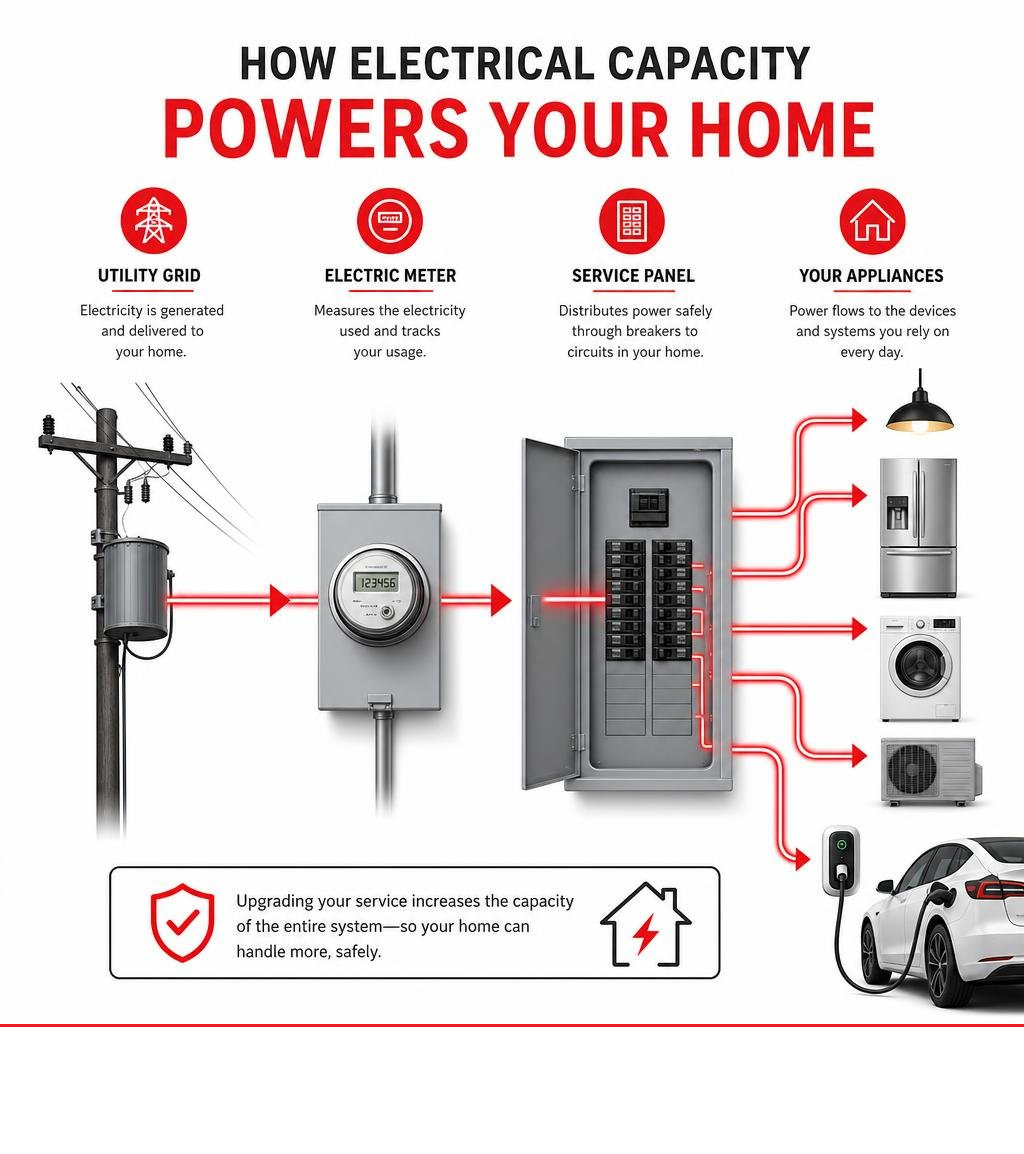
A service upgrade means your home gets more electrical capacity — from the utility line at the street, through the meter, all the way to your breaker box. Most older Denver homes run on 100-amp service. That was fine in 1975 with a gas furnace and no air conditioning. It’s a different story now.
Think about what’s on your wish list: a Level 2 EV charger, a heat pump, maybe a hot tub in the backyard. Each one draws serious power. Stack a few together on a 100-amp panel and you’ve got a problem.
Most upgrades land between $2,000 and $5,000 and can be completed in a single day. Power is typically off for about four to six hours. It’s a manageable project — and for a lot of Denver homeowners, it’s overdue.
I’ve walked through hundreds of homes around here, and the story is usually the same: the house has aged into modern life faster than its electrical system has. That’s what this guide is here to help you sort out.
Electric service upgrade word list:
What is an Electric Service Upgrade?
When we talk about an electric service upgrade, we are talking about increasing the overall volume of electricity that can safely flow into your home. Think of your electrical system like the plumbing in your house. If you have a small half-inch water pipe coming from the street, you can only run so many showers at once before the pressure drops to a trickle.
Amperage is the electrical equivalent of water pressure and pipe size combined. It measures the volume of electrical current. Your utility meter and the service mast—the metal pipe on the exterior of your house that feeds the overhead wires into your meter—are rated for a specific amount of this current.
If you are curious about how your current setup measures up, you can read more about Is It Time for a Sparking New Panel? Everything About Electrical Service Upgrades to see how these components work together.
To safely increase your electrical capacity, we have to make sure every single part of this pathway is rated to handle the higher electrical flow. It is not just about making things work; it is about making sure they do not overheat and cause a fire. For a deeper dive into why this matters, you can check out our guide on Understanding Electrical Panel Upgrades: When and Why You Need One.
Panel Upgrade vs. Electric Service Upgrade
It is very common to hear these two terms used interchangeably, but they actually refer to different scopes of work.
A panel upgrade is primarily an indoor job. It involves taking out your old, crowded breaker box and installing a brand-new one with more space for circuits and modern safety features. If you want to see what a complete swap looks like, take a look at Out with the Old, In with the New: A Comprehensive Look at Electrical Panel Upgrades.
An electric service upgrade is a much larger project. It includes the panel upgrade, but it also goes all the way upstream to the utility connection. This means we replace:
- The meter socket on the outside of your home
- The heavy service entrance conductors running from the utility drop to your meter
- The grounding system, which we bring up to modern building codes
This process requires close coordination with your local utility company to disconnect the main power lines, let us do our work, get a local city inspection, and then hook everything back up. If you are wondering if your home is a good candidate for this, read our breakdown on From 100 to 200 Amps: Is Your Home Ready for a Power Boost? and explore the benefits of Unplugging the Mystery: Everything About 200 Amp Electrical Service.
Signs Your Denver Home Needs More Power
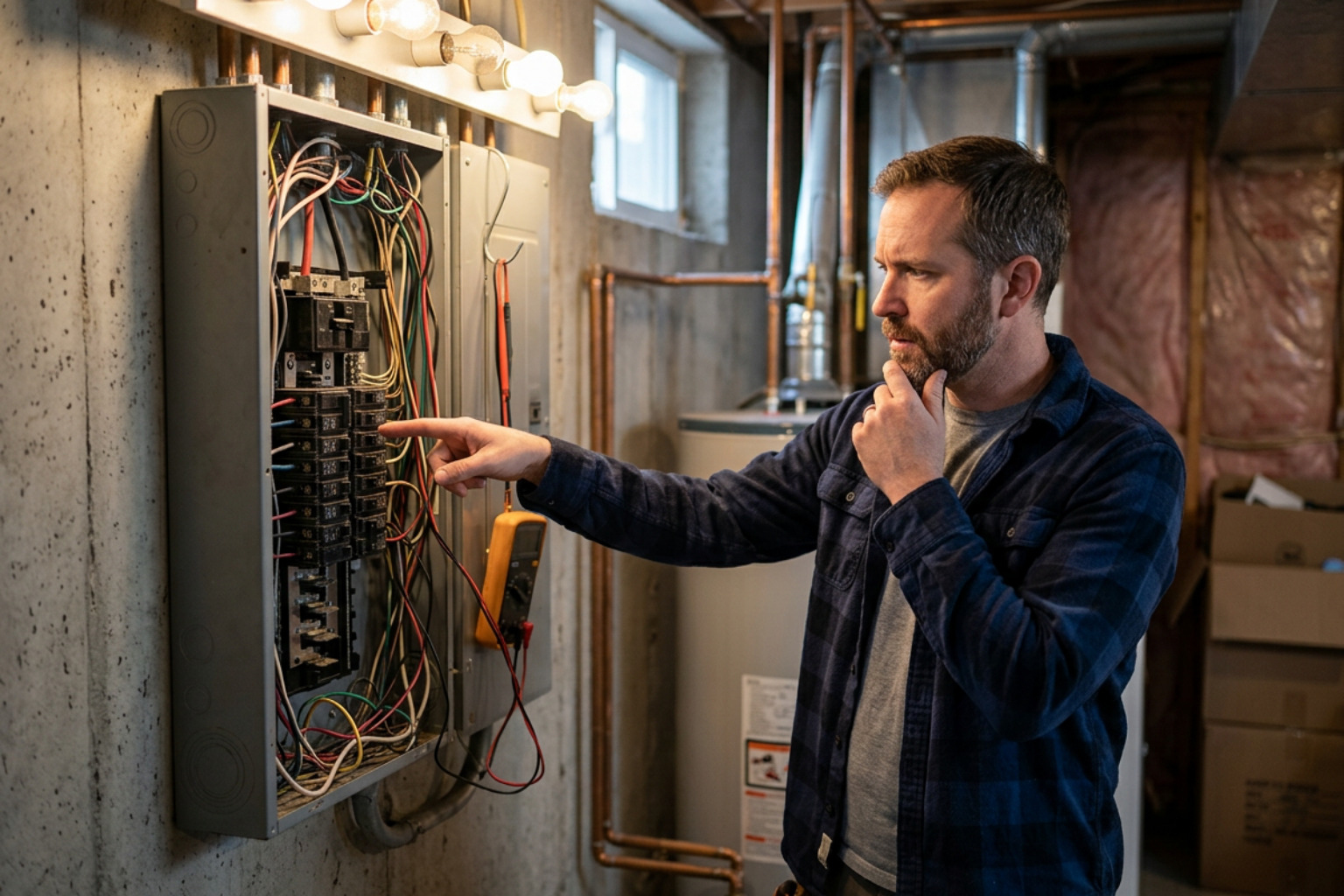
If your home’s electrical system is struggling, it will usually try to tell you. The most common warning signs we see in Denver homes include flickering lights when the air conditioning kicks on, or breakers that trip every time you try to run the microwave and a hair dryer at the same time.
If you are noticing these issues, you can learn more about the common Signs Your Electrical Panel is Outdated to help diagnose the problem.
Many older homes in the Denver Metro Area are still operating on a 100-amp limit. While this was plenty of power decades ago, it simply cannot keep up with the demands of modern electronics, multi-zone HVAC systems, and high-draw kitchen appliances. To help you visualize the difference, here is how different capacities compare:
| Amperage Rating | Standard Use Case | Modern Limitations |
|---|---|---|
| 100 Amps | Small homes, gas heating/appliances, basic electrical needs | Cannot safely support EV chargers, hot tubs, or heat pumps simultaneously |
| 200 Amps | Modern standard for single-family homes | Plenty of room for electrification, EV charging, and central AC |
| 400 Amps | Large homes, heavy electric heating, workshops, or multiple EV chargers | Ideal for complete electrification without any power management worries |
If you want to know more about the local signs of an overloaded system, check out our article on Is Your Electrical Panel Outdated? Signs You Need an Upgrade in Denver.
Outdated Panels and Safety Recalls
Aside from capacity limitations, some older homes in our area have panels that are active safety hazards. Brands like Federal Pacific Electric (FPE) Stab-Lok and Zinsco were installed in millions of homes from the 1950s through the 1980s.
Over the years, testing has shown that these breakers have a remarkably high failure rate. Instead of tripping when a circuit overloads, they can lock up, allowing electricity to continue flowing until the wires melt or catch fire.
Many home insurance companies in Colorado will no longer write or renew policies for homes that still have these recalled panels installed. Replacing them is not just a matter of convenience; it is a critical safety step. You can read the full details on these hazards in our guide to the Electrical Panel Recall: FPE, Zinsco, Aluminum.
Powering the Future: Electrification, EV Chargers, and Hot Tubs

As we move toward a cleaner energy future, our homes are doing more heavy lifting than ever before. Traditional gas-burning appliances are being replaced with highly efficient electric heat pumps, induction cooktops, and electric water heaters.
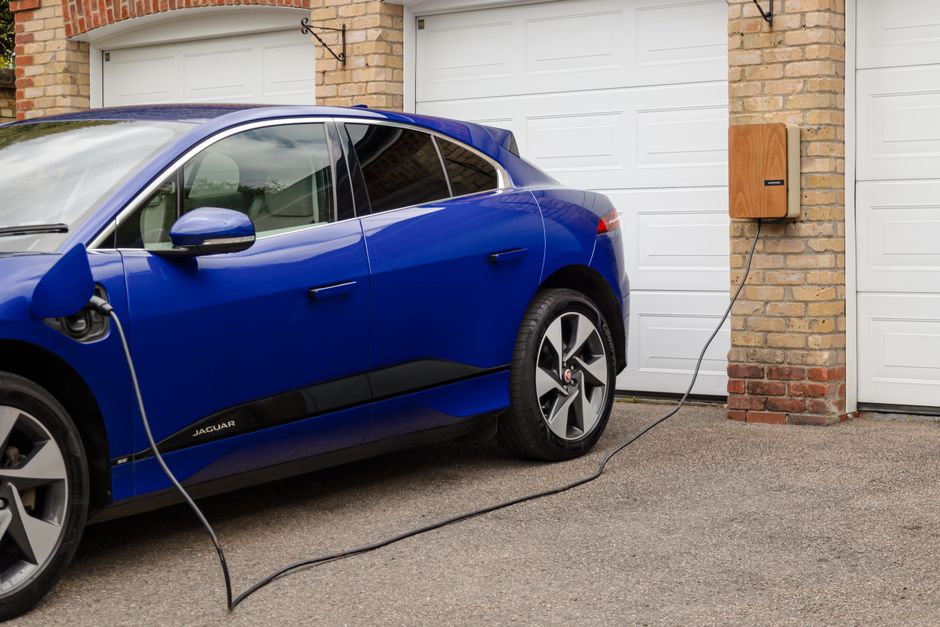
When you add a Level 2 EV charger to your garage, you are introducing an appliance that can draw as much power as an entire small house did fifty years ago. Preparing your home for these changes means looking at your electrical foundation first. Without a robust service panel, you simply will not have the physical capacity to connect these clean energy solutions.
Preparing for an Electric Service Upgrade with High-Load Appliances
Before we install any high-draw appliance, we always perform a detailed load calculation. This formula looks at the square footage of your home, your existing appliances, and your planned additions to determine exactly how much headroom your current panel has.
Hot tubs require precise load calculations and dedicated sub-panels. Our deep experience working with custom spa installations means we understand the specific pull-draw of the latest models, ensuring your home’s panel can handle the new heat load without tripping breakers.
If you are planning major upgrades or building a large addition, you might even want to look beyond the standard 200-amp setup. You can read our guide on Thinking Big: Your Guide to Upgrading to 300 or 400 Amp Service to see if a larger upgrade makes sense for your property.
The Cost, Timeline, and Utility Process
A typical residential electric service upgrade in the Denver Metro Area costs between $2,000 and $5,000. The exact price depends on several variables, such as whether your utility lines run overhead or underground, if your meter socket needs to be relocated to meet current codes, and the structural design of your home.
Because this work involves the main power lines coming into your property, it requires coordination with your local utility provider, which is typically Xcel Energy in our service areas. We handle all the permitting, scheduling, and paperwork with the utility to make the process as seamless as possible for you.
We also work closely with local municipal building departments across the Denver Metro Area—including Castle Rock, Castle Pines, Highlands Ranch, Parker, and Lone Tree—to ensure every installation is fully permitted, inspected, and compliant with local electrical codes.
Smart Alternatives: Electrifying Without a Full Upgrade
What if you want to install an EV charger or a heat pump, but a full service upgrade is not in your budget right now? Fortunately, modern technology offers some clever workarounds.
Smart circuit splitters and load-management devices can pause power to your EV charger for a few minutes if your electric clothes dryer and range are running at the same time. This keeps your total home draw below your panel’s physical limit without tripping any breakers.
Another option is installing a smart electrical panel, like a SPAN panel, which allows you to monitor and control your home’s energy consumption in real-time. If you are trying to decide between these options, you can read our comparison of Electrical Panel Replacement vs. Repair to see which path fits your home best.
Frequently Asked Questions About Service Upgrades
How long does a service upgrade take and will my power be off?
A standard residential upgrade is almost always a one-day job. We typically arrive first thing in the morning, and the utility company will disconnect the power shortly after.
Your power will be off for about four to six hours while we replace the exterior meter socket, the panel, and the grounding system. Once our work is complete and the local inspector signs off, the utility company reconnects the lines, and your power is restored before the end of the day.
Are there rebates or tax credits available for upgrading my panel?
Yes! Under the Federal Inflation Reduction Act, homeowners can qualify for the 25C tax credit, which can cover up to 30% of the cost of an electrical panel upgrade (up to $600) if it is done in conjunction with installing qualified energy-efficient equipment like a heat pump.
Additionally, local utilities like Xcel Energy frequently offer rebates for panel upgrades that support home electrification or Level 2 EV charger installations. We can help you navigate these programs to make sure you get all the savings you qualify for.
Can I install a hot tub or EV charger on a 100-amp panel?
It depends entirely on your home’s existing electrical load. If your heating, water heater, range, and clothes dryer all run on natural gas, you might have enough capacity left on a 100-amp panel to safely add a single EV charger.
However, if your home is already mostly electric, a 100-amp panel will not have enough safety margin. Running a load calculation is the only safe way to make this determination before installing any new high-draw equipment.
Conclusion
Upgrading your home’s electrical service is about more than just keeping the lights on. It is about making sure your home is safe, efficient, and fully prepared for the technology of tomorrow.
At Harmony Electric, we believe in doing the job right the first time. Led by Master Electrician Randy Harmuth, we bring clean, high-quality workmanship and honest recommendations to every project we touch across Denver and the surrounding communities.
If you are ready to take the next step and ensure your home has the power it needs, we invite you to Schedule residential services with Harmony Electric today.