Why Getting Hot Tub Wiring Right Is Non-Negotiable
Hot tub wiring refers to the dedicated electrical circuit — typically 240V with a 50-amp GFCI breaker — that safely powers your spa from your home’s main panel to the hot tub’s control box.
Here’s the quick version of what most hot tubs need:
| Requirement | Typical Spec |
|---|---|
| Voltage | 240V (most full-size spas) |
| Breaker size | 40A, 50A, or 60A (check your manual) |
| Wire gauge | 6 AWG (50A) or 4 AWG (60A) copper |
| GFCI protection | Mandatory — built into the disconnect or breaker |
| Disconnect location | At least 5 ft from the tub, within line of sight |
| Burial depth | 18 inches minimum in PVC conduit |
| Wiring type | 4-wire system (2 hots, 1 neutral, 1 ground) |
I’m Randy Harmuth, master electrician and owner of Harmony Electric here in Denver. Over the years, I’ve wired a lot of hot tubs — and I’ve also seen what happens when the job is done wrong.
Most homeowners are surprised to learn how involved this work actually is. It’s not just running a wire from your panel to the backyard. There’s conduit burial, GFCI protection, bonding, code compliance, and a permit process — all of it matters, and all of it affects your safety.
Electricity and water are an unforgiving combination. A well-wired hot tub is a safe one. A poorly wired one is a genuine hazard — to your family, your home, and your insurance coverage.
This guide walks through everything: what you need, how it goes together, and what to watch out for — whether you’re getting ready to hire an electrician or just want to understand what’s involved before you do.
Hot tub wiring terms to learn:
Understanding 120V vs. 240V Power Needs

When you start shopping for a spa in the Denver Metro Area, you’ll usually run into two main types of electrical setups. The first is what we call “Plug-and-Play.” These are 120V models that, as the name suggests, can often plug directly into a standard 15-amp or 20-amp outdoor outlet.
While these are easier to set up initially, they have some limitations. In our colder Colorado winters, a 120V heater struggles to keep the water hot while the jets are running. You can find more details on these power differences in our Hot Tub Amperage Guide.
The second type is a hardwired 240V installation. This is what most full-sized hot tubs require. A 240V system is much more efficient; it heats the water faster and allows the heater and the pumps to run at the same time without losing temperature. Most major manufacturers recommend this setup for a true hydrotherapy experience.
If you’re planning a backyard oasis in Highlands Ranch or Parker, I usually recommend the 240V route. It’s more work upfront, but you won’t be sitting in lukewarm water when the snow starts falling.
Essential Components for Hot Tub Wiring
To get power safely from your house to the water, we use a few specific components. First is a dedicated circuit. This means the breaker in your main panel serves only the hot tub. You can’t share this power with your patio lights or an outdoor kitchen.
The most critical safety component is the GFCI (Ground Fault Circuit Interrupter) breaker. This device is like a hyper-vigilant lifeguard. It monitors the electricity going out and coming back; if it detects even a tiny “leak” (a ground fault), it shuts off the power in milliseconds to prevent a shock. You can learn more about why these are so vital in our post: The Shocking Truth: Everything About Hot Tub GFCI Breakers.
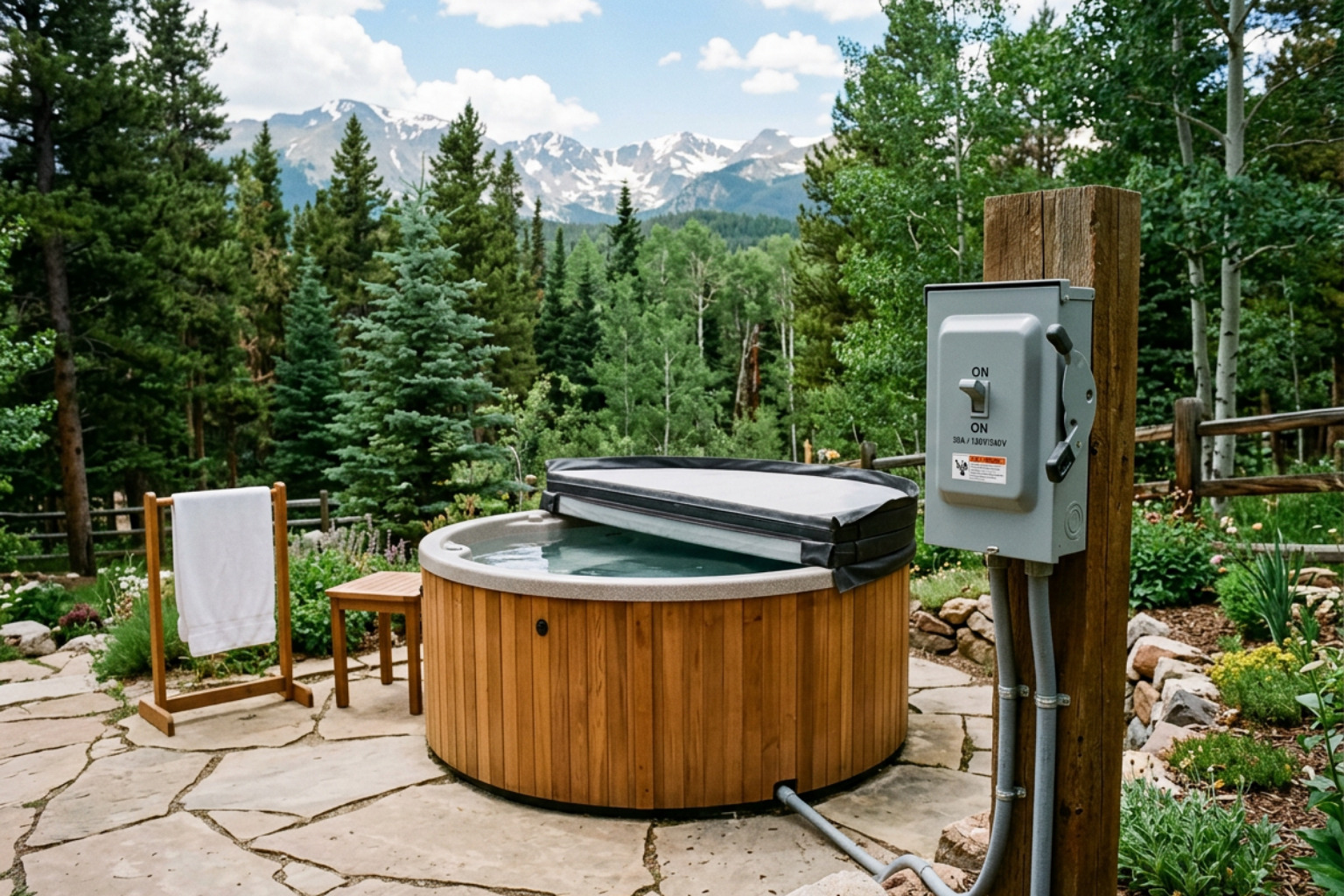
Next, you need an electrical box for the hot tub, often called a “spa pack” or disconnect. National code requires this to be:
- Within line of sight: You have to be able to see it from the tub.
- At least 5 feet away: This prevents someone inside the tub from touching the switch.
- Accessible: It shouldn’t be hidden behind a locked gate or landscaping.
| Hot Tub Rating | Breaker Size | Min. Copper Wire Size |
|---|---|---|
| 30 Amp | 40A | #8 AWG |
| 40 Amp | 50A | #6 AWG |
| 50 Amp | 60A | #4 AWG |
Selecting the Right Wire for Hot Tub Wiring
For the actual “arteries” of the system, we use individual THHN (Thermoplastic High Heat-resistant Nylon-coated) wires. We never use Romex (the white or yellow flat cable used inside walls) for the outdoor portion of the run. Romex isn’t rated for wet locations, even if it’s inside a pipe.
In most Denver homes, a 50-amp tub is the standard. For this, we use 6-gauge copper wire. If the run from your panel to the tub is particularly long—say, over 100 feet—we might need to jump up to 4-gauge wire to account for “voltage drop.” This ensures the equipment at the end of the line gets the full pressure it needs to operate. You can see how this looks in a 50 amp hot tub GFCI wiring diagram.
Step-by-Step Installation and Conduit Rules
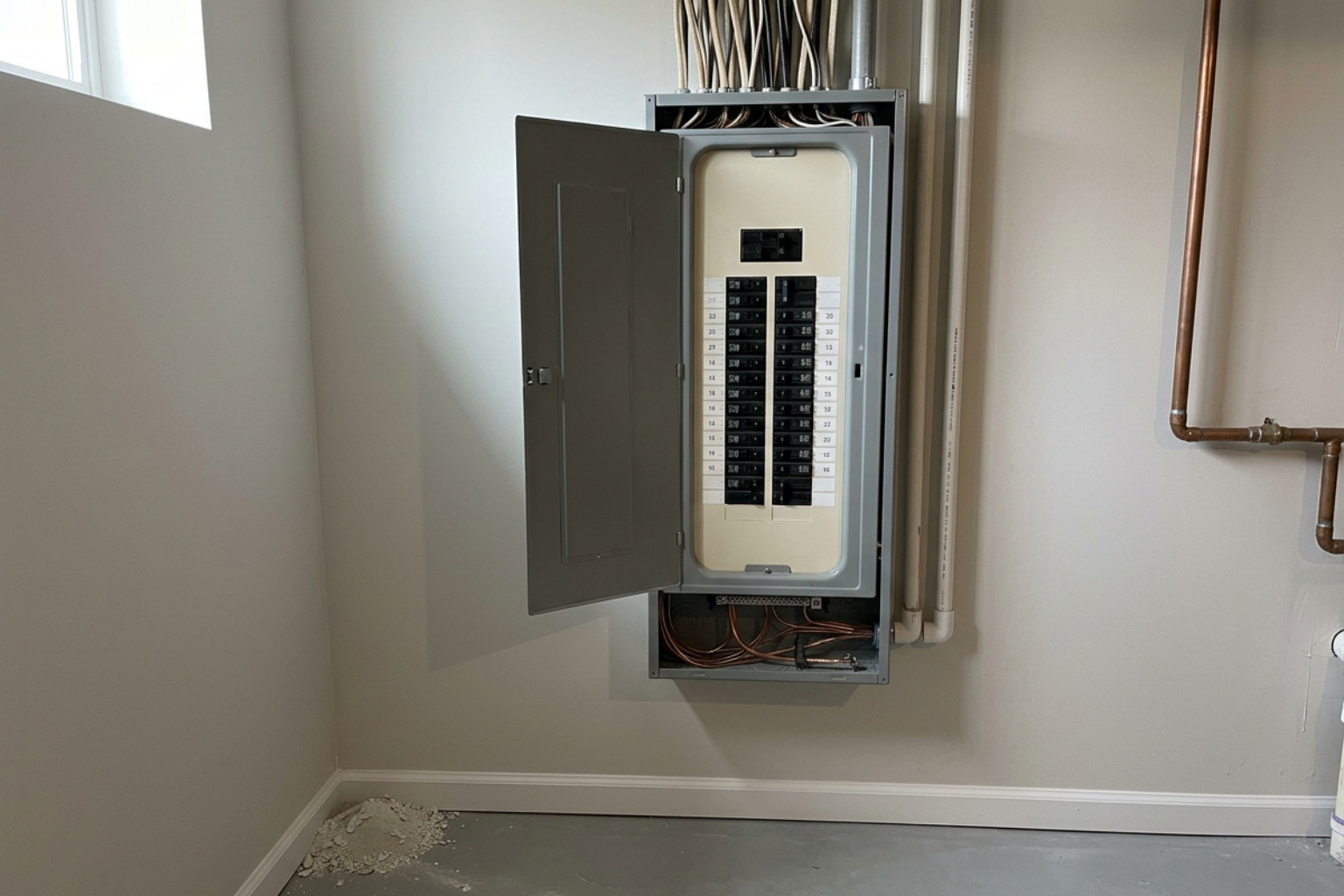
The process starts at your main service panel. We install a double-pole breaker that provides the 240V push. If your panel is older or already full, we might need to discuss an upgrade or a subpanel first. I’ve written a guide on how to safely connect your hot tub breaker that explains this step in detail.
From the panel, we run conduit. In Colorado, we typically use Schedule 40 PVC for underground runs. Code requires this conduit to be buried at least 18 inches deep. This protects the wires from a stray shovel or lawn aerator. We always use weatherproof fittings and “LB” boxes where the conduit enters or exits the house to keep moisture out.
For a visual of how the wires connect from the house to the spa, the manufacturer’s wiring diagram is a great reference for the general layout.
Connecting 3-Wire vs. 4-Wire Hot Tub Wiring Systems
Modern spas almost exclusively use a 4-wire system: two “hot” wires (usually black and red), one white neutral wire, and one green ground wire. Older tubs used 3-wire systems, but those are largely obsolete and less safe because they lack a dedicated neutral.
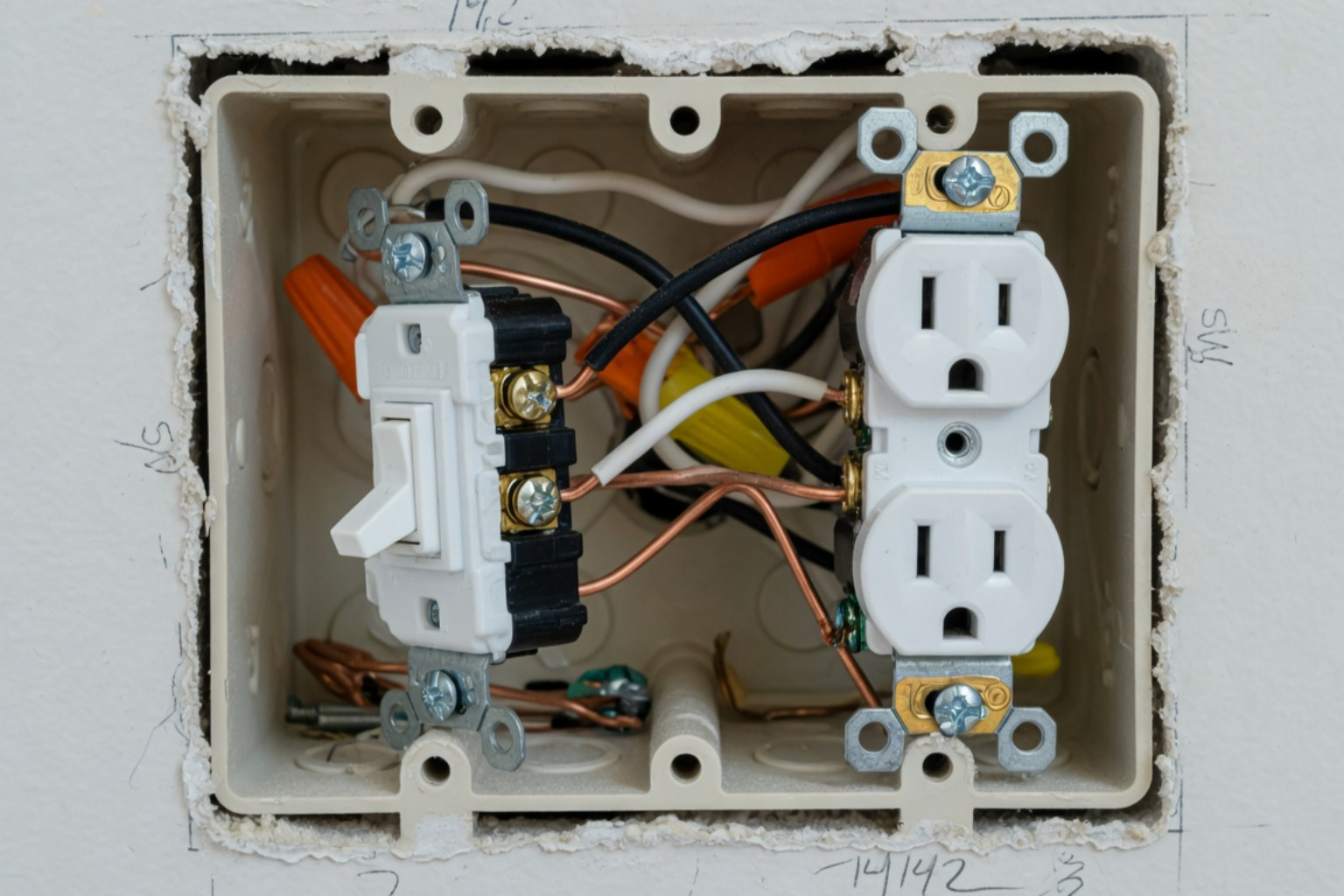
When we get to the spa’s control box, we have to be very careful with the neutral and ground connections. A common mistake is “bonding” (joining) the neutral and ground at the spa pack. They must stay separate until they reach the main service panel. If they are joined at the tub, your GFCI will trip every single time you turn it on.
We also pay close attention to “terminal torque.” Electrical connections can loosen over time due to heat and vibration, so we use a torque screwdriver to ensure every lug is tightened exactly to the manufacturer’s specs. You can find more on this in our Hot Tub Wiring Simplified: 3-Wire GFCI Guide and our tips on hooking up your hot tub GFCI.
Staying Code Compliant and Safe in Denver
In Denver, Centennial, and Lone Tree, we follow NEC (National Electrical Code) Article 680. This is the “rulebook” for anything involving water and electricity. One specific rule many people miss is the requirement for a 120V convenience receptacle. Code says you must have a standard GFCI outlet located between 6 and 20 feet from the tub. This is so you aren’t tempted to run an extension cord across the patio for a radio or phone charger.
Another big part of the job is “bonding.” This isn’t the same as grounding. Bonding involves connecting all the metal parts around the tub—like a metal fence or a window frame within 5 feet—to each other with a solid copper wire. This ensures that if a fault happens, everything stays at the same electrical “pressure,” preventing a shock if you touch two different surfaces.
Safety is why we always insist on a Hot Tub Permit in Colorado. A permit means a city inspector will come out and double-check our work. It’s an extra set of eyes to ensure your family is safe. You can read more about Hot Tub Electrical Code GFCI requirements to see the standards we hold ourselves to.
Trying to skip these steps can lead to common problems when installing a hot tub without a licensed electrician, ranging from failed inspections to dangerous “stray voltage” in the water.
Avoiding Common Hot Tub Wiring Mistakes
I’ve seen a lot of DIY attempts in Castle Rock and Parker that went south quickly. Here are the big ones to avoid:
- Undersized Wire: Using #8 wire for a 50-amp tub. It might work for a week, but eventually, it will overheat and could start a fire.
- Romex Outdoors: Running standard house wire through a pipe in the ground. Water will get into that pipe, and Romex insulation will fail.
- Aluminum Wire: While aluminum is okay for some big house feeds, we always use copper for hot tubs. It handles the high-heat cycles of a spa heater much better.
- Neutral Miswiring: Connecting the spa’s white neutral wire to the ground bar instead of the GFCI breaker itself. This is the #1 reason for a “mystery” tripping breaker.
If you’re seeing these issues, check out our guide on DIY Hot Tub Wiring Mistakes or our specific advice on the Hot Tub Breaker in Colorado.
Frequently Asked Questions about Hot Tub Electrical
Can I use Romex or SER cable for my hot tub?
You can use Romex (NM-B) or SER cable for the portion of the run that stays inside your house (like through your basement or crawlspace). However, the moment the wiring goes outside or into a conduit, you must switch to individual THHN/THWN copper conductors.
How deep does the conduit need to be buried?
For standard PVC conduit (the gray plastic pipe), the minimum burial depth is 18 inches. If you are running it under a driveway, that depth increases to 24 inches. We always recommend adding a “warning tape” a few inches above the pipe in the trench so future gardeners don’t hit it.
Do I really need a permit for a hot tub in Denver?
Yes. Every municipality we serve, from Castle Pines to Denver Metro, requires an electrical permit for a new hot tub installation. It’s not just a “money grab” by the city; it’s a legal record that the installation was done to safety standards. If you ever sell your home, a missing permit for a hot tub can hold up the closing.
Final Thoughts on Your Backyard Oasis
Installing a hot tub should be about relaxation, not worrying if the wiring is going to hold up. At Harmony Electric, we take that worry off your plate. Whether you are in Centennial or Parker, we handle the entire process—from the initial load calculation to the final city inspection.
What sets us apart is that we do the work right the first time. We don’t believe in shortcuts when it comes to your safety. That’s why our hot tub wiring installations come with a lifetime workmanship guarantee and a three-year material warranty. We treat your home with the same respect we’d treat our own.
If you’re ready to get your spa up and running, we’re here to help. You can check out our Hot Tub Installation page for more details or view our Hot Tub Installation Pricing to get an idea of what to expect.
For any other electrical needs, explore more info about Denver electrical services we provide. Let’s get you wired so you can get soaking!