Why Hot Tub GFCI Breaker Installation is the Most Important Safety Step You’ll Take
Hot tub GFCI breaker installation is the critical safety measure that stands between you and a potentially fatal electrical shock. If you’re setting up a hot tub, here’s what you need to know right away:
Quick Answer: What You Need for Safe Hot Tub GFCI Installation
- Dedicated 240V Circuit – Most hot tubs need 50 or 60 amps with #6 gauge copper wire
- GFCI Breaker – Protects the entire circuit at your main electrical panel
- Manual Disconnect (Spa Panel) – Required safety shutoff located 5-10 feet from the tub, within line of sight
- Professional Installation – This work requires a licensed electrician and permit in Colorado
- Final Inspection – Testing and code compliance verification before first use
You’re excited about your new hot tub. I get it. After years of wiring hot tubs around Denver, I’ve seen how much homeowners look forward to relaxing in their backyard spa.
But here’s what I need you to understand first: water and electricity are a deadly combination. Without proper GFCI protection, a single electrical fault can turn your relaxation zone into a serious hazard.
The good news? When installed correctly, a GFCI breaker is incredibly effective at preventing electrical shock. It monitors the electrical current and shuts off power in a fraction of a second if something goes wrong.
In this guide, I’ll walk you through what GFCI protection actually is, why your hot tub needs it, and what’s involved in a proper installation. I’ll also cover common problems that cause GFCI breakers to trip and when you can troubleshoot versus when to call a professional.
This isn’t a DIY guide. Hot tub wiring requires a licensed electrician, proper permits, and code compliance. But understanding the process helps you make informed decisions and know what to expect.
Hot tub gfci breaker installation vocab explained:
- hooking up 220v hot tub
- hot tub breaker wiring
What is a GFCI and Why Your Hot Tub Can’t Live Without It
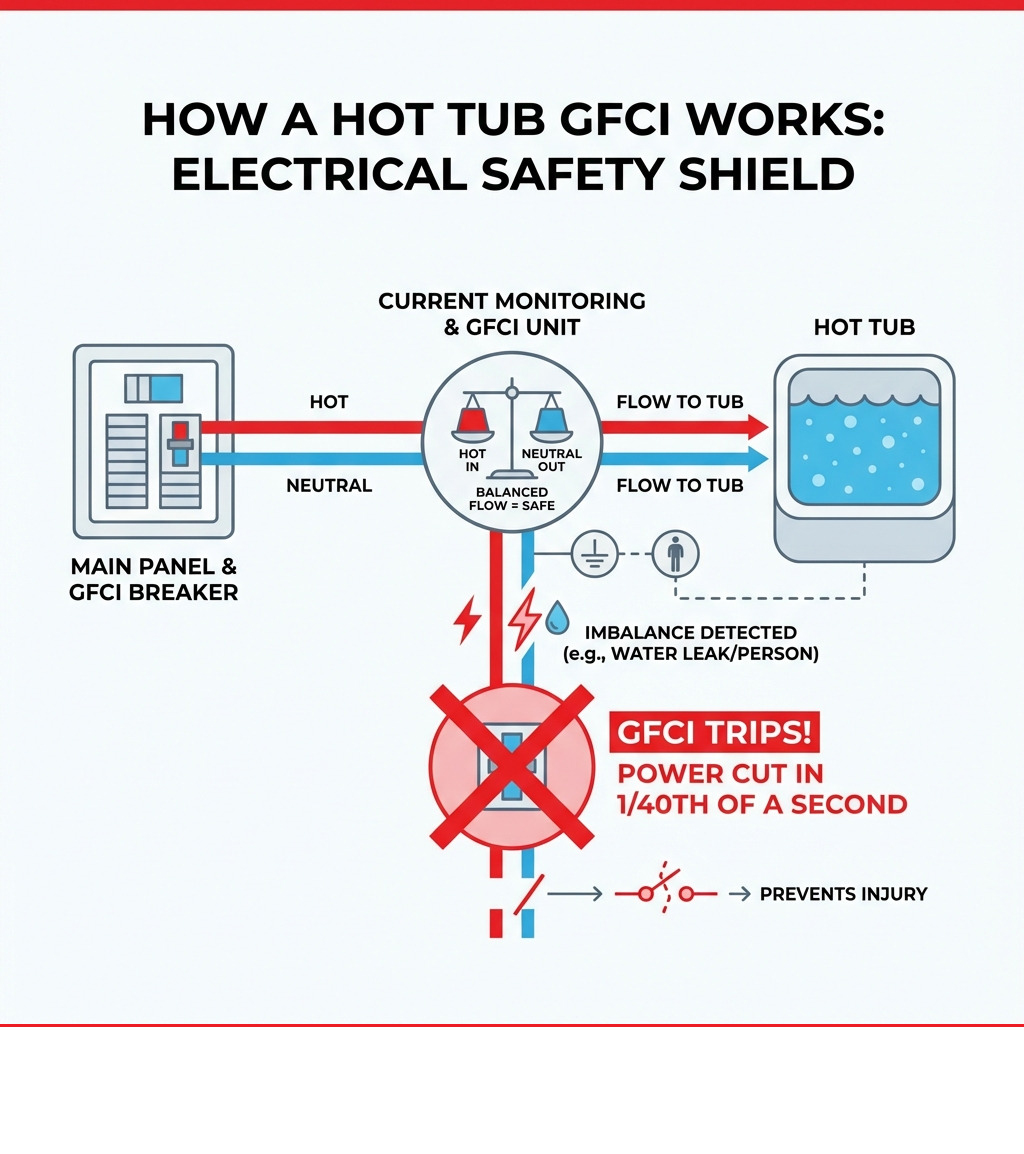
Let’s start with the basics. A GFCI, or Ground Fault Circuit Interrupter, is a special type of electrical device designed to protect you from severe electrical shocks. Think of it as a super-sensitive safety guard for your electrical system.
Here’s how it works: Electricity flows in a circuit, leaving your electrical panel, going through your hot tub, and returning to the panel. A GFCI constantly monitors this flow. If it detects even a tiny imbalance – meaning some electricity is “leaking” out of the circuit, perhaps through water or even a person – it trips, cutting off power almost instantly. We’re talking about 1/40th of a second! That’s much faster than a standard breaker, which only trips on an overload or short circuit, not a ground fault.
Why is this so crucial for a hot tub? Because water and electricity are a dangerous mix. When your body is submerged in water, like in a hot tub, you become much more susceptible to electrical current. Even a low-voltage current can cause serious injury or even death, a phenomenon sometimes referred to as Electrical Shock Drowning (ESD). The National Electrical Code (NEC) specifically requires GFCI protection for all hot tubs and spas because of this inherent risk. It’s not just a good idea; it’s the law, designed to keep you safe. You can learn more about these requirements through resources like the Electrical Requirements for Hot Tubs and Spas.
GFCI Breaker vs. GFCI Outlet
When we talk about GFCI protection, it’s important to understand there are two main types: GFCI breakers and GFCI outlets. While both serve the same life-saving purpose, they’re used in different situations for hot tubs.
| Feature | GFCI Breaker | GFCI Outlet |
|---|---|---|
| Location | Installed in the main electrical panel | Replaces a standard wall outlet |
| Protection Scope | Protects the entire circuit it’s on, including all downstream outlets and devices | Protects itself and any outlets wired downstream from it |
| Amperage | Available in various amperages (e.g., 20A, 30A, 50A, 60A) | Typically 15A or 20A |
| Hot Tubs | Required for 240V hardwired hot tubs (protects the dedicated circuit) | Used for 120V “plug-and-play” hot tubs (often integrated into the power cord) |
| Cost | Generally more expensive per unit | Less expensive per unit |
For most modern hot tubs, especially those that are hardwired and require 240V, a GFCI breaker is what you’ll need. It’s installed directly into your home’s main electrical panel and protects the entire dedicated circuit running to your hot tub. This provides comprehensive safety for the high-power demands of a 240V spa.
A GFCI outlet, on the other hand, is typically used for 120V plug-and-play hot tubs, where the GFCI protection is often built right into the hot tub’s power cord. This protects the hot tub at the point of connection to a standard wall outlet.
Getting the Right Electrical Setup for Your Hot Tub
Before we even think about the hot tub GFCI breaker installation, we need to make sure your home’s electrical system is ready. Most hot tubs aren’t just plug-and-play like a toaster; they need a specific, robust electrical setup.
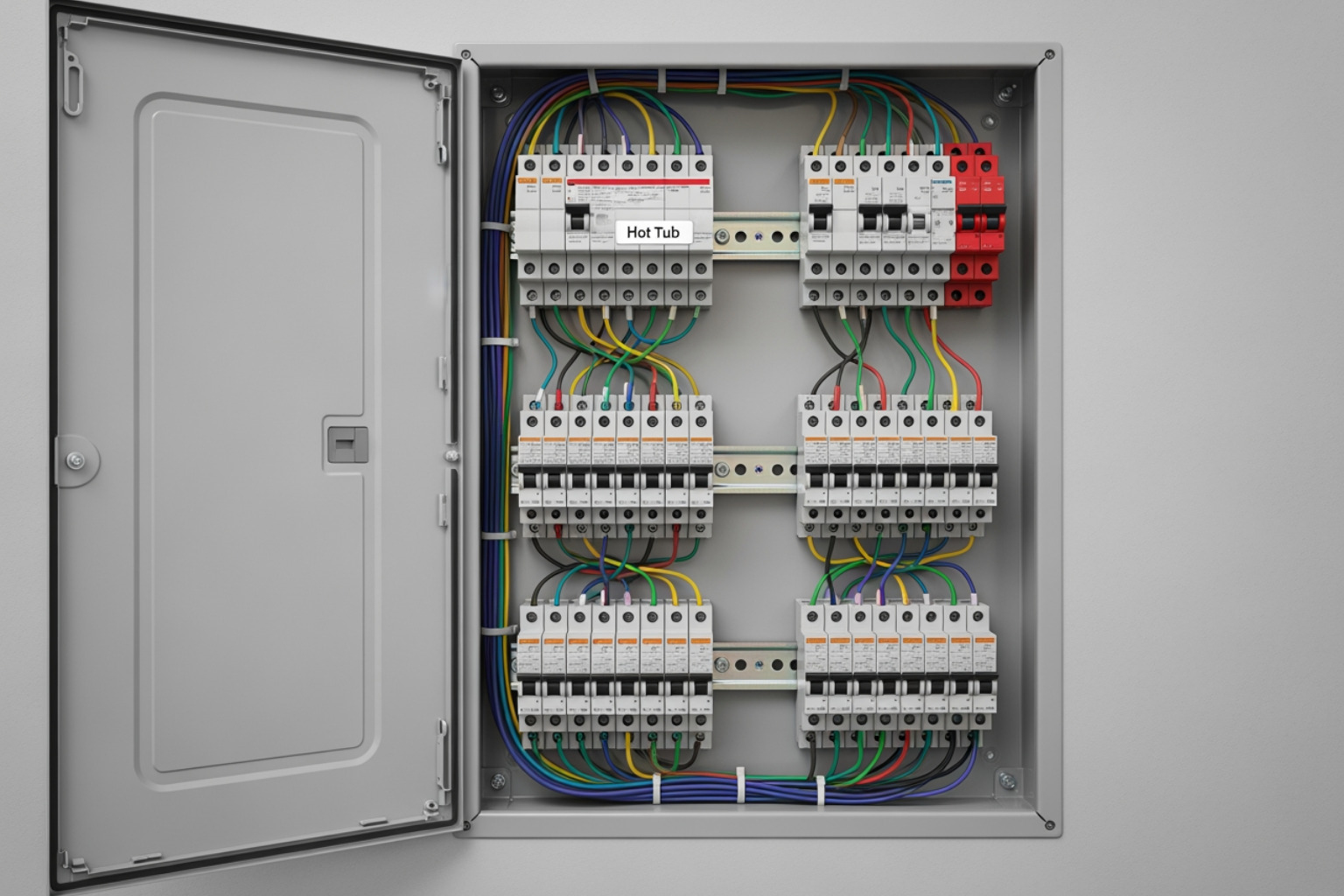
A hot tub almost always requires a dedicated circuit. This means the hot tub gets its own circuit directly from your main electrical panel, with no other appliances or outlets sharing that power. This prevents overloading your system and ensures your hot tub has a consistent, safe power supply.
We’ll also need to consider the correct amperage and wire gauge, which are determined by your specific hot tub’s power requirements. And critically, a manual disconnect device, often called a “spa panel,” is a non-negotiable safety component. It’s important to determine if your current electrical panel can handle this addition.
For 240V Hardwired Hot Tubs
Most full-sized hot tubs run on 240 volts. This higher voltage allows the heaters and pumps to run more efficiently and powerfully. For these tubs, you’ll need a dedicated 240V circuit, typically rated for 50 or 60 amps. The exact amperage will be specified in your hot tub’s owner’s manual – it’s crucial to match this perfectly.
For a 50 or 60 amp circuit, we’ll generally use #6 gauge copper wire. This is a thick, robust wire designed to safely carry the high current your hot tub demands. We always use copper wire for hot tubs here in Denver because it’s much more reliable and less prone to corrosion than aluminum, especially in outdoor, damp environments.
The wiring system for a 240V hot tub is usually a 4-wire system:
- Two “hot” wires (Line 1 and Line 2): These carry the 240V power.
- One neutral wire: This provides a return path for 120V components within the hot tub, like lights or controls.
- One ground wire: This is a critical safety wire that provides a safe path for fault currents back to the panel, preventing shock.
This 4-wire setup ensures that all components, whether 120V or 240V, are powered and protected correctly.
For 120V “Plug-and-Play” Hot Tubs
Some smaller hot tubs are designed as “plug-and-play” models, meaning they can plug into a standard 120V household outlet. These usually come with a power cord that has a built-in GFCI for protection. While convenient, there are some trade-offs:
- Dedicated Outlet: Even a 120V tub needs its own dedicated outlet, meaning no other devices should be plugged into the same circuit.
- Slower Heating: They often heat up much slower than 240V models.
- Weaker Jets: The pumps may not be as powerful, leading to less intense jet action.
Some of these plug-and-play models can actually be converted to 240V for better performance, but this always requires professional electrical work. If you’re considering this, it’s a good idea to chat with us first to see if it’s feasible for your specific hot tub.
The Manual Disconnect (Spa Panel)
Beyond the GFCI breaker in your main panel, the NEC requires another crucial safety device for hardwired hot tubs: a manual disconnect, often housed in what we call a “spa panel.” This is essentially a weatherproof box with a switch that allows you to quickly shut off all power to the hot tub at the hot tub’s location.
Here’s why it’s so important and where it needs to be:
- Emergency Shutoff: In an emergency, or for maintenance, you can immediately cut power without running back to your main electrical panel.
- Safety for Service: It provides a safe way for service technicians (or us!) to work on your hot tub without power running to it.
- Location Requirements: According to the National Electrical Code, this disconnect must be:
- Within sight of the hot tub.
- At least 5 feet away from the hot tub’s water edge.
- No more than 10 feet away from the hot tub.
These rules ensure that the disconnect is easily accessible for anyone using or servicing the hot tub, adding another layer of critical safety.
A Pro’s Guide to Hot Tub GFCI Breaker Installation
Let me be clear: hot tub GFCI breaker installation is not a do-it-yourself project. We’re dealing with high-voltage electricity and water, which is a combination that demands expert knowledge and strict adherence to safety codes. Trying to do this yourself can lead to dangerous electrical hazards, costly mistakes, and even void your hot tub’s warranty. We’ve seen some serious DIY hot tub wiring mistakes over the years that we’ve had to fix.
In Colorado, like many places, you’ll need permits for hot tub electrical work, and it must be installed by a licensed electrician. This ensures the work meets local codes and is inspected for your safety.
Key Steps for a Safe Hot Tub GFCI Breaker Installation
When you hire a professional electrician like us for your hot tub GFCI breaker installation in the Denver Metro Area, here’s a simplified look at the process we follow to ensure everything is done safely and correctly:
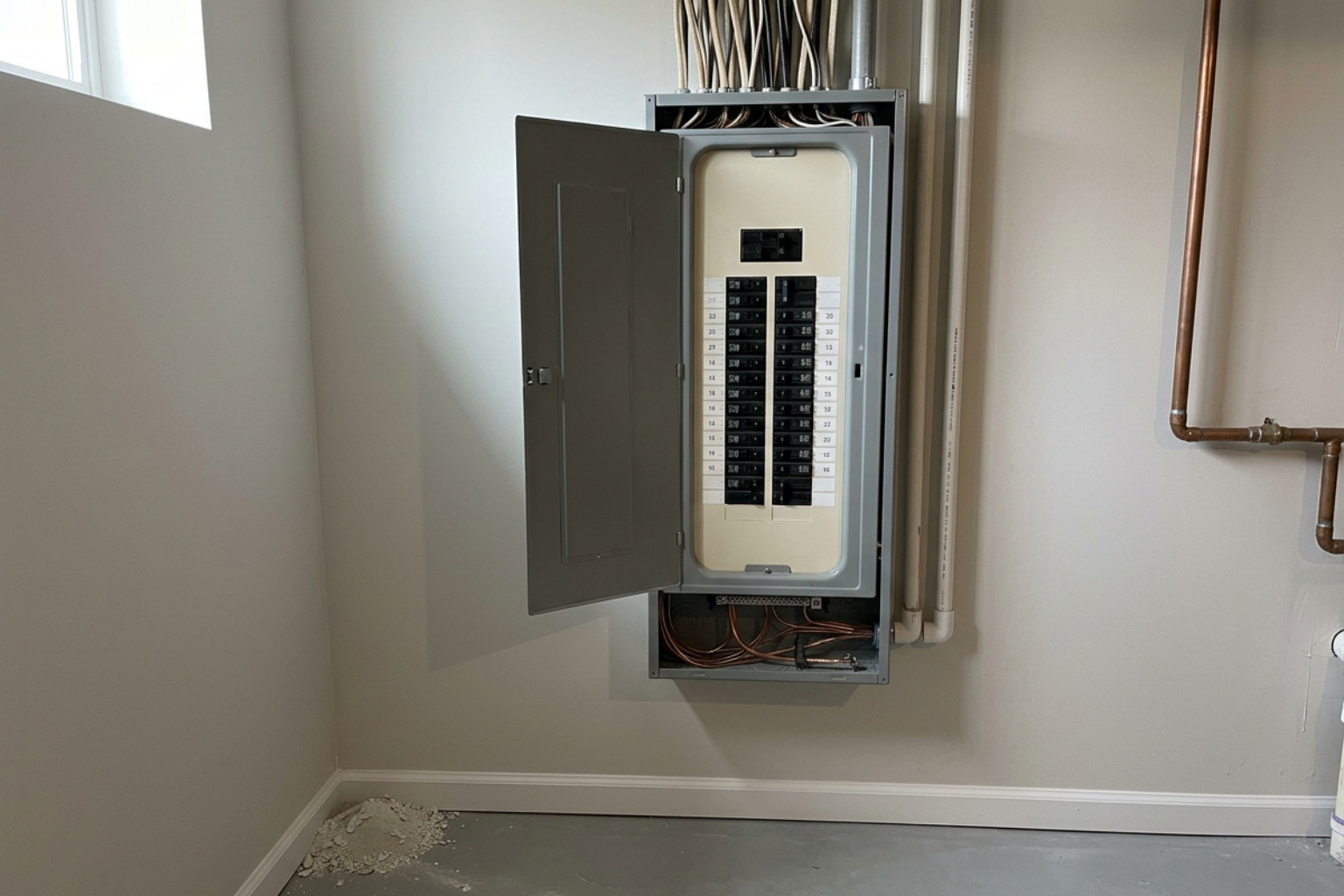
- Panel Assessment: First, we’ll inspect your main electrical panel to ensure it has enough capacity and space for the new dedicated hot tub circuit. Sometimes, especially in older homes, an electrical panel upgrade might be necessary.
- Mounting the Disconnect: We’ll mount the spa panel (manual disconnect device) in its required location – within 5 to 10 feet of the hot tub, in line of sight, and at least 5 feet from the water.
- Running Conduit: We’ll then plan and run the electrical conduit from your main panel to the spa panel, and from the spa panel to the hot tub itself. This conduit protects the wires from physical damage and environmental factors like moisture.
- Trenching: If the hot tub is outdoors, the conduit running underground will need to be buried at a specific depth, typically 18 inches, to meet code requirements. We’ll make sure to call 811 before any digging to locate underground utilities.
- Pulling Copper Wire: Next, we pull the appropriately sized copper wire (#6 gauge for most 50-60 amp tubs) through the conduit. We always use THWN (Thermoplastic Heat and Water-resistant Nylon) insulated wire, which is designed for wet locations.
- Wiring the GFCI Breaker: We install the correct amperage GFCI breaker into your main electrical panel. This is a critical step, ensuring the “load neutral out” wire is correctly connected for 240V systems, as incorrect wiring here is a common cause of immediate tripping.
- Connecting the Main Breaker: We connect the wires from the spa panel to the GFCI breaker in your main panel, and then the wires from the hot tub to the spa panel. All connections are torqued to specific values to prevent loose connections, which can cause overheating or intermittent issues.
- Final Testing: Once all connections are made and secured, we conduct thorough testing before ever powering up your hot tub.
This detailed process ensures every aspect of your hot tub’s electrical system is safe and compliant.
Testing After Your Hot Tub GFCI Breaker Installation
After we’ve completed the hot tub GFCI breaker installation, testing is essential to confirm everything is working as it should. Here’s what we do, and what you should also do regularly:
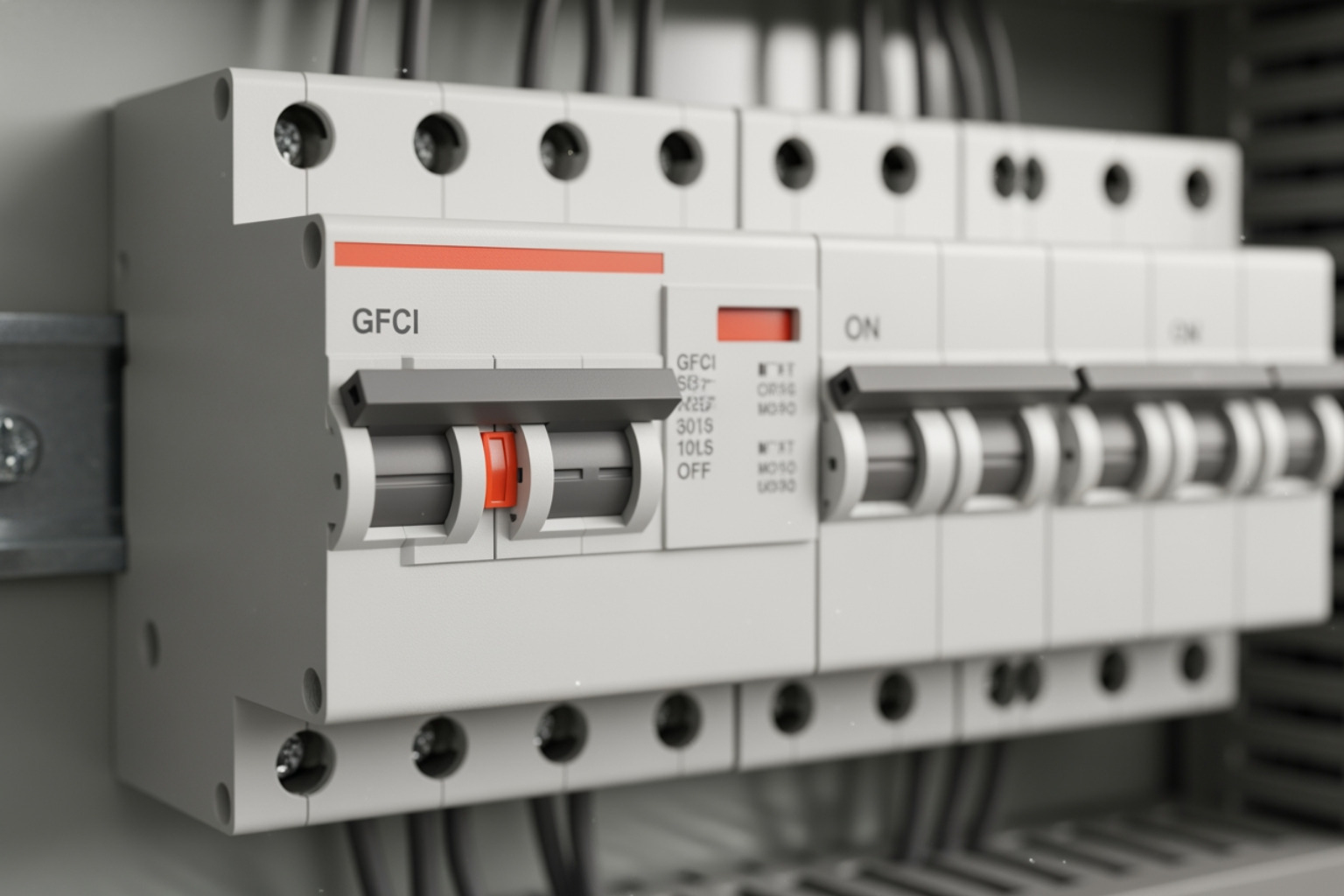
- Using the Test Button: Every GFCI breaker has a “TEST” button. When you push this button, the breaker should immediately trip, cutting power. This confirms the internal mechanism is functioning.
- Verifying Power Shutoff: After the test button is pushed, we verify that power to the hot tub has indeed been cut.
- Resetting the Breaker: To restore power, you simply push the breaker handle fully to the “OFF” position, and then back to the “ON” position.
- Ensuring All Components Run: We’ll then check that all hot tub functions – pumps, heater, lights – are working correctly without tripping the GFCI.
This final check ensures your GFCI is operational and your hot tub is ready for safe enjoyment. We recommend you test your GFCI monthly to ensure it remains in good working order.
“Why Does My Hot Tub Breaker Keep Tripping?”
It can be really frustrating when you’re ready for a relaxing soak, and your hot tub GFCI breaker keeps tripping. But here’s an important insight: when your GFCI trips, it means it’s doing its job! It detected an electrical anomaly and cut power to prevent a potential shock. So, while annoying, it’s a sign that your safety system is active.
Many of our customers in Castle Rock and Centennial ask us about this. There are several common reasons why a hot tub GFCI might trip. Sometimes you can do some basic troubleshooting, but often, it points to an underlying issue that needs professional diagnosis. We’ve seen many common problems that lead to tripping, especially when a hot tub is installed without a licensed electrician. For troubleshooting guidance, you can check your hot tub’s user manual.
Common Reasons for a Tripped GFCI
Here are the most frequent culprits we find when a hot tub GFCI breaker trips:
- Faulty Heater Element: This is one of the most common causes. Over time, heater elements can corrode or develop cracks, allowing water to come into contact with the electrical coil, creating a ground fault.
- Bad Pump or Ozonator: Motors in pumps or ozonators can wear out, develop internal shorts, or have seals fail, allowing moisture to enter and cause a ground fault.
- Moisture in Connections: Even with proper sealing, moisture can sometimes get into the hot tub’s control box or wiring connections, especially with environmental factors like rain, snow, or high humidity in our Colorado climate. This can cause a temporary ground fault.
- Incorrect Wiring: If the initial hot tub GFCI breaker installation wasn’t done correctly, especially with the neutral wire routing, it can cause nuisance tripping. For example, if a 240V system’s neutral wire is incorrectly routed, a 120V component activating can trip the GFCI.
- Worn Out GFCI Breaker: Like any electrical component, GFCI breakers have a lifespan. Over time, or after many trips, the breaker itself can become faulty and trip prematurely or fail to reset.
- Corrosion Effects: Water treatment chemicals like chlorine or bromine are caustic and can cause corrosion on electrical terminals and conductors over time. This corrosion can lead to poor connections or ground faults. We often see this on bonding terminals, which can interfere with the entire bonding system’s performance.
What You Can Check Yourself
While serious issues require a professional, there are a few basic things you can check if your GFCI trips:
- Resetting the Breaker: First, try resetting the GFCI breaker. Push the handle fully to the “OFF” position, then firmly back to “ON.” If it immediately trips again, there’s an ongoing problem.
- Note When It Trips: Does it trip immediately when you turn on the hot tub? Or only when a specific component (like the heater or a pump) kicks in? This information can be a big clue for us.
- Visual Inspection for Moisture: Carefully, and with the power off at the main panel, look inside the hot tub’s control box for any obvious signs of moisture or water. If you see any, do not restore power.
- Using the Test Button: As mentioned, press the “TEST” button on the GFCI. If it doesn’t trip, the GFCI itself might be faulty and needs replacement.
If the GFCI still trips after these basic checks, or if you’re uncomfortable checking anything, it’s always necessary to call a professional electrician. Don’t take chances with electricity and water.
Frequently Asked Questions about Hot Tub GFCIs
We get a lot of questions about hot tub GFCIs from homeowners in Highlands Ranch and Parker. Here are some of the most common ones:
Where does the GFCI disconnect need to be located?
The manual disconnect device (spa panel) with the GFCI must be located:
- At least 5 feet (1.5 meters) from the water’s edge of the hot tub. This minimum distance prevents accidental contact while in the tub.
- Within line of sight of the hot tub. This means you should be able to see the disconnect from the hot tub, ensuring you can quickly shut off power in an emergency.
- No more than 10 feet (3 meters) away from the hot tub. This ensures it’s conveniently close for emergency shutoff.
These are critical NEC code requirements designed for your safety and easy emergency access.
What are the consequences of improper GFCI installation?
Improper hot tub GFCI breaker installation can have severe and potentially deadly consequences:
- Severe Shock Risk: Without proper GFCI protection, a ground fault can lead to a dangerous or fatal electrical shock.
- Fire Hazard: Incorrect wiring can cause overheating, leading to electrical fires.
- Damage to Hot Tub Components: Improper voltage or wiring can damage expensive hot tub components like heaters, pumps, and control systems.
- Voided Warranties: Hot tub manufacturers will often void warranties if the electrical installation doesn’t meet their specifications and local codes.
- Failed Inspections: In Colorado, a permit and inspection are typically required. Improper installation will fail inspection, delaying your hot tub enjoyment and requiring costly rework.
Can I troubleshoot GFCI issues myself?
For basic troubleshooting, yes, you can try:
- Resetting the breaker.
- Noting when the breaker trips.
- Carefully performing a visual check for obvious moisture (with power off).
- Using the GFCI’s “TEST” button.
However, anything beyond these basic steps – especially anything that involves opening up electrical panels, working with wires, or diagnosing internal hot tub component issues – always requires a licensed electrician. The risks associated with high-voltage electricity and water are too great to attempt complex electrical repairs as a homeowner.
The Bottom Line: Safety, Cost, and Getting It Done Right
Your hot tub should be a source of relaxation, not worry. The safety of your family and friends depends on a correctly installed electrical system, with the GFCI breaker at its heart. Improper wiring is not just a code violation; it’s a serious hazard that can lead to electrical shocks, fires, and significant damage.
When it comes to the typical costs associated with hot tub GFCI breaker installation in the Denver area, it can vary. While we can’t give an exact quote without seeing your specific situation, most standard 240V hot tub electrical installations, including the dedicated circuit, GFCI breaker, spa panel, and wiring, typically range from $1,200 to $2,500. Factors that influence this cost include:
- Distance from your main electrical panel to the hot tub.
- Whether your existing electrical panel has sufficient capacity and space for a new dedicated circuit (older homes often require upgrades).
- The need for extensive trenching for underground conduit.
- The specific amperage required by your hot tub.
At Harmony Electric, we believe in doing the work right the first time. We back our hot tub wiring installations with a lifetime workmanship guarantee and a three-year material warranty. We ensure every aspect of your hot tub GFCI breaker installation meets or exceeds the National Electrical Code and local Colorado regulations, giving you peace of mind.
For a safe, reliable hot tub setup you can enjoy for years, trust a professional electrician. We’re here to help make your hot tub dreams a safe reality, from Castle Pines to Lone Tree and all across the Denver Metro Area.