Why Hot Tub Safety Starts with the Right Breaker
A gfci breaker for hot tub installations is required by electrical code and prevents electric shock when water and electricity mix. Here’s what you need to know:
Quick Answer:
- What it is: A Ground Fault Circuit Interrupter (GFCI) breaker shuts off power instantly if it detects current leaking where it shouldn’t
- Why you need it: Hot tubs combine water and 240-volt electricity—a dangerous mix without proper protection
- What size: Most hot tubs need a 50-amp, 2-pole GFCI breaker (check your manual)
- Where it goes: Usually in a weatherproof spa panel (disconnect box) near your hot tub
- Who installs it: Always hire a licensed electrician—this isn’t a DIY job
I’ve been wiring hot tubs around Denver for years, and I see the same question every time: “Do I really need that special breaker?” The short answer is yes. The longer answer is that a GFCI breaker is the single most important safety device between your family and a serious electrical accident.
Most homeowners don’t realize that regular circuit breakers only protect against overloads and short circuits. They won’t stop the kind of small current leak that can shock you in a hot tub. That’s where a GFCI breaker comes in—it’s watching for even tiny imbalances in electrical current and cuts power in milliseconds.
In this guide, I’ll walk you through everything you need to know about GFCI breakers for hot tubs: what they do, how to pick the right one, what they cost, and why professional installation matters. No electrical jargon, no fluff—just the real-world information you need to keep your hot tub safe.
1. What’s a GFCI Breaker, and Why Does Every Hot Tub Need One?
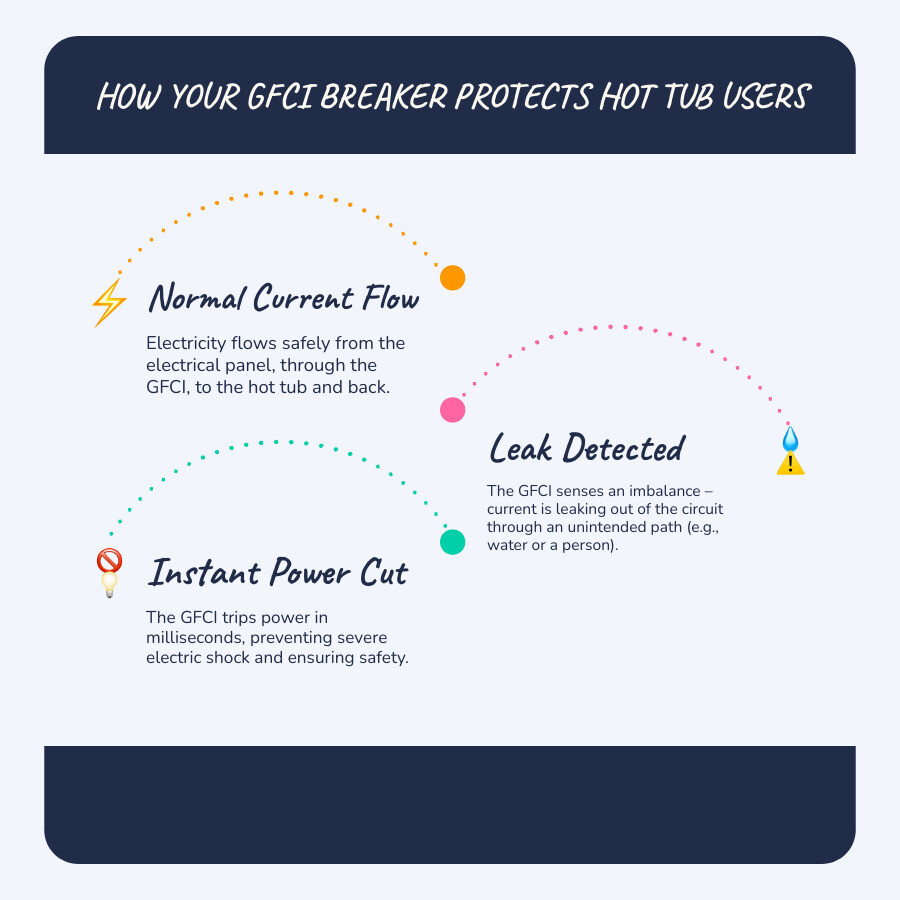
Let’s start with the basics. A GFCI, or Ground Fault Circuit Interrupter, is a clever device designed to protect us from electrical shock. Think of it as a vigilant guardian for your electrical system. Unlike a standard circuit breaker, which trips when there’s too much current flowing (an overload) or a direct short circuit, a GFCI breaker is looking for something far more subtle: an imbalance in the electrical current.
Imagine electricity flowing in a loop. A GFCI constantly monitors the current going out to an appliance and the current coming back. If even a tiny amount of electricity “leaks” out of that loop—say, through a person who accidentally touches a live wire or through water—the GFCI detects this imbalance. It then trips, cutting off power almost instantly, usually within milliseconds. This rapid response is crucial, especially when water is involved.
Why is this so important for hot tubs? Well, we’re talking about a large body of water, often heated and circulated by powerful electrical components, all just a few feet from where people are relaxing. Water and electricity are a notoriously dangerous combination. Water conducts electricity incredibly well, and if there’s a fault in your hot tub’s wiring or components, that water can become energized. A GFCI breaker is your primary defense against a potentially fatal electrical shock in that scenario.
What I usually see in Denver homes is a real desire for safety, but sometimes a lack of understanding about how to achieve it with something as complex as a hot tub. Many homeowners are surprised to learn just how specific the electrical requirements are. We always emphasize that the National Electrical Code (NEC) mandates GFCI protection for hot tubs to prevent electrical shock. It’s not just a suggestion; it’s a non-negotiable safety feature.
For more general electrical safety tips around water, you can check out these electrical safety tips for hot tubs and spas from the NFPA.
GFCI Breaker vs. Standard Breaker: What’s the Difference?
To really understand why a GFCI breaker is essential, let’s quickly look at what a standard circuit breaker does. A standard breaker is like a bouncer at a club, but for electricity. Its job is to protect your home’s wiring and appliances from damage. If too many devices are plugged into one circuit (an overload), or if wires accidentally touch (a short circuit), the standard breaker trips, shutting down power to prevent overheating and potential fires.
However, a standard breaker isn’t designed to protect people from shock. It won’t react to a small current leak, the kind that can pass through a human body and cause a severe, even fatal, electrical shock. The current might not be high enough to trip a standard breaker, but it’s more than enough to be dangerous.
This is where the GFCI breaker steps in. It’s much more sensitive. While a standard breaker might need 15 or 20 amps of current to trip, a GFCI breaker will trip with a fault current as low as 5 milliamps (that’s 0.005 amps!). This incredible sensitivity allows it to “catch” those small leaks before they become dangerous. It’s the difference between protecting the wires in your walls and protecting the people in your hot tub.
GFCI Breaker vs. GFCI Outlet: Why the Breaker Matters for Hot Tubs
You might be familiar with GFCI outlets in your bathroom or kitchen—those outlets with the “Test” and “Reset” buttons. While these outlets provide excellent protection for individual plug-in devices on 120-volt circuits, they’re generally not suitable for the heavy-duty, hardwired demands of a hot tub.
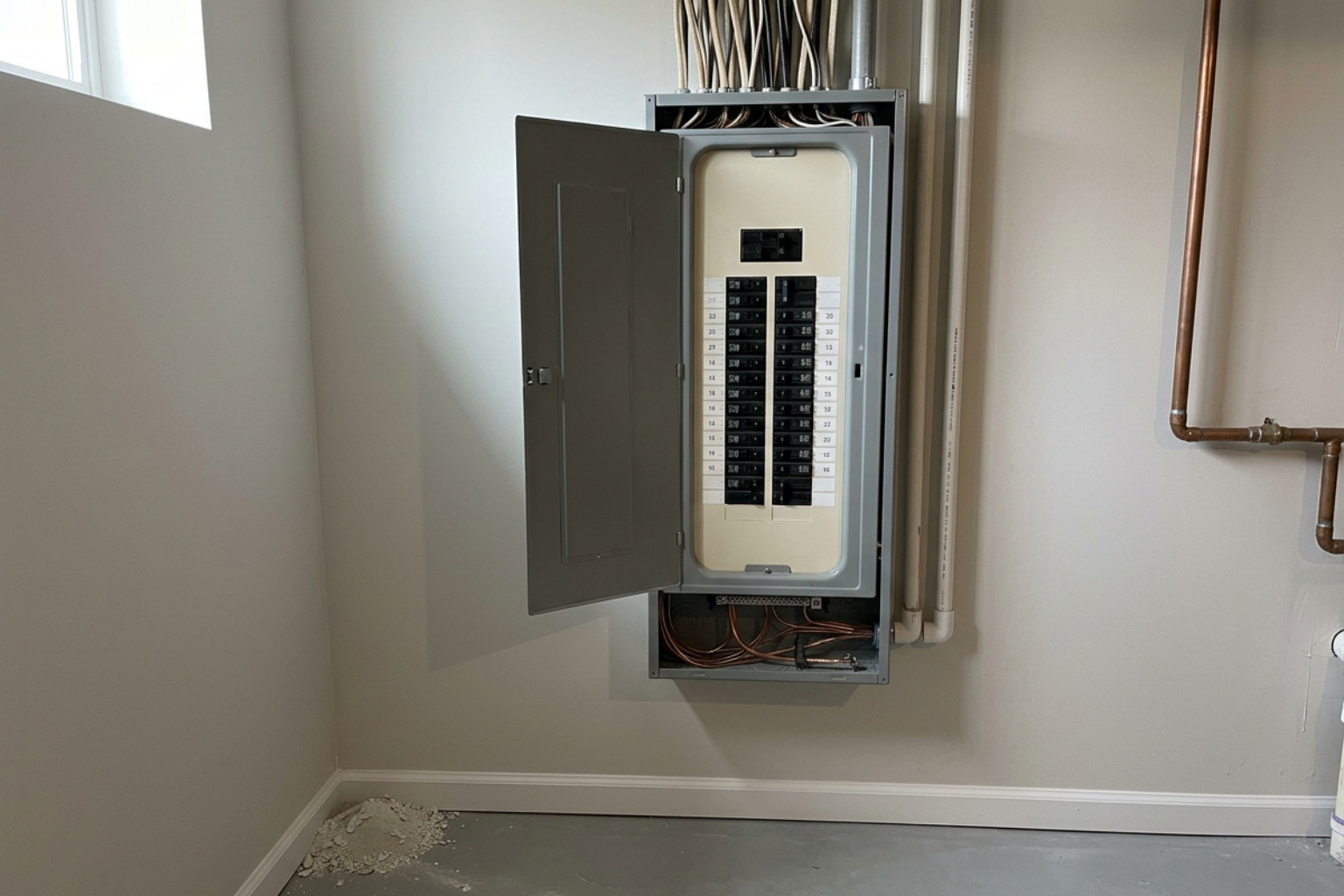
Hot tubs typically require a dedicated 240-volt electrical supply and draw a significant amount of amperage, often between 40 to 60 amps. This isn’t something you just plug into a wall outlet. Instead, the hot tub is usually hardwired directly into your home’s main electrical panel or a subpanel specifically for the hot tub.
For these high-amperage, hardwired applications, we use a gfci breaker for hot tub installation that goes directly into your main electrical panel. This breaker provides full-circuit protection for the entire hot tub system, from the moment electricity leaves your panel until it powers your hot tub’s pumps, heaters, and controls. The National Electrical Code (NEC) mandates this full-circuit GFCI protection for all hot tub electrical connections. It ensures that every part of your hot tub’s electrical system is monitored and protected, offering a comprehensive safety net that an individual GFCI outlet simply can’t provide for such a powerful appliance.
To learn more about the specific requirements, check out our article on hot tub electrical code and GFCI.
2. Picking the Right GFCI Breaker for Your Hot Tub
Choosing the correct gfci breaker for hot tub use isn’t a guessing game; it’s a critical safety decision that starts with your hot tub’s manufacturer specifications. The very first thing we do, and what you should always do, is check your hot tub’s owner’s manual or the data plate on the unit itself. This will clearly state the required voltage and amperage.
Most hot tubs around Denver and the surrounding areas are designed to run on 240 volts. This higher voltage allows them to power heating elements and pumps efficiently. In terms of amperage, hot tubs can vary, but we commonly see requirements for 40, 50, or 60 amps. A 50-amp GFCI breaker is a very common recommendation for many hot tubs, ensuring enough power while providing essential safety.
Understanding your hot tub’s power needs is key to preventing nuisance trips or, worse, inadequate protection. Our Hot Tub Amperage Guide offers more detail on matching your tub’s needs to your electrical supply.
What Size Breaker Does My Hot Tub Need?
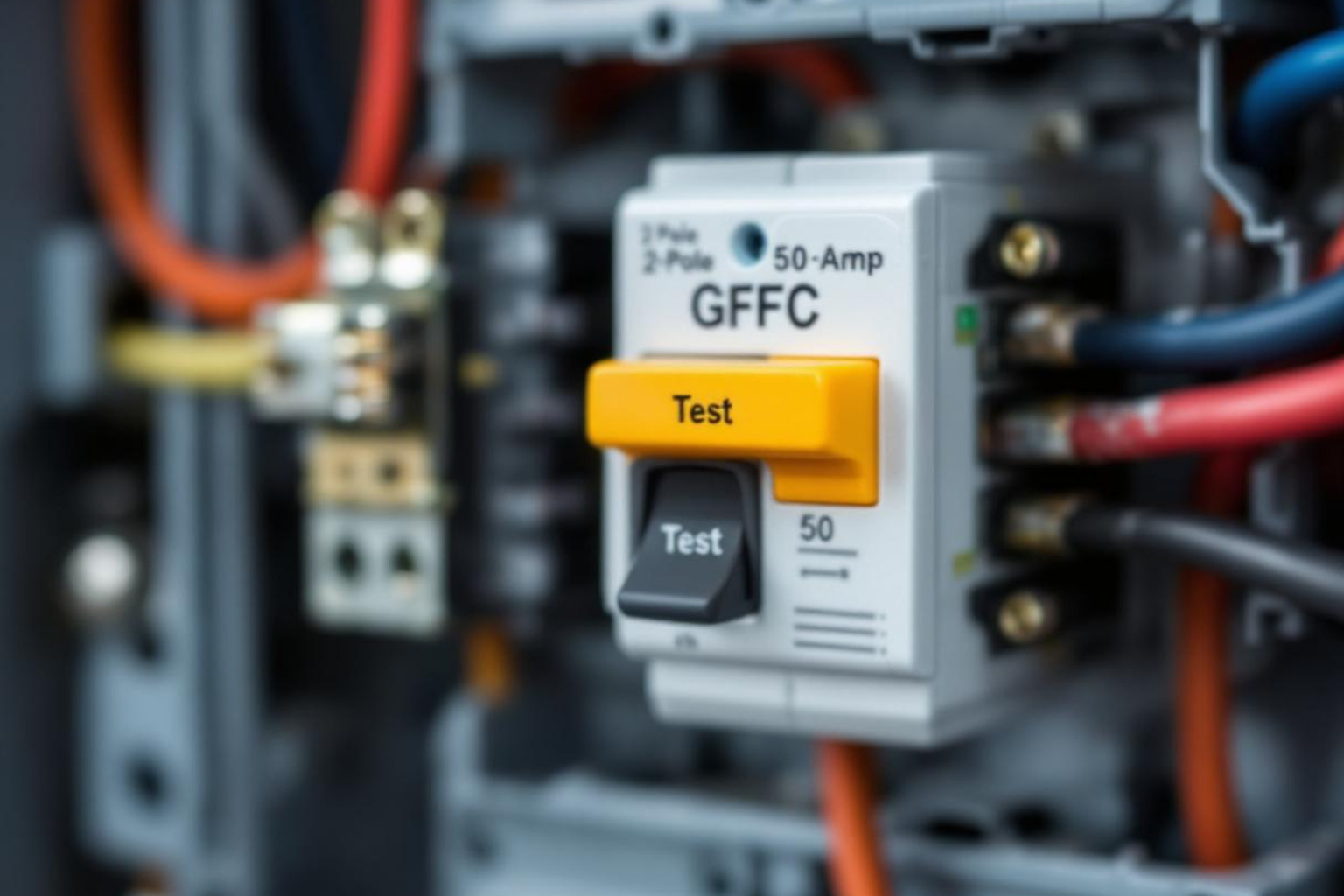
As I mentioned, hot tub power requirements typically fall into a few common amperage sizes: 40A, 50A, and 60A. The specific size your hot tub needs is dictated by its total electrical load, which includes its heaters, pumps, and any other accessories.
Here in Colorado, we find that a 50-amp GFCI breaker is quite common for many residential hot tubs. This size strikes a good balance, providing sufficient power for typical hot tub operation without being oversized. However, some larger or more powerful tubs might need 60 amps, while smaller “plug-and-play” type tubs (which are less common for full-size units we install) might use a lower amperage.
The best way to double-check your tub’s requirements is, again, to consult the manufacturer’s specifications. This information is usually found on a data plate on the hot tub itself or in the owner’s manual. It will specify the minimum circuit ampacity and the maximum overcurrent protection required. If you’re unsure, it’s always best to consult with a licensed electrician. We can help you decipher these specifications and ensure you get the right size.
It’s also worth considering your existing electrical panel. Sometimes, homeowners are concerned about whether their current setup can handle the added load of a hot tub. We often get asked, Can My Existing Electrical Panel Handle a Hot Tub? An electrician can assess your panel’s capacity and advise on any necessary upgrades.
2-Pole GFCI Breakers: What Most Hot Tubs Use
When we talk about the gfci breaker for hot tub installations, we’re almost always referring to a “2-pole” breaker. What does that mean in plain English?
Think of it like this: your home’s electrical system typically has two “hot” wires coming into your main panel for 240-volt appliances, plus a neutral wire and a ground wire. A 2-pole breaker connects to both of those “hot” wires. This is necessary because most hot tubs operate on 240 volts, which requires both hot wires to deliver power. A 2-pole GFCI breaker monitors the current on both of these hot wires simultaneously, along with the neutral wire, to detect any imbalance.
This setup is standard for virtually all hardwired hot tubs in the U.S. It ensures that the entire 240-volt circuit feeding your hot tub is protected against ground faults. While there are smaller, 120-volt “plug-and-play” hot tubs that might use a single-pole GFCI breaker or even just a GFCI outlet, these are generally smaller units with less powerful heaters and pumps. For the robust, full-size hot tubs we install around Denver, a 2-pole GFCI breaker is almost always the required and safest choice.
3. What Makes a Good GFCI Breaker for a Hot Tub?
When selecting a gfci breaker for hot tub installation, quality and reliability are paramount. This isn’t an area to cut corners. Here’s what we look for and recommend:
First and foremost, always ensure the breaker is UL Listed. This means it has been tested and certified by Underwriters Laboratories for safety and compliance with national standards. It’s a stamp of approval that gives us peace of mind. We always specify UL Listed components in our work.
Next, consider reliable brands. Companies like Square D, Siemens, and Eaton are well-known and respected in the electrical industry for producing high-quality breakers and electrical components. While there are many brands out there, sticking with established names often means better engineering, fewer nuisance trips, and greater longevity.
Warranty basics are also important. Many reputable brands offer a decent warranty on their breakers and spa panels. For instance, some Eaton spa panels offer a limited lifetime warranty on their CH series breakers, while their BR series might come with a 10-year limited warranty. A strong warranty often reflects the manufacturer’s confidence in their product’s durability.
Finally, and especially important for us here in Colorado with our diverse weather, is weatherproofing for outdoor setups. Most hot tubs are installed outdoors, meaning the GFCI breaker and its enclosure need to withstand the elements. Look for products rated IP65 for waterproofing, or Type 3R outdoor rated enclosures. These ratings ensure the electrical components are protected from rain, snow, and dust, preventing corrosion and ensuring safe operation year-round.
Why I Recommend a Spa Panel (Disconnect Box)
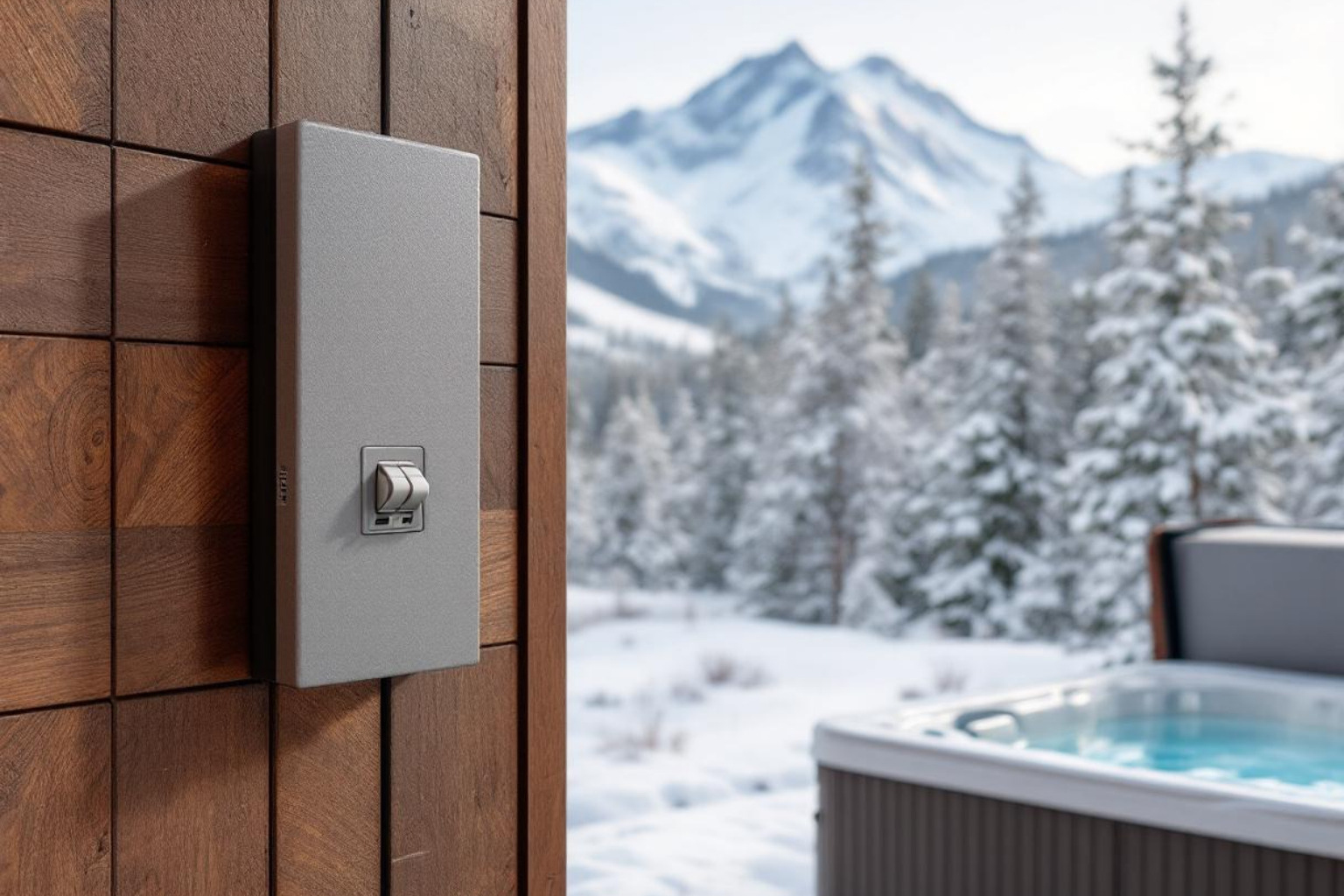
While you could install a GFCI breaker directly into your home’s main electrical panel, we almost always recommend a dedicated spa panel, also known as a disconnect box. This integrated unit is a game-changer for hot tub safety and convenience.
A spa panel is an all-in-one weatherproof enclosure that typically includes the gfci breaker for hot tub protection, along with a manual disconnect switch. This means you get your essential GFCI protection and a visible, easily accessible way to shut off power to your hot tub right at the unit itself.
Here’s why we love them:
- Safety and Code Compliance: The National Electrical Code (NEC) requires both GFCI protection and a visible disconnect for spa pump safety. A spa panel handles both requirements in one neat package. It also needs to be installed within sight of the hot tub, but at least five feet away, to meet code.
- Convenience: Having a dedicated shutoff switch right by the hot tub is incredibly convenient for maintenance, repairs, or emergencies. You don’t have to run to your main electrical panel inside the house.
- Protection: These panels are built tough, often with IP65 or Type 3R ratings, meaning they’re designed to withstand outdoor conditions, protecting the sensitive electrical components inside from rain, snow, and dust.
- Tidy Wiring: A spa panel keeps all the hot tub’s electrical connections neatly organized and safely enclosed, leading to a much cleaner and more professional installation.
When we’re wiring a home hot tub in Denver, a spa panel is always part of our plan to ensure the safest and most reliable setup.
What Should a Hot Tub GFCI Breaker Cost?
The cost of a gfci breaker for hot tub applications can vary quite a bit, depending on whether you’re just buying the breaker itself or a complete spa panel kit. From what we see, you can expect a typical price range of $100 to $300+ for these components.
If you’re looking at just the GFCI breaker itself, especially a 50-amp, 2-pole model from a reputable brand, you might find prices ranging from around $100 to $200. However, most hot tub installations benefit greatly from a full spa panel kit. These kits include the GFCI breaker, a weatherproof enclosure, and a disconnect switch, providing a complete, code-compliant solution. For a quality 50-amp spa panel kit, prices usually range from $200 to $300 or more. Some premium or higher-amperage (60-amp) units can push past $300, like the Siemens 30 Amp GFCI Breaker for Hot Tub listed around $280 or a Beachcomber 50 Amp GFCI kit at $258.
Why does quality matter here? Because this isn’t just about turning your hot tub on; it’s about life-saving protection. Investing in a reliable, UL Listed product from a trusted brand means you’re getting a device that’s been rigorously tested and is designed to perform when it matters most. Trying to save a few dollars on this critical component can lead to nuisance tripping, premature failure, or, worst-case, a compromised safety system. When we work on hot tub installations, we prioritize safety and longevity, ensuring the components we use are top-notch.
4. Installing a Hot Tub GFCI Breaker: What Really Matters
Installing a gfci breaker for hot tub is more than connecting a few wires. It’s a precise process requiring careful attention to detail and strict electrical codes. Proper installation is crucial for both safety and the reliable operation of your hot tub.
Here are some key areas where precision truly matters:
- Proper Grounding: This is non-negotiable. Your hot tub must be properly grounded to reduce the possibility of electrical shock. This involves connecting all non-current-carrying metal parts of the hot tub and surrounding electrical equipment to a continuous grounding system. An electrician ensures this bonding is correct and robust.
- Using the Right Wire Size: The wires connecting your main electrical panel to your spa panel, and then to your hot tub, must be correctly sized for the amperage your hot tub draws. Too-small wires can overheat, posing a fire risk. Your hot tub’s manual and the NEC specify these requirements. For example, some spa panels require wire sizes ranging from #8 to #2 AWG.
- Running Conduit: For outdoor installations, wires need protection from physical damage and the elements. We run wires through approved conduit, which can be non-metallic or liquid-tight flexible metal, depending on the distance and specific code requirements. This protects the wires from UV light, animals, and accidental damage. We’ve seen older non-metallic conduits become brittle and crack from UV exposure over time, which is why proper installation and material choice are so important.
- Tightening Connections the Right Way: This might sound simple, but it’s a critical step often overlooked in DIY attempts. All electrical conductors must be torqued tight according to the manufacturer’s instructions and NEC Section 110.14. It’s not enough to just tighten them “as much as you can.” Proper torque ensures a secure connection, prevents arcing, and reduces the risk of overheating. We always use calibrated tools to ensure every connection is perfectly tightened.
Why I Always Recommend a Licensed Electrician
When it comes to wiring a hot tub, I can’t stress this enough: always hire a licensed electrician. This isn’t a sales pitch; it’s a safety imperative. I’ve seen what goes wrong with DIY jobs—incorrect wire sizing, improper grounding, and missing GFCI protection. These are serious hazards. Wiring a hot tub should never be a DIY project due to the risks of mixing electricity and water.
The National Electrical Code (NEC) has specific, complex rules for hot tub installations to protect you and your family (you can find more details on NEC code basics for hot tubs). A licensed electrician understands these codes inside and out, from the correct distance for the spa panel (typically 5 to 10 feet) to the proper conduit and grounding procedures.
Furthermore, in Denver and surrounding communities like Castle Rock, Centennial, and Parker, hot tub installations require permits and inspections. A licensed electrician will ensure all work is up to code, can pull the necessary permits, and will be there for the inspection to ensure everything passes. This not only guarantees your safety but also protects your investment and ensures your homeowner’s insurance remains valid. Cutting corners here can lead to fines, voided warranties, and, most importantly, a dangerous situation.
We’ve put together a list of common problems when installing a hot tub without a licensed electrician that highlights why professional help is indispensable.
How to Spot a GFCI Breaker That’s Not Working Right
Even the best gfci breaker for hot tub installations won’t last forever, and sometimes, issues can arise. It’s important to know the signs of a malfunctioning GFCI breaker so you can address it promptly and maintain safety.
Here are some common indicators that your GFCI breaker might not be working correctly:
- Breaker Trips Too Often: If your GFCI breaker is tripping frequently, even when there doesn’t seem to be an obvious electrical problem with your hot tub, it could be a sign of a faulty breaker. While nuisance trips can sometimes be caused by a hot tub component, if it’s happening constantly or without apparent cause, the breaker itself might be failing. We often get calls where hot tub owners describe their GFCI tripping every time they turn on their hot tub, or even at random times when the hot tub isn’t in use. This could point to issues like a corroded heater, loose connections, or moisture in the control box, but it can also be the GFCI itself.
- Won’t Reset: You’ve pressed the “Reset” button (usually red), but the breaker just won’t stay on, or it trips immediately after you try to reset it, even with nothing connected to the hot tub. This is a strong indicator that the GFCI breaker itself is faulty and needs to be replaced.
- Looks Burned or Corroded: Always keep an eye on your electrical components. If you notice any discoloration, burn marks, or corrosion (especially a greenish color) around the terminals or on the breaker itself, it’s a serious red flag. Corrosion can interfere with the GFCI’s operation and is a sign of an underlying issue that needs immediate professional attention.
- Makes Odd Noises: Electrical systems should generally be quiet. If you hear buzzing, humming, or flickering sounds coming from your spa panel or main electrical panel where the GFCI is located, it could indicate a loose connection, internal damage to the breaker, or another electrical fault.
If you observe any of these signs, it’s crucial to contact a licensed electrician immediately. Never try to force a GFCI breaker to stay on if it’s tripping, and don’t attempt to repair it yourself. Safety comes first. For more troubleshooting tips, check out How Do I Fix a Tripped Hot Tub GFCI Circuit Breaker? – Hot Spring Spas.
5. Where to Get a Safe, Code-Compliant GFCI Breaker
When it’s time to purchase a gfci breaker for hot tub installation, you have a few options, but some are definitely safer and more reliable than others. As a Master Electrician, I strongly recommend focusing on quality and compatibility.
Our primary recommendation is to buy through your electrician. When you hire Harmony Electric for your hot tub wiring, we handle the sourcing of all necessary components, including the GFCI breaker and spa panel. This ensures you get a high-quality, UL Listed product that is perfectly compatible with your hot tub and your home’s electrical system. We have established relationships with suppliers and can guarantee the authenticity and quality of the parts.
If you’re sourcing parts yourself, we advise using trusted electrical supply stores. These are businesses that specialize in electrical components and cater to electricians. They typically carry reputable brands and can provide expert advice. You’ll find these stores in Denver and the wider Denver Metro Area.
What we generally don’t recommend is buying from random online sellers. While the prices might seem attractive, the risk of receiving counterfeit, used, or incompatible parts is significant. These products might not meet safety standards, could fail prematurely, or, worst of all, might not provide the life-saving protection you expect from a GFCI. When it comes to something as critical as hot tub safety, it’s simply not worth the gamble.
How do we make sure you get the real thing? We only source from reputable distributors and manufacturers. We verify that all components are UL Listed and meet the specific voltage and amperage requirements of your hot tub. Our goal is to install a system that not only meets but exceeds code requirements, ensuring your hot tub is a source of relaxation, not a safety concern.
Ready for a Safe Hot Tub Installation?
A gfci breaker for hot tub is the heart of hot tub safety. Getting it right protects your family and your investment. If you’re in Denver or nearby and want your hot tub wired safely, my team at Harmony Electric is here to help. We do it right the first time, so you can relax and enjoy your spa.
We handle all aspects of hot tub wiring, from assessing your electrical panel to installing the correct GFCI breaker and spa panel, ensuring everything is up to code and perfectly safe.
Ready to get started? Get a quote for your Hot Tub Installation with our professional Denver electricians. We also specialize in Hot Tub Wiring in Castle Rock, CO and other communities like Castle Pines, Centennial, Highlands Ranch, Parker, and Lone Tree.