Why Hot Tub Electrical Requirements Matter Before You Buy or Install
Hot tub electrical requirements depend mainly on the size and type of spa you choose. Here’s a quick overview:
| Requirement | 120V (Plug-and-Play) | 240V (Full-Size) |
|---|---|---|
| Breaker size | 15-20 amps | 40-60 amps (50A most common) |
| Wire gauge | 12-14 AWG | 6 AWG copper (8 AWG for 40A) |
| Circuit type | Dedicated GFCI outlet | Dedicated hardwired GFCI circuit |
| Disconnect required | No | Yes, 5-50 ft from spa |
| Permit required | Usually no | Yes, in most jurisdictions |
| Professional install needed | Recommended | Always |
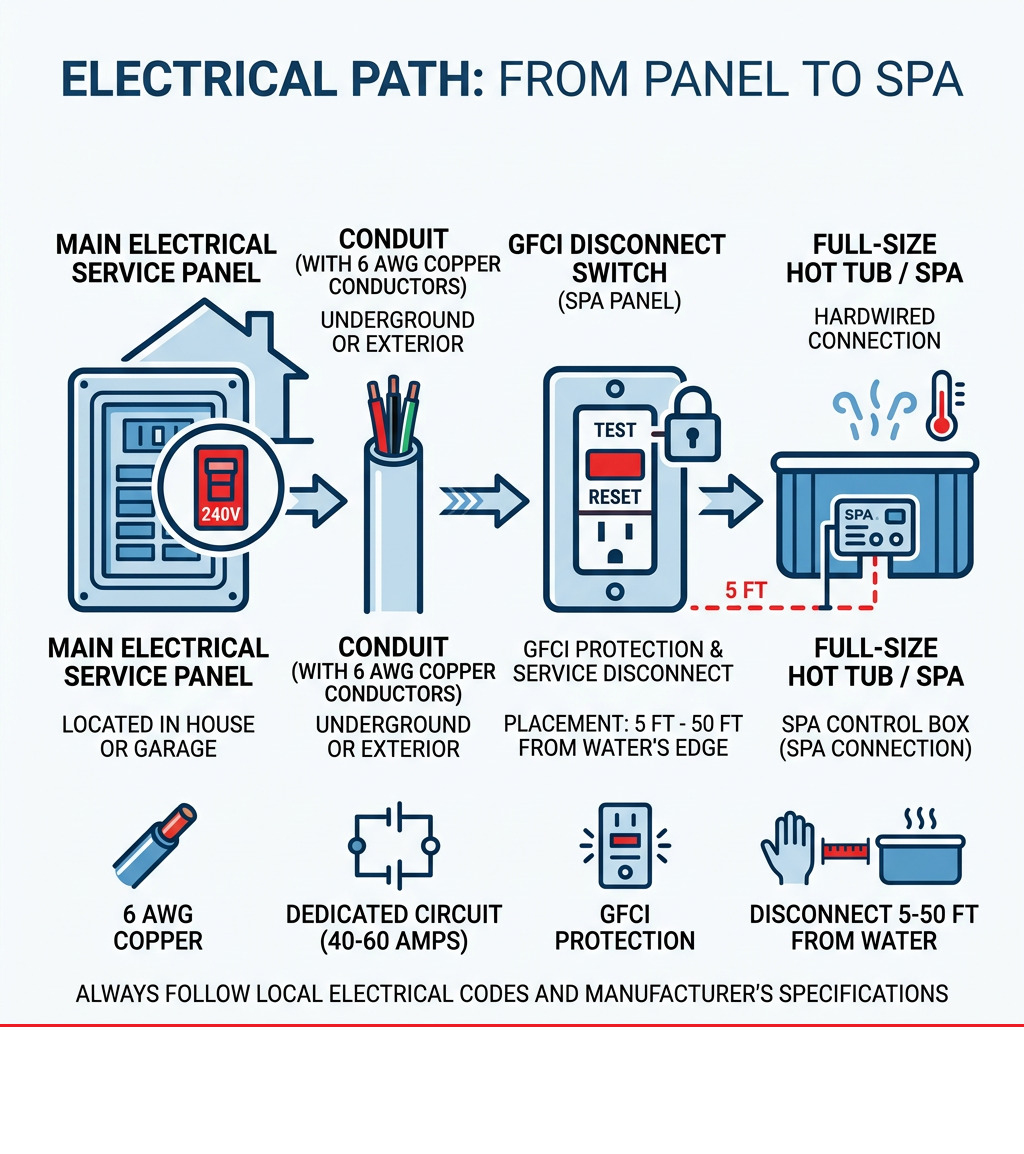
The short version: most full-size hot tubs need a dedicated 240V/50-amp circuit, GFCI protection, 6 AWG copper wiring, and a disconnect switch placed at least 5 feet from the water’s edge.
I’m Randy Harmuth, Master Electrician and owner of Harmony Electric. Over the years, I’ve wired a lot of hot tubs in Denver and the surrounding area. And honestly? The electrical side is where most hot tub projects go sideways.
Most homeowners are surprised to learn that a hot tub isn’t like plugging in a refrigerator. It’s a high-voltage appliance sitting in water. That combination demands a lot of respect — and the right setup from the start.
The good news is that when it’s done correctly, it’s completely safe. This guide walks you through everything you need to know: voltage options, wiring, GFCI protection, permits, and common problems I see in Denver homes.
No fluff, just what actually matters.
Essential hot tub electrical requirements terms:
Choosing Your Power: 120V vs. 240V Hot Tub Electrical Requirements
When you start shopping for a spa in the Denver Metro Area, you’ll usually run into two main categories: the “plug-and-play” models and the traditional hardwired units. Choosing between them isn’t just about the price of the tub; it’s about how much power your home can provide.
Understanding 120V Plug-and-Play Models
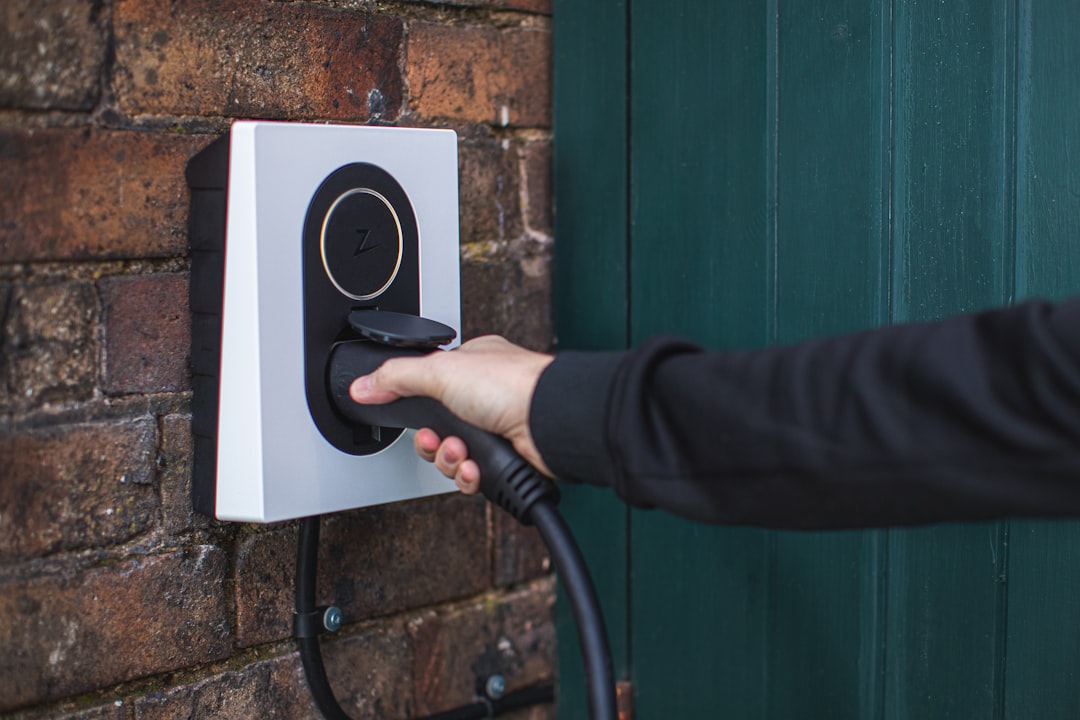
A 120V hot tub is designed for convenience. In theory, you just plug it into a standard outdoor outlet. However, there’s a catch. These units require a dedicated circuit. That means the outlet can’t share power with your patio lights, a pellet grill, or the garage freezer.
Most of these tubs pull 15 to 20 amps. If you try to share that circuit, you’ll be walking to the breaker panel every time the heater kicks on. The downside to 120V is performance. Because the voltage is lower, the heater usually can’t run at the same time as the high-speed jets. If you’re soaking on a snowy Denver night, the water temperature will start to drop as soon as you turn the bubbles on.
For more on sizing, check out our Hot Tub Amperage Guide.
Why Most Denver Homeowners Choose 240V Hot Tub Electrical Requirements
If you want the true spa experience, 240V is the way to go. About 85% of the residential installations we do use a 50-amp, 240V service. This setup allows the heater and the pumps to run simultaneously, meaning your water stays at 104 degrees even when the jets are blasting.
A 240V system heats water significantly faster—usually 2 to 5 degrees per hour compared to the 1 degree per hour you might get with a 120V unit. To make this happen, we have to run heavy-duty 6 AWG copper wire from your main panel to a specialized spa panel. It’s a bigger investment upfront, but it’s much more efficient in the long run.
You can learn more about the specifics of Hooking Up 220V Hot Tub systems on our blog.
The Safety Essentials: GFCI Protection and Disconnects
When you mix high-voltage electricity with water, safety isn’t just a “good idea”—it’s the law. The most critical component in your setup is the Ground-Fault Circuit Interrupter (GFCI).
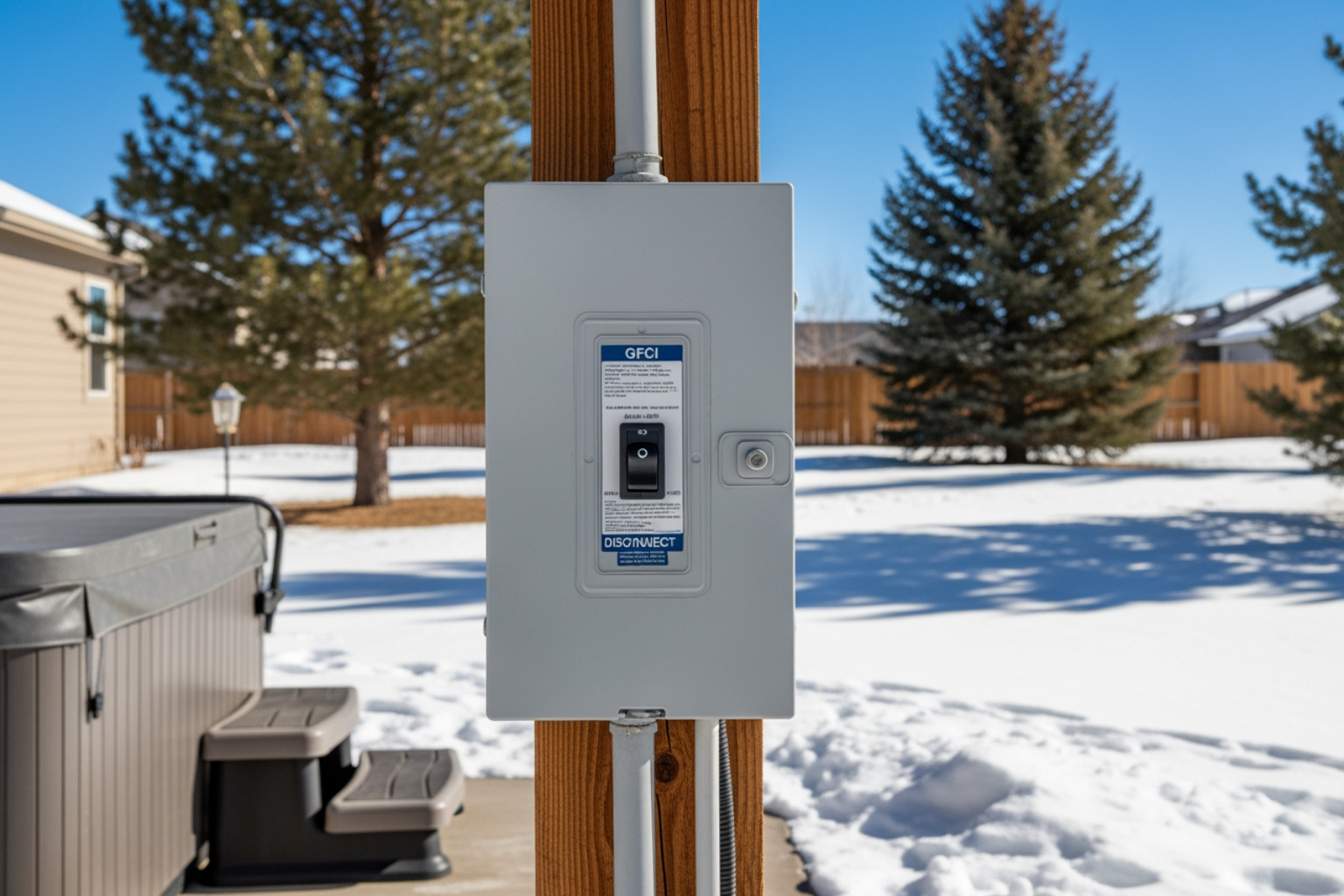
A GFCI breaker is incredibly sensitive. It monitors the electricity flowing to the tub and the electricity coming back. If it detects a tiny leak—as small as 4 to 6 milliamps—it cuts the power in about 4 milliseconds. This prevents the water from becoming energized, which is why The Shocking Truth: Everything About Hot Tub GFCI Breakers is something every owner should read.
Mandatory GFCI Disconnect Placement
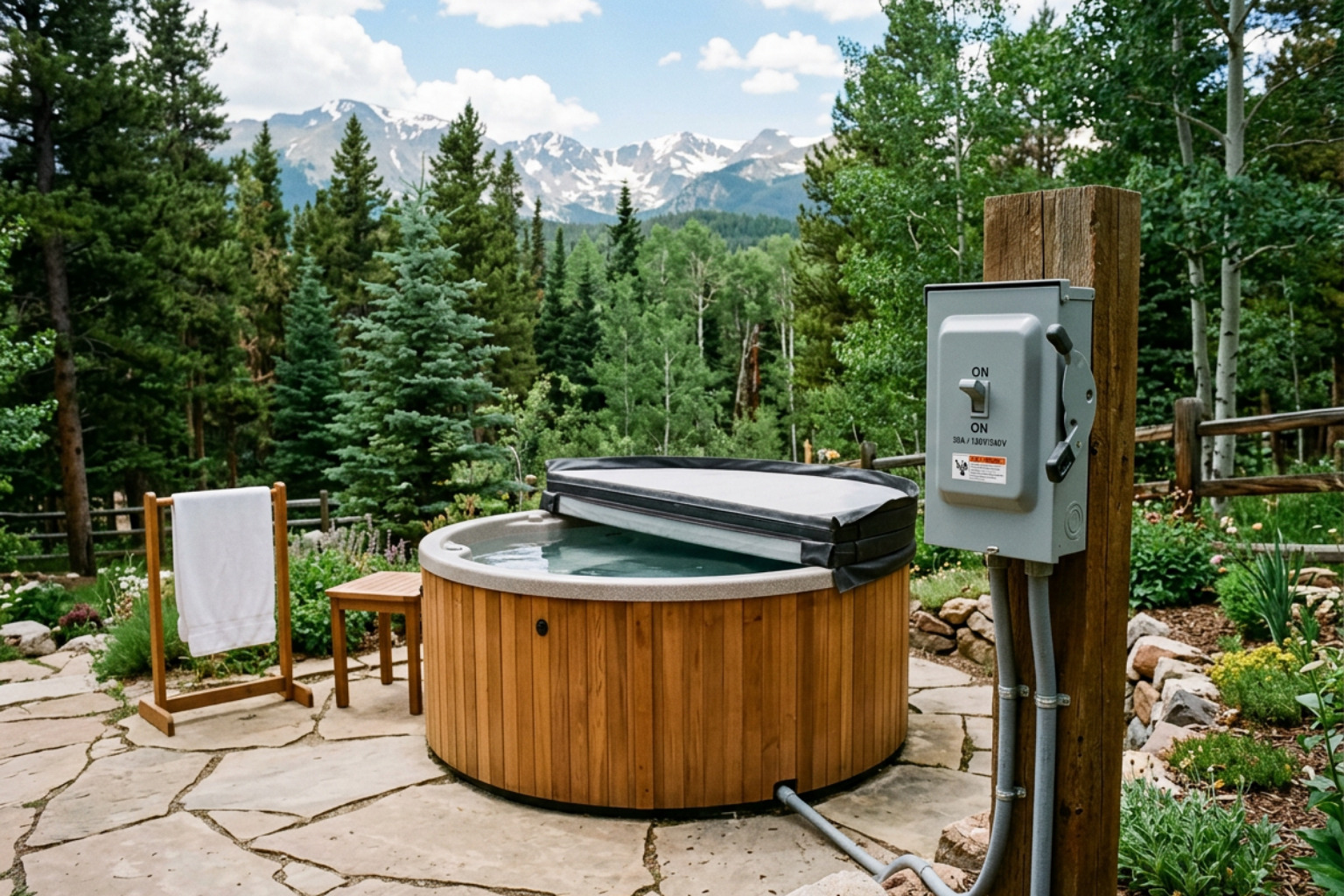
The National Electrical Code (NEC) Section 680.44 is very specific about where your “maintenance disconnect” (the spa panel) must be.
- Minimum Distance: It must be at least 5 feet from the inside wall of the hot tub. This ensures you can’t reach out and touch the electrical box while you’re still in the water.
- Maximum Distance: It must be within 50 feet and within “line of sight” of the spa.
- Purpose: This allows a service technician or an emergency responder to quickly kill the power without searching the whole house for the main panel.
We go into detail on this in our guide to Hooking Up Your Hot Tub GFCI: The Easy Way to Safety.
Why a Dedicated Circuit is Non-Negotiable
I often get asked if a hot tub can just “tap into” an existing line in the backyard. The answer is always no. A hot tub must have its own dedicated circuit. Sharing a circuit causes “nuisance tripping” and can lead to overheated wires.
Wiring mistakes are responsible for roughly 12% of all hot tub malfunctions. Often, this happens because someone tried to save money by using undersized wires or sharing a circuit with other heavy appliances. Following NEC Dedicated Circuit Requirements ensures your spa runs safely.
Wiring and Installation: Getting the Technical Details Right
The “guts” of your installation involve more than just pulling some wire. In Denver, we have to account for weather, soil conditions, and the sheer amount of power these units draw.
For a typical 50-amp installation, we use four conductors: two “hot” wires, one neutral, and one ground. We strictly use copper wire—usually THHN or THWN-2—because it handles the heat and load better than aluminum. For most runs, 6 AWG copper is the industry standard. If your tub is more than 100 feet from the panel, we might even jump up to 4 AWG to prevent “voltage drop,” which can cause your pumps to underperform.
You can see a visual breakdown in our 50 Amp Hot Tub GFCI Wiring Diagram.
Approved Conduit and Underground Methods
You can’t just bury hot tub wire in the dirt. It needs protection.
- PVC Conduit: Most of our underground runs use Schedule 40 or 80 PVC conduit buried at least 18 inches deep.
- Liquid-Tight Flexible Conduit: We use a flexible, waterproof conduit (often called “whip”) for the final few feet where the wiring enters the hot tub cabinet. This allows for a bit of movement and makes servicing the tub easier.
For a deeper dive into the materials, check out Wiring a Home Hot Tub.
Bonding and Grounding for 240V Hot Tub Electrical Requirements
There is a big difference between grounding and bonding. Grounding protects the electrical system; bonding protects you.
Equipotential bonding involves connecting all the metal parts around the spa—like ladders, handrails, or even the internal motor frame—with a #8 solid bare copper wire. This ensures that all these surfaces stay at the same electrical potential. If a fault occurs, you won’t become the “bridge” that completes the circuit. This is a vital part of the Hot Tub Electrical Code GFCI standards.
Planning Your Space: Distances, Permits, and Codes
Before you pour a concrete pad in Castle Rock or Parker, you need to look up.
- Overhead Power Lines: Your hot tub must be at least 10 feet away (horizontally) from any overhead power lines.
- Clearance: We generally recommend keeping the tub at least 5 feet away from the house to avoid moisture issues, though local codes vary.
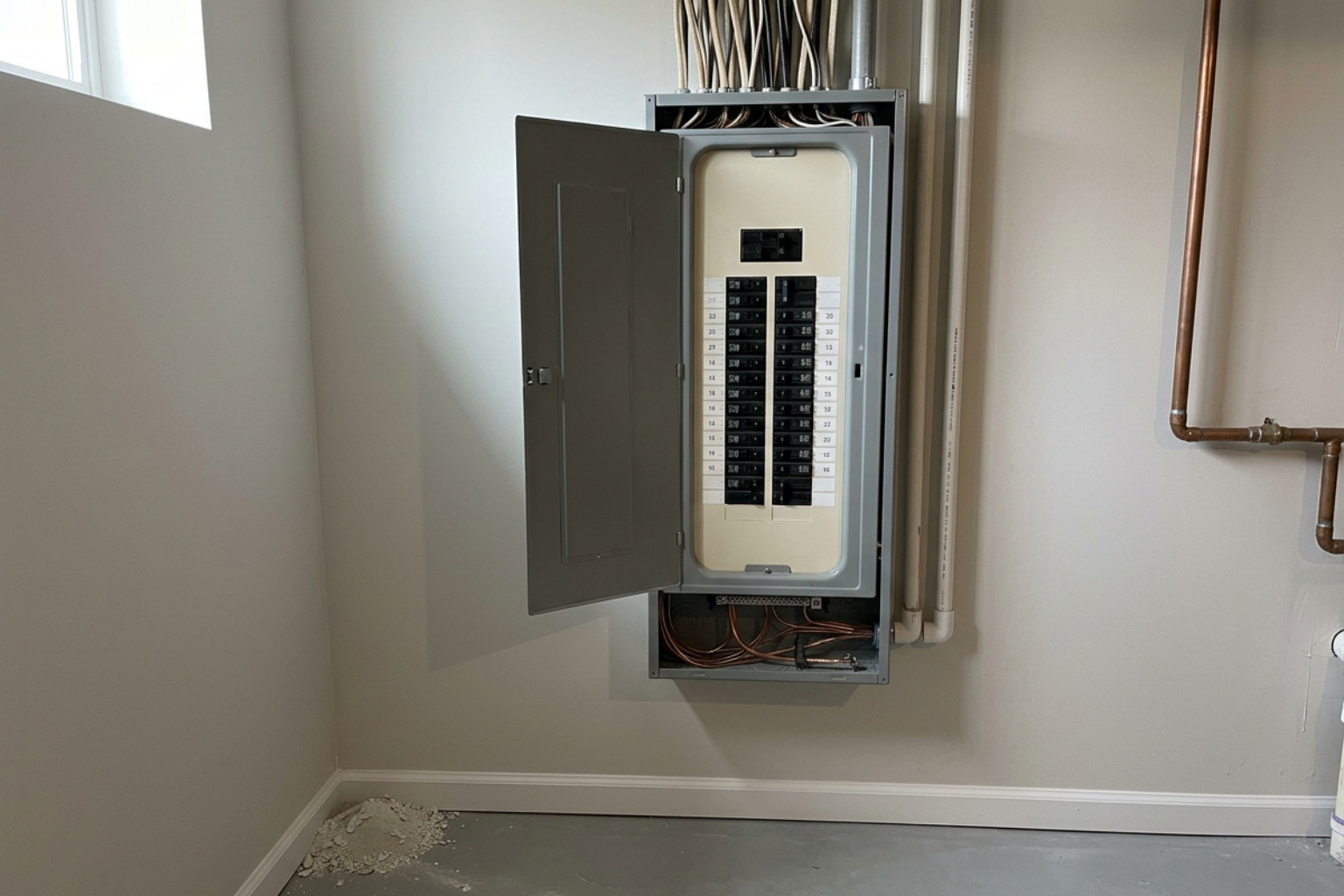
One of the first things I do when visiting a home is check the main panel. Many older homes in the Denver Metro Area only have 100-amp service. Adding a 50-amp hot tub might push that panel to its limit. You might need an upgrade before the spa arrives. Ask yourself: Can My Existing Electrical Panel Handle a Hot Tub?
Navigating Permits and Inspections in Colorado
I’ll be blunt: Do not skip the permit.
In places like Highlands Ranch, Centennial, and Lone Tree, a permit is required for any 240V hot tub installation. It usually costs between $50 and $200, but it’s the best money you’ll spend. An inspector provides a second set of eyes to ensure the work is code-compliant.
If you ever sell your home, a missing permit for a hot tub can hold up the closing. Even worse, if there’s an electrical fire and you didn’t have a permit, your insurance company might deny the claim. We handle the Hot Tub Permit Colorado process for our customers to make it easy.
Indoor vs. Outdoor Installation Precautions
Installing a tub indoors? That’s a whole different ballgame.
- Ventilation: You’ll need a powerful exhaust system to handle the humidity, or you’ll have mold issues in weeks.
- Drainage: The floor must be able to handle hundreds of gallons of water in case of a leak.
- Switches: Any wall switches (like for lights or fans) must be at least 5 feet away from the water.
If you’re in the southern suburbs, our Hot Tub Wiring in Castle Rock, CO page covers more local specifics.
Troubleshooting and Maintenance: Keeping the Water Safe
Once your tub is up and running, your job isn’t quite over. Electrical components outside deal with UV rays, snow, and chemicals like chlorine, which can lead to corrosion.
Why Your Hot Tub Breaker Keeps Tripping
If your breaker trips, don’t just keep flipping it back on. It’s trying to tell you something.
- Moisture: This is the cause of about 45% of service calls. If water gets into the disconnect box or the ozonator, the GFCI will trip.
- Heater Failure: Corrosion on the heating element can cause a short.
- Loose Connections: Over time, the vibration of the pumps can loosen wire terminals.
Avoid Common Problems When Installing a Hot Tub Without a Licensed Electrician by having a professional check the torque on your connections annually.
Backup Power and Generators
With the storms we get in Colorado, people often ask if they can run their spa on a generator.
- Portable Generators: Generally, no. Most can’t handle the 50-amp surge.
- Standby Generators: If you have a large whole-home unit (14-24 kW), it can run the spa, but it must be factored into the load calculation.
The good news is that most hot tubs are well-insulated. If the power goes out, keep the cover on. The water will usually stay warm enough to prevent pipe freezing for 24 to 48 hours.
Frequently Asked Questions about Hot Tub Electrics
Can I use an extension cord for my plug-and-play hot tub?
No. Never. Extension cords aren’t designed to carry that much continuous current. They can overheat, melt, and start a fire. If your outlet is too far away, we need to install a new, permanent GFCI outlet closer to the tub.
How much does it cost to wire a 240V hot tub?
In the Denver area, a standard installation usually runs between $600 and $2,200. The price depends on how far the tub is from your panel and if we have to dig a trench through Rocky Mountain soil (which is never as easy as it looks!). You can see our Hot Tub Installation Pricing for more details.
Do I really need a permit for a backyard spa?
Yes. It’s for your safety and your home’s resale value. Most local municipalities in the Denver Metro Area require it for any hardwired appliance.
Conclusion
Getting your hot tub electrical requirements right is the difference between a relaxing evening and a stressful (or dangerous) DIY disaster. At Harmony Electric, we’ve spent years helping Denver homeowners turn their backyards into retreats.
Whether you’re in Castle Pines, Aurora, or downtown Denver, we focus on doing the work right the first time. We back our hot tub wiring with a lifetime workmanship guarantee because we believe in the quality of our craft. No upselling, no fluff—just safe, reliable power for your new spa.
If you’re ready to get your hot tub hooked up correctly, give us a call. We’ll handle the permits, the trenching, and the wiring so you can just focus on the water.
Get a quote for your hot tub installation from Harmony Electric