What Wire Do You Need for a 220V Hot Tub? Here’s the Short Answer
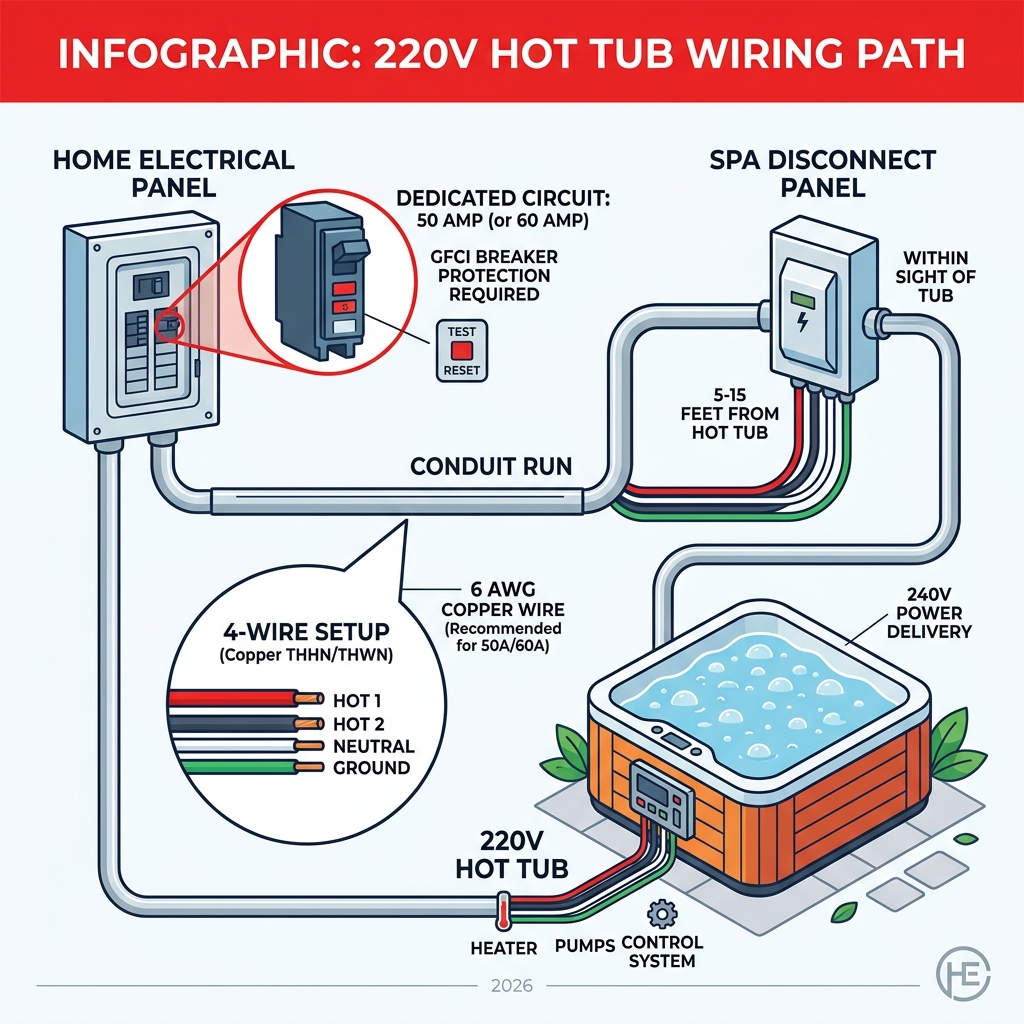
220 hot tub wire typically means 6 AWG copper THHN/THWN, run through conduit on a dedicated 50-amp, 240V circuit with GFCI protection. That covers the vast majority of hot tub installations.
Here’s a quick reference based on circuit size:
| Breaker Size | Wire Gauge (Copper) | Typical Use |
|---|---|---|
| 50A | 6 AWG | Most full-size hot tubs |
| 40A | 8 AWG | Smaller or lower-demand models |
| 60A | 6 AWG (verify run length) | High-demand or large spas |
A few things every installation needs, regardless of wire size:
- 4 wires: two hots (black + red), one neutral (white), one ground (green or bare)
- GFCI protection: built into the breaker or disconnect panel
- Dedicated circuit: no sharing with other appliances
- Spa disconnect panel: mounted within sight of the tub, at least 5 feet away
I’m Randy Harmuth, Master Electrician and owner of Harmony Electric. We wire a lot of hot tubs for homeowners across Denver and the surrounding area. And honestly, the wire question is one I get almost every week.
The answer sounds simple — but the right answer depends on a few things: how far your panel is from the tub, what your specific model requires, and what your local inspector expects. Get those wrong, and you’re looking at tripped breakers, underperforming heaters, or a failed inspection.
This guide walks through everything clearly, so you know exactly what you’re dealing with before anyone touches a wire.
Basic 220 hot tub wire glossary:
Choosing the Right 220 Hot Tub Wire for Your Setup

When you’re looking at the back of a hot tub or reading the manual, you’ll see requirements for a 50-amp or 60-amp circuit. For a standard 50-amp circuit, 6 AWG copper wire is the gold standard.
We specifically use THHN/THWN wire because it is designed to handle the heat and moisture that come with being near a spa. THHN stands for Thermoplastic High Heat-resistant Nylon-coated, and the “W” in THWN means it’s rated for wet locations. Since your hot tub is outside and full of water, that moisture rating isn’t just a suggestion—it’s a safety requirement.
In my experience working on homes from Castle Rock to Highlands Ranch, I’ve seen people try to use smaller wire to save a few bucks. But if you use 8 AWG wire on a 50-amp circuit, the wire can overheat, damaging the insulation and potentially causing a fire. Always match your hot tub amperage to the correct wire gauge.
Understanding the 4-Wire Requirement
Most modern 220V-240V hot tubs require a 4-wire setup. This includes:
- Two “Hot” wires (usually black and red): These provide the 240V of power needed to run the heavy-duty heater and the powerful jet pumps.
- One Neutral wire (white): This allows the tub to run 120V components, like the control panel, internal lights, and ozonators.
- One Ground wire (green or bare): This is your safety lifeline, providing a path for electricity to return to the panel if there’s a short circuit.
If you are looking at a 50 amp hot tub GFCI wiring diagram, you’ll see all four of these wires connecting the main panel, the disconnect, and the hot tub’s control box.
Why Copper is the Standard for 220 Hot Tub Wire
While aluminum wire is sometimes used for main service entries or very long feeder runs to subpanels, we almost always recommend copper for wiring a home hot tub.
Copper is a better conductor, which means it handles the high-demand “startup” load of a hot tub motor more efficiently. More importantly, hot tub terminals are often designed specifically for copper. Aluminum expands and contracts more than copper when it heats up, which can lead to loose connections and “arcing” (sparks) over time. For a 50-amp service that’s going to be running for hours at a time in the Colorado winter, copper gives you the longevity and reliability you want.
Why Distance and Voltage Drop Matter
One thing that surprises many homeowners in Parker or Centennial is that the “standard” wire size might not be enough if your hot tub is far away from your electrical panel. This is because of something called voltage drop.
Think of electricity like water in a hose. If the hose is 10 feet long, the pressure at the end is great. If the hose is 200 feet long, the pressure drops by the time it reaches the nozzle. In electrical terms, if the voltage drops too much (more than 3% according to the NEC), your heater won’t get as hot as it should, and your pump motors will have to work harder, which can shorten their lifespan.
Calculating Voltage Drop for 220 Hot Tub Wire
If your hot tub is more than 100-120 feet away from your main panel, we usually have to “upsize” the wire. For example, a 40-amp hot tub at a distance of 120 feet might require 4 AWG stranded copper instead of the usual 8 AWG to keep the voltage drop around 2.4%.
I’ve seen cases where a hot tub is rated for 36 amps and a DIYer thinks they can use thin 12-gauge wire because “it’s only 20 feet.” That is a dangerous mistake. Even for short runs, you must size the wire based on the breaker size (50 amps), not just the running load of the tub.
Investing in the right wire size upfront helps you avoid unforeseen installation costs later when a component burns out prematurely. You can find more details on sizing in this guide to hot tub wire.
Essential Components: GFCI Breakers and Disconnect Panels
Safety is the most important part of any 220 hot tub wire project. Because water and electricity are a deadly combination, the National Electrical Code (NEC) is very strict about how these are installed.
Every 220V hot tub requires a GFCI (Ground Fault Circuit Interrupter) breaker. This device monitors the electricity flowing through the circuit. If it detects even a tiny “leak” of power (which could mean someone is getting shocked), it shuts the power off in milliseconds.
Safety Standards for 220 Hot Tub Wire Installation
According to NEC Article 680, you must have a manual disconnect—often called a “spa panel”—located:
- At least 5 feet from the inside wall of the hot tub (so you can’t touch the panel while you’re in the water).
- Within sight of the hot tub (so a service technician can see that the power is off while they are working on it).
- No more than 50 feet away (though local Colorado codes may vary slightly).
| Feature | 3-Wire Setup (Older/Specific) | 4-Wire Setup (Modern Standard) |
|---|---|---|
| Components | 2 Hots + 1 Ground | 2 Hots + 1 Neutral + 1 Ground |
| Power Capability | 240V Only | 240V and 120V |
| Safety | Grounding only | Grounding + Neutral for electronics |
| NEC Compliance | Rare for new spas | Required for most new installs |
Setting up your GFCI the easy way usually involves buying a pre-configured spa disconnect box that includes the 50-amp GFCI breaker.
Conduit and Trenching: Protecting Your Investment
You can’t just bury 220 hot tub wire in the dirt. Even “direct burial” cable (like UF-B) isn’t usually recommended for hot tubs because it’s vulnerable to shovels, rodents, and shifting soil.
The best practice is to use Schedule 40 PVC conduit. Here’s what we typically do for Denver area homes:
- Dig a trench: Usually 18 inches deep for PVC conduit.
- Use Sweep Elbows: Never use 90-degree “plumbing” elbows. Use “sweeps,” which have a gradual curve that makes it much easier to pull heavy 6 AWG wire through.
- Liquid-tight Flexible Conduit: For the last few feet between the disconnect panel and the hot tub, we use a flexible, waterproof conduit (often called “Sealtite”). This allows for a bit of movement and makes the final connection much easier.
Before you start digging, you must get a permit and call 811 to have your underground utility lines marked. Avoiding common DIY mistakes like shallow trenches or the wrong conduit type will save you a lot of headaches during the inspection.
Common Mistakes and Professional Tips
As a Master Electrician, I’ve seen a lot of “creative” wiring. Here are the most common issues we fix:
- Missing the Bonding Grid: Many people confuse “grounding” with “bonding.” Grounding protects against electrical shorts. Bonding involves connecting all the metal parts around the spa (like handrails or metal frames) with a #8 solid copper wire to ensure there is no “potential” difference in voltage between them. This prevents that annoying “tingle” you might feel when touching a metal rail.
- Installing a Separate Ground Rod: This is a big no-no. You should never install a separate ground rod at the hot tub. Your equipment ground must go back to the main service panel to ensure a reliable path for trip current.
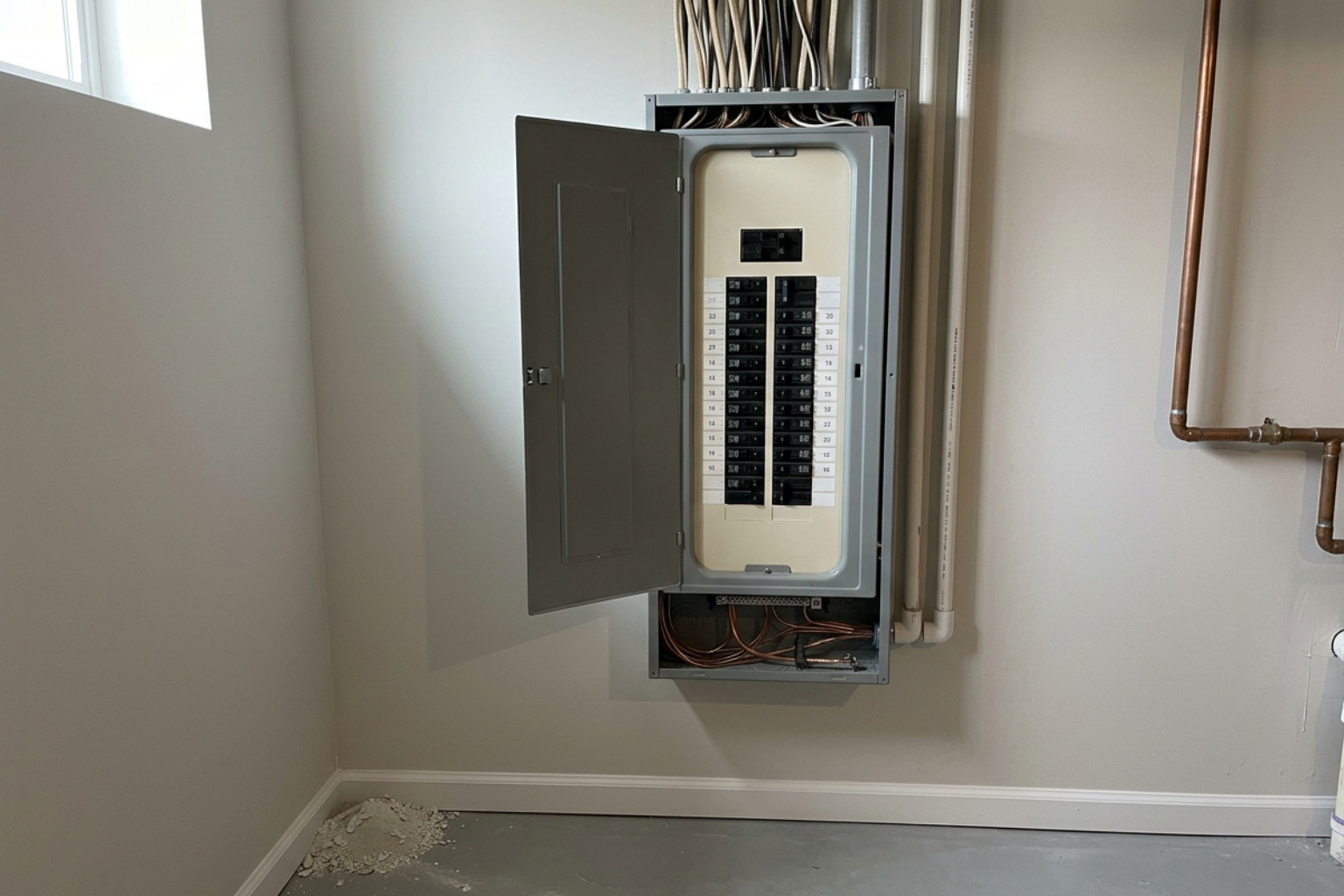
- Ignoring the Panel Capacity: Before you buy that beautiful 60-amp spa, you need to know if your electrical panel can handle it. If your home has a 100-amp service and you add a 50-amp hot tub, you might trip your main breaker every time the AC and the hot tub run at the same time.
- Loose Terminals: Hot tub vibrations can loosen wire connections over time. We use specific torque wrenches to ensure every lug is tightened to the manufacturer’s exact specifications. This prevents common installation problems like melted terminals.
Frequently Asked Questions about Hot Tub Wiring
Can I use aluminum wire for my hot tub?
While it is technically possible if the terminals are rated for it (and you use a larger gauge, like #4 AWG for a 50A circuit), we strongly recommend copper. Most hot tub manufacturers specifically require copper to maintain the warranty and ensure a safe, long-lasting connection.
Does the ground wire need to be insulated?
Yes. For hot tub installations, the NEC requires the equipment grounding conductor to be insulated (usually green) when run in conduit. This protects the wire from corrosion and ensures a clear path back to the panel.
How far should the spa panel be from the water?
The disconnect must be at least 5 feet from the water’s edge to prevent someone from reaching out and touching it while in the tub. However, it must be within “line of sight” and no more than 50 feet away so that it can be quickly accessed in an emergency.
Conclusion
Wiring a hot tub isn’t just about getting the lights to turn on—it’s about making sure your family is safe while they relax. From choosing the right 220 hot tub wire to ensuring your GFCI is tested and your bonding is secure, every detail matters.
At Harmony Electric, we take pride in doing the job right the first time. Whether you’re in Denver, Castle Rock, or Highlands Ranch, our team—led by myself, Randy Harmuth—is here to help. We offer a lifetime workmanship guarantee on our hot tub wiring because we believe in the quality of our work.
If you’re ready to get your backyard oasis up and running safely, contact us for professional hot tub installation services. We’ll handle the permits, the trenching, and the technical stuff so you can get to the best part: soaking in the bubbles.