What an Electrician for Hot Tub Installation Actually Does (And Why It’s Not Optional)
Hiring an electrician for hot tub installation is one of the most important steps in getting your spa up and running safely. It’s not just a formality — a hot tub runs on a dedicated 240-volt circuit that your home’s standard wiring simply isn’t built to handle.
Here’s what a licensed electrician does for a hot tub install, at a glance:
| Task | Why It Matters |
|---|---|
| Installs a dedicated 240V circuit | Hot tubs can’t share circuits with other appliances |
| Sizes the breaker (usually 50–60 amps) | Prevents overloads and tripped breakers |
| Runs 6-gauge copper wire | Handles the electrical load safely |
| Installs a GFCI disconnect box | Cuts power instantly if water contacts wiring |
| Bonds and grounds all metal parts | Prevents dangerous voltage differences in the water |
| Pulls permits and arranges inspection | Keeps you legal and protects your warranty |
Most homeowners are surprised to learn just how much goes into hot tub wiring. It’s not a plug-in appliance. A standard installation typically takes 3 to 5 hours and involves trenching, panel work, and code-specific safety hardware.
I’m Randy Harmuth, a Master Electrician and owner of Harmony Electric here in Denver. I’ve wired a lot of hot tubs across the Front Range, and I put this guide together to walk you through exactly what the process looks like — what’s required, what it costs, and what to watch out for.
Whether you’re still planning your install or you’ve already got a hot tub sitting in your backyard waiting to be connected, this guide will help you understand what’s involved and what questions to ask.
Quick electrician for hot tub installation definitions:
Why You Need a Specialized electrician for hot tub installation
When you mix high-voltage electricity with a large body of water, the margin for error is zero. In my years of working around the Denver Metro area, I’ve seen plenty of “handyman” specials that made my hair stand on end. The primary reason you need a specialist is that hot tubs are governed by very specific rules in the National Electrical Code (NEC), specifically Section 680.
This section of the code isn’t just red tape; it’s written to prevent electrocution. Water is an excellent conductor, and even a tiny amount of “stray” current can become lethal in a spa environment. A professional knows how to create a “safety loop” that ensures if a fault occurs, the power is cut in a fraction of a second.
Furthermore, many homeowners don’t realize that common problems when installing a hot tub without a licensed electrician often lead to expensive equipment damage. If the voltage isn’t consistent or the grounding is weak, you can burn out expensive control boards or pump motors before you even get your first soak in.
The Role of a Professional electrician for hot tub installation
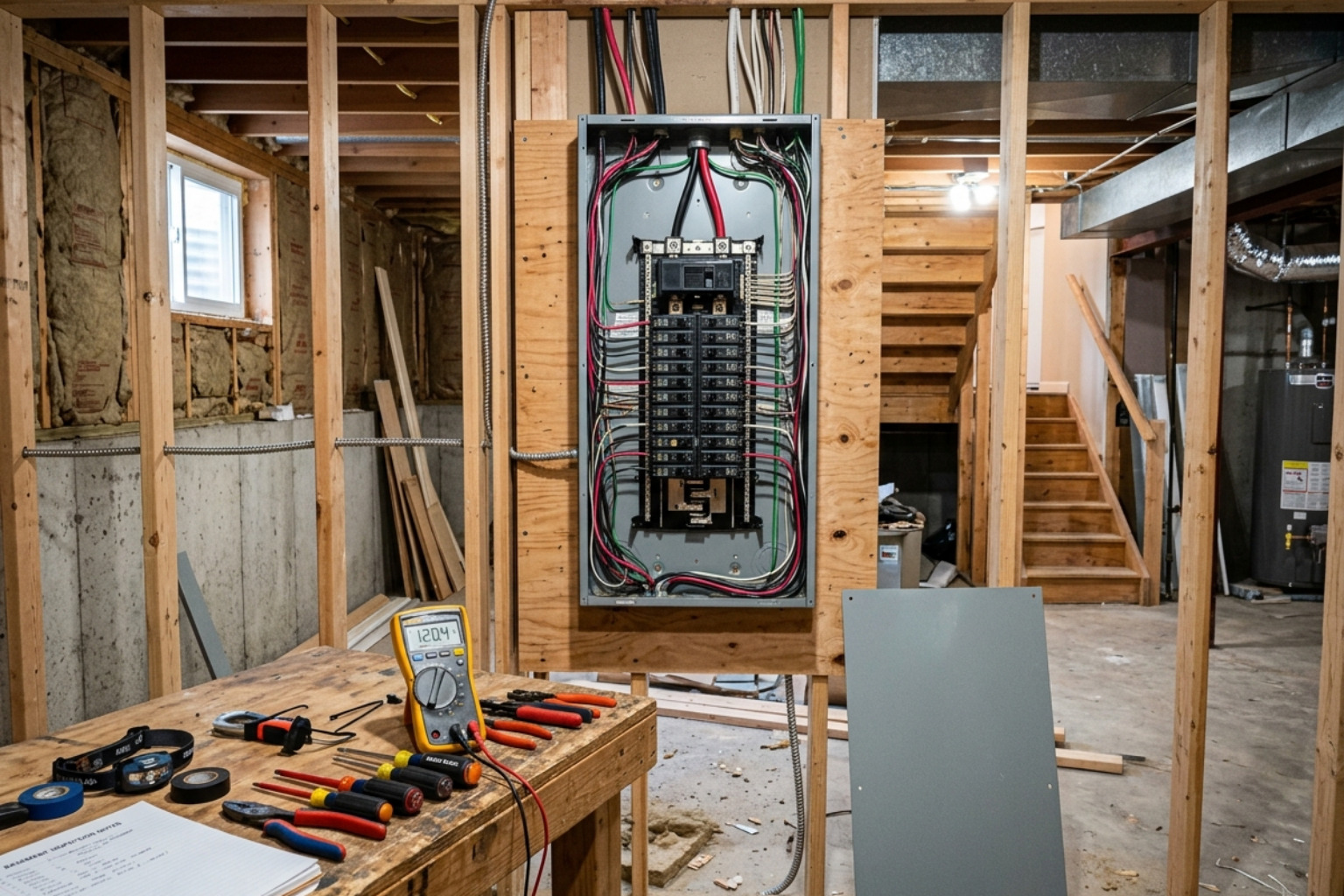
Our job starts long before we pull a single wire. First, we perform a load calculation. We need to see if your current electrical panel has the “room” (the available capacity) to add another 50 or 60 amps.
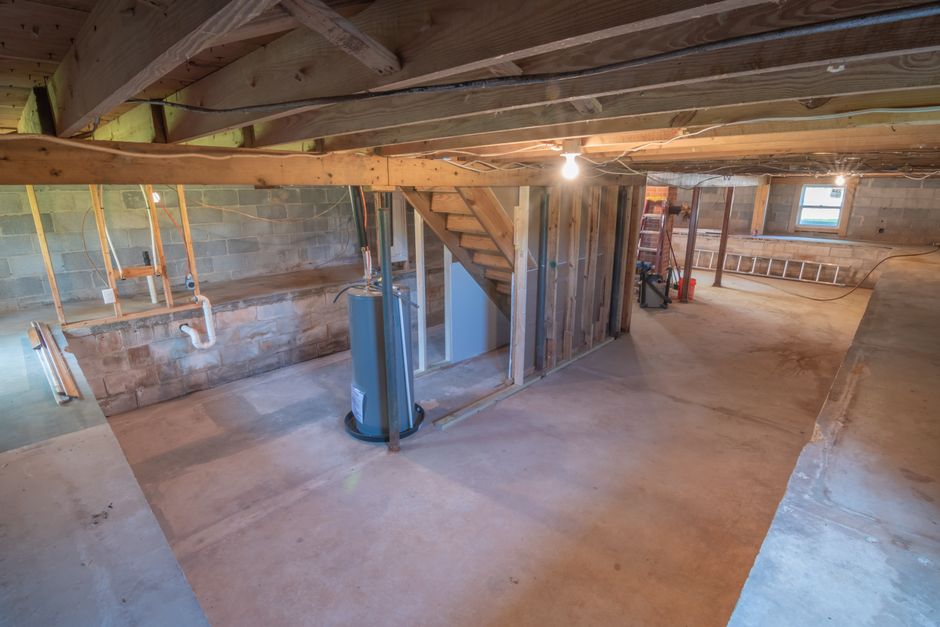
In many older Denver homes with 100-amp service, adding a hot tub might push the system to its limit. We help you determine can my existing electrical panel handle a hot tub? before you spend thousands on the tub itself. If your panel is full or undersized, we can help with a panel upgrade to make sure your whole house stays powered safely.
Risks of DIY Wiring Mistakes
I get it—DIY projects are satisfying. But hot tub wiring is one area where “good enough” can be deadly. One of the most frequent DIY hot tub wiring mistakes I see is the use of the wrong wire type or improper grounding.
If you don’t use a dedicated circuit, your hot tub might try to pull power at the same time as your AC or electric dryer, leading to frequent breaker trips. Even worse, improper wiring can void your manufacturer’s warranty. Most major spa brands require proof of professional installation to honor their 5- or 10-year equipment guarantees.
Understanding the Core Electrical Requirements
Before you call an electrician for hot tub installation, it helps to know what kind of power your specific model needs.
| Feature | 120V “Plug-and-Play” | 240V Hard-Wired (Standard) |
|---|---|---|
| Power Needs | Standard 15-20 Amp Outlet | Dedicated 50-60 Amp Circuit |
| Heating Speed | Slow (1-2 degrees per hour) | Fast (3-6 degrees per hour) |
| Jet Power | Lower (usually 1 pump) | High (multiple pumps + heater) |
| Installation | Plug into dedicated GFCI outlet | Hard-wired by electrician |
Most full-sized family hot tubs require a 240-volt connection. This allows the heater and the high-speed jets to run at the same time. If you’re unsure about your model’s needs, check out our hot tub amperage guide for a deeper dive.
Choosing the Right Materials and Wire Gauge
We don’t just use standard “romex” wire for hot tubs. Because the wiring is often outdoors or underground, we use THWN (Thermoplastic High Heat-resistant Nylon-coated) copper wire. This wire is rated for wet locations.
For a 50-amp tub, we typically run 6-gauge copper wire inside a rigid PVC conduit. This conduit must be buried at a specific depth—usually 18 inches—to protect it from shovels or landscaping tools. We take care of all the wiring a home hot tub details so you don’t have to worry about local inspectors failing the job.
The Importance of a Dedicated Circuit
A “dedicated” circuit means that the wire goes from your breaker panel directly to the hot tub and nowhere else. No lights, no garage outlets, nothing. This prevents “voltage drop,” which can cause your pumps to run hot and fail prematurely. When hooking up 220v hot tub systems, ensuring this direct path is the only way to guarantee system reliability over the long haul.
Mandatory Safety Features: GFCI, Grounding, and Bonding
Safety is the biggest part of what we do. There are three technical terms you’ll hear us use: GFCI, Grounding, and Bonding.
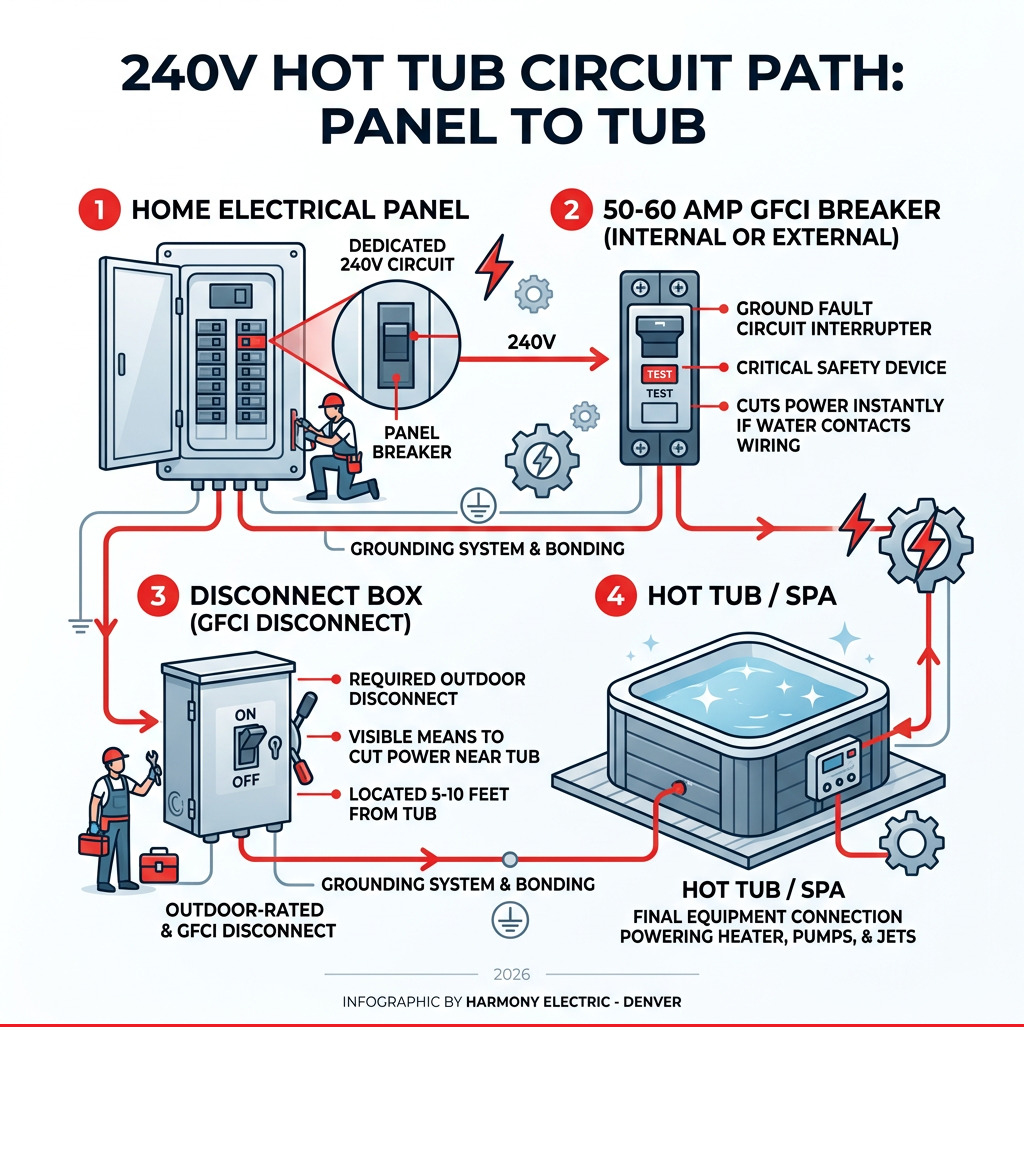
- GFCI (Ground Fault Circuit Interrupter): This is a specialized breaker that monitors the current flowing out and back. If it detects even a tiny leak (a “ground fault”), it shuts off the power in 1/40th of a second.
- Grounding: This provides a safe path for electricity to travel to the earth if there is a short circuit.
- Bonding: This is the one people forget. Bonding connects all the metal parts of the hot tub and surrounding structures (like a metal fence or ladder) together so they are at the same electrical potential.
Why Bonding is Different from Grounding
In a hot tub, you can actually get a shock from “stray” voltage that isn’t coming from the tub’s own power cord. It can come from the ground itself or nearby metal objects. Bonding creates an “equipotential plane.” Essentially, it makes sure everything you can touch is at the exact same voltage level, so current won’t flow through your body. It’s a complex part of the shocking truth: everything about hot tub GFCI breakers and safety.
Installing the Manual Disconnect Switch
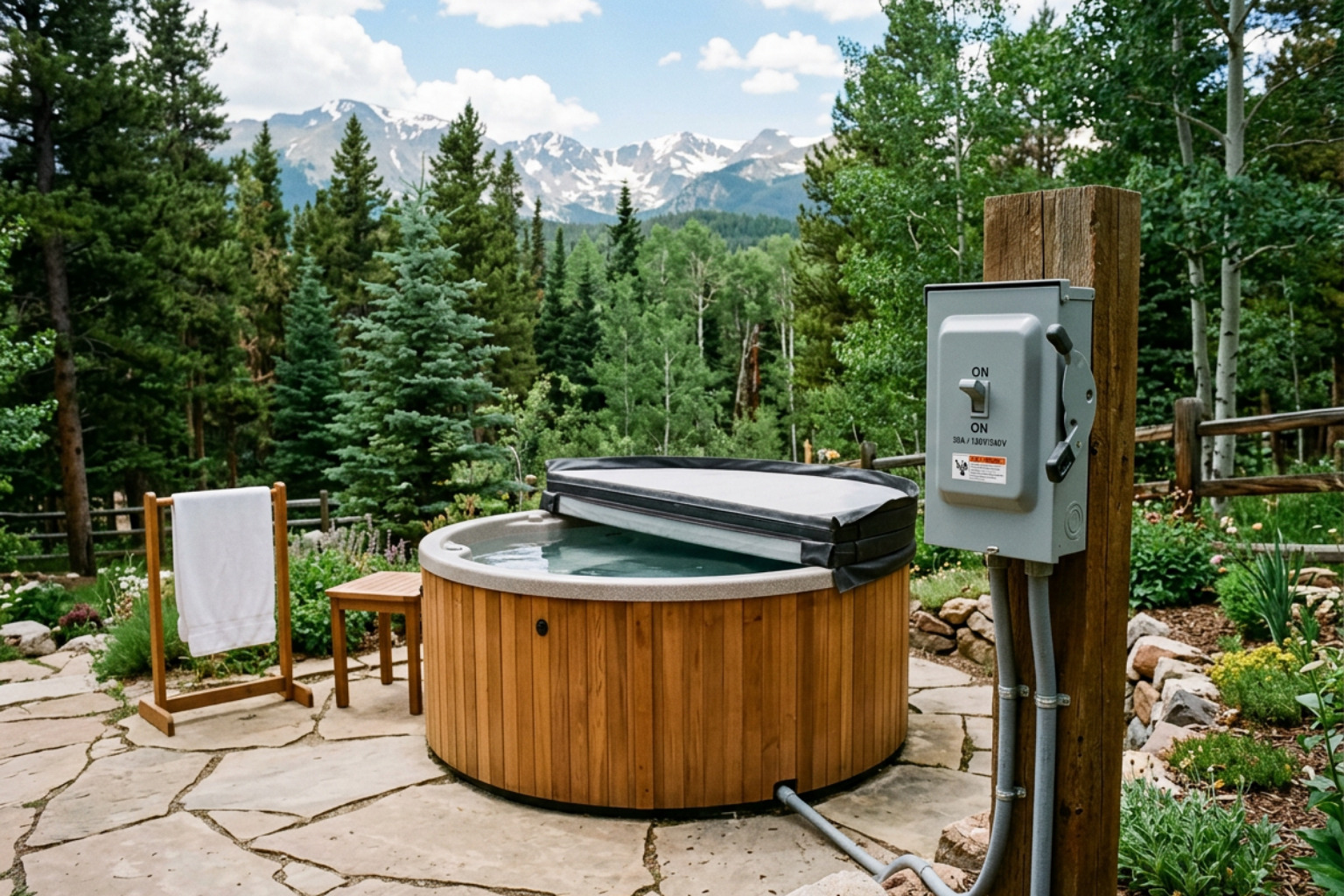
The NEC requires a manual “disconnect” or “spa pack” to be installed within sight of the hot tub, but no closer than 5 feet from the water’s edge. This is so you (or a service tech) can quickly cut the power in an emergency without running all the way to the main panel. We help you choose the right electrical box for hot tub placement that is both code-compliant and aesthetically pleasing in your backyard.
The Professional Installation Process Step-by-Step
When we arrive for a hot tub job in Centennial or Highlands Ranch, we follow a proven process:
- Site Assessment: We look at your panel and the path to the tub.
- Permitting: We handle the paperwork with the local building department.
- Trenching: If the tub is in the middle of the yard, we dig a trench for the conduit.
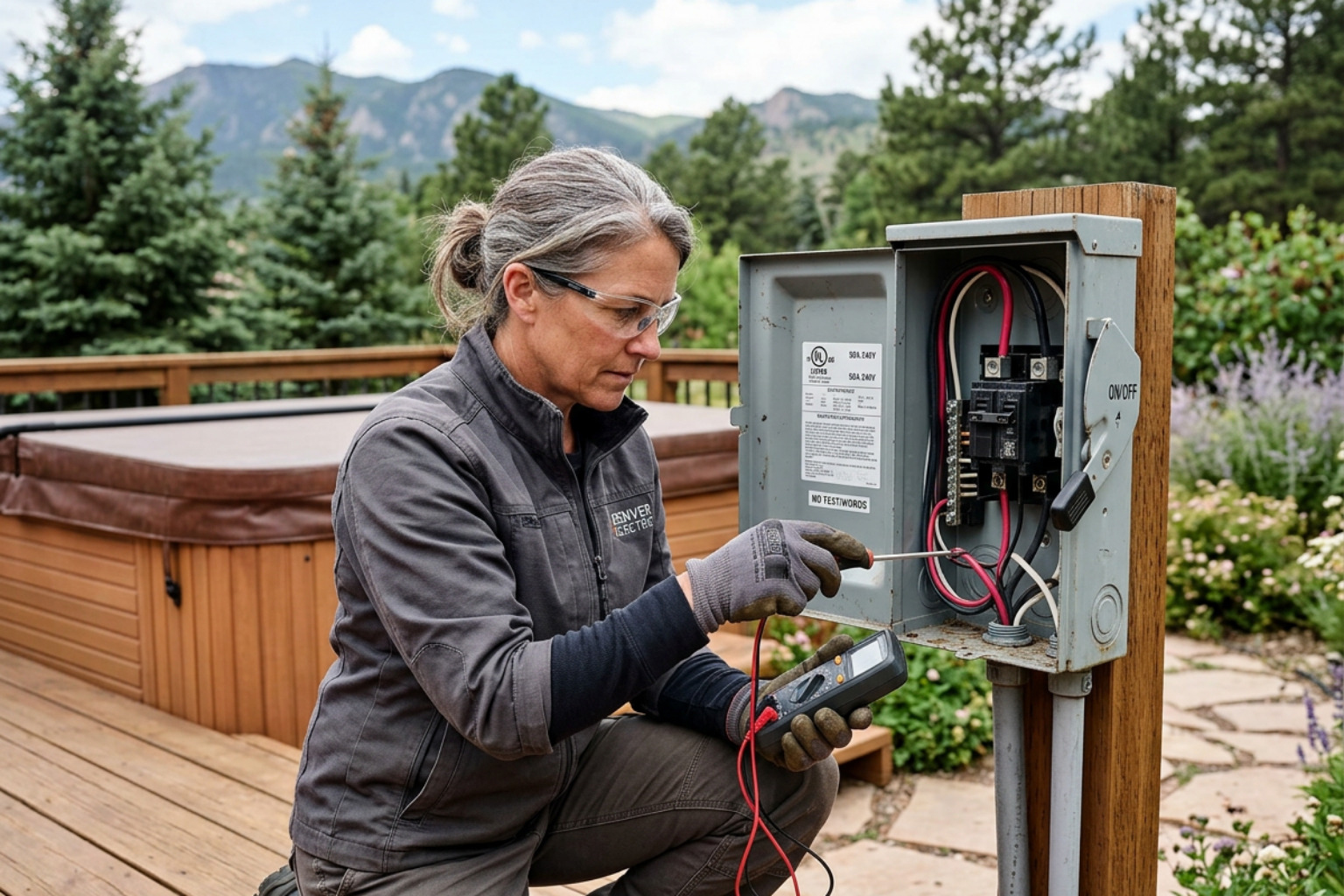
- Mounting the Disconnect: We install the GFCI spa pack on the exterior wall or a post.
- Running the Wire: We pull the heavy 6-gauge wire from the main panel to the disconnect, and then to the tub.
- Final Connections: We wire the tub’s control board.
- Testing: We test the GFCI to make sure it trips exactly when it should.
We aim for hooking up your hot tub GFCI: the easy way to safety so you can start filling the tub with water as soon as we leave.
Hiring a Licensed electrician for hot tub installation in Denver
You want someone who knows the local quirks of Colorado homes. Whether it’s dealing with the rocky soil in Castle Rock or the specific permit requirements in Parker, local expertise matters. At Harmony Electric, we are led by a Master Electrician, which means we have the highest level of licensing available. We also offer a lifetime workmanship guarantee—if our wiring ever fails due to how it was installed, we’ll fix it for free. If you’re looking for hot tub wiring in Castle Rock CO, we’ve got you covered.
Navigating Permits and Inspections
Yes, you need a permit. In the Denver Metro area, an electrical permit ensures that a third-party inspector verifies the work is safe. This is important for your insurance and for when you eventually sell your home. We handle the hot tub permit Colorado process from start to finish.
Estimating the Cost of Your Hot Tub Wiring
I’m often asked, “Randy, what’s this going to cost me?” While every home is different, most hot tub electrical installations fall between $500 and $2,000.
What affects the price?
- Distance: The further the tub is from your main panel, the more copper wire and conduit we need. Copper isn’t cheap!
- Trenching: Digging through soft soil is easier than digging through the clay and rock we often find in Lone Tree or Castle Pines.
- Panel Capacity: If we need to add a subpanel or upgrade your main service, that adds to the cost.
- Permit Fees: These vary by city (Denver, Centennial, etc.).
For more details, check out don’t get shocked: your guide to 220V hot tub installation costs.
Factors That Impact the Final Quote
Indoor tubs are a different beast. They require specialized ventilation to handle the moisture and often have different foundation requirements. Outdoor tubs are more common but require weatherproof hardware. We provide hot tub installation pricing that is transparent and upfront—no hidden fees or “surprises” at the end of the job.
Long-Term Value of Professional Work
Think of professional installation as an investment. Doing it right the first time saves you from “ghost” electrical issues, protects your $10,000+ hot tub investment, and ensures your family is safe. Plus, a professionally wired tub is more energy-efficient because it uses properly sized conductors that don’t waste energy as heat. You can find more about general home improvement safety standards through reputable sources, but for the actual wiring, you want a pro.
Frequently Asked Questions about Hot Tub Wiring
Can I use an extension cord for my hot tub?
Absolutely not. Extension cords are not designed to carry the heavy load of a hot tub. They can overheat, melt, and start a fire. Even “heavy-duty” cords aren’t rated for the continuous draw a spa requires.
Do plug-and-play hot tubs need a special outlet?
They usually need a dedicated 15 or 20-amp outlet. Even though they “plug in,” they shouldn’t share that outlet with a toaster or a vacuum. If the outlet is outdoors, it must be a GFCI outlet with a weatherproof “in-use” cover.
How far should the disconnect box be from the water?
The NEC says it must be at least 5 feet away. This is to prevent someone from standing in the water and touching the electrical box at the same time. However, it also must be “within sight” of the tub, usually no further than 50 feet.
Getting Your Hot Tub Ready for Relaxation
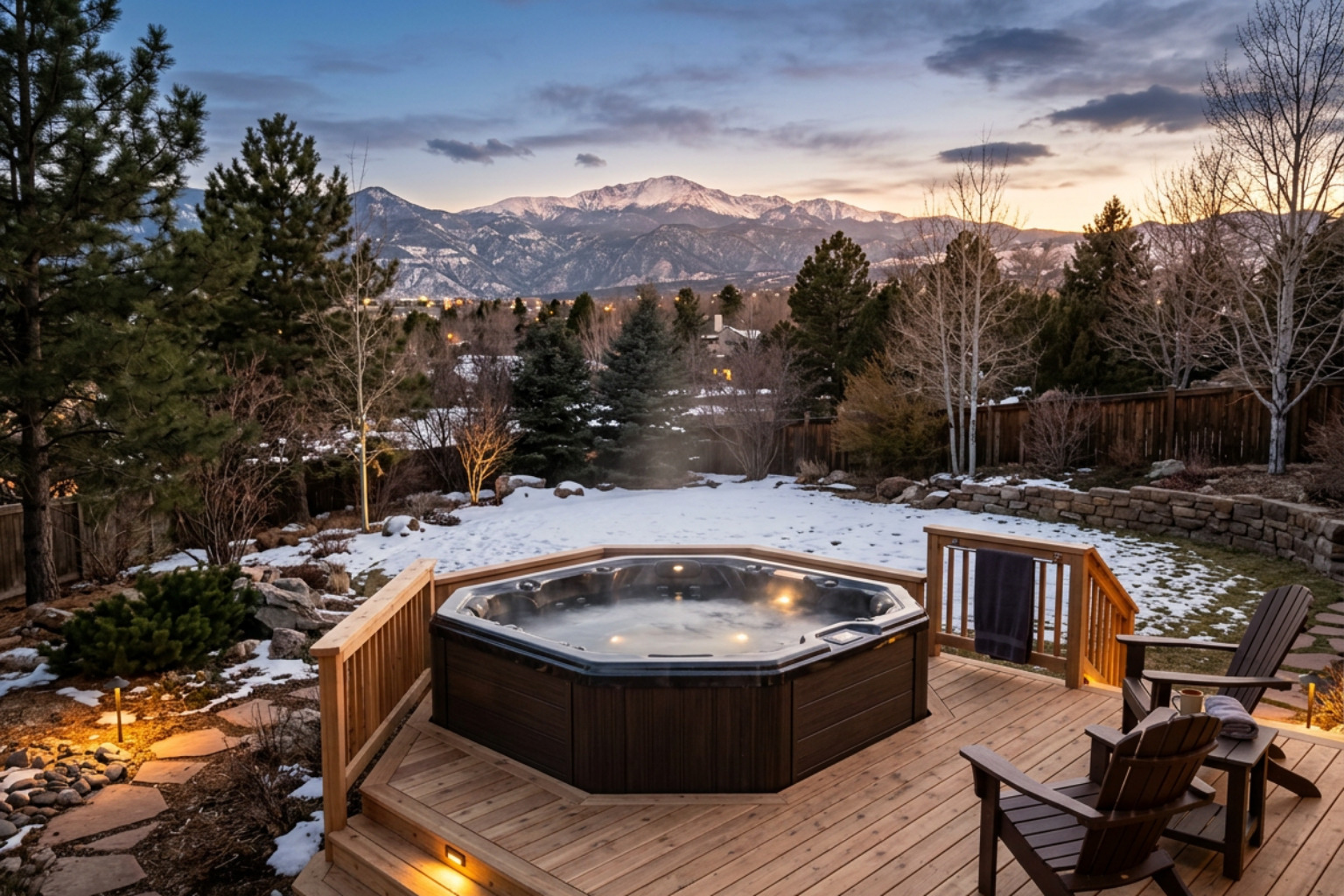
At Harmony Electric, we believe your backyard oasis should be a place of total relaxation, not a source of electrical worry. We take pride in providing clean, high-quality work that stands the test of time.
If you’re in Denver, Castle Rock, Centennial, or any of our surrounding communities, we’d love to help you get wired up. We offer honest recommendations and a focus on safety that only a Master Electrician can provide. Ready to get started? Check out our hot tub installation services page to schedule your assessment.