What Does EV Charger Installation Cost in Lone Tree?
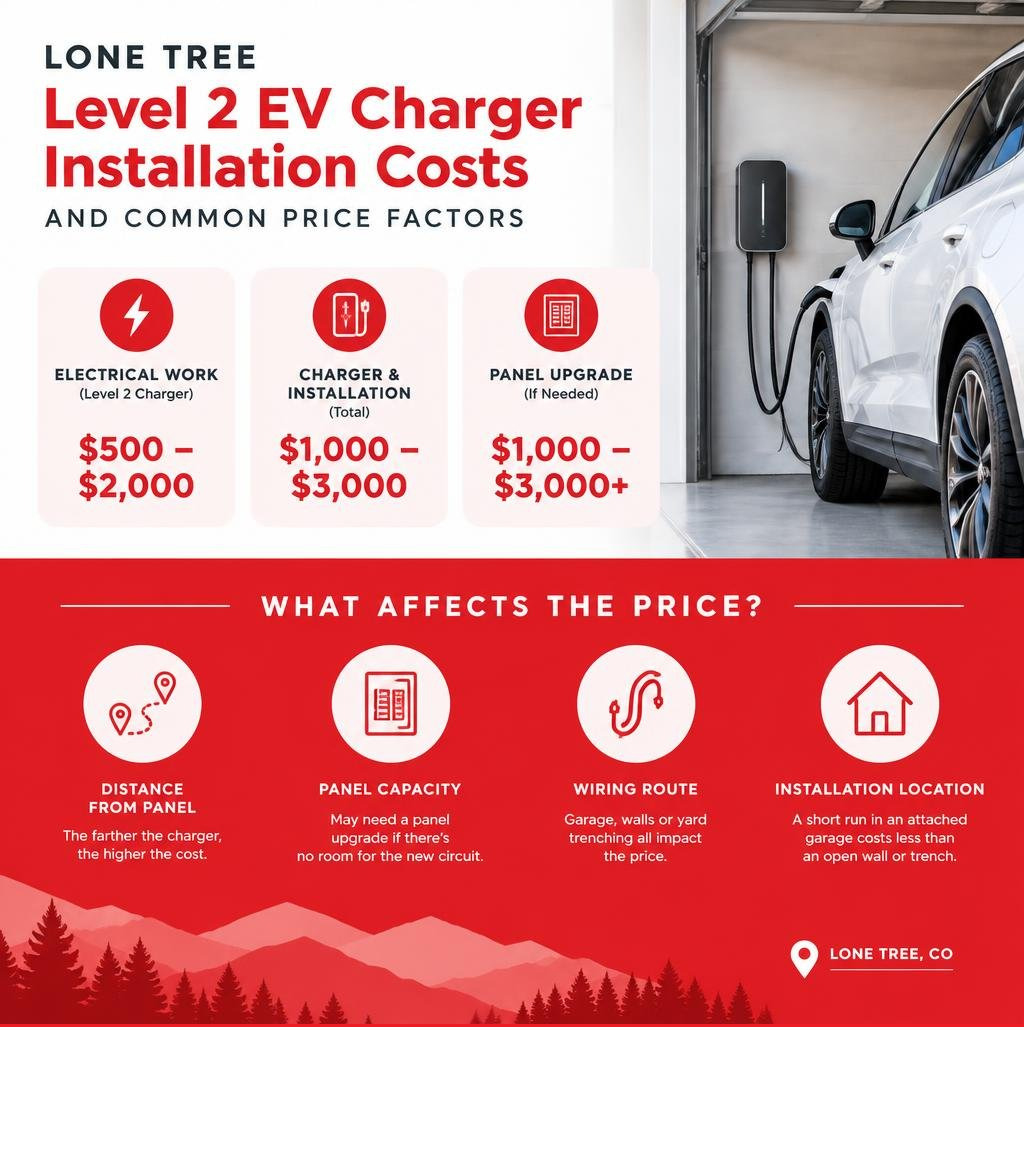
A Level 2 EV charger installation in Lone Tree typically costs $500 to $2,000 for the electrical work. With the charger itself, many homeowners can budget $1,000 to $3,000 total. A panel upgrade, if needed, can add $1,000 to $3,000 or more.
The biggest price differences come down to how far the charger sits from your electrical panel, whether the panel has room for the new circuit, and how the wiring gets to your parking spot. A short run through an attached garage usually costs less than one that needs finished walls opened or a yard trenched.
I’m Randy Harmuth, owner of Harmony Electric, and I’ll walk you through what to look for in a Lone Tree installation quote. The overall cost of EV charger installation in Lone Tree depends on your home’s layout and electrical capacity. Understanding realistic EV charger installation pricing and what happens during an EV charger installation inspection will help you plan your project with confidence.
Understanding the Cost of EV Charger Installation in Lone Tree
When you start planning a home charging station, it helps to break the total invoice into two distinct parts: the hardware and the professional electrical labor. Most dedicated Level 2 wall boxes run between $300 and $700 depending on smart features, cable length, and maximum amperage output.
The labor and materials side typically falls between $500 and $2,000 for standard residential setups in our area. That covers running heavy-gauge copper conductors, mounting the dedicated double-pole breaker, installing conduit, wiring the station, and conducting comprehensive safety testing.
To see how local quotes compare with broader benchmarks, you can review the average cost of EV charger installation or research compiled by the U.S. Department of Energy’s Alternative Fuels Data Center.
| Location / Scope | Typical Labor & Materials | Hardware Cost | Total Estimated Project Range |
|---|---|---|---|
| Lone Tree, CO (Standard Install) | $500 – $2,000 | $300 – $700 | $800 – $2,700 |
| Lone Tree, CO (With Panel Upgrade) | $1,500 – $5,000 | $300 – $700 | $1,800 – $5,700 |
| Colorado State Average | ~$2,398 (all-in labor/parts) | Included in avg | $1,200 – $3,500 |
| National Average | $749 – $2,500 (labor only) | $400 – $800 | $1,000 – $3,000+ |
What we see in Lone Tree homes is that modern subdivision layouts often keep installation costs quite reasonable, provided the main electrical panel sits in the garage or an adjacent utility room.
Level 1 vs Level 2 Cost of EV Charger Installation in Lone Tree
Every new electric vehicle comes with a basic cord that plugs directly into a standard 120-volt household wall outlet (Level 1). If you only commute a few miles down Lincoln Avenue each day, trickle charging at 3 to 5 miles of range per hour might be manageable. Adding a simple dedicated 120-volt outlet usually costs between $200 and $500.
However, almost all drivers quickly find that Level 1 charging is too slow for everyday convenience, especially during cold Colorado winters when battery efficiency drops.
A dedicated 240-volt Level 2 charging setup delivers roughly 25 to 40 miles of range per hour of charging. Our EV charger levels guide for home explains the differences in charging speeds and daily power demands. Installing a 240-volt circuit ensures your vehicle can fully recharge overnight during off-peak hours.
Regional Comparison: Lone Tree vs Denver and Colorado Springs
Electrician hourly rates across Douglas County and the greater Denver metro area generally sit between $75 and $150 per hour. Because Lone Tree features a high proportion of newer single-family builds in neighborhoods like Heritage Hills, RidgeGate, and Carriage Club, many homes already have 200-amp electrical panels.
Installations here tend to align closely with broader regional rates in Centennial and Highlands Ranch.
Older historic properties in central Denver or parts of Colorado Springs frequently incur higher costs due to outdated 100-amp service panels or detached carriage garages that require long outdoor trenching runs.
Key Factors That Impact Your Installation Quote
Every home is built differently, which is why an electrician needs to look at your layout before giving an exact price.
The primary cost drivers include:
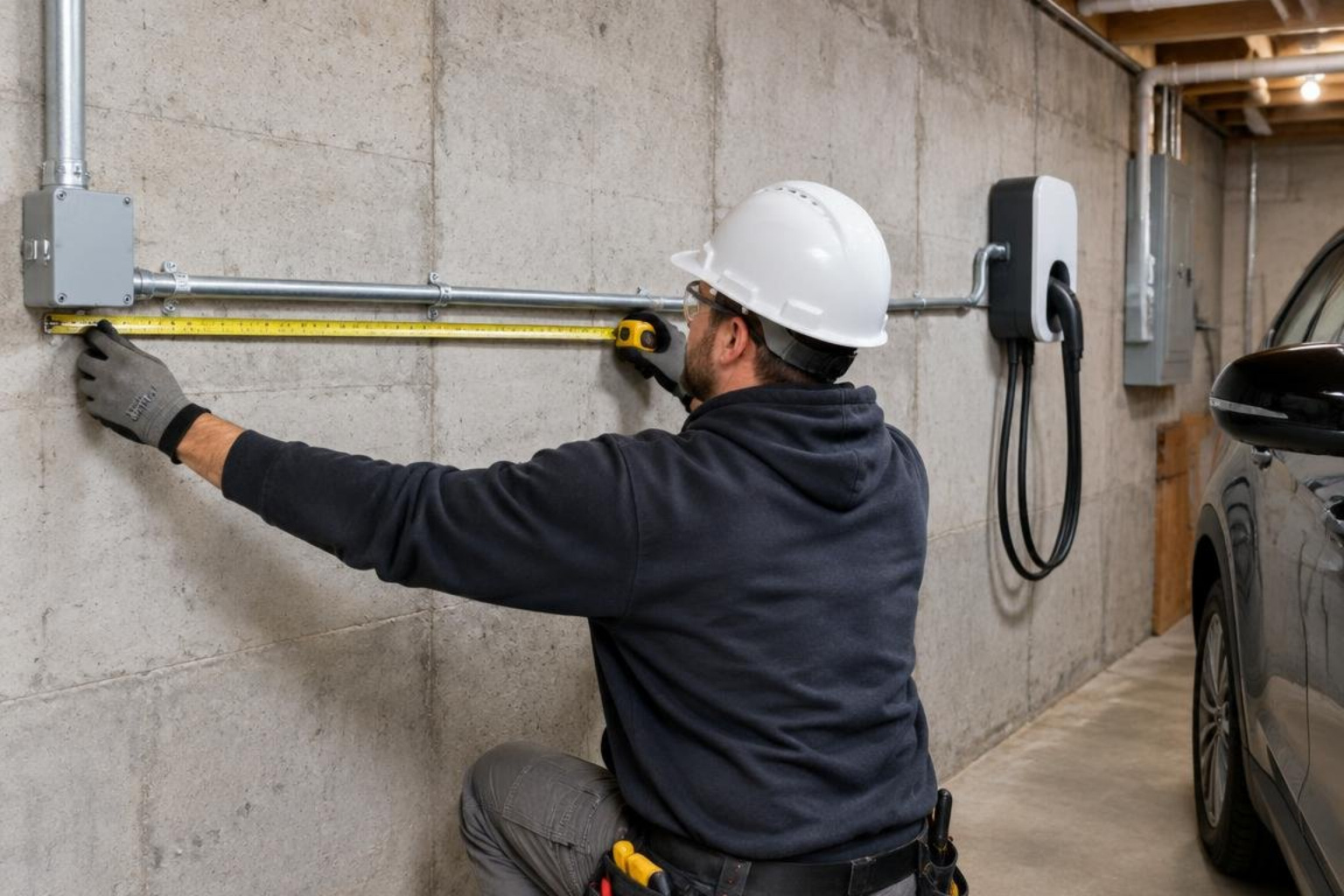
- Distance from the electrical panel: Copper wire is priced by the foot. A charger mounted right next to your breaker panel uses 10 feet of wire, while a run to the far side of a three-car garage can easily require 50 to 80 feet of heavy conduit and wire.
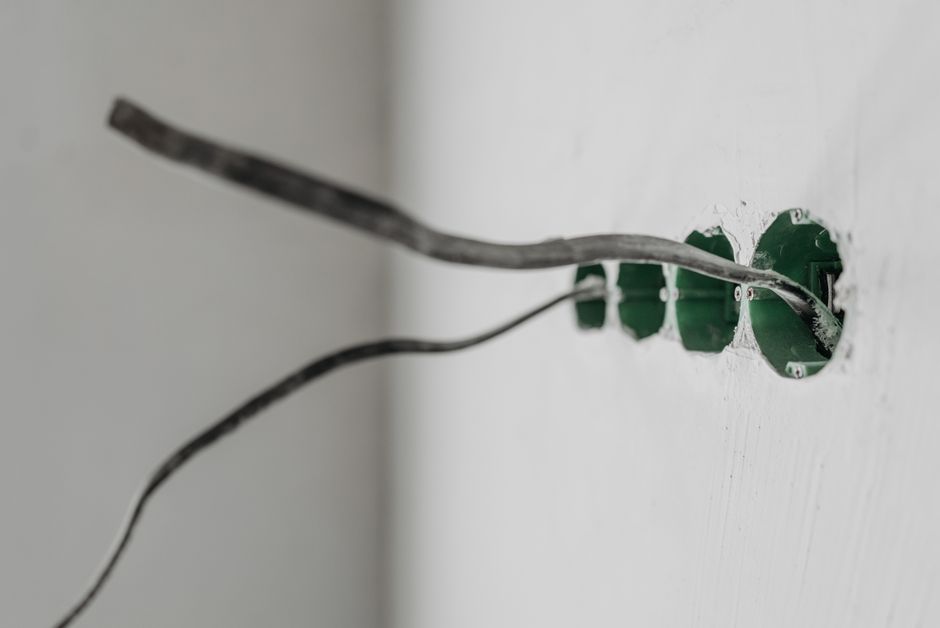
- Conduit routing paths: Running conduit across unfinished garage framing is fast and economical. Fishing wiring through finished drywall ceilings, finished basements, or masonry walls requires more labor hours and specialized mounting hardware.
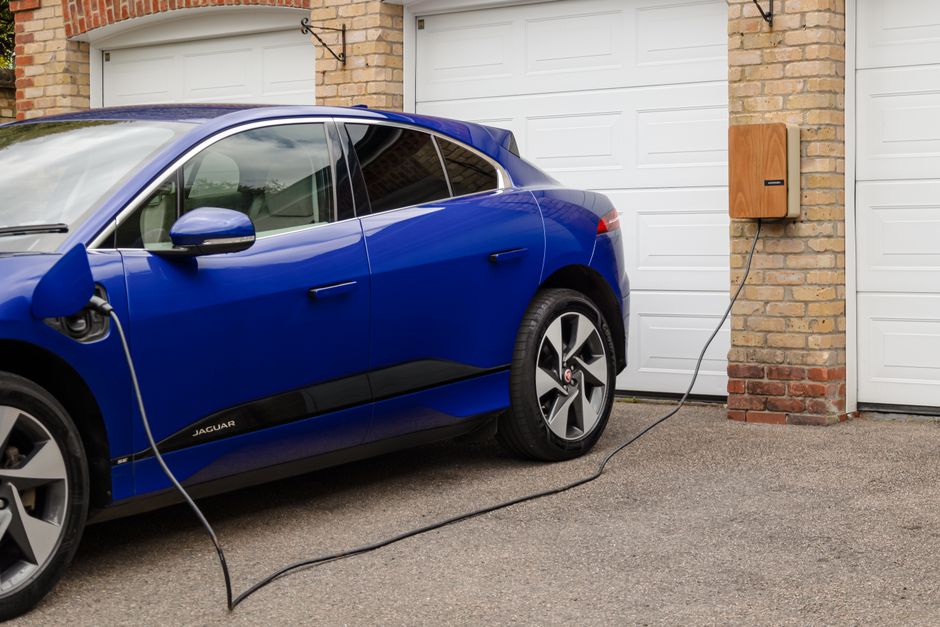
- Hardwired vs. plug-in connection: Installing a heavy-duty NEMA 14-50 receptacle lets you unplug and take your mobile charger on road trips. However, hardwiring your station directly allows for higher continuous output (up to 48 amps or more) and avoids the cost of a dedicated GFCI breaker required on new 240V outlets by modern electrical code.
If you prefer a plug-in setup, we outline the process for setting up Level 2 charging with a 240V outlet to help you weigh your options.
Electrical Panel Upgrades and Sub-Panels
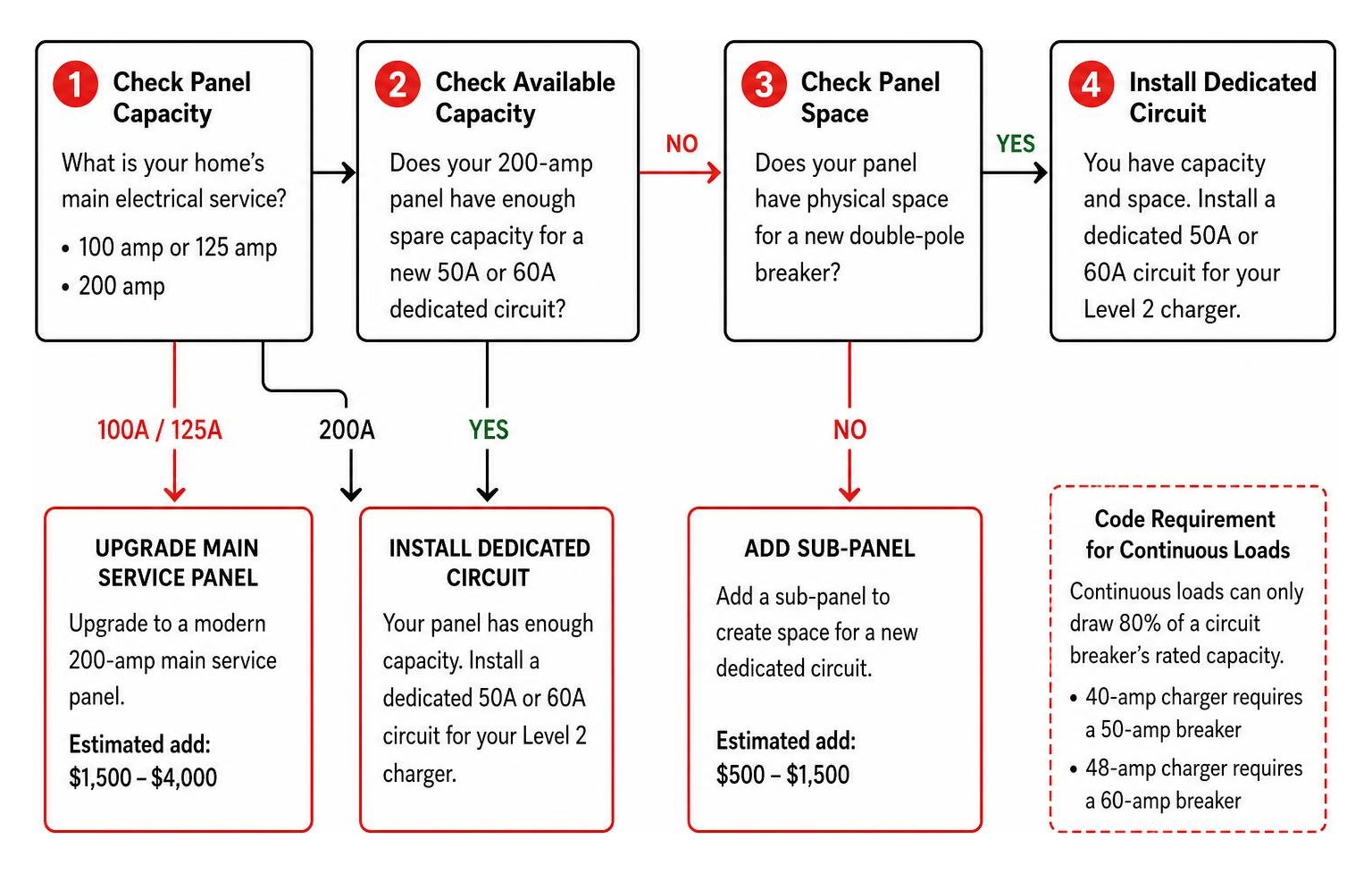
A continuous load like a Level 2 charging station draws significant power for hours at a time. Under the National Electrical Code (NEC), continuous loads can only draw 80% of a circuit breaker’s rated capacity. That means a 40-amp charger requires a dedicated 50-amp circuit breaker, and a 48-amp charger needs a 60-amp circuit breaker.
If your home operates on an older 100-amp or 125-amp service panel that already powers an electric range, clothes dryer, and central air conditioner, your service might not have the spare capacity for another large load.
Upgrading to a modern 200-amp main electrical service panel generally adds $1,500 to $4,000 to the total scope of work. When your main panel has adequate incoming utility power but simply lacks physical space for new double-pole breakers, installing a secondary sub-panel costs roughly $500 to $1,500. We offer practical guidance on budgeting for EV charger installation expenses to help navigate these extra panel costs.
Permitting, Inspections, and Site Complexity
The City of Lone Tree Building Division requires an electrical permit for installing new 240-volt circuits or modifying service panels. Permitting fees generally range from $50 to $300 depending on project valuation and local municipal fee structures.
Pulling permits protects you as a homeowner. An official inspection confirms that wire gauge sizes, breaker ratings, disconnects, and grounding paths fully meet safety standards.
When your setup requires routing power across finished flagstone patios, through crawlspaces, or out to a detached carriage house, trenching and weatherproofing add both material costs and labor time. You can learn what local inspectors check in our passed or failed EV charger inspection guide.
Ways to Maximize Savings and Long-Term ROI
While installing dedicated charging infrastructure requires an upfront investment, home charging provides the lowest cost per mile of driving compared to public DC fast chargers or gasoline.

Residential charging cuts the lifetime cost of electric vehicle ownership by an estimated $10,000 to $26,000 compared to fueling a gasoline vehicle. For a commuter driving 12,000 to 15,000 miles per year, fueling with home electricity often costs $35 to $60 per month, replacing $120 to $180 per month in gasoline expenses.
At a net monthly savings of $60 to $120, a standard $1,200 to $1,800 home installation typically pays for itself in less than two years.
Local Utility Rebates and Colorado Incentives
Depending on your specific address in Lone Tree, your home electric service is provided by either Xcel Energy or CORE Electric Cooperative. Both utilities offer programs that can lower your charging costs:
- Utility Rebates: Local utilities frequently offer equipment rebates between $250 and $500 for installing qualifying smart Level 2 charging stations.
- Time-of-Use (TOU) Rate Plans: Enrolling in off-peak charging schedules allows you to charge your vehicle late at night when electric rates are lowest.
- State Programs: Colorado provides clean energy tax credits and infrastructure programs designed to support home electrification.
Before scheduling your project, breaking down the bill for EV charging can help clarify how stacking these programs lowers your total out-of-pocket investment.
Ways to Lower the Cost of EV Charger Installation in Lone Tree
You can take several practical steps to keep your installation costs manageable without cutting corners on electrical safety:
- Mount near the main breaker box: Choosing a charging spot on the garage wall directly adjacent to your panel keeps conduit runs short and minimizes copper wire expenses.
- Consider smart load management: If your panel is near capacity, a dynamic load-management device ($200 to $500) can pause vehicle charging when high-draw appliances like your oven or electric dryer run, helping you avoid an expensive service upgrade.
- Opt for a 32-amp or 40-amp unit: These units charge almost any EV overnight on a standard 40-amp or 50-amp circuit, eliminating the need for the heavy wiring and larger breakers demanded by 48-amp or 50-amp hardwired units.
- Obtain detailed itemized quotes: Ensure contractor estimates clearly separate hardware, wiring materials, labor, and municipal permit fees. Our buyer’s guide to choosing local electricians covers helpful questions to ask before hiring.
Frequently Asked Questions About Lone Tree EV Charger Installations
How much does it cost to install a Level 2 EV charger in Lone Tree?
Most Lone Tree homeowners spend between $500 and $2,000 on electrical labor, conduit, wiring, and breaker hardware. When you add the price of a quality Level 2 charger ($300 to $700), the typical all-in project cost ranges from $1,000 to $2,700 for homes with available panel capacity.
Do I need a permit for EV charger installation in Douglas County?
Yes. Installing a new 240-volt dedicated circuit requires an electrical permit from the City of Lone Tree Building Division or Douglas County building authorities. A licensed electrical contractor will pull this permit and arrange the required safety inspection once the installation is complete.
Will installing a home EV charger require a full 200-amp panel upgrade?
Not always. While an EV charger requires substantial electrical capacity, homes with 150-amp or 200-amp panels usually have adequate room unless they already support several high-draw electric appliances. A licensed electrician can perform an official load calculation to see if your current panel can handle the addition or if a smart load-shedding device can solve the problem without a complete service replacement.
Getting Started with Your Lone Tree Installation
Getting an accurate quote for your home EV charger comes down to understanding your home’s electrical capacity and choosing the right spot on your garage wall. Taking the time to evaluate your layout, check local utility programs, and work with an experienced local professional ensures your vehicle charges safely and reliably every single night.
At Harmony Electric, we believe in straightforward communication, clean workmanship, and doing the job right the first time. All of our dedicated EV charging station installations come backed by our lifetime workmanship guarantee and a three-year material warranty. If you are ready to get your home charging station set up, contact our team to schedule your professional EV charger installation today.