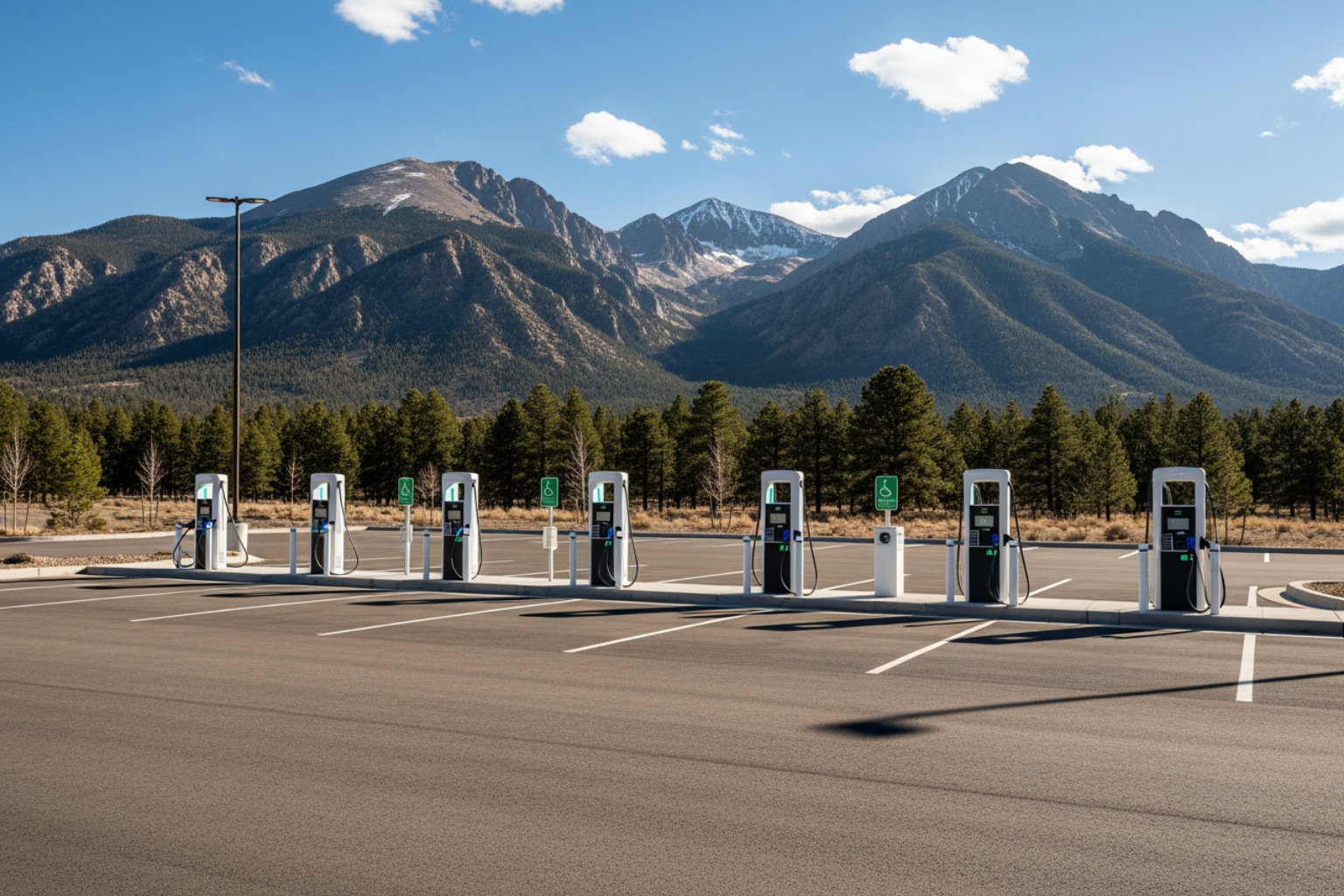
Is Your Business Ready for the EV Revolution?
Commercial ev charger installation is the process of adding Level 2 or DC Fast Charging stations to your business property. It involves site assessment, electrical upgrades, utility coordination, permitting, and professional installation. Most commercial projects take 2-8 weeks from planning to operation, depending on your existing electrical capacity and the number of chargers you’re adding.
Quick Overview:
- Level 2 chargers work for most workplaces, retail, and apartments (adds 10-40 miles of range per hour)
- DC Fast Charging suits highway locations and fleet depots (80% charge in 20-40 minutes)
- Typical costs range from $3,000-$15,000 per Level 2 station installed, $50,000+ for DC Fast Chargers
- Rebates available through federal tax credits (30% of costs), state programs, and utility incentives
- Permitting required in Denver and surrounding areas for code compliance
I’ve been installing electrical systems around Denver for years, and the shift to electric vehicles is the biggest change I’ve seen in commercial electrical work. It’s happening fast.
Here’s what I know: 31 million EVs are projected to be on North American roads by 2030. In Canada, EV sales jumped 160% in just one year. Right here in Colorado, more drivers are making the switch every month.
What does that mean for your business? Your customers, employees, and tenants are going to expect charging. Some already do.
Whether you run a retail shop, manage an apartment building, operate a fleet, or own a restaurant, adding EV chargers isn’t just about keeping up anymore. It’s about staying competitive, attracting the right customers, and positioning your business for what’s coming next.
The good news? The technology is proven. Incentives make it more affordable than most business owners realize. And when it’s done right, commercial charging can even generate revenue while you sleep.
Let me walk you through what you actually need to know.
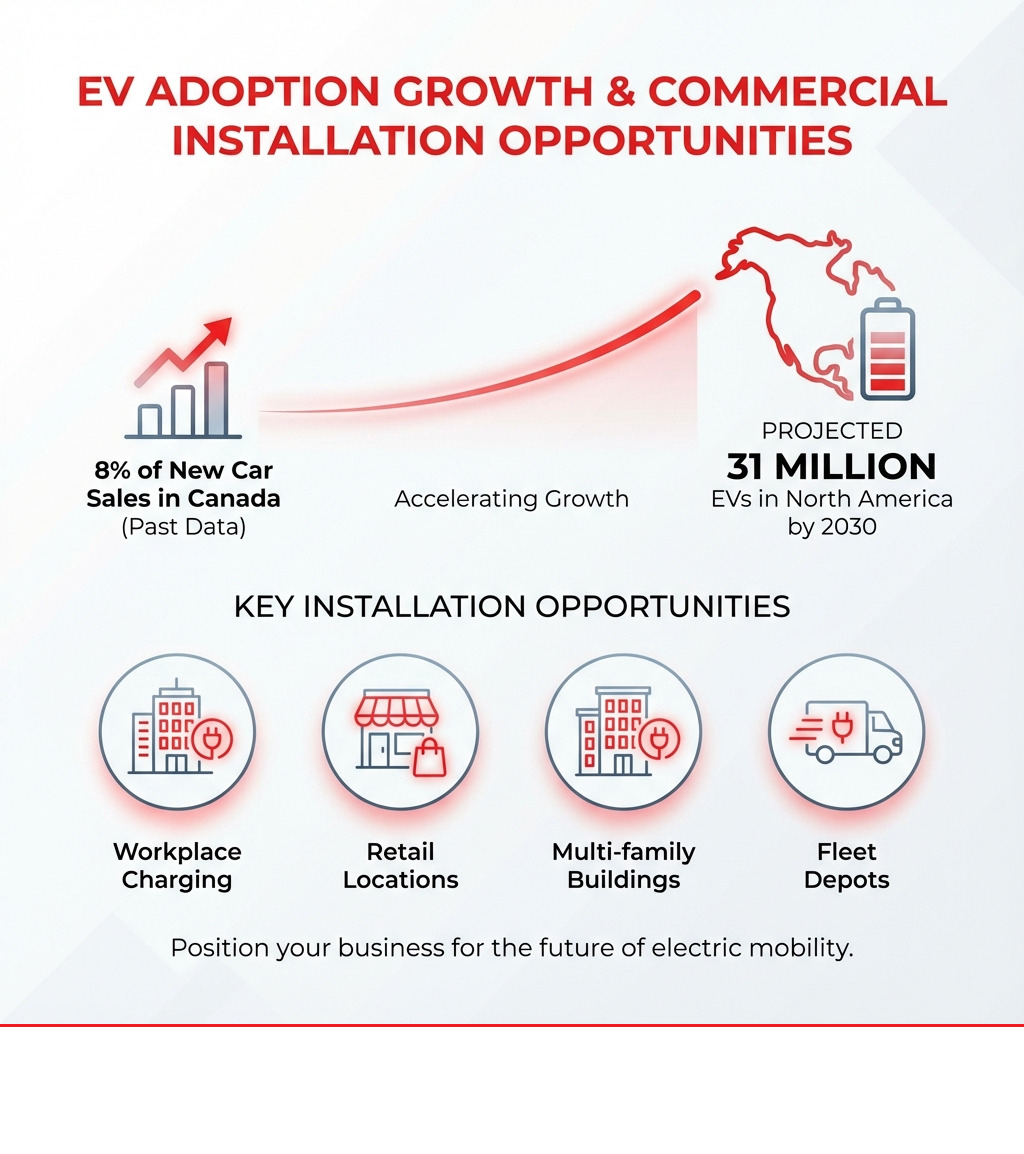
Why Adding EV Chargers is a Smart Move for Your Business
Think about it: when you drive an electric car, your eyes are always peeled for a place to charge. If your business offers that convenience, you’re instantly more appealing. We see it all the time in Denver and the surrounding communities like Castle Rock and Highlands Ranch. Businesses that accept EV charging tend to draw in a new kind of customer.
It’s not just about attracting new faces, either. Offering charging can be a real perk for your employees, making your workplace more attractive. This is especially true in today’s competitive job market, where companies are looking for ways to stand out.
For businesses with fleets, electrifying your vehicles and having on-site charging is becoming a necessity. It lowers fuel costs, reduces emissions, and positions your company as forward-thinking. And if you’re thinking about sustainability, installing EV chargers helps meet those goals and shows your commitment to a greener future.
Some businesses even find that their charging stations can generate a new revenue stream. You can set fees for usage, turning a service into a small profit center. It’s a win-win: you provide a valuable amenity, and it pays for itself.
We handle all sorts of electrical work for businesses, and adding EV charging is one of the most rewarding projects because the benefits are so clear. You can learn more about our general electrical support for businesses on our Commercial Services page.
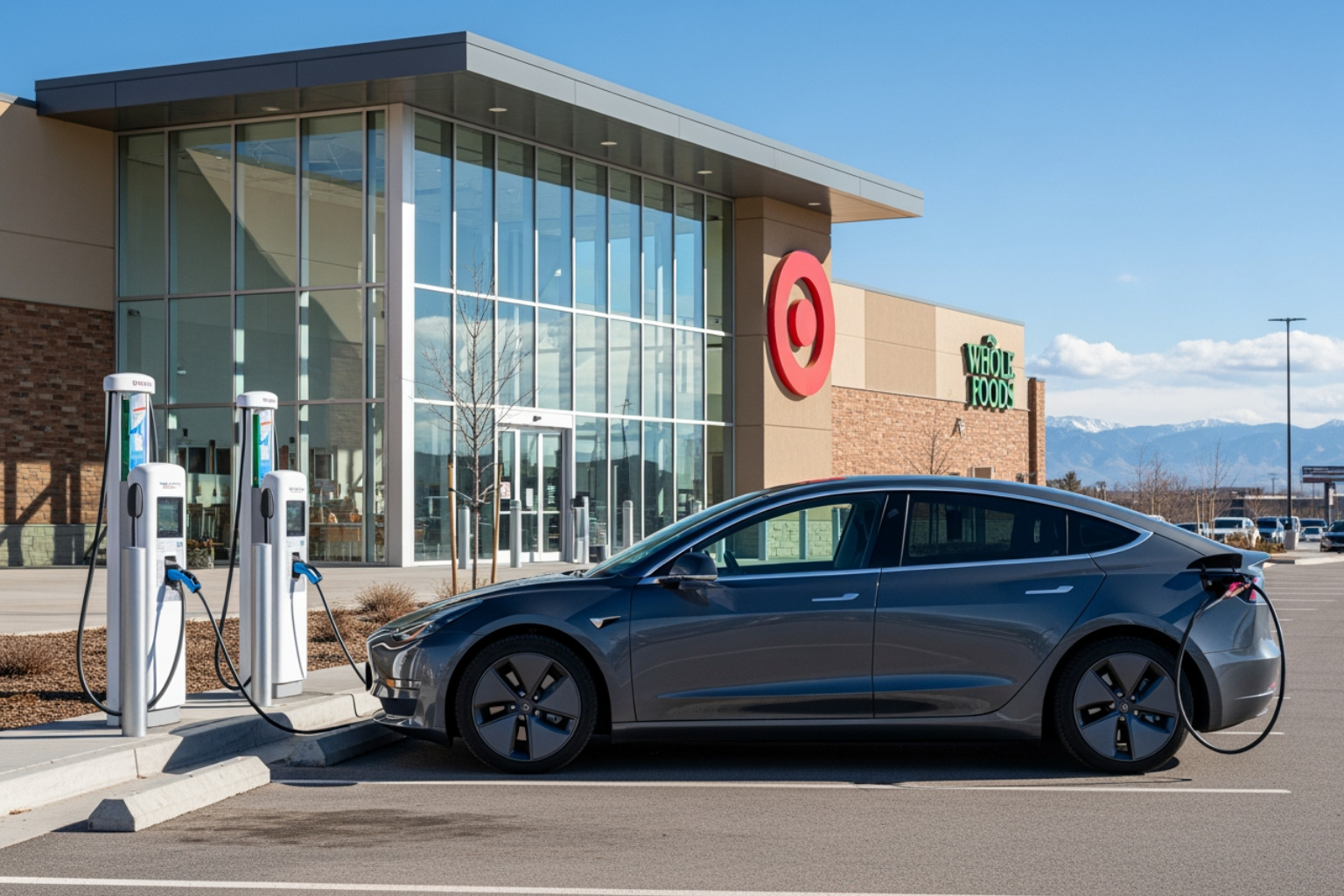
Meeting the Needs of Different Businesses
The beauty of commercial EV charging is how versatile it can be. It’s not a one-size-fits-all solution; we tailor it to your specific business type and needs.
- Workplace Charging: For office buildings in Denver, providing chargers can attract and retain employees. It’s a convenient perk that boosts morale and shows you care about their daily commute.
- Retail and Hospitality: Shops, restaurants, hotels, and even entertainment venues can boost customer traffic and loyalty. EV drivers often choose places where they can charge while they dine, shop, or relax.
- Multi-Family Buildings: If you manage apartments or condos in Centennial or Parker, residents are increasingly looking for EV charging. It can significantly increase property value and tenant satisfaction. We often work with property managers and HOAs to design custom solutions.
- Fleet Depots: For companies operating electric fleets, reliable on-site charging is critical. This ensures vehicles are ready for their routes, whether it’s for last-mile delivery or service vehicles.
- Public Parking Lots: Cities and private operators can offer charging in public garages or lots, providing a much-needed service and potentially generating revenue.
Each of these scenarios has unique requirements, from how many chargers are needed to how quickly vehicles need to charge. That’s why a thorough site assessment is always our first step.
The Difference Between Home and Business Setups
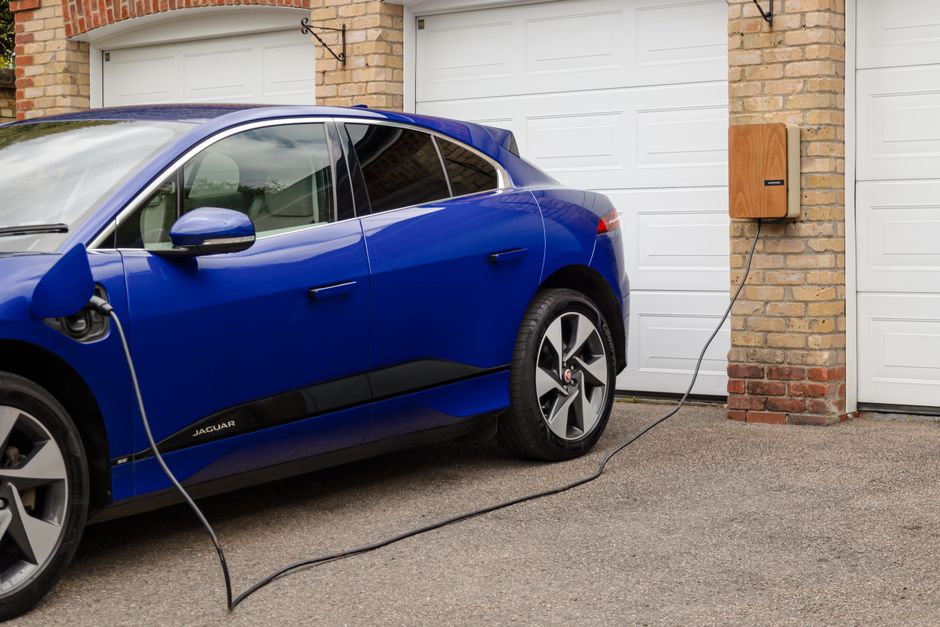
While the basic idea of plugging in an electric car is the same, commercial EV charger installation is a whole different ballgame compared to putting one in your garage at home.
For residential installations, we’re usually dealing with one or two chargers, often a Level 2, tied into an existing home electrical panel. The car charges overnight, and there’s typically just one user. You can find more details on what home setups involve on our More info about residential EV chargers page.
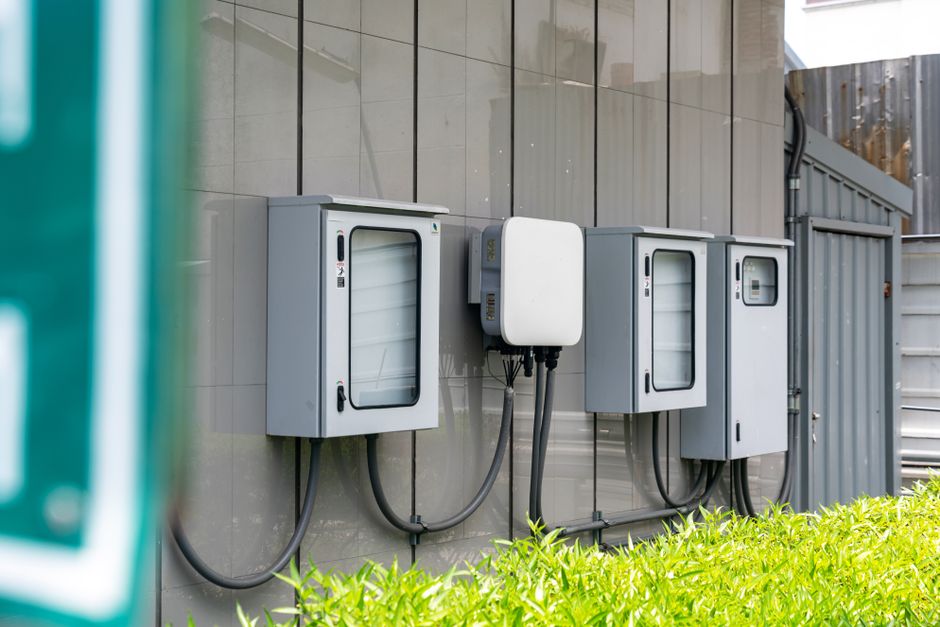
Commercial setups are much more complex. You might be looking at multiple chargers, potentially a mix of Level 2 and faster options. These stations need to be much more durable, able to withstand heavy use and outdoor weather in places like Castle Pines.
The power requirements are significantly higher. We often need to consider new electrical panels, dedicated circuits, and sometimes even upgrades to the building’s main electrical service.
Another big difference is the software. Commercial chargers are almost always “networked.” This means they can be managed remotely, collect usage data, handle payments, and even balance the load across multiple chargers so you don’t overload your electrical system. This kind of smart management isn’t usually a concern for a single home charger.
Choosing the Right Charger: Level 2 vs. DC Fast Charging
When we talk about EV chargers, we usually break them down into a few main types, but for commercial use, Level 2 and DC Fast Charging (sometimes called Level 3) are the most common. Choosing the right one really depends on how quickly you need vehicles to charge and what your budget looks like.
Here’s a quick comparison:
| Feature | Level 2 Chargers | DC Fast Chargers (Level 3) |
|---|---|---|
| Charging Speed | 10-40+ miles of range per hour | 60-80% charge in 20-40 minutes (60-300+ miles per hour) |
| Equipment Cost | $400–$1,500 (charger unit only) | $30,000+ (charger unit only) |
| Installation Cost | $3,000 – $15,000 (installed) | $50,000 – $200,000+ (installed) |
| Electrical Req. | 240V, 40-100A circuit | 480V, much higher amperage (often 100A-500A+) |
| Ideal Use Cases | Workplaces, apartments, retail (longer dwell times) | Highway corridors, fleet depots, public charging hubs |
| Power Output | Up to 19.2 kW | 50 kW to 350+ kW |
When to Choose Level 2 Chargers
Level 2 chargers are often the sweet spot for many businesses in the Denver Metro Area. They’re a fantastic choice for situations where vehicles will be parked for a few hours or overnight.
- Overnight Charging: Perfect for apartment complexes or condos where residents can plug in their cars in the evening and wake up to a full charge.
- Workplace Charging: Employees can charge their vehicles throughout the workday, getting plenty of range for their commute home.
- Dwell Time: If your customers or visitors typically spend an hour or more at your location—like at a restaurant, retail store, or medical office—a Level 2 charger provides a meaningful charge without requiring a huge investment.
- Cost-Effectiveness: Both the equipment and installation for Level 2 chargers are significantly less expensive than DC Fast Chargers. This makes them a more accessible option for many businesses.
- Lower Power Draw: They draw less power from your electrical system compared to DC Fast Chargers, which can sometimes mean fewer costly electrical upgrades.
We’ve installed countless Level 2 chargers for businesses and multi-family properties, and they consistently deliver excellent value and convenience.
When DC Fast Charging is Necessary
Now, if speed is absolutely critical, or if you’re serving a very specific type of EV driver, then DC Fast Charging might be what you need. These are the big guns of EV charging.
- Quick Turnaround: Think about gas stations, highway rest stops, or places where drivers need to get back on the road in 20-40 minutes. DC Fast Chargers are built for that kind of rapid replenishment.
- Highway Corridors: Along major routes in and out of Denver, or connecting to other cities, these chargers are essential for long-distance travel.
- Fleet Vehicles: For electric fleets that operate throughout the day and need quick charging between shifts or routes, DC Fast Chargers keep them moving.
- Public Charging Hubs: If you’re planning a dedicated EV charging station for public use, especially in high-traffic areas, fast chargers will be in high demand.
- Higher Revenue Potential: Because they offer such a premium service, DC Fast Chargers often command higher usage fees, which can lead to greater revenue generation.
However, be prepared for a much higher upfront cost for both the equipment (which can be over $30,000 per unit) and the installation (easily $50,000 to $200,000+), due to the massive electrical infrastructure required. They need a 480-volt connection and a very robust electrical service.
The Complete Commercial EV Charger Installation Process
Installing commercial EV chargers is a multi-step process. It’s not something you want to rush or cut corners on, especially here in Colorado where we have specific codes and utility requirements. We manage everything from the initial planning to getting those chargers up and running.
Here’s how we typically approach a commercial ev charger installation project:
- Planning and Site Assessment: We start by really understanding your business and your goals. This includes looking at your property, your existing electrical system, and how you envision people using the chargers.
- Design and Permitting: Once we have a plan, we handle the technical design and steer the permitting process with the City of Denver or your local jurisdiction.
- Utility Coordination: We work directly with Xcel Energy to ensure your site has the necessary power capacity and that the connection is safe and reliable.
- Installation: Our licensed electricians get to work, preparing the site, running conduit, installing the chargers, and making all the electrical connections.
- Commissioning and Testing: We power up the stations, configure the software, and test everything to make sure it’s working perfectly.
- Ongoing Support: We don’t just install and leave. We offer guidance on ongoing management and maintenance to keep your stations running smoothly.
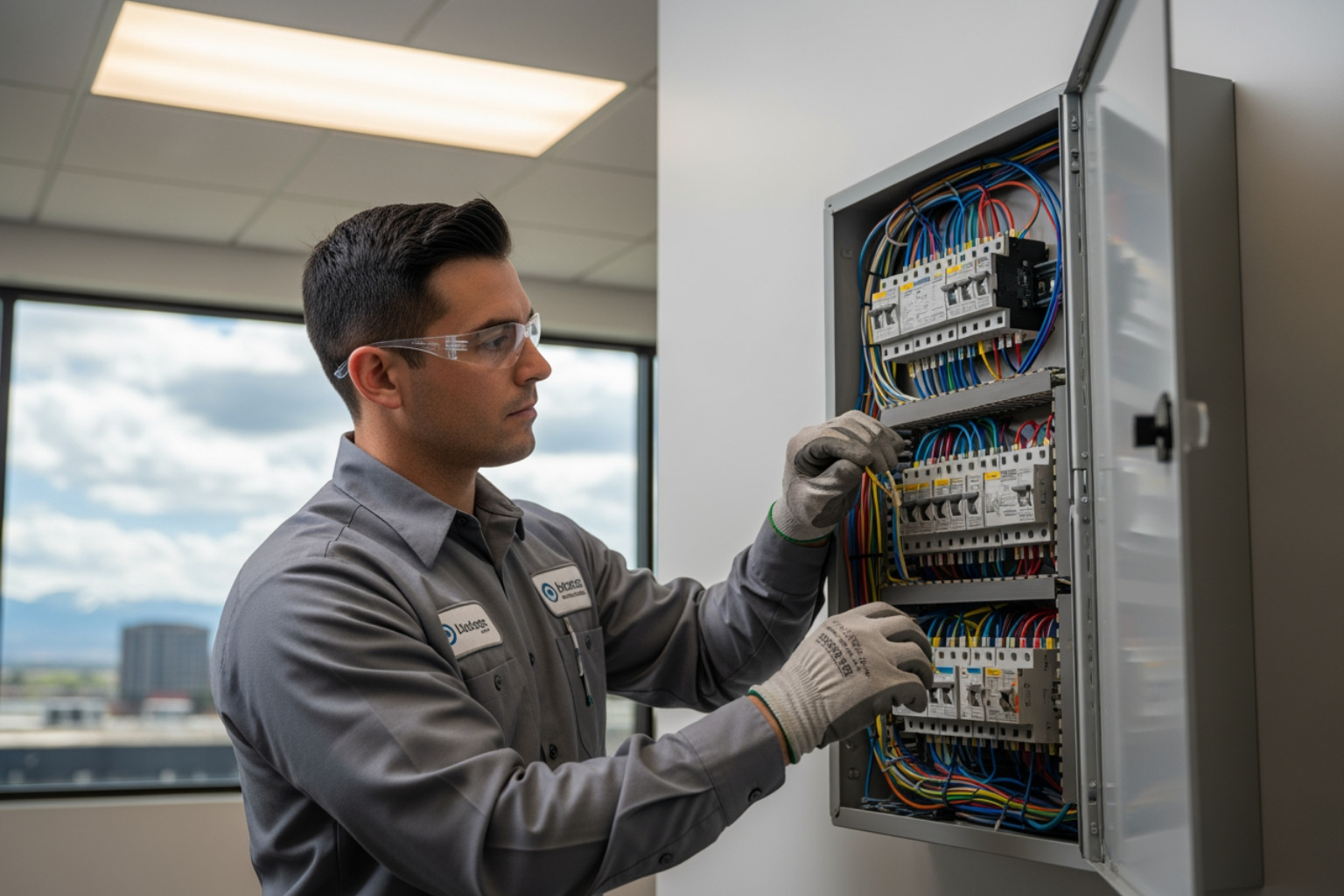
Step 1: Planning and Site Assessment for a commercial ev charger installation
This is probably the most crucial step in any commercial ev charger installation. It’s where we lay the groundwork to make sure everything runs smoothly and efficiently. We start by really listening to your needs.
- Site Analysis: We walk your property, whether it’s a retail parking lot in Lone Tree, an apartment garage in Aurora, or a fleet depot in Centennial. We look at the physical layout, how vehicles move, and where chargers would make the most sense for users.
- Load Calculations: This is a big one. We need to figure out how much electricity your existing building uses and how much more power the new EV chargers will demand. This tells us if your current electrical system can handle it, or if we’ll need to consider upgrades to your main panel or circuits. You can find more about handling power demands on our Panel & Circuit Upgrades Denver page.
- Choosing Locations: We help you decide on the best spots for the chargers, considering accessibility, visibility, safety, and future expansion.
- User Demand: We think about who will be using these chargers and how often. Are they employees charging for 8 hours? Customers for 2 hours? Fleet vehicles needing a quick boost? This influences the type and number of chargers we recommend.
Getting this right upfront saves a lot of headaches and money down the road. It’s all about making informed decisions.
Step 2: The Installation and Working with Your Utility
Once we have a solid plan, it’s time to get our hands dirty. The physical installation involves careful electrical work and often some construction.
- Trenching and Conduit Runs: If chargers are going into a parking lot, we’ll need to dig trenches for underground conduit to protect the electrical wiring. For indoor garages, we might run conduit along walls or ceilings.
- Mounting Stations: Chargers can be mounted on pedestals in parking spaces or directly to walls. We make sure they’re securely fastened and accessible.
- Electrical Connections: This is where our expertise really shines. We connect the chargers to your electrical system, ensuring all wiring is up to code and safely installed. This often involves new dedicated circuits.
- Working with Xcel Energy: Here in Denver and our service areas, Xcel Energy is our main utility partner. We coordinate with them from the beginning. They need to approve the proposed load and might need to perform upgrades to their side of the service connection to your property. This ensures the grid can handle the increased demand. We handle the paperwork and communication to make this process as smooth as possible for you.
- Inspections and Code Compliance: Before any work starts, we secure the necessary permits from the city or county. Throughout and after installation, municipal inspectors will check our work to ensure everything meets the National Electrical Code (NEC) and local Denver building codes. Our goal is always to do the job right the first time, ensuring your installation is fully compliant and safe.
Step 3: Ongoing Management and Maintenance
Installing the chargers is a big step, but it’s not the end of the journey. For commercial EV charging, how you manage and maintain your stations makes a huge difference in their long-term success and your return on investment.
- Network Software: Most commercial chargers come with smart software. This allows you to control access, monitor usage, and even set pricing. We help you get this set up so you can manage your stations efficiently.
- Setting User Fees: You can decide whether to offer charging for free, at a flat rate, or based on consumption. The software handles all the billing and payment processing for you.
- Usage Reporting: The software also provides valuable data. You can see how often your chargers are used, during what times, and by whom. This helps you understand demand and optimize your setup.
- Remote Monitoring: Many systems allow us (or you) to monitor the chargers remotely. If there’s an issue, sometimes it can be resolved without an on-site visit, minimizing downtime.
- Routine Maintenance Checks: Just like any other electrical equipment, EV chargers need occasional checks. We offer preventative maintenance services to keep your stations in top working order, ensuring reliability and a long lifespan. We also stand by our work with a lifetime workmanship guarantee and a three-year material warranty on select installations, including EV chargers. This commitment to quality is why businesses and property managers trust us. If you’re a property manager, choosing the right electrical partner is crucial, and we even have some thoughts on How to Choose the Right Electrician for Your Apartment Complex.
Budgeting and Future-Proofing Your Investment
Let’s talk about the money side of things. Investing in commercial ev charger installation can feel like a big step, but it’s often more manageable than you might think, especially with the right planning and incentives.
When we look at the costs, we typically break them down into a few categories:
- Installation Costs: This covers the labor for our electricians, any necessary trenching, conduit, wiring, and the main electrical panel upgrades. This is often the largest variable cost, depending on your site’s existing electrical capacity and how far we need to run new lines.
- Hardware Costs: This is the price of the charging stations themselves. As we discussed, Level 2 chargers are much less expensive than DC Fast Chargers.
- Software Fees: Many networked commercial chargers come with a subscription fee for the management software. This covers features like payment processing, usage tracking, and remote monitoring.
- Maintenance Expenses: While EV chargers are generally robust, it’s wise to budget for occasional maintenance or repairs. Our lifetime workmanship guarantee means you won’t pay for our labor if there’s an issue with our installation down the line, but hardware components can still need attention.
The good news is, there are ways to significantly reduce these upfront costs.
Reducing Your Upfront Costs
No business wants to spend more than they have to. The good news is, governments and utilities are actively trying to encourage EV adoption, which means there are often programs to help offset the cost of commercial ev charger installation.
- Federal Tax Credits: The federal government often offers tax credits for businesses that install EV charging infrastructure. These can cover a significant portion of your installation costs, sometimes up to 30% or more. These programs can change, so we always recommend checking the latest information.
- State and Local Rebates: Colorado often has its own state-level incentives. Additionally, cities and counties in our service areas like Denver, Castle Rock, and Littleton might offer local rebates or grants. These can really add up!
- Utility Incentives: Xcel Energy, our local utility provider, frequently offers programs and rebates for businesses looking to install EV charging stations. We stay up-to-date on these offerings and can help you identify and apply for them.
Identifying and applying for these incentives can be a bit of a maze, but it’s worth the effort. It’s often one of the first things we discuss with our clients, helping them explore government grants and subsidies to make their project more affordable.
How to Future-Proof Your commercial ev charger installation
The EV landscape is evolving quickly, so when you invest in a commercial ev charger installation, you want to make sure it will serve your business well for years to come. Thinking ahead can save you from costly upgrades later.
- Scalable Design: When we design your system, we don’t just think about today. We consider where you might want to add more chargers in the future. This means planning for extra capacity in your electrical panel or laying extra conduit during the initial installation. It’s much cheaper to do it now than to dig everything up again later.
- Smart Charging: Opt for networked chargers with smart software. This technology allows for features like dynamic load management, which can balance the power draw across multiple chargers to prevent overloading your electrical system. It’s like having a smart traffic controller for your electricity.
- Load Management Software: This software is key for larger installations. It ensures that the total electrical demand from your chargers never exceeds your building’s capacity, even if every port is in use. This avoids expensive peak demand charges from the utility.
- Choosing Non-Proprietary Hardware: We generally recommend chargers that use open standards. This gives you more flexibility down the road if you ever want to switch software providers or integrate with other systems. You won’t be locked into one company’s ecosystem.
By taking these steps, you’re not just installing chargers; you’re building a robust and adaptable charging infrastructure that can grow with the demand for EVs.
Frequently Asked Questions about Commercial EV Chargers
I get a lot of questions from business owners and property managers about commercial EV chargers. Here are some of the most common ones.
How long does a typical commercial installation take?
Most commercial ev charger installation projects, from our initial planning meeting to the moment the chargers are ready to use, typically take between 2 to 8 weeks. This timeframe can vary quite a bit depending on a few factors:
- Site Complexity: If we need extensive trenching or major electrical service upgrades, it will take longer.
- Permitting: The time it takes for the City of Denver or your local jurisdiction to issue permits can sometimes extend the timeline.
- Utility Coordination: If Xcel Energy needs to upgrade their infrastructure to support your new load, that can add a few weeks.
A straightforward installation might be on the shorter end, while a complex one with many chargers and significant electrical work will take longer. We always give you a clear timeline upfront.
Do I need a special permit to install EV chargers at my business in Denver?
Yes, absolutely. A permit is always required for commercial ev charger installation in Denver and all our surrounding service areas like Highlands Ranch, Castle Pines, and Parker. This isn’t just bureaucracy; it’s about safety.
Working with high-voltage electrical systems requires careful planning and adherence to strict codes. Permits ensure that the installation meets the National Electrical Code (NEC) and local safety standards. If you skip the permit, you could face fines, issues with insurance, or even be forced to remove the installation. We handle all the permitting paperwork for you, making sure everything is done by the book.
Can I set my own prices for people to use the chargers?
Yes, you certainly can! One of the big advantages of commercial EV charging systems is the flexibility they offer. The networked software that comes with most commercial chargers allows you to:
- Set Pricing: You can charge by the hour, by the kilowatt-hour (kWh), or even offer a flat session fee. Some businesses choose to offer free charging as a customer amenity.
- Manage Access: You can make the chargers publicly available, restrict them to employees only, or set up different access levels for different user groups.
- Track Usage: The software gives you detailed reports on who used the chargers, when, and for how long. This helps you manage costs and revenue.
We help you configure these settings during the commissioning phase, so your chargers operate exactly how you want them to.
Let’s Get Your Business Plugged In
The shift to electric vehicles isn’t just a trend; it’s a fundamental change in how we power transportation. For businesses across Denver and our surrounding communities, embracing this change with a commercial ev charger installation offers clear benefits: attracting new customers, retaining employees, electrifying fleets, and hitting those important sustainability goals.
It’s a smart investment, and with the right planning and professional installation, it can even generate revenue. But getting it right means more than just bolting a charger to a wall. It means a thorough site assessment, expert electrical work, seamless utility coordination, and ensuring everything is up to code.
That’s where we come in. As Harmony Electric, led by Randy Harmuth, Master Electrician, we pride ourselves on doing the job right the first time. We bring clear communication, honest recommendations, and a commitment to quality to every project. We’re known for prompt scheduling, professional service, and clean, high-quality electrical work—without any unnecessary complexity.
If you’re ready to explore how commercial EV chargers can benefit your business, we’re here to help.
Get a professional assessment for your commercial EV charger installation today.