What Does Basement Electrical Work Actually Cost?
The electrical cost for a basement finish is one of the first numbers homeowners want to nail down — and for good reason. It’s usually one of the bigger line items in the whole project.
Here’s a quick answer if that’s all you need right now:
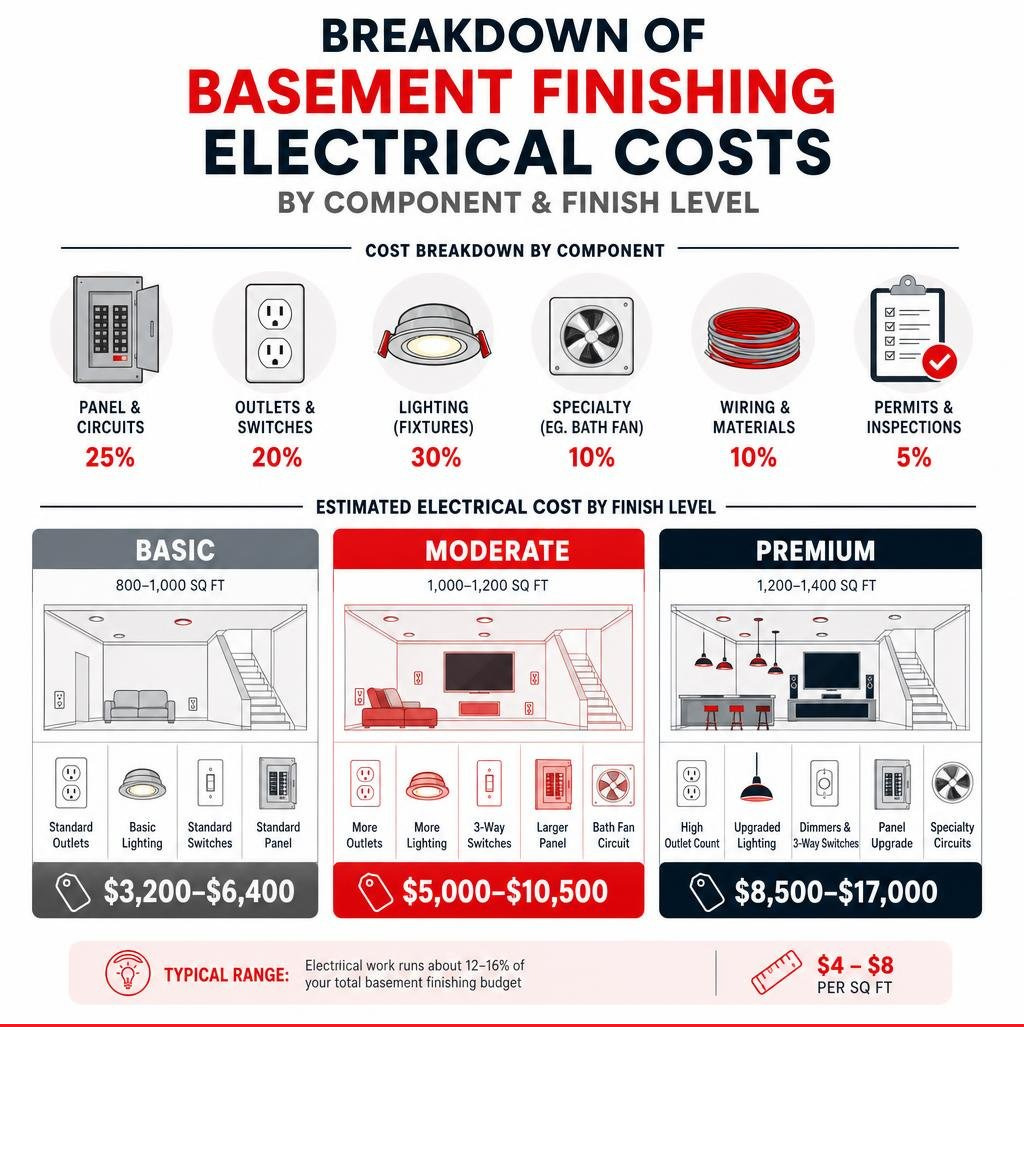
| Finish Level | Basement Size | Estimated Electrical Cost |
|---|---|---|
| Basic | 800–1,000 sq ft | $3,200–$6,400 |
| Moderate | 1,000–1,200 sq ft | $5,000–$10,500 |
| Premium | 1,200–1,400 sq ft | $8,500–$17,000 |
Key cost drivers at a glance:
- Number of circuits, outlets, and recessed lights
- Whether your panel needs an upgrade
- Local labor rates (Denver and Front Range tend to run higher)
- Permit and inspection fees ($100–$500 in most Colorado municipalities)
- Any special features like a bathroom, home theater, or wet bar
As a general rule, electrical work runs about 12–16% of your total basement finishing budget — roughly $4 to $8 per square foot for a typical residential project.
Most homeowners I talk to in the Denver area are surprised by that number. Not because it’s outrageous, but because they hadn’t thought much about it until the quotes started coming in.
The rest of this guide breaks down exactly where that money goes — and how to know whether the quote you’re looking at is fair.
Average Electrical Cost for Basement Finish Projects in 2026
When you start planning a basement remodel, budgeting can feel like aiming at a moving target. In 2026, material supply chains and labor markets have stabilized somewhat, but copper prices remain historically high. This means the overall electrical cost for a basement finish requires a clear, itemized strategy.
For a standard basement finishing project, you can expect the electrical portion to range from $3,000 to $9,000 on average. This represents about 12% to 16% of the total cost to finish the space.
To help you visualize where your hard-earned money goes, let’s look at how the budget is typically allocated across a standard 1,000-square-foot project:
- Rough-In Wiring (Labor & Materials): 40% to 50% of the total electrical budget. This covers pulling the wires through the studs before the drywall goes up.
- Fixtures & Devices: 20% to 30%. This includes the actual recessed cans, outlets, switches, and decorative lighting.
- Panel & Circuit Setup: 15% to 20%. This includes adding new breakers, balancing the load, or installing a subpanel.
- Permits & Inspections: 5% to 10%. Municipal fees to ensure everything is up to code.
If you want a deeper look at the stages of this process, check out our guide on the Harmony Electric Basement Finish Out process.
Estimating the Electrical Cost for Basement Finish by the Square Foot
Looking at square footage is a great way to get a baseline estimate. However, keep in mind that electricity is priced more by “openings” (outlets, switches, and light fixtures) and “runs” (the length of wire from the panel to the device) than by raw floor space.
For a 1,000-square-foot basement, a standard layout usually requires about 4 dedicated circuits, 14 to 20 outlets, and 8 to 14 recessed lights. If your basement is completely unfinished with open studs, this setup typically costs between $3,500 and $7,000 all-in.
For a larger 1,500-square-foot basement, the scale of the project increases. You will likely need more circuits to prevent overloaded breakers, especially if you plan to partition the space into bedrooms, a family area, and a bathroom. A standard finish on a 1,500-square-foot basement generally ranges from $5,500 to $11,000.
Nationally, individual wiring runs cost between $302 and $365 per run in 2026, which is why keeping your floor plan simple and open can save you thousands of dollars.
Itemized Pricing: Outlets, Switches, and Recessed Lights
When an electrician walks through your basement to put together a bid, they are usually counting “openings.” An opening is any point where we have to cut a box into the framing, pull wire to it, and wire up a device.
Here is what those individual components generally cost to install during a basement finish in the Denver area:
- Standard 120V Outlet: $100 to $180 per outlet (includes pulling the wire and installing the receptacle).
- Single-Pole Switch: $80 to $130 per switch.
- 3-Way or 4-Way Switch: $120 to $200 per switch (these require more complex wiring runs so you can control a light from multiple doors or stairs).
- Recessed Light Can (LED pot lights): $80 to $200 per fixture.
- Hardwired Smoke/CO Detector: $100 to $180 per unit (code requires these to be interconnected so if one goes off, they all do).
- Cable, Ethernet, or Phone Jack: $90 to $160 per run.
By multiplying these unit costs by your desired number of fixtures, you can build a highly accurate bottom-up budget before you ever call an electrician.
Key Factors That Drive Your Basement Electrical Expenses

Every basement is unique. Two neighbors with identical home models can end up with completely different bills for their basement electrical work. Why? Because several behind-the-scenes factors dictate the complexity of the job.
Let’s look at the main physical and material factors that will influence your final invoice.
The Impact of Wire Gauge and Material Costs
The type of wire we run through your walls makes a big difference in both material costs and long-term safety. Residential wiring typically uses either 14-gauge or 12-gauge copper wire.
- #14 AWG Wire: This is thinner wire rated for 15-amp circuits. It is perfectly fine for basic lighting and general-use outlets in bedrooms or living areas. It is easier to pull and less expensive.
- #12 AWG Wire: This is thicker wire rated for 20-amp circuits. Code requires 20-amp circuits in kitchens, bathrooms, and dining areas. I also highly recommend using #12 wire for home offices, entertainment areas, or any outlet where you might plug in a space heater or vacuum cleaner.
Copper prices fluctuate constantly, which directly impacts the cost of Romex cable. Because #12 wire contains more copper than #14, choosing to run 12-gauge wire throughout your entire basement will increase your material budget by 15% to 25%. However, it gives you much better circuit capacity and prevents annoying tripped breakers when you run multiple appliances at once.
Regional Labor Rates and Market Variations
Where you live has a massive impact on labor costs. Electricians in high-cost-of-living areas have higher overhead, insurance, and licensing costs, which is reflected in their hourly rates.
In the Denver metro area — including Castle Rock, Castle Pines, Highlands Ranch, Parker, Lone Tree, and Centennial — professional electrical labor rates generally range from $90 to $150 per hour.
Because of our local building boom and strict enforcement of the National Electrical Code (NEC), getting quality work done in Colorado requires hiring licensed professionals who pull permits.
Upgrades, Bathrooms, and Special Features

If you are just putting up some drywall to create a basic playroom, your electrical needs will be straightforward. But most homeowners want to maximize their basement’s potential by adding bathrooms, wet bars, home offices, or media rooms.
Each of these features introduces new electrical requirements. To avoid overloading your existing electrical system, you need to understand how these spaces rely on The Dedicated Circuit Demystified: Everything You Need to Know. Let’s look at how much these specialized additions can add to your budget.
Panel Upgrades and Dedicated Circuits
Before we pull a single foot of wire in your basement, we have to look at your main electrical panel. Many older homes in the Denver area only have a 100-amp or 125-amp service. If your panel is already packed with breakers for your AC, stove, and dryer, there might not be enough physical space or electrical capacity to add 4 to 6 new basement circuits.
If your panel is full, you have three options:
- Tandem Breakers: If your panel brand allows them, we can sometimes use slim breakers to free up space. This is the most budget-friendly fix.
- Subpanel: We can install a secondary panel next to your main one. This costs about $1,000 to $2,500 and is a great solution if your main utility service has enough capacity but lacks physical space.
- Service Upgrade (to 200 Amps): If your home runs on 100 amps and you are adding high-draw appliances, you will likely need a full service upgrade. This involves replacing the panel, meter main, and the wire coming from the utility company.
To help you budget for this, you can compare options in our guide on Electrical Panel Replacement vs Repair or check out The Ultimate Guide to Electrical Panel Installation Costs.
Here is a quick look at the costs associated with these specialized circuits:
| Circuit Type | Amperage | Common Use | Estimated Cost |
|---|---|---|---|
| Standard Dedicated | 15A / 20A | Microwave, Refrigerator, Sump Pump | $200–$450 |
| High-Voltage Dedicated | 30A / 50A | Steam Shower, Sauna, EV Charger | $500–$1,200 |
If you are wondering why these individual lines cost what they do, we break down the variables in our post on How Much Does a Dedicated Circuit Really Cost?.
How Special Features Shift the Electrical Cost for Basement Finish
Adding luxury features to your basement is a fantastic way to enjoy your home and build equity, but they require heavy power.
For example, if you plan to install a hot tub right outside your basement walkout, you will need a dedicated 50-amp, 240V circuit.
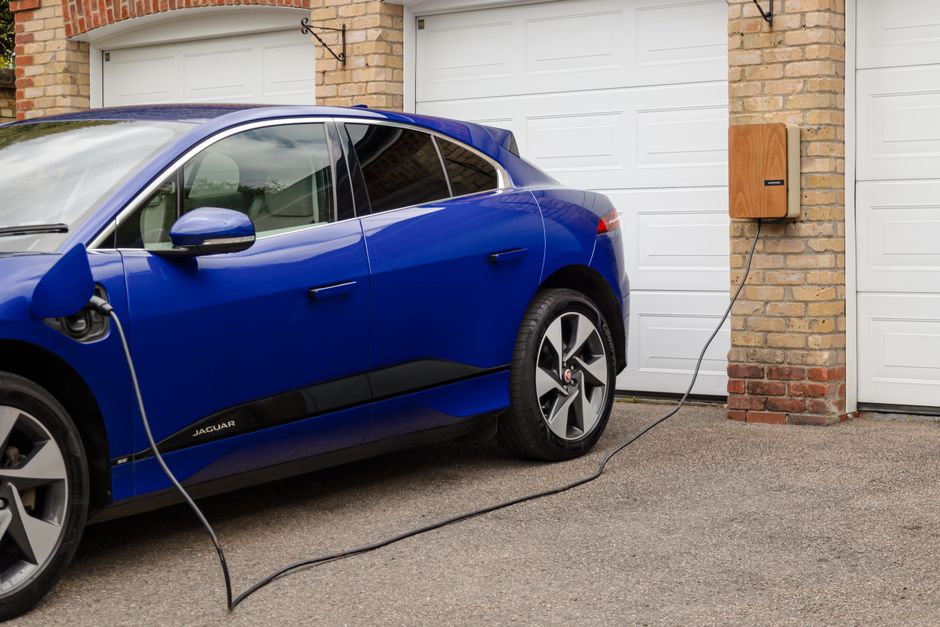
Similarly, if you want to take advantage of having the basement walls open to run a line for an EV charger in the garage, now is the perfect time to do it. Doing these jobs together saves you money on permits and trip fees. If you are adding multiple high-draw features, you can learn more about preparing your home’s infrastructure in our article on how to Level Up Your Amps with a Professional Service Upgrade.
Professional Installation vs. DIY: Safety, Codes, and Quotes
I love a good DIY project as much as anyone. Hanging drywall, painting, and laying down luxury vinyl plank flooring are great ways for handy homeowners to save money. But when it comes to electrical work, the risks of DIY go far beyond a crooked wall or a bad paint job.
In Colorado, electrical work must comply with the strict standards of the National Electrical Code (NEC).
To help you understand the professional workflow and how inspections are structured, here is how a typical basement project progresses:

Comparing Electrician Quotes and Spotting Red Flags
When you are looking for an electrician, I always recommend getting at least two or three bids. However, don’t just look at the bottom-line number. You need to make sure you are comparing apples to apples.
Here are some common red flags to watch out for when reviewing quotes:
- The “Per-Opening” Price is Unusually Low: If a bid comes in thousands of dollars lower than others, the contractor might be planning to skip pulling permits, use cheap materials, or hit you with surprise change orders later.
- No Mention of Permits or Inspections: If an electrician asks you to pull the homeowner permit yourself, or suggests doing the job “on the side” without a permit, walk away. This is a massive red flag that they are unlicensed or uninsured.
- Vague Scope of Work: A professional bid should clearly state how many outlets, switches, light fixtures, and circuits are included. If the quote just says “wire basement to code,” you have no protection if they install the bare minimum.
- Lack of AFCI/GFCI Protection in the Bid: Modern code requires Arc-Fault Circuit Interrupter (AFCI) breakers for all living spaces and Ground-Fault Circuit Interrupter (GFCI) protection for bathrooms, bars, and unfinished areas. These breakers are expensive (often $50 to $80 each just for the part). If a contractor doesn’t budget for them, they are either cutting corners or don’t know the local codes.
Frequently Asked Questions about Basement Electrical Costs
Do I need a permit to wire my finished basement?
Yes, absolutely. Any time you add new electrical circuits or structural framing to a home in Colorado, you must obtain a building permit from your local building department. This process involves a rough-in inspection (before the drywall goes up) and a final inspection (after the fixtures are installed). Skipping permits can make it very difficult to sell your home in the future and may even cause your homeowner’s insurance to deny a claim if an electrical fire occurs.
How many outlets and circuits does a basement finish require?
The National Electrical Code (NEC) has strict rules for receptacle spacing. Generally, you must place outlets so that no point along a wall is more than 6 feet from an outlet (meaning you need an outlet at least every 12 feet). Additionally, any hallway longer than 10 feet needs at least one outlet, and bathrooms require a dedicated 20-amp GFCI circuit. For a standard 1,000-square-foot basement, you will typically need at least 4 to 6 separate circuits to safely distribute the load.
What is the typical ROI of finishing a basement?
Finishing a basement is one of the smartest investments you can make in your home. On average, a mid-range basement finish returns 70% to 75% of its cost in added home equity at resale. If you add a conforming bedroom (which requires an egress window and a closet) and a full bathroom, the return can be even higher because you are officially increasing your home’s usable square footage and bed/bath count on MLS listings.
Conclusion
Planning the electrical cost for a basement finish doesn’t have to be stressful. By understanding the component costs, planning your layout early, and verifying your electrical panel’s capacity, you can build a budget that keeps your project on track without any safety compromises.
At Harmony Electric, we pride ourselves on doing the job right the first time. Led by Randy Harmuth, Master Electrician, we bring clear communication, honest recommendations, and clean, high-quality craftsmanship to every home in Denver, Castle Rock, Highlands Ranch, Parker, and surrounding communities. We never upsell you on things you don’t need, and we back our work with industry-leading warranties.
If you are ready to take the next step in finishing your basement, Schedule professional electrical services with us today for an honest, transparent estimate.