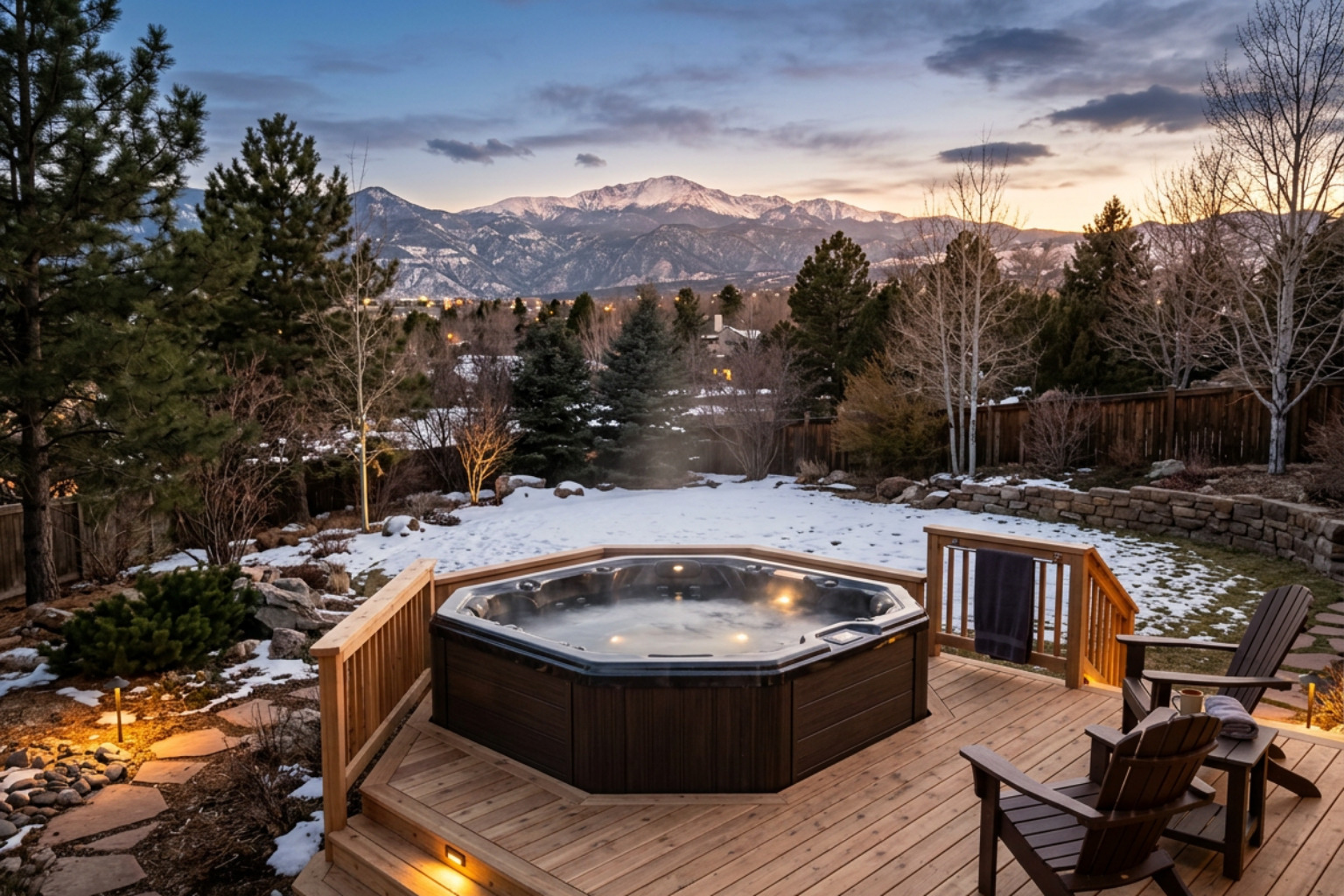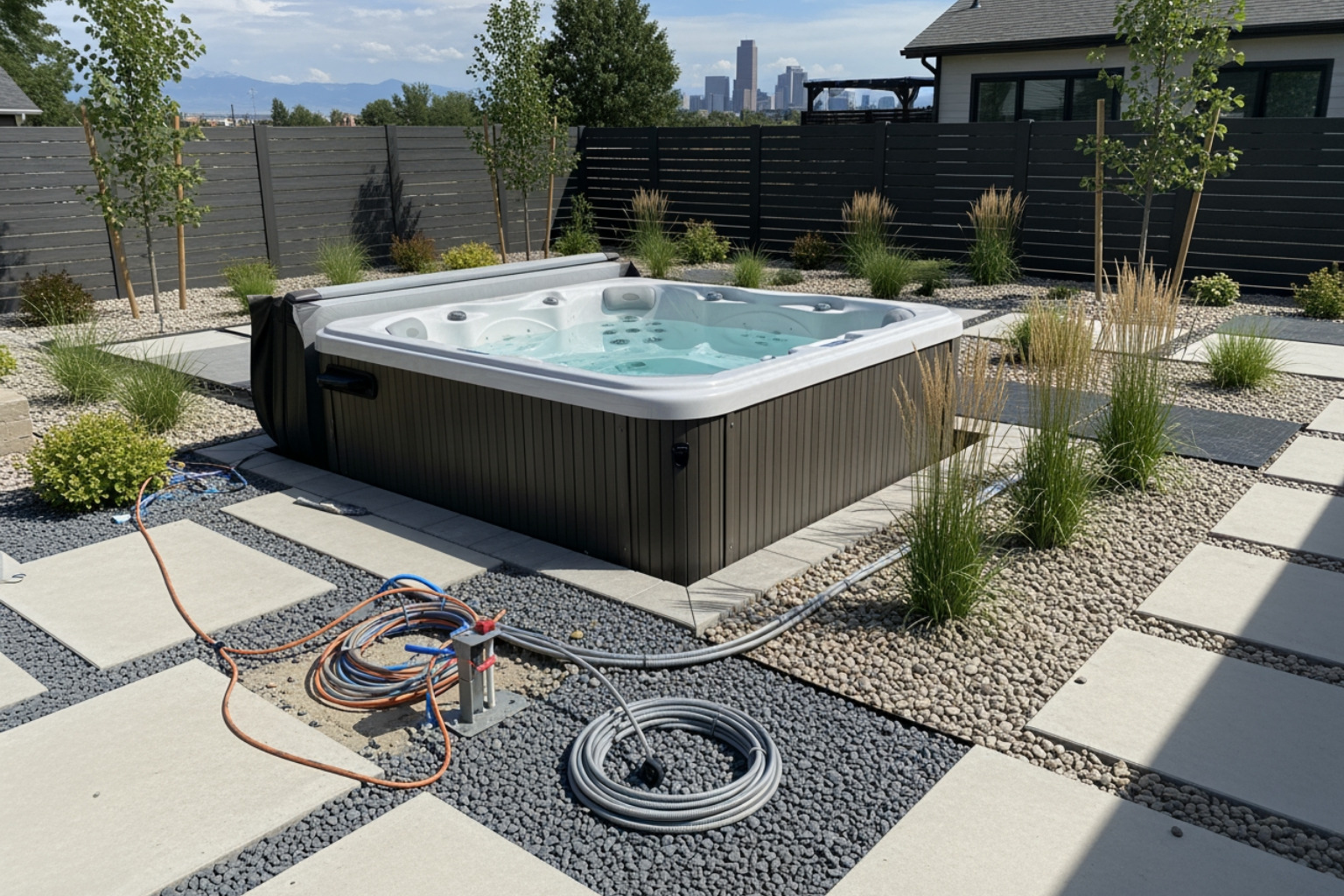
What Does It Actually Cost to Have an Electrician Wire a Hot Tub?
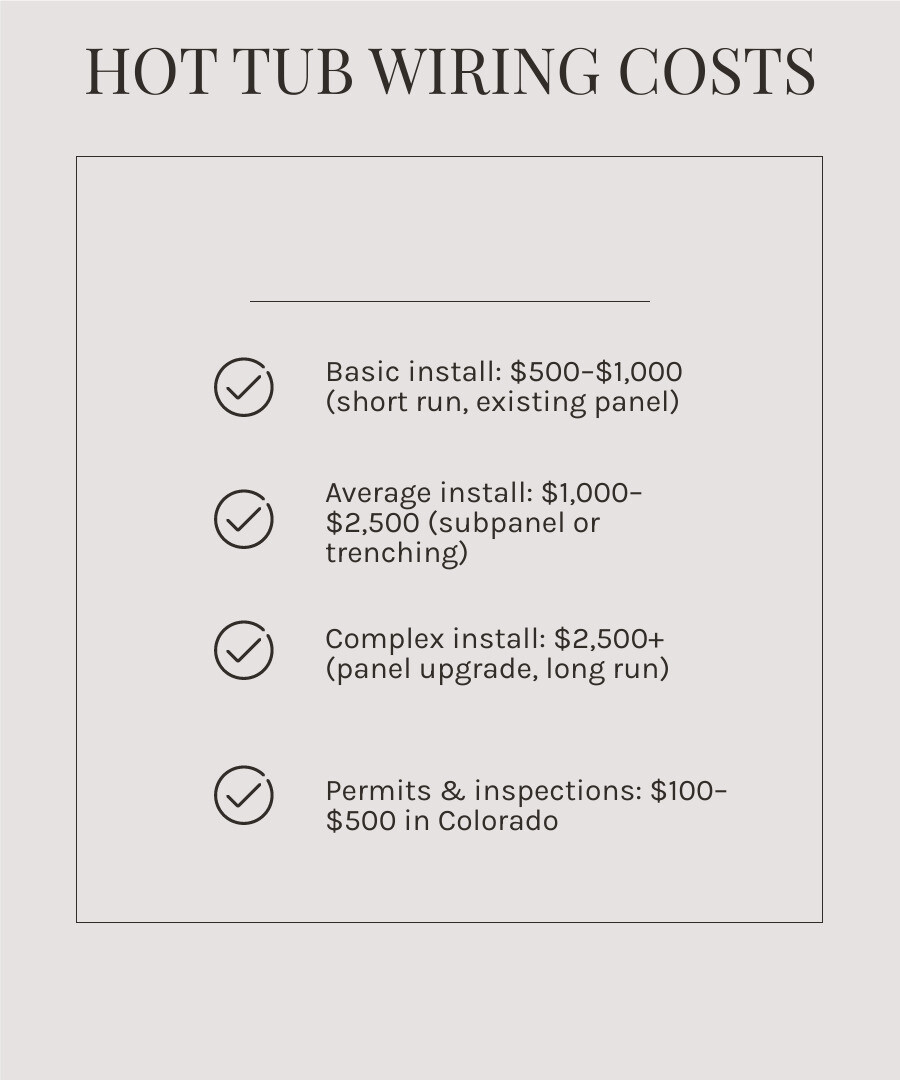
The electrician hot tub installation cost typically falls somewhere between $500 and $2,500 for most homeowners — but the real number depends on your specific situation.
Here’s a quick snapshot to help you size up your project:
| Scenario | Estimated Cost |
|---|---|
| Basic installation, short run, existing panel | $500 – $1,000 |
| Average installation with subpanel or trenching | $1,000 – $2,500 |
| Complex install, panel upgrade, long run | $2,500 – $5,000+ |
A few things drive that range up or down:
- Distance from your electrical panel to the hot tub
- Whether your panel needs an upgrade (common in older homes)
- Trenching required for underground conduit
- Permits and inspections (usually $100–$500 in Colorado)
- Labor rates in your area ($50–$100/hour is typical)
Most homeowners in the Denver area are surprised to learn that a straightforward 15–20 foot run from an existing, capable panel can come in under $1,500 all-in. But if your home has an older 100-amp service or your panel is already loaded up, that number can climb fast.
I’m Randy Harmuth, Master Electrician and owner of Harmony Electric. I’ve wired a lot of hot tubs across Denver and the surrounding communities, and the questions I hear most often are: “Why does it cost that much?” and “What am I actually paying for?”
This guide answers both — clearly and honestly.
Relevant articles related to electrician hot tub installation cost:
- 50 amp gfci breaker for hot tub wiring diagram
- gfci breaker for hot tub
- hot tub gfci breaker installation
Breaking Down the Electrician Hot Tub Installation Cost
When you look at a quote for a hot tub installation, it’s rarely just one number. It’s a combination of specialized labor, high-quality materials, and local compliance fees. In our experience serving the Denver Metro area, labor often accounts for about 75% of the total wiring expense. This is because running high-voltage lines through a home and out to a backyard requires precision and a deep understanding of safety codes.
On average, a licensed electrician will charge between $50 and $130 per hour. A standard installation of a spa subpanel and the associated wiring usually takes between 4 to 8 hours. If you are looking for a detailed breakdown of how we price these projects at Harmony Electric, you can check out our Hot Tub Installation Pricing page.
To give you a better idea of the “national average” versus what we see here in Colorado, take a look at this comparison:
| Project Component | National Average | Colorado Range (Denver/Castle Rock) |
|---|---|---|
| Basic Wiring & Labor | $1,900 – $4,200 | $1,000 – $2,500 |
| Subpanel Installation | $400 – $1,800 | $500 – $1,500 |
| 220V Outlet Only | $220 – $500 | $300 – $600 |
| Full Install (with Trenching) | $2,300+ | $1,800 – $5,000 |
It is important to remember that “basic” usually means your hot tub is sitting right next to the house and your electrical panel has plenty of room. As soon as we have to move that tub 50 feet into the yard, the math changes.
Key Factors That Move the Needle on Your Quote
Every backyard in Centennial or Highlands Ranch is different. I’ve walked into some yards where the panel is on the same wall as the hot tub, and others where we have to navigate around finished basements, concrete patios, and landscaping.
The biggest variables I see that impact the electrician hot tub installation cost include:
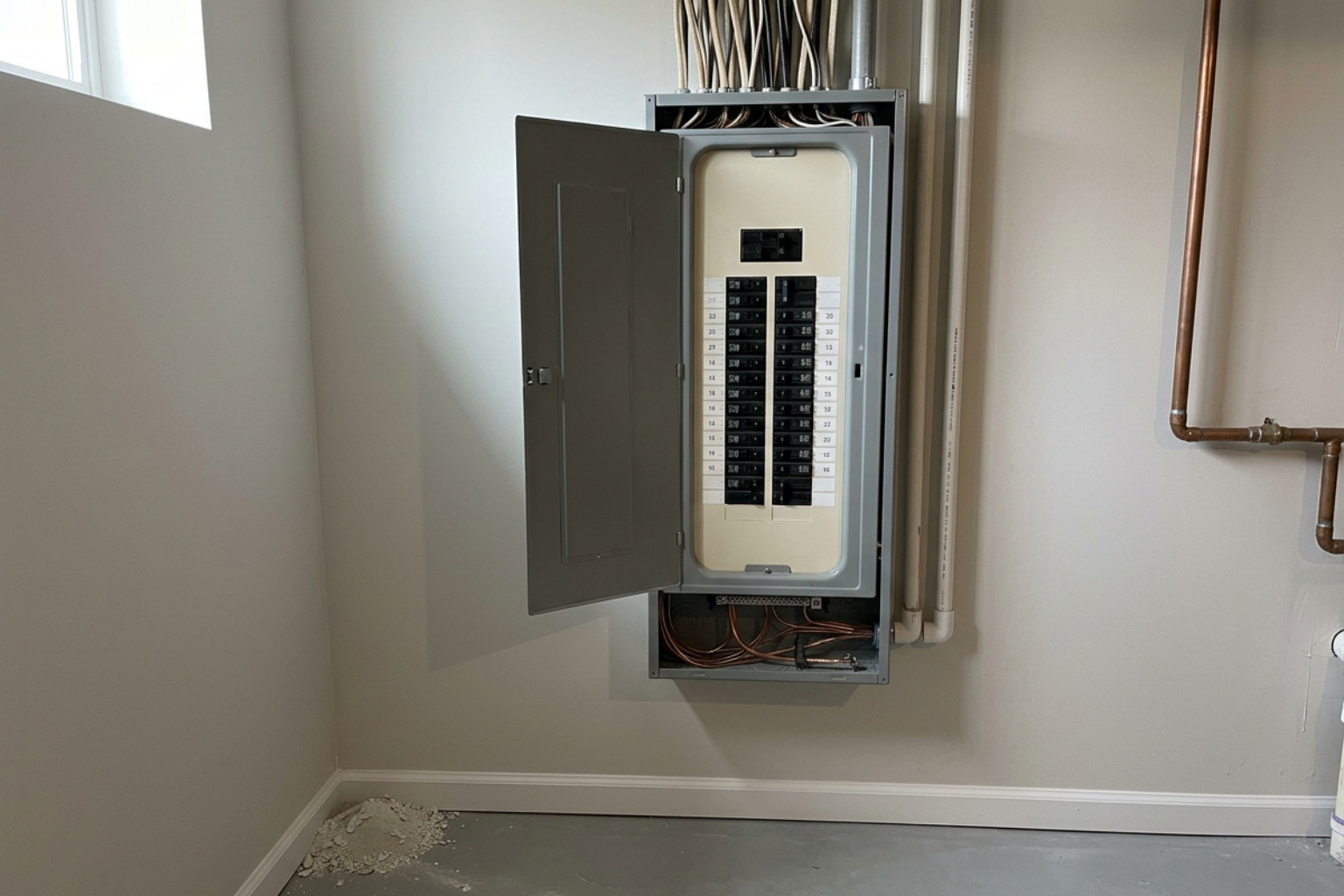
- Panel Capacity: Before we even pull a wire, we have to ask: Can My Existing Electrical Panel Handle a Hot Tub? Most modern tubs require a 50-amp or 60-amp breaker. If your panel is already full, we can’t just “squeeze it in.”
- Trenching Needs: If the conduit needs to go underground, someone has to dig. We often suggest homeowners hire a landscaper or even dig the trench themselves to save on our labor costs. Digging a 18-inch deep trench through Colorado clay is hard work, and doing it yourself can save you hundreds.
- Indoor vs. Outdoor: Indoor installs (like in a sunroom) might seem easier, but they often require more complex routing through walls and ceilings, which can drive up labor time.
- Safety Compliance: We follow strict Pool and Spa Safety Tips and NEC codes. This isn’t just about making the tub turn on; it’s about making sure no one gets a shock while they’re trying to relax.
How Distance Impacts Your Electrician Hot Tub Installation Cost
Distance is the “silent budget killer.” It’s not just about the extra hour of labor; it’s about the cost of copper. Heavy-gauge wire (like #6 AWG) is expensive. If we are running a line from one side of the house to the other, the material costs can skyrocket.
For a Hot Tub Wiring in Castle Rock, CO, a typical 15-20 foot run is manageable. However, if the run exceeds 50 feet, we have to account for “voltage drop.” This means we might need even thicker wire to ensure the tub gets the power it needs to heat up properly. In some cases, the wire alone can represent up to 85% of the total material cost of the job.
Hidden Fees and the Real Electrician Hot Tub Installation Cost
When you’re budgeting, don’t forget the “extras” that don’t always show up on the initial estimate:
- Permits: Most cities in the Denver Metro area require a permit for high-voltage outdoor wiring. Expect to pay between $100 and $500 for a Hot Tub Permit Colorado homeowners need.
- Inspections: Once we finish, the city inspector has to sign off. This ensures the work is safe and protects your home’s resale value.
- Site Prep: An electrician doesn’t build the pad. You’ll need a level concrete slab or a reinforced deck. A 4-inch reinforced concrete pad can cost between $500 and $2,000 depending on the size.
- Delivery Access: If your backyard is hard to reach, you might need a crane. Crane services in Colorado typically range from $300 to $1,000.
Essential Components: What You’re Actually Paying For
When we provide a quote, we aren’t just charging for “wire.” We are installing a life-safety system. Because water and electricity are a dangerous mix, the components must be top-tier.
Here is what goes into a professional installation:
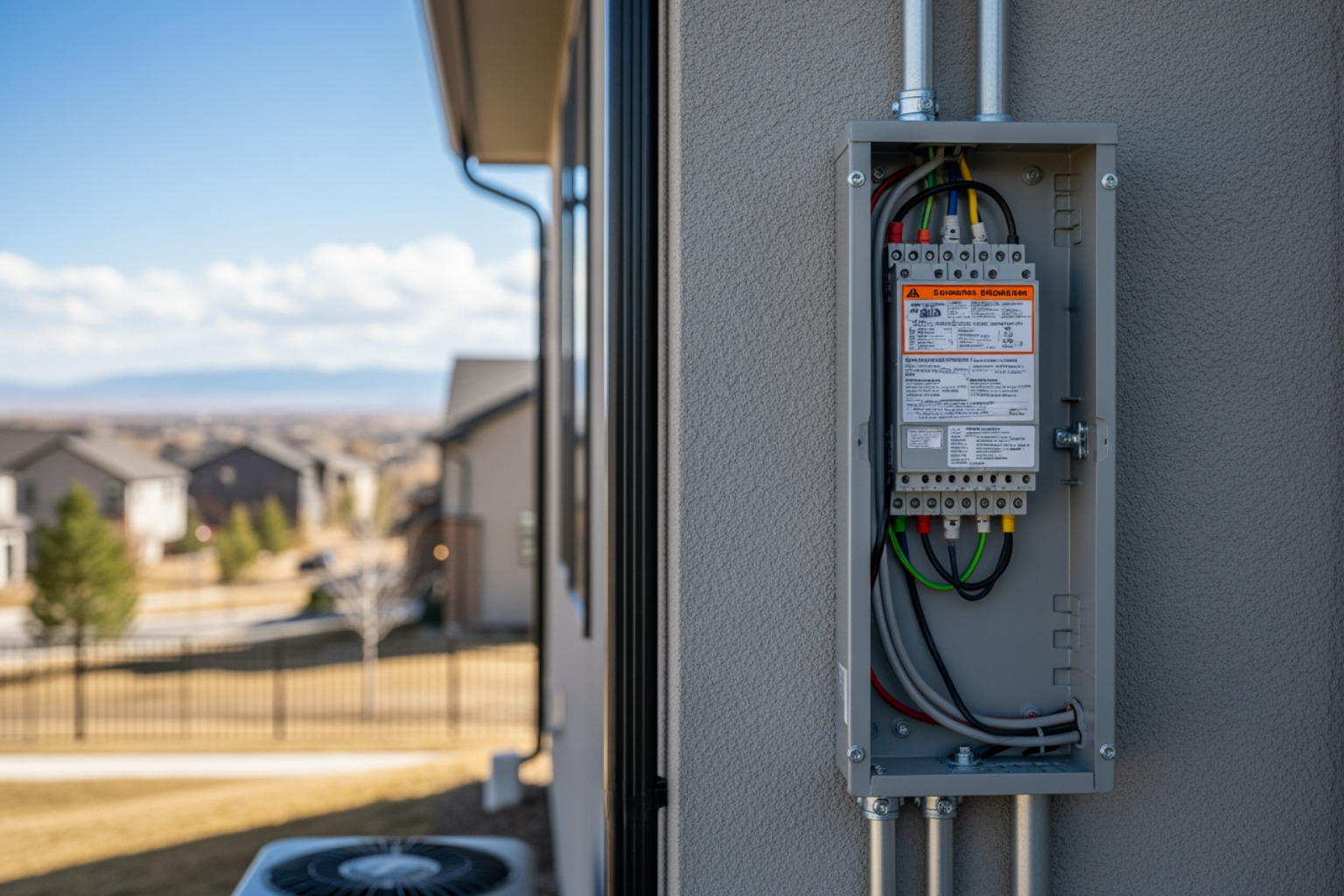
- GFCI Protection: This is the most critical part. A Ground Fault Circuit Interrupter (GFCI) breaker shuts off power in a fraction of a second if it detects a leak. You can see how this looks in our Power Up Safely: Your 50-Amp Hot Tub GFCI Wiring Diagram.
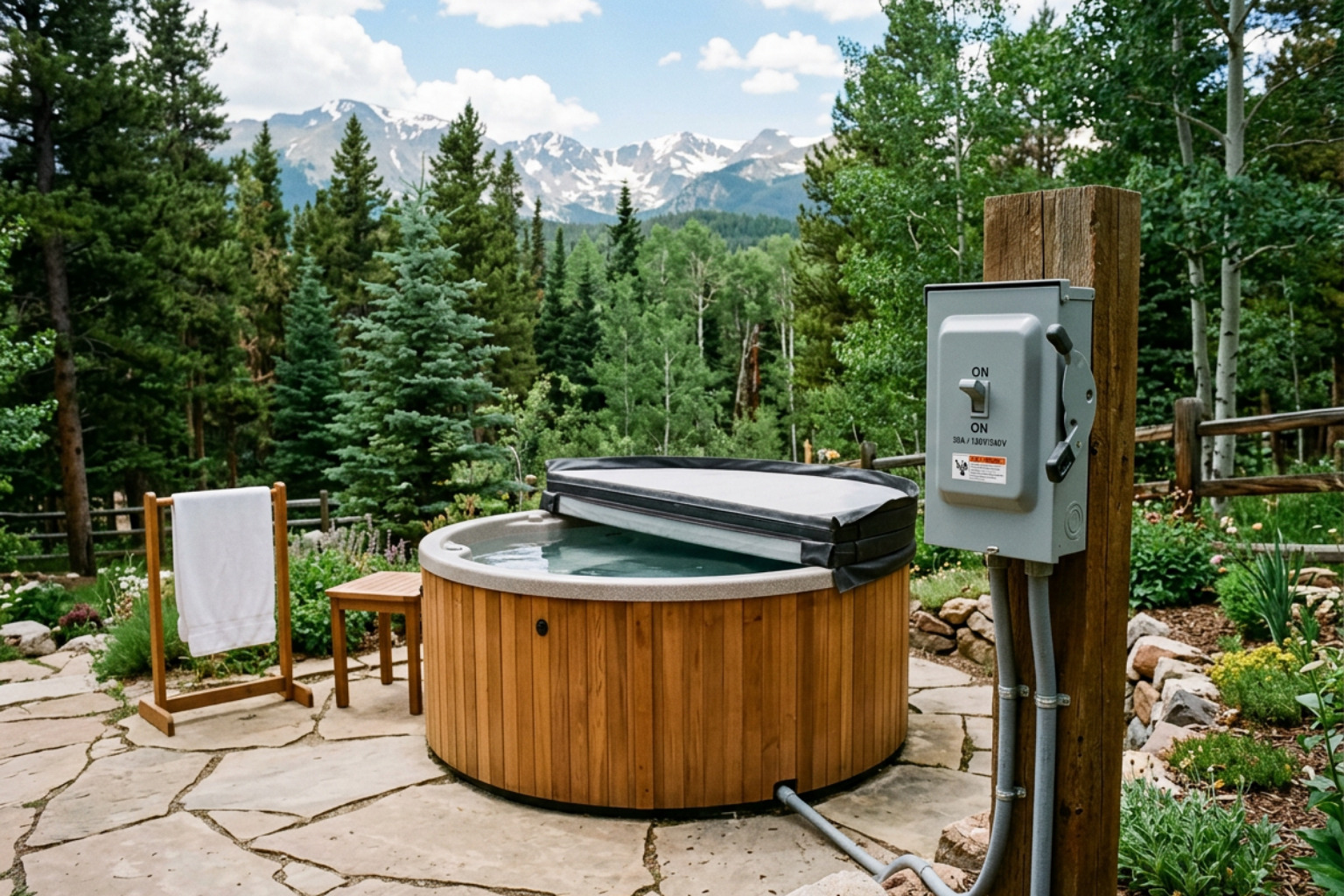
- Manual Disconnect: The law requires a “kill switch” within sight of the hot tub but at least 5 feet away. This allows you (or a service tech) to cut power instantly in an emergency.
- Spa Subpanel: This is an Electrical Box for Hot Tub use that houses the GFCI breaker. It’s usually mounted on the exterior of the house.
- Heavy-Gauge Wire and Conduit: We use thick copper wire protected by PVC or liquid-tight conduit to ensure the elements (and the occasional weed whacker) don’t damage the power lines.
Why Your Electrical Panel Might Need an Upgrade
I often visit homes in older parts of Denver or Centennial that still have 100-amp electrical service. While that was plenty of power in the 1970s, it’s rarely enough for a modern home with an AC, an electric range, and now a 50-amp hot tub.
If your panel is at its limit, adding a hot tub could cause frequent breaker trips or even heat damage to your electrical bus bars. We use our Hot Tub Amperage Guide to calculate your home’s “load.” If the math doesn’t add up, we may recommend a panel upgrade to 200 amps.
While an upgrade can add $2,500 to $5,000 to the total project, it’s often a necessary step for Hooking Up 220v Hot Tub systems safely. Think of it as upgrading the “lungs” of your home so it can breathe under the new power demand.
Safety First: Why DIY Wiring Isn’t Worth the Risk
I get it—home improvement is expensive, and it’s tempting to try and save a few hundred bucks by watching a YouTube video. But as a Master Electrician, I’ve seen the “after” photos of DIY Hot Tub Wiring Mistakes, and they aren’t pretty.
Here are the most common hazards I see with DIY attempts:
- Incorrect Wire Size: Using wire that is too thin, which leads to overheating and potential fires.
- Improper Grounding: This is the #1 cause of “tingles” or shocks when touching the water.
- Wrong GFCI Placement: If the GFCI isn’t wired exactly right, it won’t trip when you need it to.
- Code Violations: If you sell your home later, an inspector will flag unpermitted work, which can hold up your sale.
Beyond the physical danger, there is a financial risk. Most hot tub manufacturers will void your warranty if the unit wasn’t installed by a licensed professional. There are many Common Problems When Installing a Hot Tub Without a Licensed Electrician, ranging from fried control boards to insurance claims being denied because the work wasn’t up to code.
At Harmony Electric, we stand by our work with a lifetime workmanship guarantee. We do it right the first time so you can actually relax in your tub instead of worrying about the wiring.
Frequently Asked Questions about Hot Tub Wiring
Is a permit required for hot tub electrical work in Colorado?
Yes. In almost every jurisdiction we serve—from Castle Pines to Parker—a permit is required for any new 240V circuit. This involves an application fee and a visit from a city inspector to ensure the work meets the National Electrical Code (NEC).
How long does it take an electrician to wire a hot tub?
For a standard backyard installation, you can expect us to be there for 4 to 8 hours. This includes mounting the subpanel, running the conduit, pulling the wire, and performing final safety tests.
Can I use my existing 110V outlet for a new hot tub?
Only if you bought a specific “Plug-and-Play” model. These are smaller tubs that don’t heat up as fast and usually can’t run the heater and the high-speed jets at the same time. Most standard 4-6 person tubs require a dedicated 220V/240V circuit.
Conclusion
Adding a hot tub is one of the best ways to turn your Denver home into a personal sanctuary. While the electrician hot tub installation cost is a significant part of the budget, it’s the one area where you absolutely shouldn’t cut corners.
At Harmony Electric, we take pride in providing clean, high-quality work that keeps your family safe. Whether you’re in Highlands Ranch, Lone Tree, or anywhere in the Denver Metro area, we are here to help you power up your backyard oasis. We offer honest recommendations and a lifetime workmanship guarantee because we believe in doing things the right way.
Ready to get your spa bubbling? Visit our Hot Tub Installation page to schedule a free estimate and let’s get started.