
Why Electrical Panel Upgrades Matter for Modern Homes
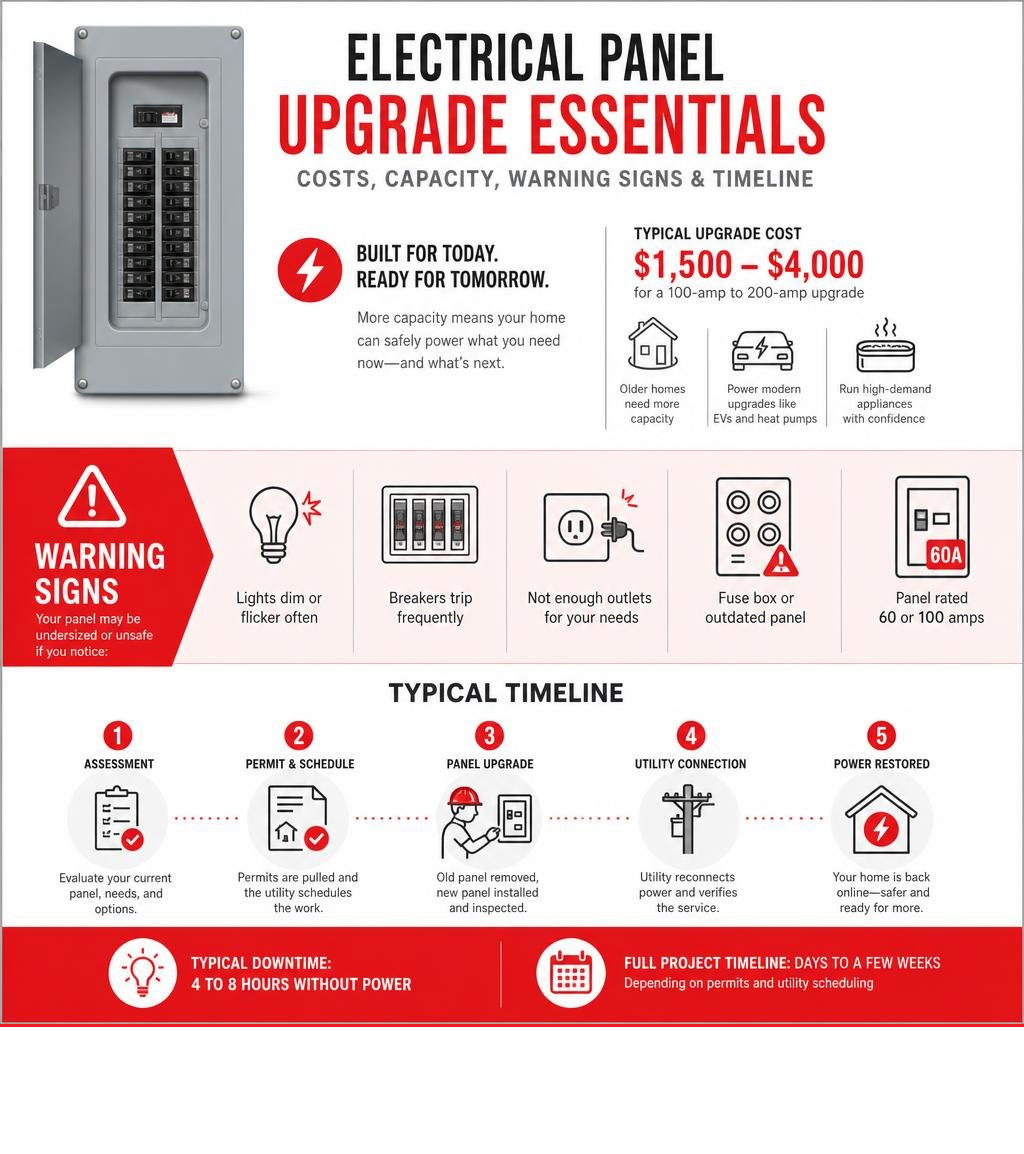
Electrical panel upgrades replace an outdated or undersized breaker box and, when needed, increase the power service coming into the home. For many homeowners, the practical question comes down to cost, safety, and whether the existing panel can handle plans like an EV charger, heat pump, electric range, or hot tub.
| Quick answer | What it means |
|---|---|
| Typical cost | A 100-amp to 200-amp upgrade often falls around $1,500 to $4,000, though service-line, meter, and wiring work can raise the price. |
| Common reason | Older 60- or 100-amp panels may not have enough capacity for major new electric equipment. |
| Safety reason | Fuse boxes and panels from brands such as Federal Pacific, Zinsco, or Pushmatic deserve a prompt professional assessment. |
| Typical downtime | The hands-on panel swap often means 4 to 8 hours without power. Permits and utility scheduling can make the full project take longer. |
| Does it raise the bill? | No. A larger panel provides more capacity; your bill changes only if your home uses more electricity. |
What I usually see in Denver homes is not one clear-cut problem. It is a panel that has worked fine for years, then starts running out of room as the home adds air conditioning, an EV, a basement finish, or a spa. An upgrade can be a smart long-term investment, but it is not always the first or only option.
I’m Randy Harmuth, Master Electrician and owner of Harmony Electric, and this guide will help you sort out the real benefits, tradeoffs, and costs before you decide.
Understanding Electrical Panel Upgrades and How They Work
Your electrical panel is the central control hub for every light, outlet, and major system in your house. Electricity travels from the power company’s lines outside into your electrical meter base, passes through the main circuit breaker inside your panel, and spreads across individual branch circuits throughout your walls.
When homeowners talk about electrical panel upgrades, they often mean a “heavy up.” A heavy up increases the total volume of electrical current, measured in amperes or “amps,” that your home can draw at any single moment.
Upgrading service usually requires replacing the panel box itself, swapping the main breaker, and running thicker service wires from the utility meter to your breaker box. In many cases, we also work with utility providers like Xcel Energy across the Denver Metro Area to disconnect power safely while replacing the outside meter socket and service mast.
To understand the difference between options, it helps to compare a service upgrade with standard replacements or subpanels. Here is how those three projects differ in scope, typical costs, and primary purpose:
| Option | What It Involves | Typical Cost Range | Best Used For |
|---|---|---|---|
| Full Panel Upgrade (Service Heavy-Up) | Replaces panel, main breaker, meter socket, and upgrades service capacity (e.g., 100A to 200A). | $1,500 – $4,000+ | Whole-home electrification, EV chargers, heat pumps, and hot tubs when overall main capacity is maxed out. |
| Same-Amperage Panel Replacement | Swaps an old or damaged breaker box with a modern panel without changing total amp capacity (e.g., 100A to 100A). | $1,200 – $2,500 | Replacing hazardous legacy panels or corroded breaker boxes when total electric capacity is already sufficient. |
| Subpanel Addition | Installs a secondary circuit box fed directly by the main panel to expand physical breaker spaces. | $500 – $1,500 | Detached garages, finished basements, or workshops that need more space for circuits without boosting main home power. |
For a deeper dive into the mechanical components inside your breaker box, read our detailed article Out With the Old, In With the New: A Comprehensive Look at Electrical Panel Upgrades.
Evaluating Electrical Panel Upgrades for Home Electrification
Most homes constructed during or before the 1980s were wired with 100-amp electrical panels. Back then, 100 amps easily powered a refrigerator, dishwasher, television set, and basic kitchen appliances.
Today, home energy demands look completely different. Transitioning from gas appliances to cold-climate heat pumps, high-efficiency electric water heaters, induction cooktops, and 48-amp Level 2 electric vehicle chargers quickly exceeds what a 100-amp system can carry safely.
Making the move From 100 to 200 Amps: Is Your Home Ready for a Power Boost? is standard for modern all-electric homes. Before recommending a service increase, I complete a standard residential load calculation that looks at how the home is actually used and what new equipment is being added.
A load calculation tallies your home’s total square footage, permanent heating and cooling loads, and appliance ratings using accepted residential demand formulas. This gives us a practical answer: whether your current panel has available capacity or whether a service upgrade is the safer long-term choice. You can learn more about assessing your system in our guide Understanding Electrical Panel Upgrades: When and Why You Need One.
Key Pros and Cons of Electrical Panel Upgrades
Like any substantial home improvement, upgrading your breaker box comes with clear trade-offs. Weighing the benefits against the investment helps ensure you make the right choice for your household budget.
Pros:
- Improved Fire Safety: Modern panels include advanced Arc-Fault Circuit Interrupter (AFCI) and Ground-Fault Circuit Interrupter (GFCI) protection, which quickly shut off power when dangerous electrical arcs or water shocks occur.
- Electrification Readiness: Upgrading to 200 amps gives you plenty of electrical headroom to add Level 2 EV chargers, central air conditioning, hot tubs, or basement finishes without tripping main breakers.
- Power Reliability: Eliminates frustrating power interruptions, flickering overhead lights, and overloaded shared branch circuits.
- Home Value and Insurance: Many home insurance carriers mandate replacing outdated or recalled equipment before issuing coverage, and a modern 200A panel is a strong selling point for buyers.
Cons:
- Initial Financial Investment: Total project costs generally range from $1,500 to $4,000 or higher depending on utility service line work.
- Temporary Utility Outage: Your home will be entirely without electricity during the 4 to 8 hours it takes to install the equipment and undergo utility inspection.
- Potential Cosmetic Repair: Relocating a panel or upgrading service lines through finished drywall or stucco may require minor drywall patching and painting afterward.
Signs Your Panel Is Outdated, Overloaded, or Dangerous
Recognizing early warning signs can prevent minor electrical nuisances from escalating into sudden power losses or hazardous thermal damage inside your walls.
What I usually see in older neighborhoods across Denver, Highlands Ranch, and Parker are clear signs that a system is reaching its limit. Check out our comprehensive guide on Signs Your Electrical Panel is Outdated if you notice any of these symptoms in your home:
- Frequent Breaker Tripping: Breakers shut off repeatedly when running basic household appliances together, like running the microwave and toaster oven at the same time.
- Flickering or Dimming Lights: Overhead lights dim briefly whenever high-draw motor loads engage, such as your air conditioner compressor or clothes dryer.
- Thermal Warmth or Discoloration: The interior metal door or panel cover feels warm to the touch, or you spot dark burn marks and paint discoloration along circuit breakers.
- Audible Buzzing or Sizzling: A faint hum, sizzle, or crackling sound coming directly from inside the breaker enclosure.
- Old Fuse Boxes: Glass plug fuses or screw-in cartridge fuse blocks are long past their intended design lifespan. Screw-in fuse boxes were designed for minimal lighting loads and cannot meet modern safety expectations.
Replacing an old fuse box with a modern circuit breaker panel eliminates manual fuse swapping and provides modern circuit protection. Read more about fuse panel conversion pricing in The Real Price Tag on Replacing Your Old Fuse Box.
Hazardous Legacy Brands: Federal Pacific, Zinsco, and Pushmatic
Certain brands installed between the 1950s and late 1980s have well-documented design flaws that make them unsafe for modern operation. In our dedicated overview on Electrical Panel Recall: FPE, Zinsco, Aluminum, we outline the severe risks associated with these specific legacy models:
- Federal Pacific Electric (FPE) Stab-Lok Panels: Installed in tens of millions of homes nationwide from the 1950s through the 1980s. Independent testing revealed that Stab-Lok breakers often fail to trip during direct overloads and short circuits, allowing current to flow unchecked and overheating home wiring.
- Zinsco and GTE-Sylvania Panels: These panels utilize aluminum bus bars that are prone to severe oxidation and corrosion over time. The breaker clips can weld directly to the bus bar, causing severe arcing, melted casings, and an inability to shut off power manually.
- Pushmatic Panels: These panels rely on push-button mechanisms rather than flipping levers. Over time, internal springs stiffen or freeze, preventing breakers from opening during an electrical fault. Replacement parts are completely obsolete.
Additionally, homes built between 1965 and 1973 often used single-strand aluminum branch wiring. Aluminum expands and contracts much more than copper when under load, causing loose connections at outlets and panel terminals. During a panel replacement, these connections should be retrofitted with approved copper adapters to maintain safe contact.
Because of these known issues, many home insurance carriers in Colorado will deny coverage or require immediate panel replacement during home sales involving FPE or Zinsco panels.
How Much Does an Electrical Panel Upgrade Cost in 2026?
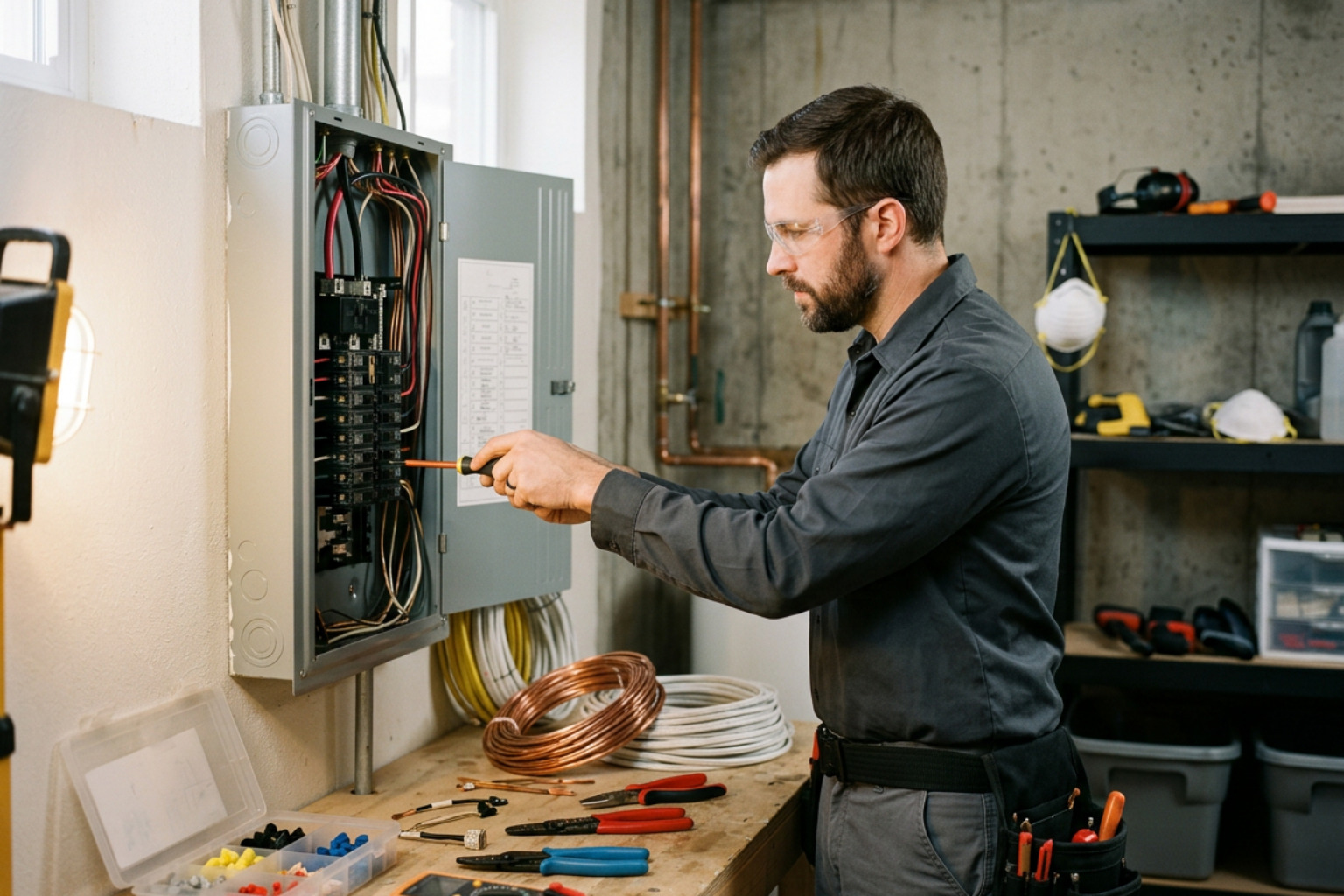
In 2026, the national average cost to upgrade a residential electrical panel from 100 amps to 200 amps ranges between $1,500 and $4,000, including standard permits, inspection fees, and electrician labor.
Every project has unique conditions based on the existing equipment and physical layout of the property. Below is an itemized breakdown of where those project dollars typically go:
- Panel Enclosure and Main Breaker: $200 – $500 for the raw panel hardware, main breaker, and primary bus bars.
- Branch Circuit Breakers (AFCI/GFCI): $300 – $800 depending on how many dual-function AFCI/GFCI combination breakers are required by local building code updates.
- Electrician Labor and Scheduling: $800 – $2,000 representing skilled trade labor to unhook old circuits, mount new hardware, route main wiring, ground systems, and trace branch circuits.
- Permit Fees and Utility Coordination: $100 – $350 paid directly to local city or county building departments for municipal permits and final inspection sign-offs.
- Meter Socket and Weatherhead Upgrades: $400 – $1,200 if the external service mast, weatherhead, or utility meter socket needs replacing to carry heavier 200A wiring.
Key Cost Factors and Financial Assistance Options
Several site-specific variables can push your overall project estimate toward the higher or lower end of the pricing spectrum:
- Overhead vs. Underground Utility Services: Underground utility lines require coordination with the power company. If underground trenching or heavy service cable conduit is required, costs can increase significantly compared to basic overhead drops.
- Service Mast and Point of Attachment: Older roof service masts may need to be raised or strengthened to meet modern clearances over driveways and structures.
- Panel Relocation: Moving a panel box from an unapproved location (like a bathroom, closet, or directly above a stairwell) to an accessible garage or exterior wall requires extending every branch circuit wire, adding $800 to $1,800 in labor.
Financial Assistance and Tax Incentives: Homeowners upgrading equipment can often take advantage of incentives to help lower net out-of-pocket expenses:
- Inflation Reduction Act (Section 25C Tax Credit): Federal Energy Efficient Home Improvement Credits allow qualifying homeowners to claim a tax credit of 30% up to $600 for electrical panel upgrades installed in conjunction with qualified heat pumps, induction stoves, or heat pump water heaters. You can review eligible clean energy upgrades on Energy.gov.
- Local Utility Rebates: Utility companies frequently offer financial incentives or rebates ranging from $200 to $1,000 for service upgrades that facilitate residential clean energy conversion or EV charger installations.
- State and Local Grants: Depending on your income bracket and location, low-to-moderate-income programs offer targeted grant funding to cover primary panel updates during home electrification.
Professional Installation: Step-by-Step Process, Permits, and Timeline
Understanding what happens on installation day makes the process smooth and easy to plan around.
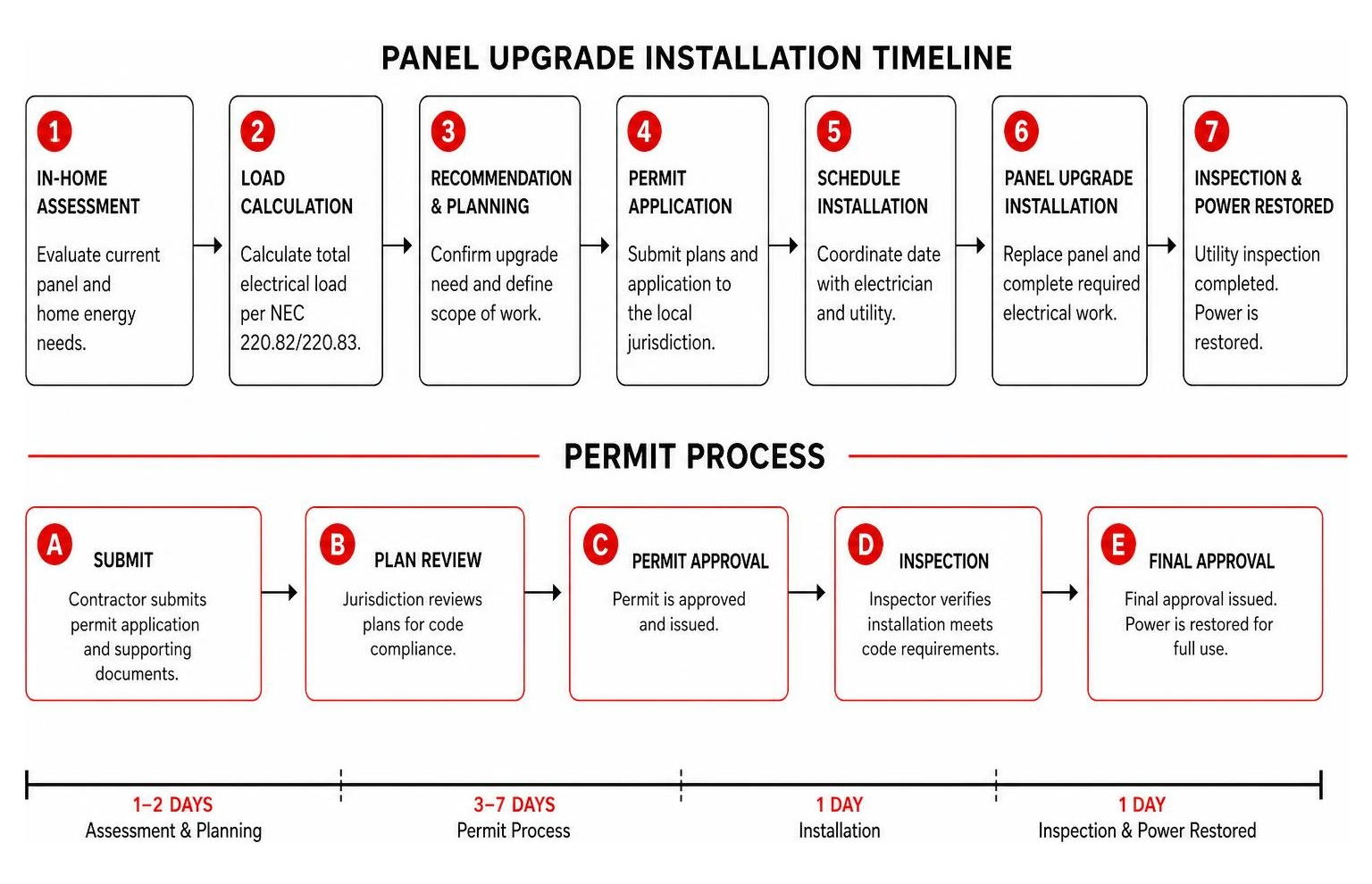
Here is how a standard residential panel upgrade moves from initial planning to final inspection sign-off:
- Site Inspection and Load Calculation: We evaluate your current panel, review your home’s electrical demand, and confirm whether the utility service can support the planned upgrade.
- Permitting and Utility Scheduling: We submit the required electrical permit documents to the local building department. We also coordinate with Xcel Energy or your local power utility to schedule the temporary service disconnect.
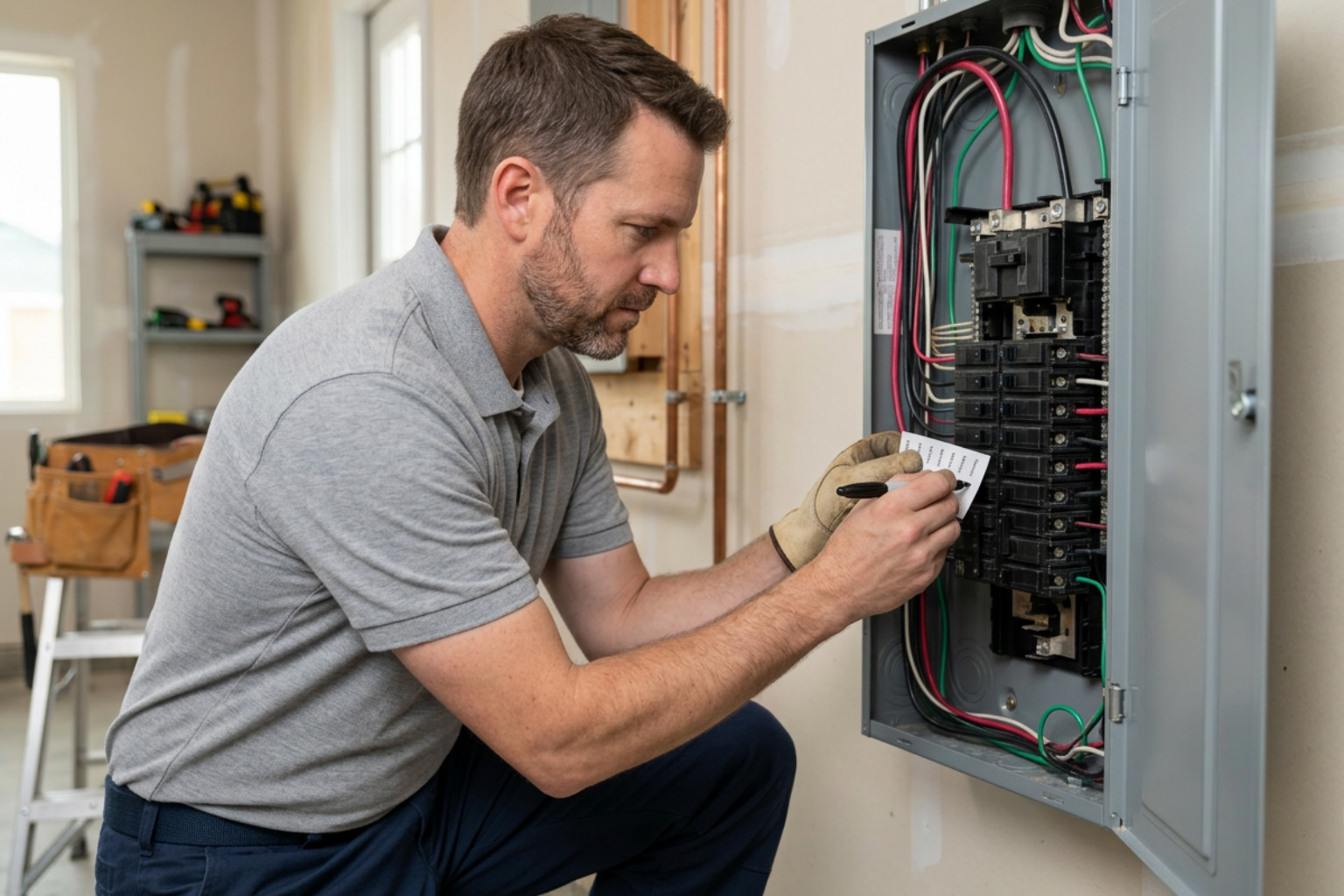
- Installation Day (4 to 8 Hours): On installation day, the power utility disconnects power at the street or meter. We remove the old panel, install the new main enclosure, mount ground rods, wire new AFCI/GFCI breakers, connect incoming service conductors, and clearly label every circuit inside the door.
- Utility Reconnect: The utility company re-energizes the service lines, and we verify proper voltage across all household circuits.
- Municipal Final Inspection: A local building inspector reviews the installation to verify grounding, bonding, and overall safety before closing out the permit.
What to Ask Your Electrician Before Your Colorado Custom Spa Arrives
If you are planning a major outdoor addition like a luxury hot tub or swim spa, your electrical panel needs to be ready before delivery day.
High-voltage spa equipment typically uses a dedicated 240-volt, 50-amp circuit paired with an outdoor GFCI disconnect panel. As an authorized installation partner for Colorado Custom Spas, we work directly with spa delivery teams to make sure your backyard wiring matches the manufacturer’s high-voltage specifications.
Proper authorized installation protects your spa’s manufacturer warranty and helps prevent premature electrical component failures. To make sure your home is prepared, ask your electrician these key questions before delivery day:
- Does my main electrical panel have enough available capacity for a 50A spa circuit based on a full household load review?
- Will my installation require a dedicated circuit breaker directly from the main panel or a secondary subpanel? Check out How Much Does a Dedicated Circuit Really Cost? for pricing details.
- Are you pulling official municipal permits and providing a written warranty covering labor and materials?
- Will the outdoor GFCI emergency shut-off switch be placed in the right line-of-sight location for the spa layout?
Frequently Asked Questions About Electrical Panel Upgrades
Can I add an EV charger or heat pump without upgrading my panel?
In some cases, yes. If your load calculation shows your 100-amp panel is near its limit, you can install smart load management devices or circuit-sharing switches. These devices automatically pause power to an EV charger whenever heavy appliances like an electric dryer or oven turn on.
However, if you plan to run multiple major electric loads simultaneously—such as a heat pump, electric water heater, and Level 2 EV charger—a full service upgrade to 200 amps is usually the safest and most practical option.
How long does a panel upgrade take and will it increase my electric bill?
The actual physical installation takes 4 to 8 hours on work day, during which power to your home will be shut off. The entire project timeline—from pulling initial city permits to final inspection sign-off—typically spans 1 to 3 weeks.
Upgrading your electrical panel will not increase your electric bill. An electrical panel simply acts as a doorway for power. Your monthly bill is based strictly on how many kilowatt-hours of electricity your appliances consume, not the size of the panel on the wall.
What size panel (amps) does my home actually need?
For almost every single-family home in the Denver Metro Area, a 200-amp panel provides plenty of power capacity for full home electrification, including air conditioning, EV charging, and high-demand appliances.
Larger properties exceeding 4,000 square feet, homes with multiple detached auxiliary dwelling units (ADUs), or houses running multiple Level 2 EV chargers alongside all-electric heating may require 300-amp or 400-amp service. Read our guide on Thinking Big: Your Guide to Upgrading to 300 or 400 Amp Service to evaluate larger service options.
Conclusion
Upgrading your electrical panel is one of the most reliable ways to keep your home running safely while preparing for modern electric equipment. Whether you are replacing an aging breaker box, preparing for an EV charger, or organizing power for a new hot tub, taking time to evaluate your capacity guarantees reliable service for years to come.
At Harmony Electric, we handle complete residential panel services throughout Denver, Castle Rock, Highlands Ranch, Parker, Lone Tree, Centennial, and Castle Pines. Led by Master Electrician Randy Harmuth, our team believes in doing the job right the first time with clean craftsmanship, clear communication, and straightforward estimates without high-pressure sales. Every installation is backed by a three-year material warranty and a lifetime workmanship guarantee.
If you are ready to evaluate your home’s breaker panel or plan your next project, explore our Electrical Repairs and Upgrades services or contact us today to schedule an on-site consultation.