Why Understanding Car Charging Point Installation Cost Matters
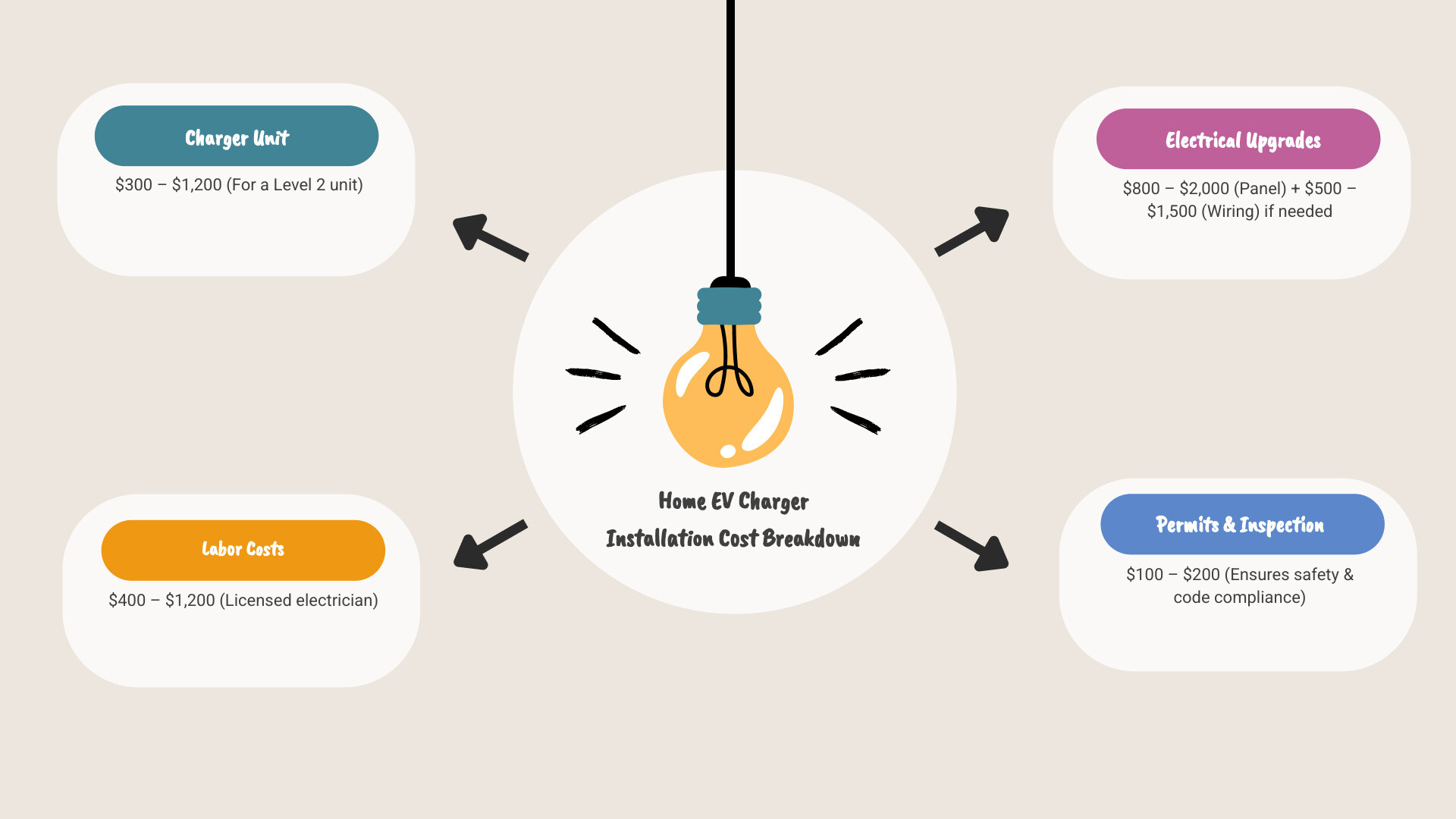
If you’re shopping for car charging point installation cost information, you’re probably excited about your new electric vehicle—but also wondering what it’ll really take to charge it at home. The good news? Most Denver-area homeowners spend between $1,000 and $3,000 for a complete Level 2 home charger installation, including the unit, labor, permits, and any minor electrical work.
Here’s the quick breakdown:
| Cost Component | Typical Range |
|---|---|
| Level 2 Charger Unit | $300 – $1,200 |
| Labor (Licensed Electrician) | $400 – $1,200 |
| Permits & Inspection | $100 – $200 |
| Electrical Panel Upgrade (if needed) | $800 – $2,000 |
| New Wiring (if needed) | $500 – $1,500 |
| Total Average Cost | $1,000 – $5,000+ |
I’m Randy Harmuth, master electrician and owner of Harmony Electric here in Denver. Over the years, I’ve installed dozens of home EV chargers, and I know how confusing the pricing can feel. One quote says $800, another says $3,500—what gives?
The truth is, every home is different. Your final cost depends on things like your electrical panel’s capacity, how far the charger is from your panel, whether you need an upgrade, and what kind of charger you choose.
In this guide, I’ll walk you through every piece of the puzzle so you know exactly what to expect—and why some installations cost more than others.
Car charging point installation cost vocab to learn:
- 7kw home charging point
- EV charger installation guide
- charging point installation at home
First, Let’s Talk Chargers: Levels, Features, and Purchase Costs
Before we dig into installation costs, let’s look at the charger itself. Just like cars, EV chargers come in different “levels,” each designed for different speeds and uses. Understanding these levels is key to figuring out your overall car charging point installation cost.
Here’s a quick rundown of the main types you’ll encounter, especially for home use:
| Charger Type | Equipment Cost | Charging Speed | Best For |
|---|---|---|---|
| Level 1 | Usually included with EV | 1 to 2 miles per hour | Emergency or occasional use, hybrid vehicles |
| Level 2 | $300–$1,999 | 10 to 40+ miles per hour | Daily charging at home, most EV owners |
| Level 3 (DC Fast) | $30,000+ | 60-80% in under 30 minutes | Commercial installations, public charging |
Most new electric vehicles come with a Level 1 charging cable. This cable plugs into any standard 120-volt wall outlet, just like your toaster or phone charger. It’s super convenient because it doesn’t require any special installation, but it’s also very slow. We’re talking 1 to 2 miles of range per hour of charging. If you drive 36 miles a day, that’s almost a full workday just to charge up! For many of us in Denver and the surrounding areas, a Level 1 charger takes too long to be practical for daily use, especially with Colorado’s varied terrain and our busy lives. It’s really best for occasional top-ups or if you drive very few miles each day.
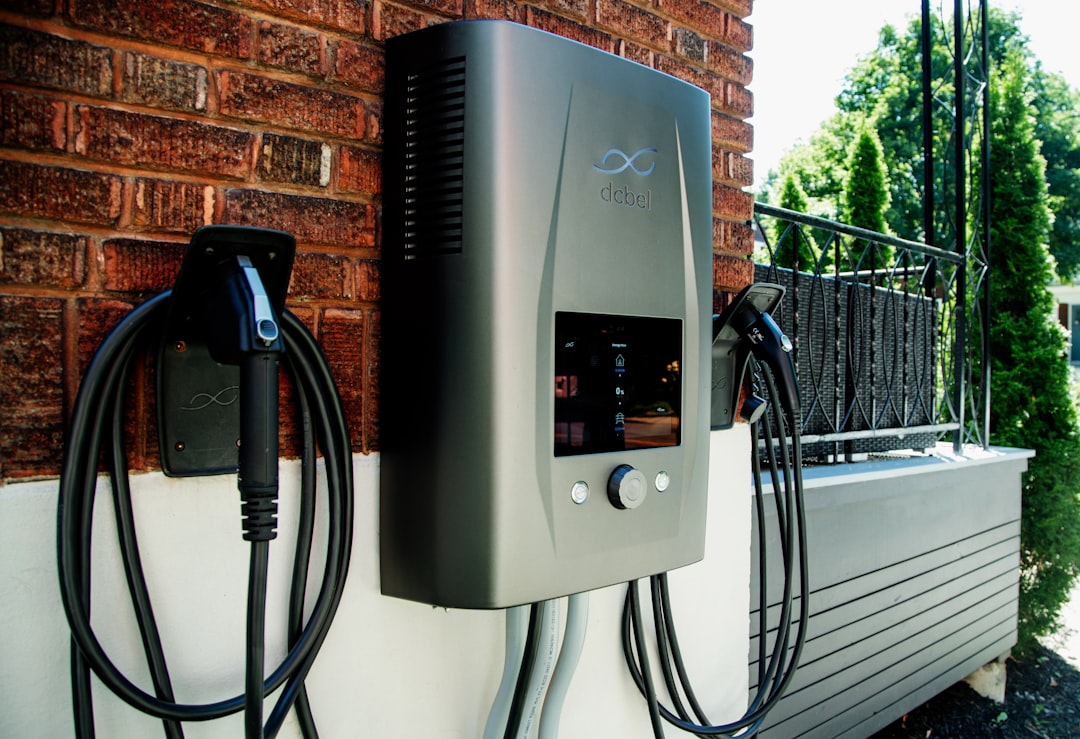
That’s where Level 2 chargers come in. These are the sweet spot for most homeowners. A Level 2 charger uses a 240-volt connection, similar to what your electric dryer or oven uses. This means it can charge your EV significantly faster, typically adding 10 to 40+ miles of range per hour. With a Level 2 charger, you can plug in your car when you get home from work and wake up to a full battery the next morning. The charger unit itself usually costs between $300 and $1,200, though some advanced models can go up to $1,999.
Level 3, or DC Fast Chargers, are a whole different beast. These are super-fast, often giving you 60-80% charge in under 30 minutes, but they require industrial-level power. You’ll only find these at public charging stations or commercial installations, not in homes.
For more detailed information on charging levels, you can check out the U.S. Department of Energy’s guide to charging at home.
Smart Chargers and Extra Features
Beyond the basic charging function, many Level 2 chargers offer “smart” features that can add to their cost but also offer great benefits. These might include Wi-Fi connectivity, which lets you monitor your charging, schedule sessions during off-peak utility hours (when electricity is cheaper), and track your energy usage through a smartphone app. Some even integrate with solar panels, allowing you to charge your car directly from your home’s solar energy.
While these advanced features can add $200 to $600 to the charger’s price, they can lead to long-term savings and convenience. For example, a bidirectional charger like Wallbox’s Quasar 2, which can send power from your car to your home, can cost around $6,440. It’s an exciting new technology, but it’s definitely on the higher end of the spectrum for a charger unit alone.
What I see most often in Denver homes are Level 2 chargers with smart features like Wi-Fi. Homeowners love being able to check their charging status from anywhere and take advantage of lower electricity rates overnight. It really makes home charging a seamless part of their routine.
The Biggest Factors That Affect Your Car Charging Point Installation Cost
Now that we’ve covered the charger itself, let’s get into the heart of the car charging point installation cost: what it takes to get that charger safely and efficiently powered up in your home. This is where things can get a little more complicated, but don’t worry, we’ll break it down.
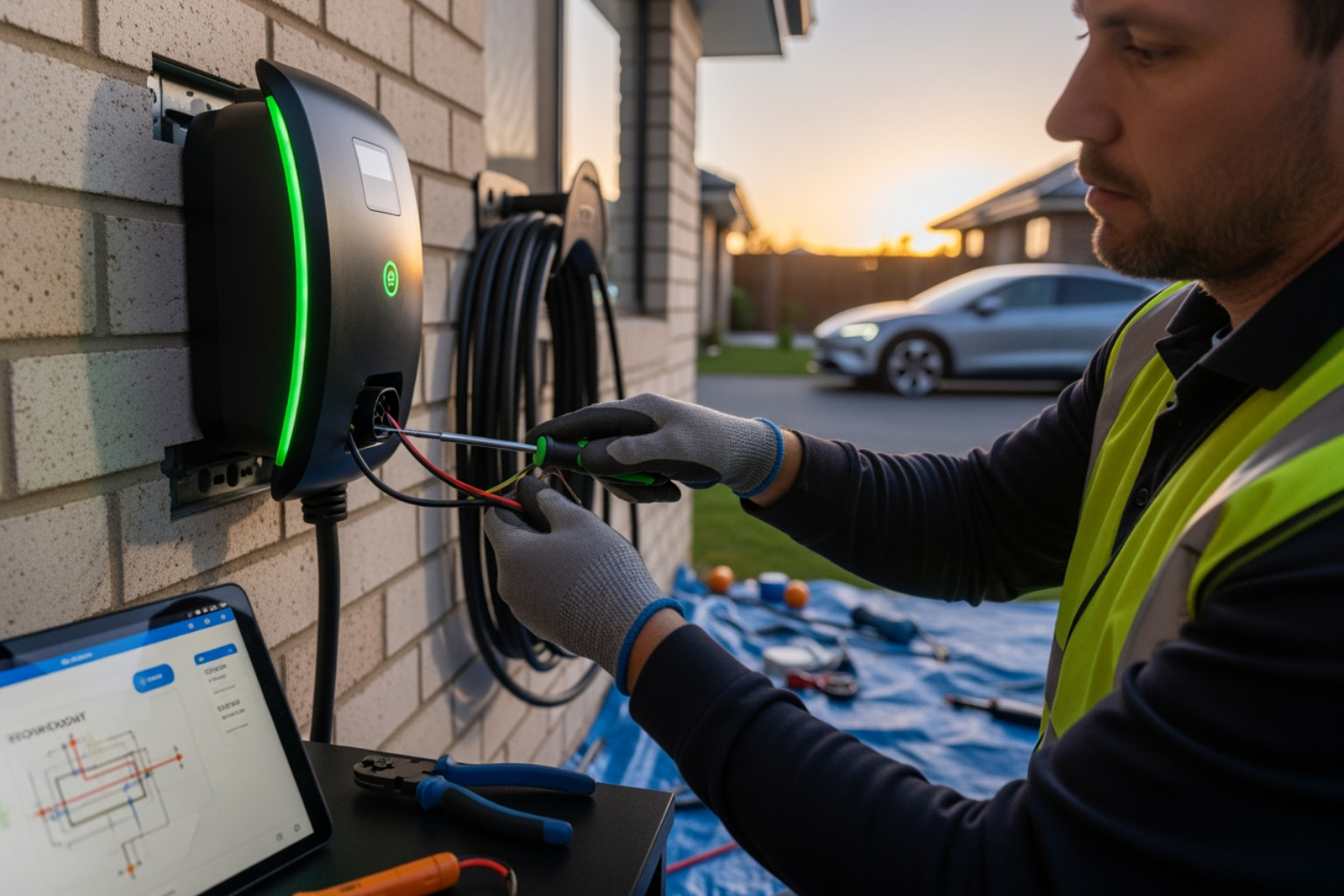
The biggest things that drive up or down your installation cost are almost always related to your home’s existing electrical system. I’ve been in countless homes across Denver, Castle Rock, Parker, and the rest of the Metro Area, and no two electrical setups are exactly alike.
The main factors we look at are:
- Your Electrical Panel’s Capacity: Can it handle the extra load of an EV charger?
- Wiring Distance: How far is the charger from your electrical panel?
- Installation Location: Is it in a garage, outside, or somewhere else?
- Hardwired vs. Outlet: Do you need a dedicated hardwired connection or an outlet?
- Your Home’s Age: Older homes often require more upgrades.
In older Denver homes, I often see electrical panels that are already maxed out or simply don’t have the capacity for a new Level 2 charger. This isn’t a problem, but it’s the biggest reason why costs can vary.
Your Electrical Panel: The Heart of the System
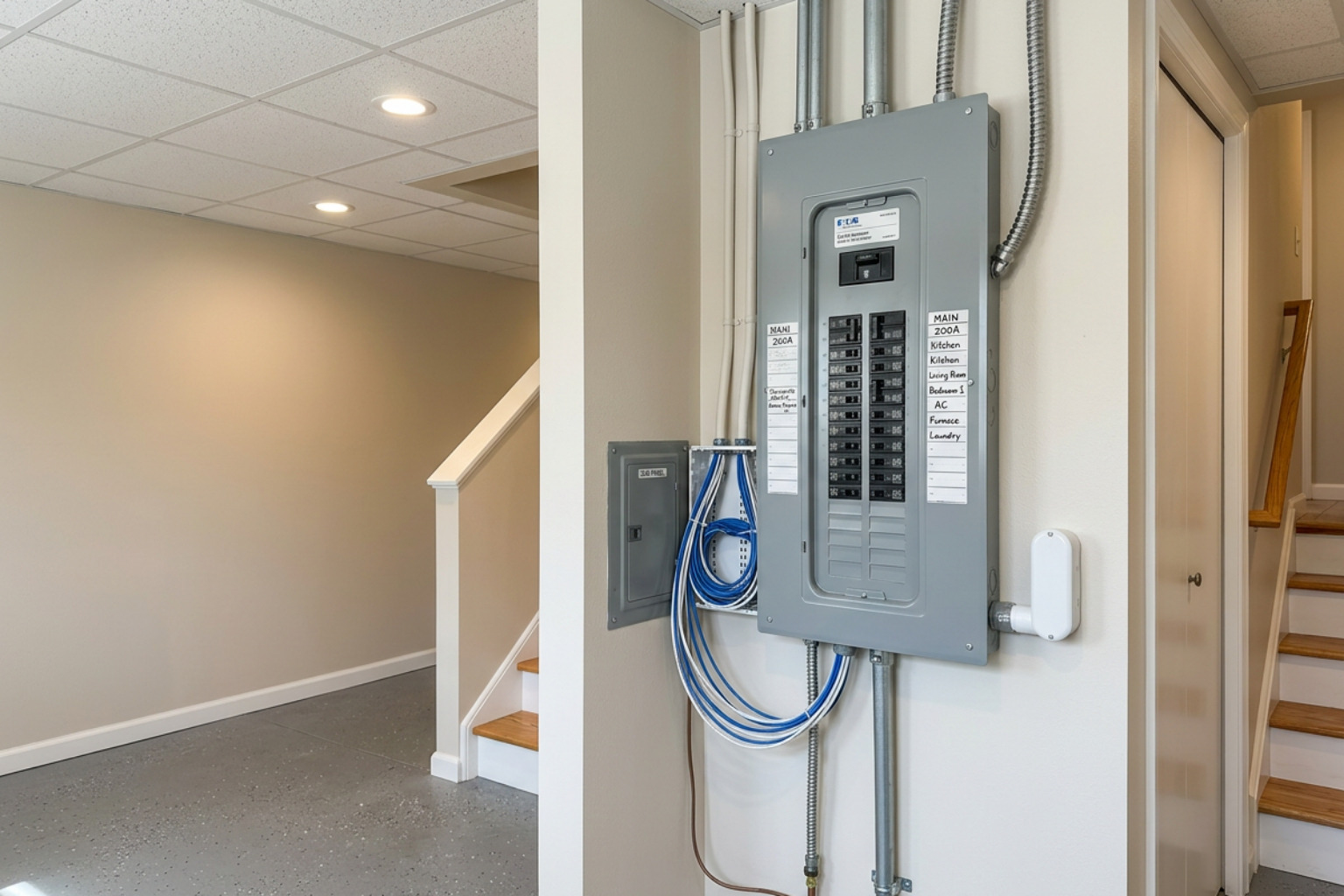
Your electrical panel is like the brain of your home’s electrical system, distributing power safely to all your appliances and outlets. A Level 2 EV charger draws a lot of power, and your panel needs to be able to handle that continuous load safely.
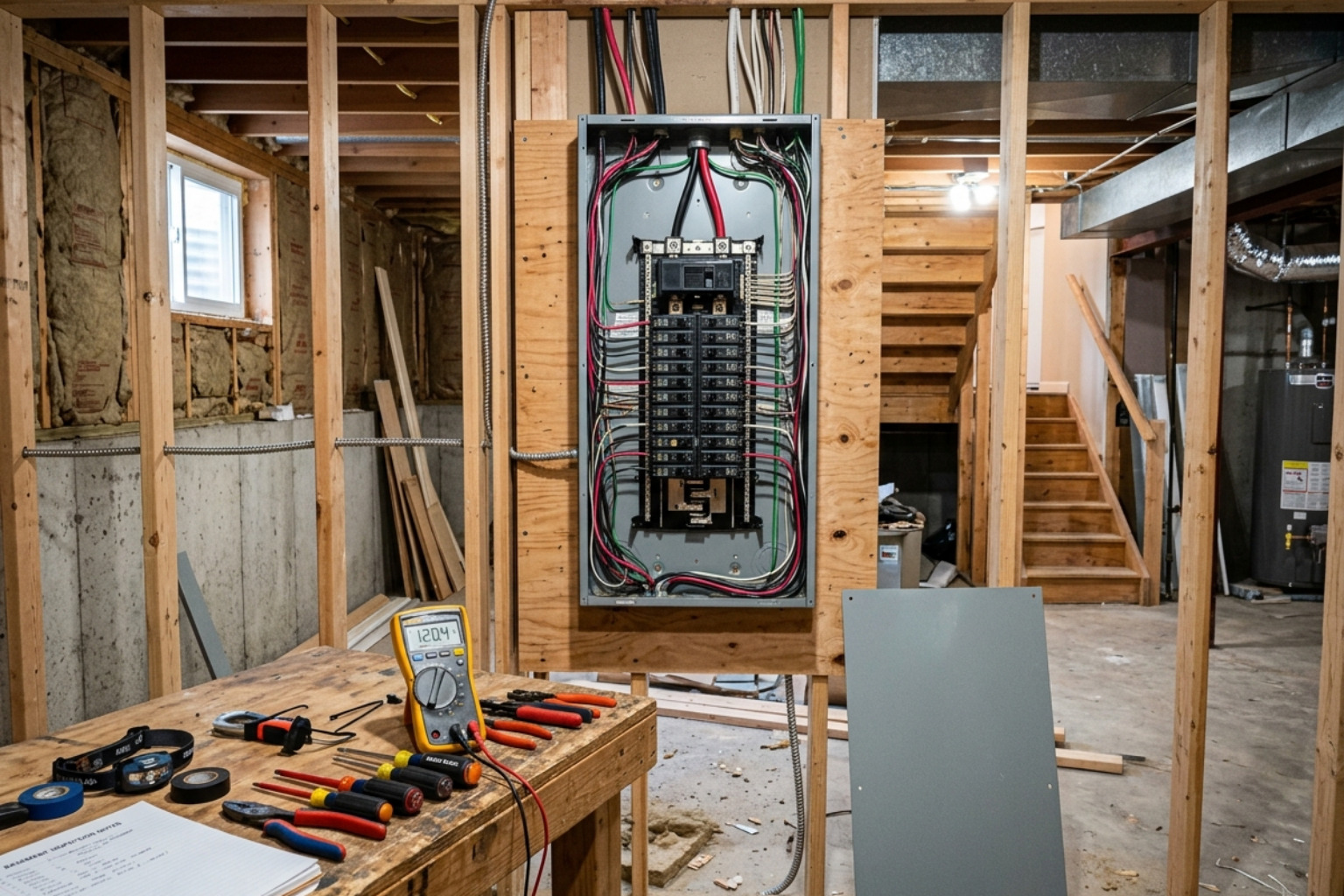
When we come out for an estimate, one of the first things we do is a “load calculation.” This is where we figure out how much power your home currently uses and how much spare capacity your electrical panel has. Most Level 2 chargers require a dedicated 240-volt circuit, often needing a 50-amp breaker. If your panel is older, full, or simply doesn’t have enough spare capacity, you might need an upgrade.
Panel upgrade costs can range from $800 to $2,000, but can sometimes exceed $3,000 if it’s a complete main service upgrade. This is a significant part of the car charging point installation cost if it’s needed. Upgrading your panel isn’t just for an EV charger; it often improves the overall safety and capacity of your home’s electrical system, preparing it for future needs.
The Journey of the Wire: Distance and Difficulty
Imagine running a new electrical line from your panel in the basement to a charger in your garage. If it’s an unfinished basement and the garage is right above it, that’s a relatively easy and quick run for us. The wire can be run neatly along joists, and the labor is minimal.
Now, imagine the panel is in the back of a finished basement, and the charger needs to go on the opposite side of a finished garage. That means we might need to fish wires through walls, go into an attic, or even run conduit along the exterior of your home. This takes a lot more time and effort, and that adds to the labor cost.
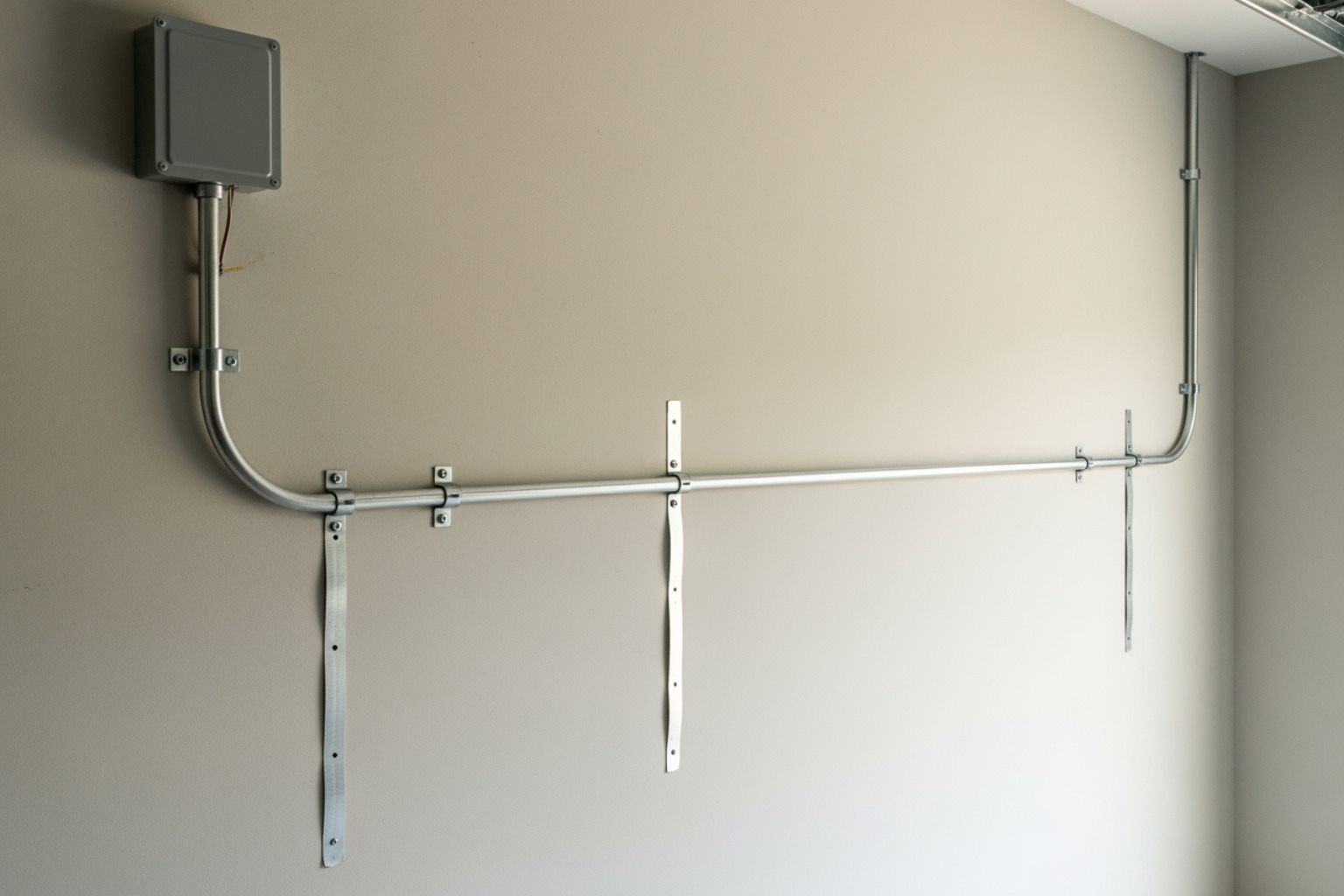
Running new wires through finished walls or from a basement to a garage can add $500 to $1,500 to the project’s total price. If we need to trench underground for an outdoor charger, that adds even more to the car charging point installation cost. We typically estimate around $10 to $20 per foot for wiring and trenching for these more complex runs.
Indoor Garage vs. Outdoor Installation
Where you want your charger installed also plays a role. Most homeowners in the Denver Metro Area prefer their garage, which is usually the most straightforward option.
If you want the charger outdoors, perhaps on the side of your house or near a detached carport, we need to consider a few extra things:
- Weatherproofing: The charger itself needs to be outdoor-rated, meaning it can withstand Colorado’s sun, snow, and hail. Chargers with a waterproof rating of at least IP67 are a good choice. We might also recommend a simple weatherproof cover (around $50) or a heavy-duty, lockable enclosure (up to $200) for extra protection.
- GFCI Protection: For outdoor outlets, extra ground-fault circuit interrupter (GFCI) protection is often required for safety.
- Mounting: If there’s no wall, you might need a free-standing pedestal mount, which starts at around $300, compared to a wall mount that costs $50-$150.
- Wiring: Outdoor runs usually involve more conduit and protection for the wiring, which can increase material and labor costs.
Generally, outdoor installations tend to be a bit more expensive than indoor garage installations due to these additional requirements.
Putting It All Together: A Realistic Look at the Final Bill
So, combining all these factors, what’s the realistic range for your car charging point installation cost? For most residential Level 2 installations in our service areas of Denver, Castle Rock, Parker, and the surrounding communities, the total cost—including the charger unit, labor, permits, and any necessary electrical work—falls between $1,000 and $5,000.
The unit itself, as we discussed, is typically $300 to $1,200 for a good Level 2 charger. Then you add in the labor and other costs:
- Labor Costs: For hiring a licensed electrician, you can expect professional labor costs to range from $400 to $1,200. This covers the electrician’s time and expertise to safely install the charger, perform load calculations, and ensure everything meets code.
- Permit Fees: Almost all Level 2 EV charger installations require a permit from your local municipality. Permits for EV charger installation typically cost $100 to $200 in our area. This ensures the work is inspected and meets all safety standards.
Understanding the Total Car Charging Point Installation Cost
Let’s look at a couple of scenarios to give you a clearer picture:
- Simple Installation Scenario: You have a newer home with a modern electrical panel that has plenty of spare capacity and a convenient spot in your garage right next to the panel. You choose a mid-range Level 2 charger. In this case, your total car charging point installation cost could be as low as $700 (if you already own the charger) to $1,500. This includes the charger, straightforward labor, and the permit.
- Complex Installation Scenario: You have an older home with a full electrical panel that needs an upgrade. The charger needs to be installed on the other side of a finished garage, requiring a longer wire run through walls. In this situation, your costs could be $3,000 to $5,000+, covering the charger, panel upgrade, extensive wiring, labor, and permits.
The good news is that the average cost to improve a single-family house with installation of outlets and chargers for Level 2 electric vehicle charging is estimated at $1,400. This aligns with what we typically see for a standard install here in Denver. For specific pricing custom to your home, we recommend getting a personalized quote.
Other Factors That Can Affect the Cost
A few other small details can nudge the price up or down:
- Mounting accessories: If you’re simply mounting the charger on a garage wall, a basic wall mount might cost $50–$150. But if you need a free-standing pedestal for an outdoor or detached location, expect to pay $300 or more.
- Hardwiring vs. plug-in: Most Level 2 chargers can either be hardwired directly into your home’s electrical system or plug into a NEMA 14-50 outlet. Hardwiring often allows for faster charging speeds and a cleaner aesthetic. While a NEMA 14-50 outlet might seem cheaper upfront, some older outlets lack the capability to handle the continuous current an EV charger demands, and hardwiring is often recommended for safety and efficiency.
- Smart features: As mentioned earlier, chargers with built-in Wi-Fi, scheduling, and other smart features can add $200–$600 to the unit’s cost.
Is It Worth It? Long-Term Savings & Available Incentives
You might be looking at these figures and wondering if the car charging point installation cost is really worth it. In my experience, for almost all EV owners, the answer is a resounding yes!
Think about it: 80% of EV owners charge at home. Why? Convenience, for one. But also, cost. Public charging is usually more expensive. Having your own charger means no more detours to gas stations or waiting in line at public chargers. You wake up every morning with a “full tank.”
Beyond convenience, there are significant financial benefits and long-term value.
The Math: Home Charging vs. Public Stations
Charging your EV at home is almost always cheaper than using public charging stations. In Colorado, the average electricity rate is around $0.18 per kilowatt-hour. For a typical EV with a 72 kWh battery, a full charge at home would cost about $12.96. If you drive the average 13,489 miles a year, your annual home charging cost would be around $693.
Compare that to public charging:
- Public Level 2 charging averages $0.25 per kWh, making a full charge around $18.
- DC Fast Charging averages $0.47 per kWh, meaning a full charge could be $33.84.
Over a year, that translates to significant savings. EV drivers can save an estimated $950 a year on fuel costs compared to gasoline vehicles. These savings really add up over the lifespan of your vehicle, potentially $6,000 to $10,000 in fuel savings alone. Plus, EVs typically have lower maintenance costs because they have fewer moving parts.
Don’t Leave Money on the Table: Tax Credits and Rebates
Another fantastic reason the car charging point installation cost is worth it? Incentives! Both the federal government and local utilities offer programs to help offset the cost.
- Federal Tax Credit: You can qualify for a federal tax credit of 30% of the installation costs, up to $1,000. This is available until June 30th, 2026, so it’s a good time to act! You can find more information on the federal tax credit from the U.S. Department of Energy.
- Colorado Rebates: Here in Colorado, we’re lucky to have additional incentives. Through programs like Xcel Energy and other local utilities, homeowners can qualify for rebates of up to $1,300. I help homeowners steer the Xcel Energy rebates all the time; it’s a great way to reduce your out-of-pocket expenses.
These incentives can significantly reduce your overall car charging point installation cost, making the investment even more attractive.
Why You Shouldn’t DIY: The Importance of a Professional Installation
I know it can be tempting to try and save a few bucks by tackling electrical work yourself. But when it comes to a Level 2 EV charger, it’s really not a job for a weekend warrior. This isn’t like plugging in a lamp; you’re dealing with high voltage and continuous, high-amperage loads.
- Safety Risks: Incorrect wiring can lead to electrical fires, short circuits, or electric shock—risks that are simply not worth taking. I’ve seen some scary DIY attempts in homes around Castle Rock and Highlands Ranch. It’s just not worth the risk to your home and family.
- Code Compliance: EV charger installations are governed by strict safety standards, like NEC Article 625. A licensed electrician knows these codes inside and out and ensures your installation is safe and legal. Without a permit and proper inspection, you could face fines, issues with your home insurance, or problems when you try to sell your house down the line.
- Insurance & Warranty: If a DIY installation causes damage or injury, your homeowner’s insurance might not cover it. Plus, many charger manufacturers require professional installation for their warranties to be valid.
A licensed electrician performs critical load calculations, steers the permitting process, and ensures your system is installed correctly and safely for long-term use. This expertise is a crucial part of the car charging point installation cost, but it’s money well spent for peace of mind.
A Quick Note on Commercial Installations
While this guide focuses on home EV charging, it’s worth a quick mention that commercial installations are a different ballgame altogether. Businesses should expect equipment and installation costs between $3,000 and $10,000 for each commercial Level 2 charger. Basic DC fast chargers start around $20,000 apiece, and their installation costs can total about $100,000 per charger due to the massive electrical infrastructure required. These powerful DC Fast Chargers are designed for public use and are not something we install in residential homes.
Wrapping Up: Your Next Step to Convenient Home Charging
Installing a home EV charger is more than just a convenience; it’s an investment in your lifestyle and your property. You get the freedom of charging whenever you want, the savings of cheaper home electricity, and the satisfaction of future-proofing your home.
Homes equipped with EV chargers tend to sell more quickly and often at a premium, according to Realtor.com. It’s an upgrade that boosts your resale potential, making that initial car charging point installation cost a smart move in the long run.
At Harmony Electric, we believe in doing the work right the first time. We provide clear, upfront pricing for your EV charger installation, and our select installations are backed by a lifetime workmanship guarantee. We’re here to make your transition to electric driving as smooth and worry-free as possible, from Denver to Castle Pines, Centennial, and beyond.
Ready for a clear, no-nonsense quote for your home? Contact a qualified local electrician today. We’ll assess your home’s unique needs and give you an honest recommendation.