Why Finding the Right EV Charger Installer Matters
Car charging point installers near me should be licensed electricians who understand your home’s electrical capacity, local building codes, and proper installation practices. Here’s what to look for:
Quick Checklist:
- Licensed and insured electrician
- Experience with Level 2 home chargers
- Familiar with Denver/Colorado electrical codes
- Can assess your panel capacity (100-amp vs. 200-amp)
- Handles permits and inspections
- Offers warranty on workmanship
- Provides clear, flat-rate pricing
I’m Randy Harmuth, a master electrician here in Denver. Over the past few years, I’ve installed dozens of home EV chargers across the metro area. What I usually see is homeowners who are excited about their new electric vehicle but confused about the installation process.
Here’s the thing: mounting a charger on your garage wall is the easy part. The real work happens behind the scenes—making sure your electrical panel can handle the load, running the right wiring, pulling permits, and getting everything inspected. A lot of older homes around Denver have 100-amp service, which might work for a charger, but often needs an upgrade to avoid tripping breakers every time you plug in.
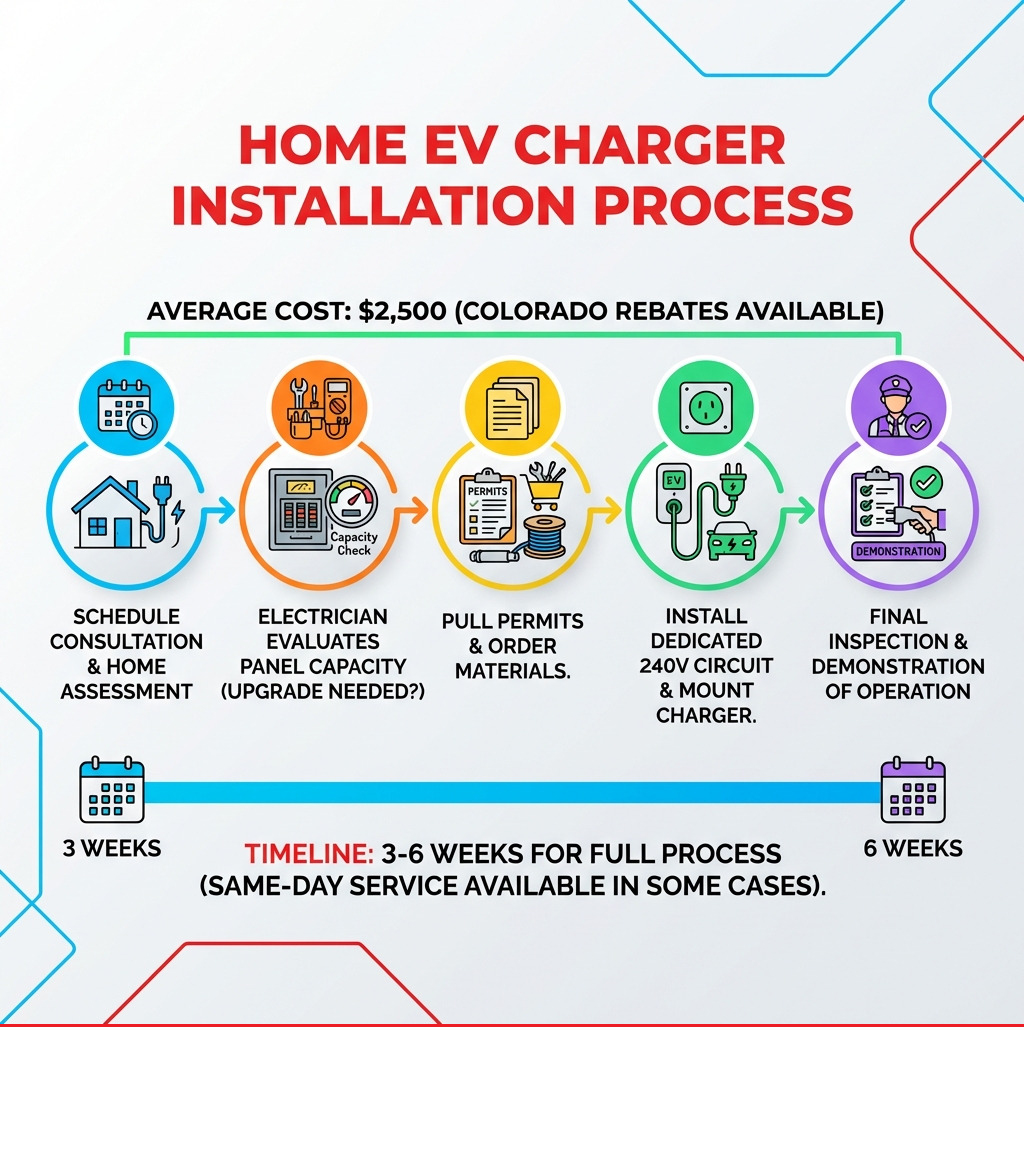
According to industry data, most Level 2 home charger installations average around $2,500. That includes labor, materials, permits, and ensuring everything meets the 2023 National Electrical Code. Colorado also offers tax credits and rebates that can bring that cost down significantly.
The bottom line: choosing the wrong installer can mean unsafe wiring, failed inspections, or a charger that doesn’t work reliably. Picking the right one means you’ll charge safely every night without worry.
Essential car charging point installers near me terms:
Picking the Right Speed: Level 1 vs. Level 2 Charging
When you start looking for car charging point installers near me, the first thing we’ll talk about is the “Level” of charger you need. Think of charger levels like garden hoses: a Level 1 is like a slow drip, while a Level 2 is more like a high-pressure fire hose.
Level 1 Charging
This is the basic cord that usually comes with your car. It plugs into a standard 120-volt wall outlet—the same kind you use for a toaster. It’s simple, but it only adds about 3 to 5 miles of range per hour. If you only drive a few miles a day, this might work, but for most folks in the Denver Metro area, it’s just too slow.
Level 2 Charging
This is what most of our customers choose. A Level 2 charger requires a dedicated 240-volt circuit—similar to what your clothes dryer or oven uses. These units provide about 25 to 70 miles of range per hour of charging. Most people find that a 7kW home charging point is the “sweet spot,” allowing for a full charge overnight.
Level 3 Charging (DC Fast Charging)
You’ll see these at public stations or Tesla Superchargers. They can add 40 miles of range in just 10 minutes. However, they aren’t feasible for homes. They require massive amounts of power and can cost up to $100,000 to install. For residential needs, Level 2 is the gold standard.
| Charger Type | Voltage | Range Added Per Hour | Best For |
|---|---|---|---|
| Level 1 | 120V | 3-5 miles | Light driving / Emergency |
| Level 2 | 240V | 25-70 miles | Daily drivers / Overnight charging |
| Level 3 | 480V+ | 200+ miles | Public stations / Road trips |
If you’re still weighing your options, check out our guide on picking your perfect plug or dive deeper into our EV charger levels guide home.
The Real Cost of Hiring Car Charging Point Installers Near Me
I like to be upfront about costs because nobody likes surprises when the bill arrives. On average, a professional Level 2 installation costs around $2,500. This isn’t just a random number; it’s a reflection of the specialized labor, high-quality materials, and the administrative work required to keep things legal and safe.
Here is a breakdown of what goes into that price:
- Labor: Running heavy-duty wire through finished basements or across garages takes time and skill.
- Materials: You need a high-amperage breaker, heavy-gauge copper wire, and a high-quality outlet or hardwired station.
- Permit Fees: Local municipalities in places like Castle Rock or Highlands Ranch charge fees to review the plans and inspect the work.
The good news? You don’t always have to foot the whole bill. Colorado is very EV-friendly. There are often state tax credits and utility rebates available that can slash your out-of-pocket costs. We always recommend checking with your local utility provider or looking into current EV charger installation pricing for the most up-to-date figures.
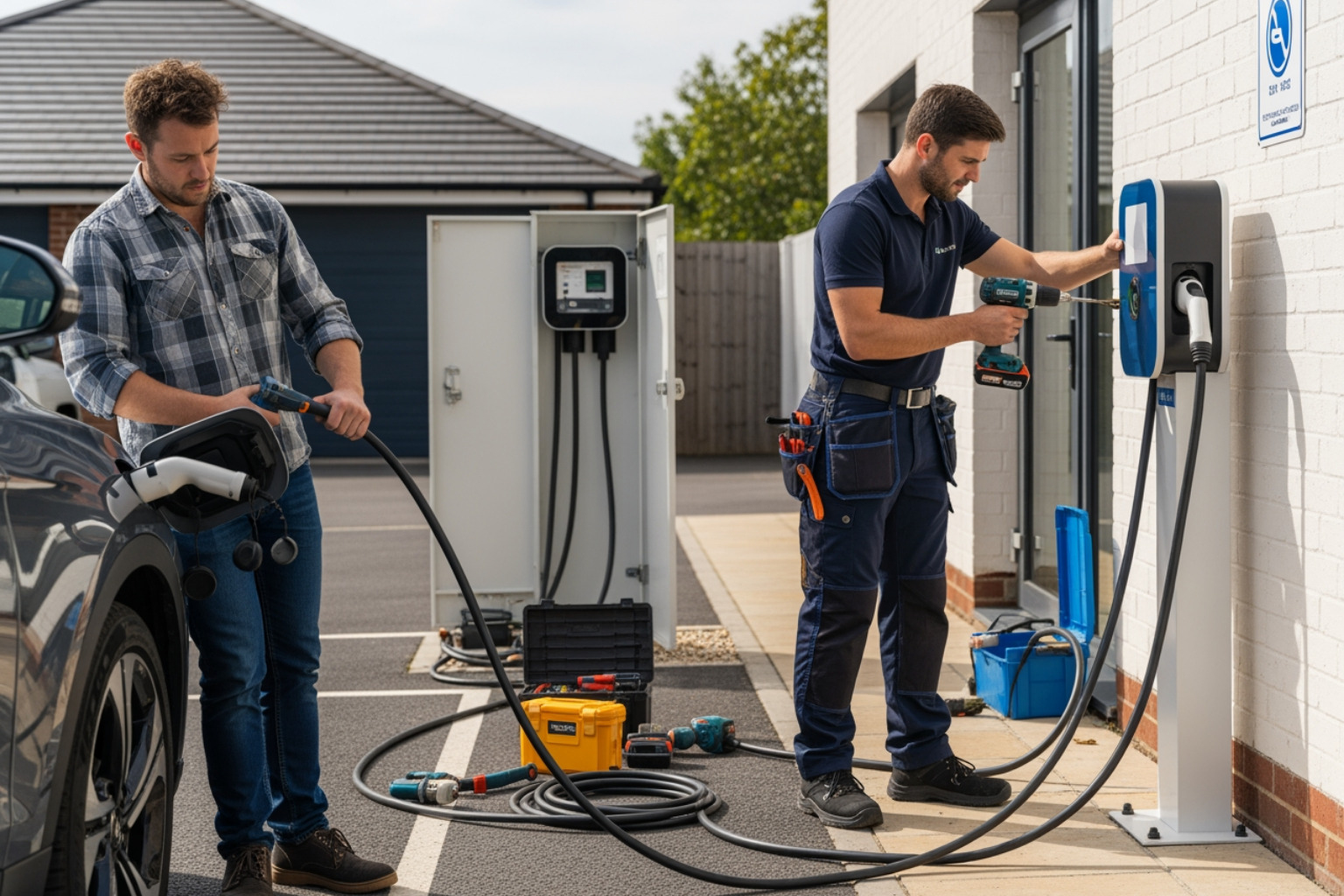
For a more detailed look at the numbers, you can read my post on the average cost of EV charger installation.
Is Your Home Ready? Panels, Permits, and Power
This is where my job as a master electrician really matters. Before we even touch a screwdriver, we have to perform a load assessment.
The 100-Amp vs. 200-Amp Debate
Many older homes in Denver and the surrounding suburbs were built with 100-amp electrical service. Back then, we didn’t have air conditioners, hot tubs, and electric cars all running at once. If your panel is already full, adding a charger that draws 40 or 50 amps could overload the system.
In many cases, an electrical panel upgrade in Castle Rock or Denver is necessary to move up to a 200-amp service. This gives your home the “breathing room” it needs to power your car and your AC at the same time.
Permits and Codes
I’ve seen some DIY attempts where people try to skip the permit. Please don’t do that. A permit ensures that a city inspector comes out to verify the work is safe. It protects your home’s value and your insurance coverage. We handle all the paperwork and coordination with the local Building and Safety Division so you don’t have to.
You can even check local utility capacity maps to see the infrastructure in your area, though these are often just for informational purposes and don’t replace a professional on-site assessment.
Hardwired vs. Plug-In: Making the Best Choice for Your Garage
When you’re searching for car charging point installers near me, you’ll need to decide how the charger connects to your home.
The Plug-In Option (NEMA 14-50)
This involves installing a heavy-duty 240-volt outlet (a NEMA 14-50). You then plug your charger into it. The benefit is flexibility—if the charger breaks or you move, you can just unplug it. However, these outlets can sometimes be a weak point if they aren’t industrial-grade, as EV charging pulls a lot of heat for many hours.
The Hardwired Option
In a hardwired installation, the electrical cable goes directly into the charging unit. I generally recommend this for most Denver homeowners. Why?
- Higher Power: Hardwiring often allows you to pull 40-50 amps or more, whereas plugs are usually capped lower.
- Weatherproofing: If you’re installing the unit outdoors or in a carport, hardwiring is much more resistant to the elements.
- Reliability: Fewer connection points mean fewer places for things to go wrong.
Whether you choose a plug or a direct connection, we make sure the installation follows the latest safety standards. You can read more about installing an EV charger at home to see which fits your lifestyle.
What to Look for in a Professional Installation
Finding Reliable Car Charging Point Installers Near Me
Not all electricians are created equal when it comes to EVs. You want someone who is “Tesla-certified” or has specific experience with brands like ChargePoint or JuiceBox. These certifications mean the installer understands the specific technical requirements of the car’s onboard computer.
Look for installers with 5-star reviews and a long history in the local community. While you can use an official guide to finding approved installers for general research, nothing beats local expertise. A trusted electrician in Denver will know the specific quirks of the local grid and the local inspectors.
What to Ask Car Charging Point Installers Near Me
When you call around, don’t just ask for a price. Ask these questions:
- Do you offer a workmanship guarantee? (At Harmony Electric, we offer a lifetime guarantee on our work).
- How long will the installation take? (Most of our installs are completed in a single day).
- Will you handle the permitting? (A professional should always say yes).
- Do I need a load balance? (This ensures your car doesn’t steal power from your fridge).
We aim for a smooth ride installation process from start to finish.
Frequently Asked Questions about Home EV Charging
Do I need a permit for a home charger?
Yes. For any Level 2 installation involving a new 240V circuit, a permit is required by law in Denver, Castle Rock, and surrounding areas. This ensures the installation is inspected for safety and complies with the National Electrical Code. It’s about protecting your family and your property. You can learn more about getting an EV charger for your property through our detailed guides.
How long does the installation take?
The physical installation usually takes about 4 to 6 hours. However, the total process—from the initial consultation to the final city inspection—can take 3 to 6 weeks depending on how fast the local permit office moves. We do offer same-day service for assessments to get the ball rolling as quickly as possible.
Can my charger handle the Colorado weather?
Absolutely. Most modern chargers are NEMA 4 rated, which means they are built to handle snow, rain, and our famous Colorado wind. If we are installing on a detached garage or an outdoor post, we use specific weatherproofing techniques to ensure the connection stays dry and safe. We’ve handled many commercial vs residential setups and know exactly what it takes to stand up to the elements.
Conclusion
Installing an EV charger is one of the best upgrades you can make for your home. It adds convenience, increases your property value, and lets you wake up every morning with a “full tank.” But because you’re dealing with high-voltage electricity, it’s not a place to cut corners.
At Harmony Electric, we take pride in doing the job right the first time. We serve the entire Denver Metro area, from Parker and Lone Tree to Castle Pines and Centennial. As a Master Electrician, I make sure every installation is safe, code-compliant, and backed by our lifetime workmanship guarantee.
If you’re ready to stop relying on public charging stations and start charging at home, we’re here to help. Schedule your professional EV charger installation with us today, and let’s get your home ready for the future.