What You Need to Know About 32 Amp Spa Wiring
32 amp spa wiring is the dedicated electrical setup that powers a full-size hardwired hot tub — and getting it right is the difference between a safe, high-performing spa and a tripped breaker or a real safety hazard.
Here’s a quick summary of what a proper 32 amp hot tub circuit requires:
| Requirement | Specification |
|---|---|
| Circuit breaker | 40 amp double-pole GFCI breaker |
| Wire gauge | 8 AWG copper (6 AWG for longer runs) |
| Voltage | 240V dedicated circuit |
| Cable protection | PVC conduit, minimum 18 inches buried |
| GFCI disconnect | Outdoors, 5–50 feet from the spa, in line of sight |
| Equipotential bonding | 8 AWG solid copper, all metal within 5 feet |
| Permit required | Yes, in Denver and most surrounding municipalities |
I’m Randy Harmuth, owner of Harmony Electric here in Denver. Over the years I’ve wired a lot of hot tubs across the Front Range — from quick patio installs to full backyard builds with subpanels and trenching through finished landscaping.
Most homeowners are surprised to learn that a 32 amp hot tub draws close to 7,400 watts of power. That’s 32 amps multiplied by 230–240 volts. That’s enough to run a heater, pumps, jets, and lighting at the same time — but only if the circuit is sized and installed correctly.
It’s not a job for a standard wall outlet, and it’s not a DIY project. The combination of high-voltage electricity and water is one of the most dangerous setups in residential electrical work.
This guide walks you through everything: what the circuit actually needs, how the installation works, and what to expect from permits to final inspection.
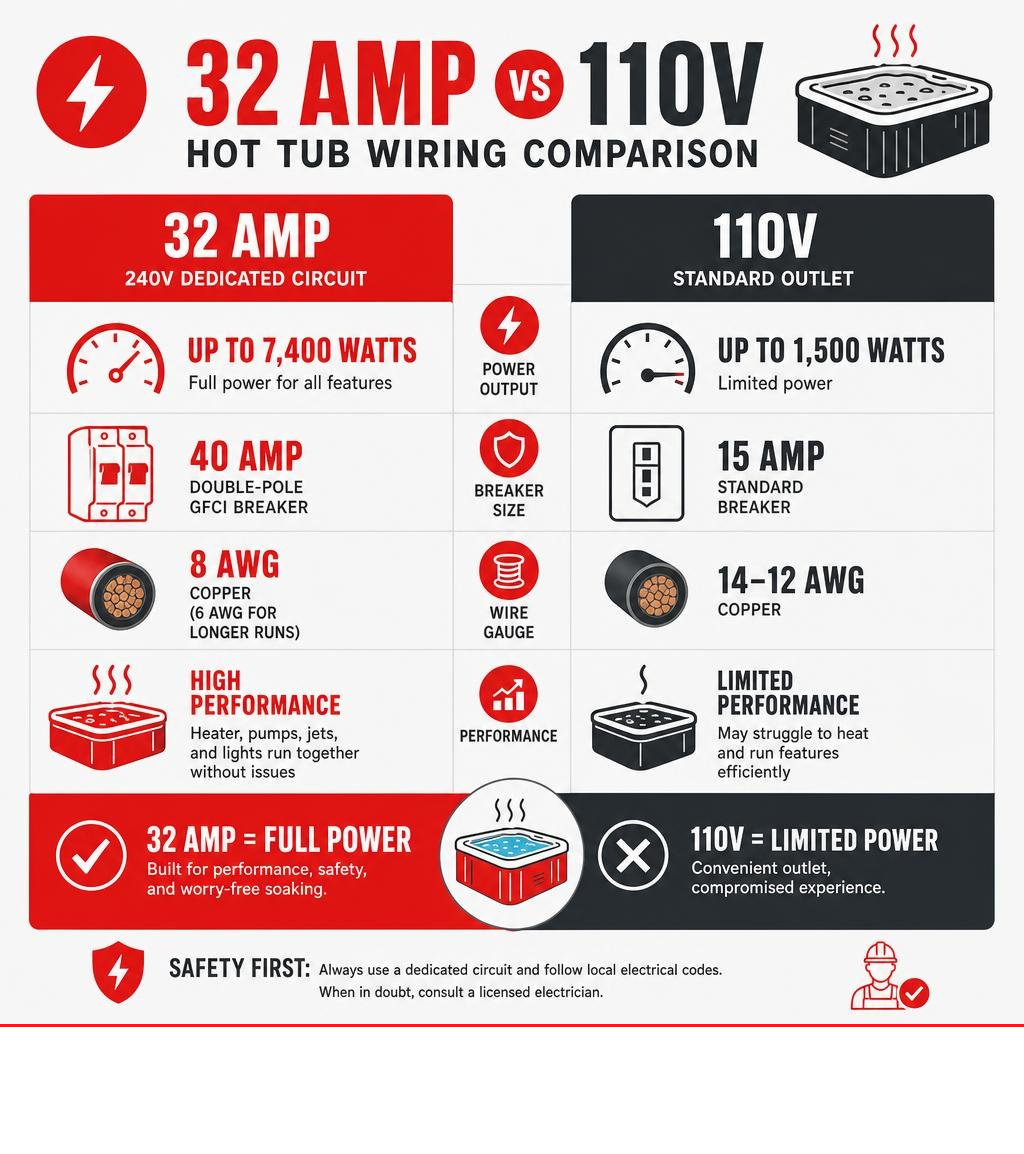
Basic 32 amp spa wiring terms:
13 Amp vs. 32 Amp: What’s the Real Difference?
When you start shopping for a spa in the Denver Metro Area, you will usually see two main categories: 110V/120V “plug-and-play” models (often pulling 13 to 15 amps) and 240V hardwired models (typically pulling 32, 40, or 50 amps).
The table below breaks down how these two configurations stack up against each other:
| Feature | 13 Amp Plug-and-Play | 32 Amp Hardwired |
|---|---|---|
| Voltage | 110V–120V | 230V–240V |
| Connection Type | Standard household plug | Hardwired to a dedicated disconnect |
| Heater Size | 1.0 kW to 1.5 kW | 3.0 kW to 5.5 kW |
| Heating & Jets | Heater shuts off when jets are on high | Heater and jets run simultaneously |
| Heating Speed | Slower (takes 12–24 hours to heat up) | Faster (heats up in a few hours) |
| Cold Weather Suitability | Struggles to hold heat below freezing | Easily maintains heat in sub-zero weather |
If you want More info about hot tub amperage, it really comes down to how much work the electrical system has to do at any given moment. A lower-amp tub simply does not have the capacity to run multiple high-draw components at once.
Why 32 Amp Spa Wiring Beats Standard Plug-and-Play
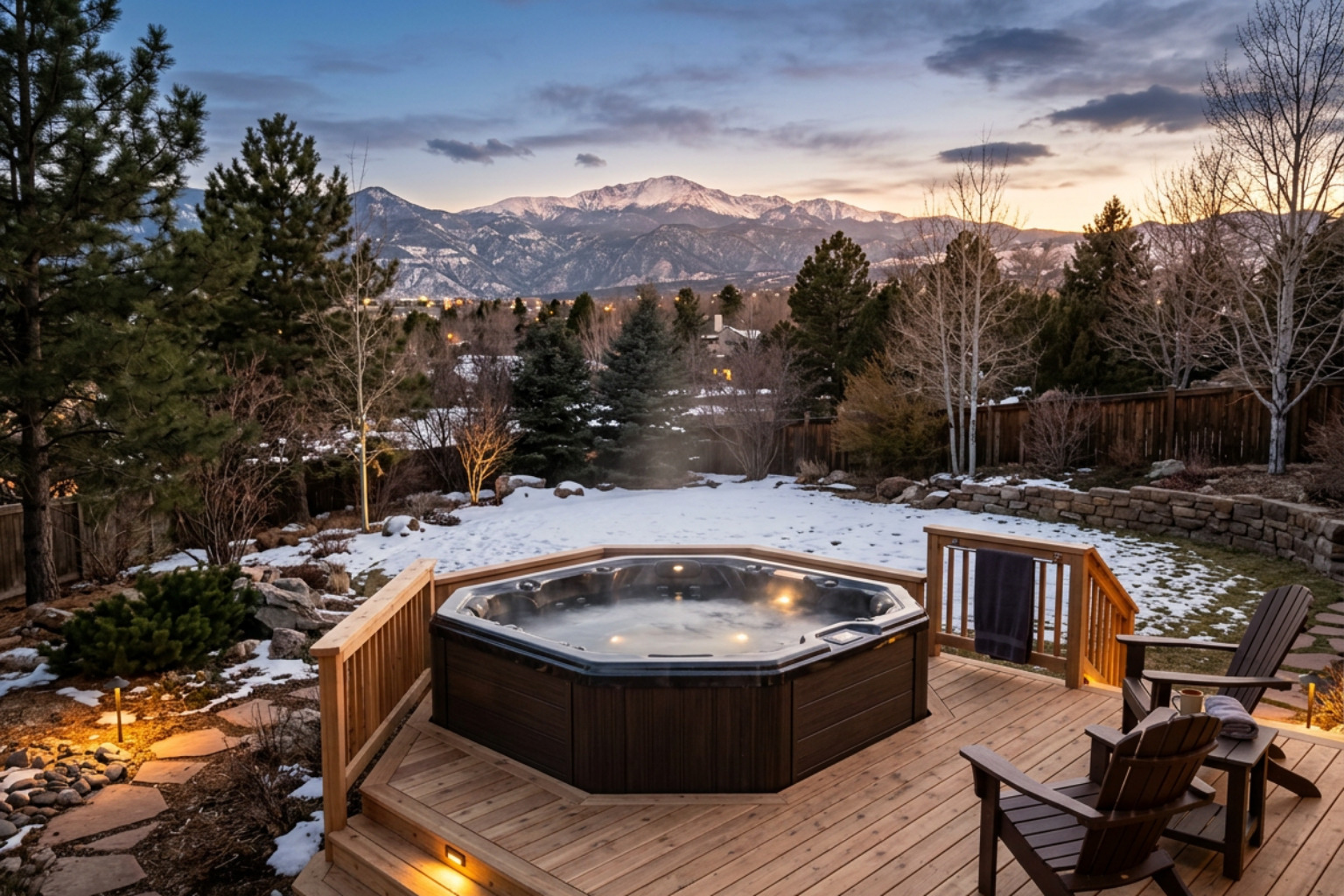
In Colorado, our winter nights get incredibly cold. If you live in Castle Rock, Parker, or Centennial, you know that a January evening can easily drop into the single digits.
This is where a standard plug-and-play tub struggles. Because a 110V tub cannot run the heater and the jet pumps at the same time, the water temperature begins to drop the moment you turn on the bubbles. Within twenty minutes of soaking in freezing weather, your hot tub can turn into a lukewarm bath.
A 32 amp hardwired spa solves this problem completely. With a larger 240V heating element, the tub has enough electrical headroom to run the heater, the high-speed therapy jets, the air blower, and the lights all at once. The water stays hot no matter how long you soak or how cold the Colorado wind is blowing.
According to comprehensive hot tub wiring guidelines, upgrading to a 240V dedicated circuit is the single best way to ensure your spa performs efficiently year-round.
Planning Your 32 Amp Spa Wiring: The Core Requirements
Before we run a single foot of wire, we have to look at the big picture. Your hot tub cannot share power with your kitchen appliances, patio lights, or garage outlets. It requires a dedicated branch circuit running directly from your home’s main electrical panel.
The National Electrical Code (NEC)—specifically Article 680, which governs pools and spas—lays out strict rules for how these circuits must be designed.
The first step we take when visiting a home in Highlands Ranch or Lone Tree is evaluating the main electrical panel. We need to make sure your home has enough physical space and electrical capacity to handle a new continuous heavy load.
If your panel is already packed to the limit, we might need to discuss a panel upgrade or installing a subpanel to distribute the load safely. You can read more about this in our guide: Can my existing panel handle a hot tub?.
Sizing Your Cable and Breaker Correctly
Sizing the wire and circuit breaker for a 32 amp continuous load requires a bit of math. Under the NEC, a hot tub is considered a continuous load because it can run for hours at a time. This means the circuit breaker must be sized at 125% of the continuous load.
- 32 amps × 1.25 = 40 amps
Therefore, a 32 amp hot tub requires a 40 amp double-pole circuit breaker.
To feed this 40 amp circuit safely, we use copper wire. For most standard residential installations where the wire run is under 100 feet, 8 AWG copper wire is the industry standard.
If your hot tub is located far down the yard or on a detached deck in Castle Pines, we have to calculate “voltage drop.” Over long distances, electrical resistance causes voltage to drop, which can make your spa’s motors run hot and fail prematurely. For runs over 100 feet, we typically upsize the wire to 6 AWG copper to keep the voltage stable.
The Crucial Role of GFCI Protection
Water and electricity are a deadly combination. If a electrical fault occurs inside your hot tub—such as a heating element casing cracking open—the water can become energized.
To prevent fatal shocks, the NEC mandates that all hot tub circuits be protected by a Class A Ground Fault Circuit Interrupter (GFCI). A Class A GFCI is designed to detect tiny leaks of electrical current (as small as 5 milliamperes) and trip the circuit in a fraction of a second.
This protection is usually installed in one of two places:
- A 40 amp GFCI breaker inside your main electrical panel.
- A standard 40 amp breaker in your main panel feeding an outdoor GFCI disconnect box (often called a “spa pack”) near the tub.
For a detailed walkthrough on how these safety devices work, check out our guide on Hooking up your hot tub GFCI.
Placement and Safety Rules for Your Outdoor Disconnect
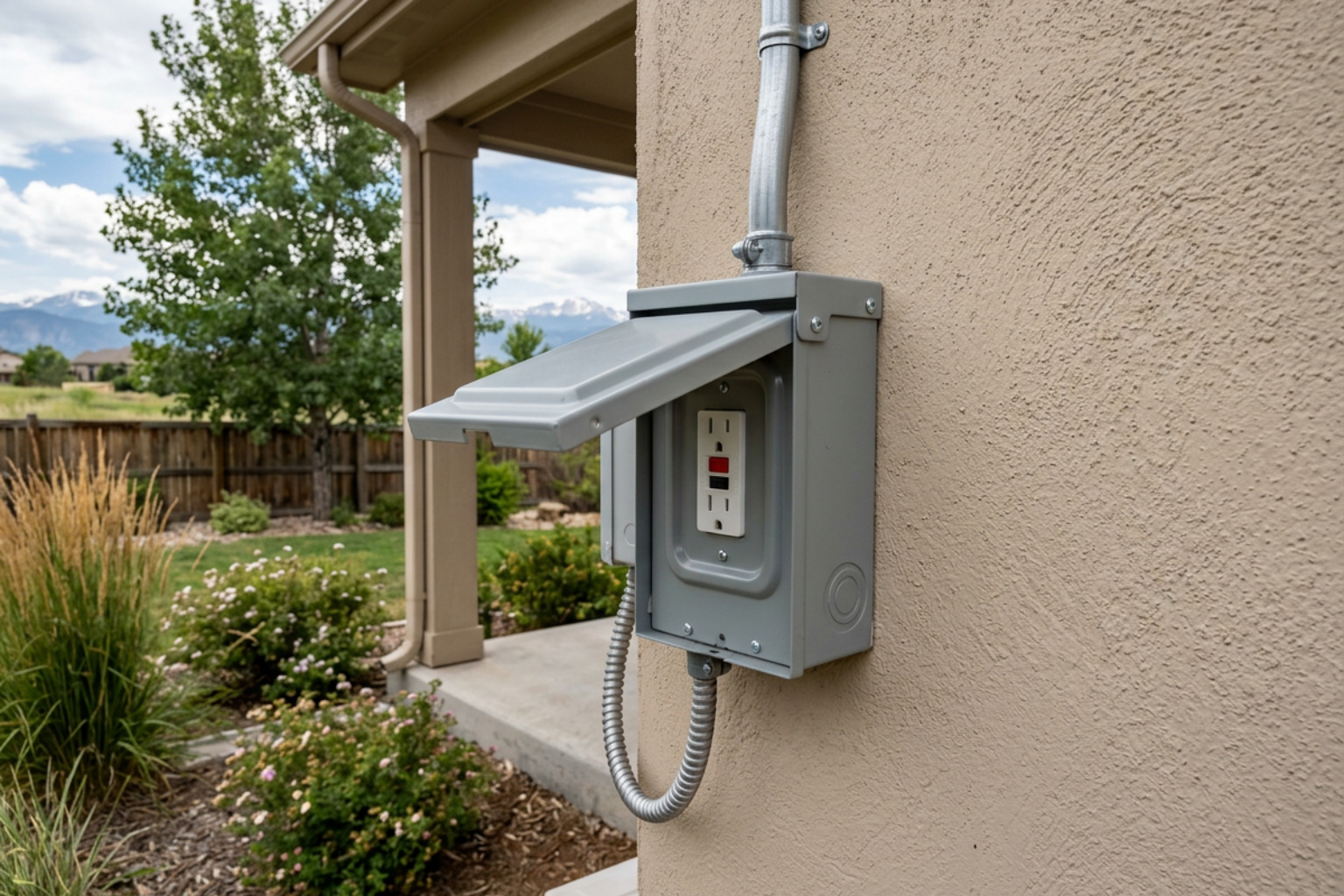
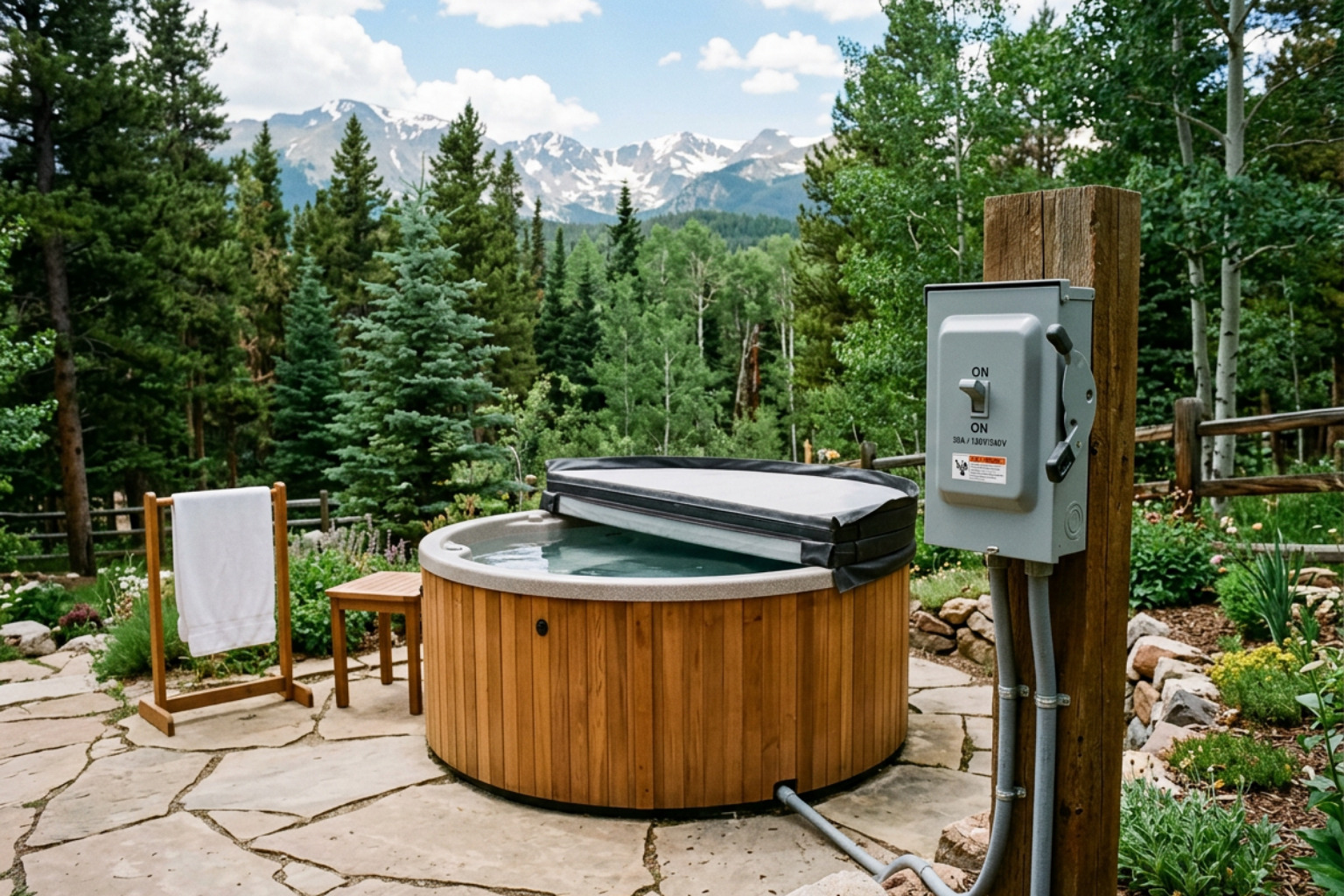
The outdoor disconnect box is one of the most visible parts of your 32 amp spa wiring installation, and its placement is strictly regulated by the electrical code.
The disconnect serves a vital safety purpose: it gives you, a service technician, or emergency personnel a way to cut all power to the hot tub instantly without running inside the house.
To keep the disconnect safe and reliable in Colorado’s snowy and rainy weather, we always use a weatherproof, outdoor-rated enclosure (typically NEMA 3R). You can learn more about these specific requirements in our guide on Hot Tub Electrical Code GFCI.
The 5-Foot Rule and Line-of-Sight Requirements
Under NEC 680.12, there are two critical rules for where this disconnect box must be mounted:
- The 5-Foot Rule: The disconnect must be installed at least 5 feet away from the inside wall of the hot tub. This prevents anyone from standing in the water and touching the electrical box at the same time.
- The Line-of-Sight Rule: The disconnect must be located within clear, unobstructed sight of the hot tub, and it cannot be more than 50 feet away.
This ensures that if a technician is working inside the spa’s equipment bay, they can look over and see that the disconnect switch is off, preventing someone else from accidentally flipping the power back on while they have their hands on the wiring.
Step-by-Step Installation Process
Wiring a hot tub is a methodical process that requires careful planning, physical labor, and precise connections.
For outdoor installations in the Denver Metro Area, all wiring running from your house to the hot tub must be protected from physical damage, moisture, and pests. We achieve this by running individual THHN/THWN copper conductors inside rigid PVC conduit.
If the conduit is buried in your yard, the electrical code requires a minimum trench depth of 18 inches for standard PVC conduit. This prevents lawnmowers, aerators, or future landscaping projects from accidentally striking the power line.
To see how this fits into the bigger picture, take a look at our comprehensive From breaker to bubbler guide.
Step-by-Step Guide to 32 Amp Spa Wiring
Here is how a typical professional installation flows from start to finish:
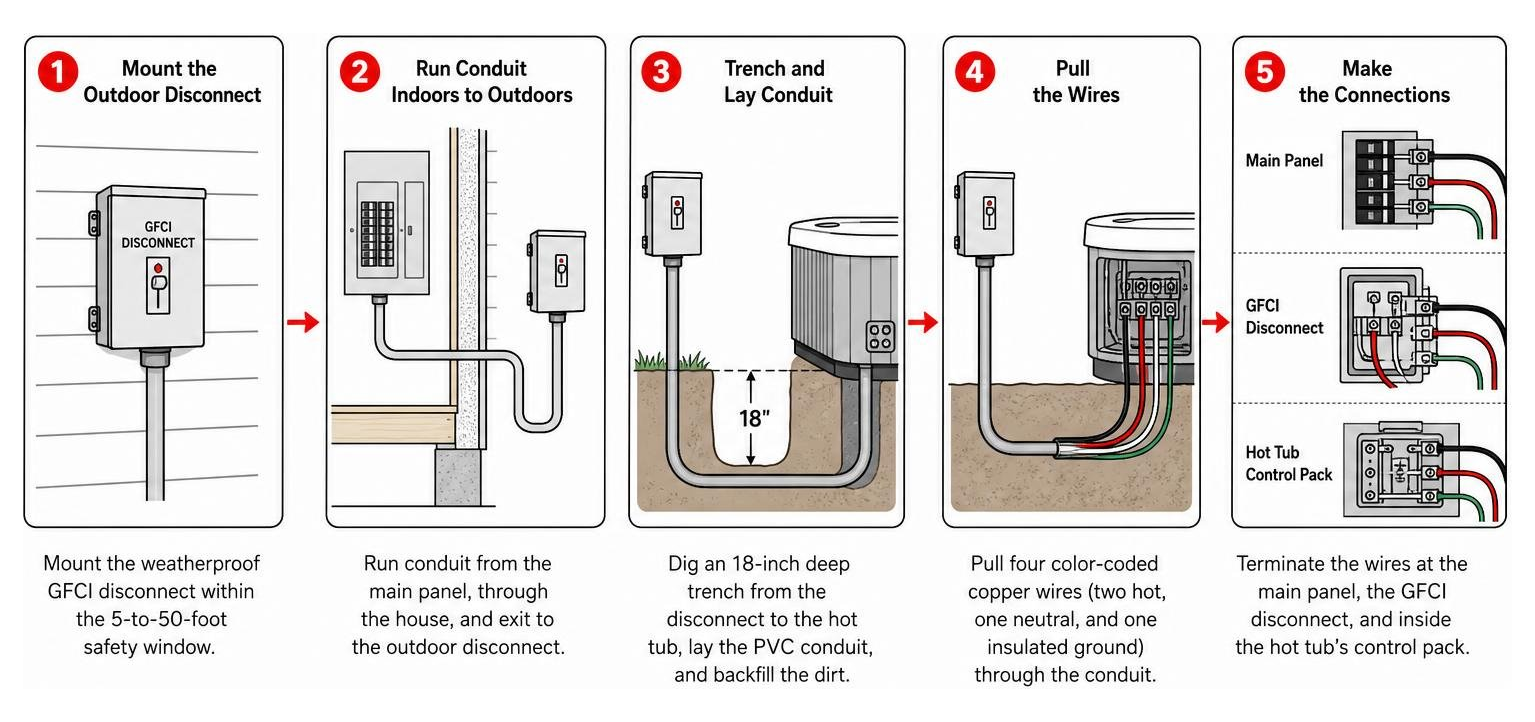
- Mount the Outdoor Disconnect: We secure the weatherproof GFCI disconnect box to an exterior wall or a dedicated post, keeping it within the 5-to-50-foot safety window.
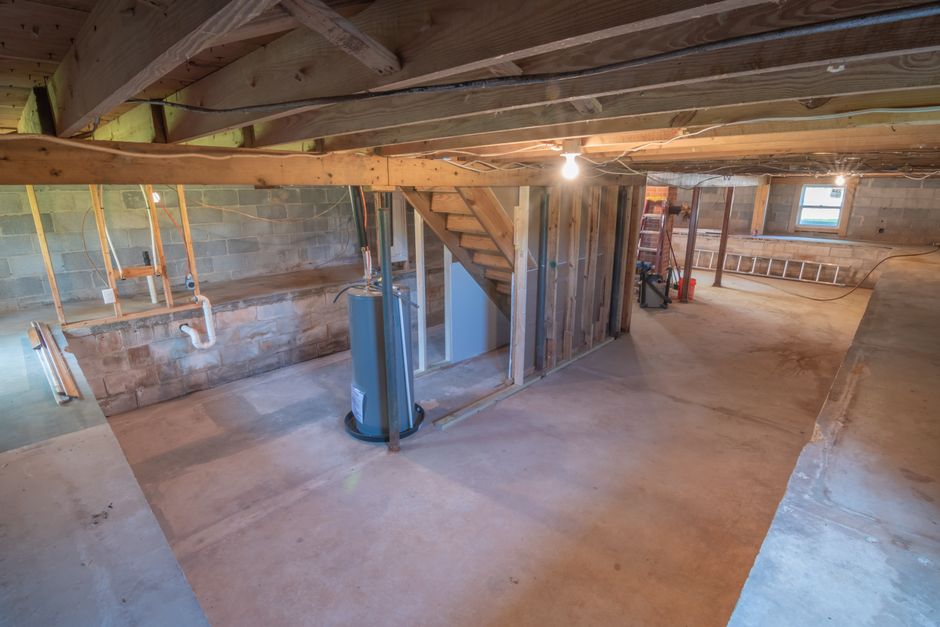
- Run Conduit Indoors to Outdoors: We run conduit from your main electrical panel, through your basement, crawlspace, or joists, and exit the house to connect to the outdoor disconnect.
- Trench and Lay Conduit: We dig the 18-inch deep trench from the disconnect to the hot tub’s equipment bay, lay the PVC conduit, and backfill the dirt.
- Pull the Wires: We pull four individual color-coded copper wires (two hot wires, one neutral, and one insulated ground) through the conduit.
- Make the Connections: We terminate the wires at the main panel, the GFCI disconnect, and finally inside the hot tub’s control pack.
- Torque to Spec: We use a calibrated torque screwdriver to tighten every terminal screw to the manufacturer’s exact specifications. Loose connections are the leading cause of melted wires and electrical fires.
For manufacturer-specific details on how these internal terminations look, you can refer to your spa’s official electrical hookup guide.
Equipotential Bonding: The Safety Step You Can’t Skip
Many homeowners—and unfortunately, some inexperienced electricians—confuse grounding with bonding. They are not the same thing.
While grounding provides a safe path for fault current to return to the breaker panel, equipotential bonding is designed to eliminate differences in electrical voltage between metal objects near your spa.
If you have a metal fence, a patio railing, or concrete reinforcement steel within 5 feet of your hot tub, a tiny voltage difference between those metal parts and the water can cause a painful “touch-voltage” shock when you step in or out of the tub.
To prevent this, we run a bare 8 AWG solid copper wire around the perimeter of the hot tub, connecting all metal frames, ladders, and nearby metal structures together to form an unbroken safety grid.
Professional Installation, Permits, and Your Warranty
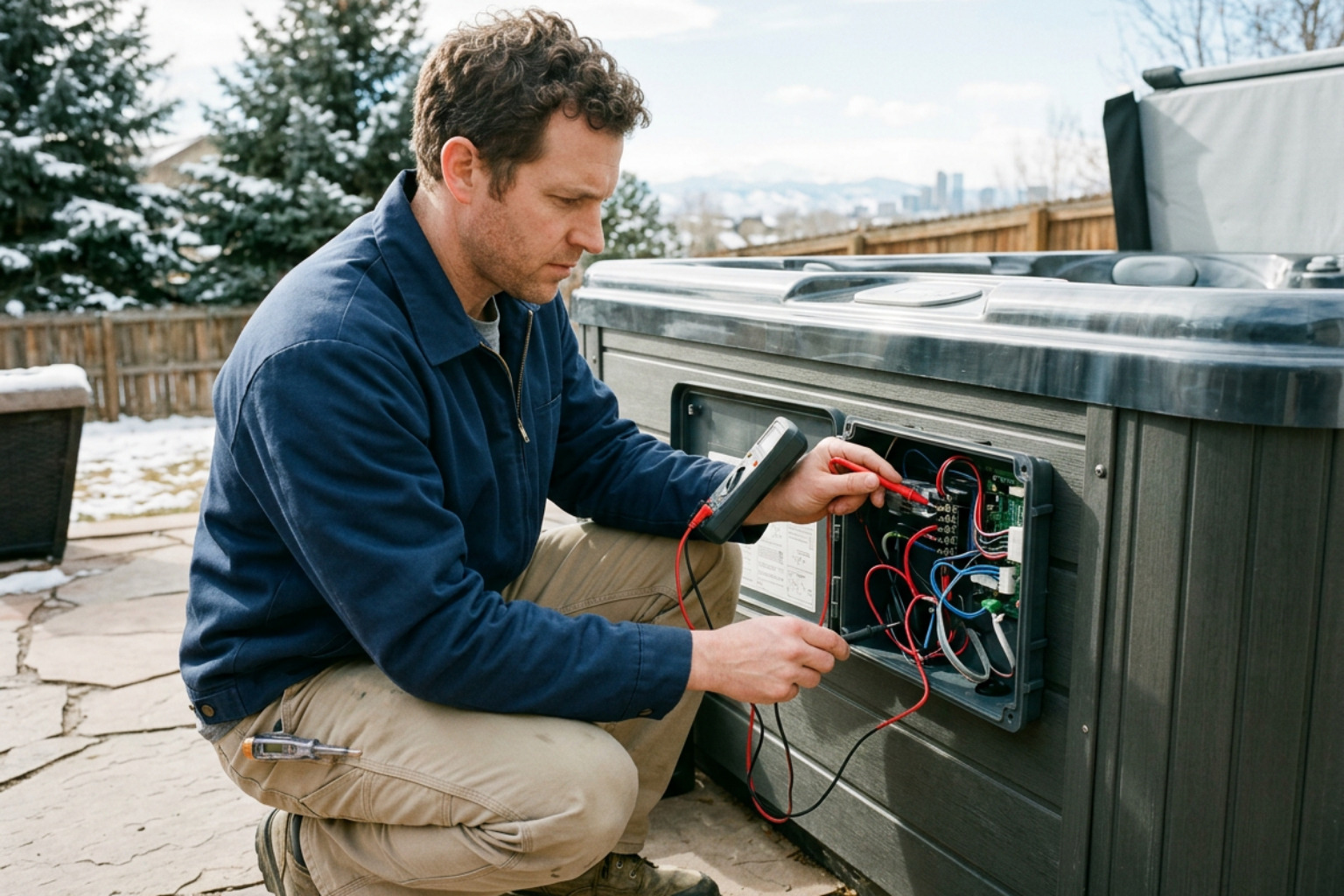
When you invest thousands of dollars into a beautiful new backyard spa, the last thing you want to do is cut corners on the power supply. Bypassing the electrical permit process or attempting a DIY installation can lead to failed home inspections, expensive code-correction repairs, or even voiding your spa’s warranty.
Most high-end hot tub manufacturers explicitly require professional, certified electrical installation for their warranties to remain valid.
As the authorized electrical installer for Colorado Custom Spas, our team at Harmony Electric understands the exact engineering and electrical demands of these high-performance systems. When we handle your 32 amp spa wiring, we ensure every connection meets strict manufacturer specifications and local municipal codes. This specialized partnership guarantees your spa is wired safely and your valuable warranty protection stays fully intact from day one.
Before we turn on the power, we coordinate with the building departments in Denver, Centennial, Parker, or Castle Rock to pull the required electrical permits and schedule the final municipal inspection.
If you are planning your budget, you can find a transparent breakdown of what to expect in our guide to hot tub installation pricing.
Frequently Asked Questions About Hot Tub Power
We get a lot of questions from homeowners across the Denver Metro Area about how hot tub electrical systems work. Here are a few of the most common ones we hear:
Can I run a 32 amp hot tub on a standard 15 or 20 amp household outlet?
No. A standard household wall outlet in your backyard or garage is only designed to supply 15 or 20 amps at 120 volts. A 32 amp hot tub requires a 240V dedicated circuit that pulls nearly three times that amount of power.
Attempting to connect a high-draw spa to a standard outlet will instantly trip your household breakers, ruin the spa’s sensitive control board, and pose a severe electrical fire hazard.
Why does my hot tub breaker trip when the heater and jets turn on?
If your hot tub has been running fine for months and suddenly starts tripping the breaker the moment the heater or the jet pumps kick in, it usually points to one of three issues:
- A Ground Fault: Water may have leaked into a pump motor or the heater casing, causing a short circuit.
- A Failing Heater Element: Over time, Colorado’s hard water can corrode the heating element casing, allowing water to touch the electrical coil inside.
- A Weak GFCI Breaker: GFCI breakers can degrade over years of exposure to temperature extremes.
If you are experiencing these issues, our hot tub breaker troubleshooting guide can help you understand what’s going on before you call us out for a repair.
Do I need a permit to wire a 32 amp hot tub in Denver?
Yes. Every municipality in the Denver Metro Area—including Castle Rock, Centennial, and Parker—requires an electrical permit for a new hot tub installation.
Skipping the permit might save a few dollars upfront, but it can create massive headaches when you try to sell your home in the future. Home inspectors look closely at outdoor electrical work, and unpermitted hot tub wiring is one of the most common reasons home sales get delayed.
Conclusion
Installing a hot tub is an exciting upgrade for your home, but the high-voltage electrical work is the foundation that keeps your family safe and your investment running smoothly for years to come.
At Harmony Electric, we pride ourselves on doing the job right the first time. Led by Master Electrician Randy Harmuth, we bring clean, professional, and code-compliant electrical solutions to families throughout Denver, Castle Rock, Highlands Ranch, and Parker.
We back our hot tub installations with a lifetime workmanship guarantee and a three-year material warranty, so you can soak with complete confidence.
If you are ready to power up your backyard retreat, Schedule your professional hot tub installation with us today.