Your Guide to Adding More Circuits Safely
A sub electric panel is a smaller electrical panel that connects to your main panel and distributes power to a specific area of your home or property. It’s one of the smartest ways to add more circuits when you’ve run out of breaker space or need dedicated power for a detached garage, workshop, hot tub, or EV charger.
Here’s when you typically need a subpanel:
- Your main panel is completely full and has no room for new breakers
- You’re adding a home addition, finished basement, or detached structure
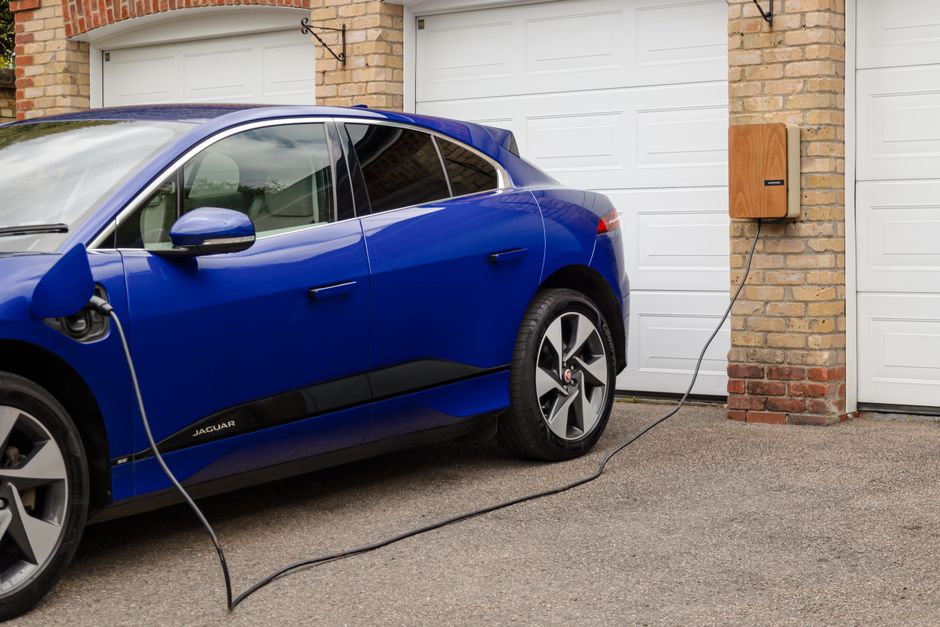
- You need power for high-demand appliances like EV chargers or hot tubs
- You want easier, more convenient access to breakers in a remote area
- You’re upgrading a workshop or garage with dedicated circuits
I’ve installed hundreds of subpanels across Denver and the surrounding communities, and I can tell you this: when done right, a subpanel makes your electrical system safer, more organized, and ready for whatever you need to power.
The catch? This isn’t a DIY project. A subpanel installation involves connecting high-voltage wires, following strict National Electrical Code (NEC) requirements, and making sure neutral and ground wires are separated properly. Get it wrong, and you risk serious safety issues—or a failed inspection.
In this guide, I’ll walk you through everything you need to know about subpanels: what they are, when you need one, how they’re installed, and when a full service upgrade might be the better call instead.
What Exactly Is a Subpanel and How Is It Different?
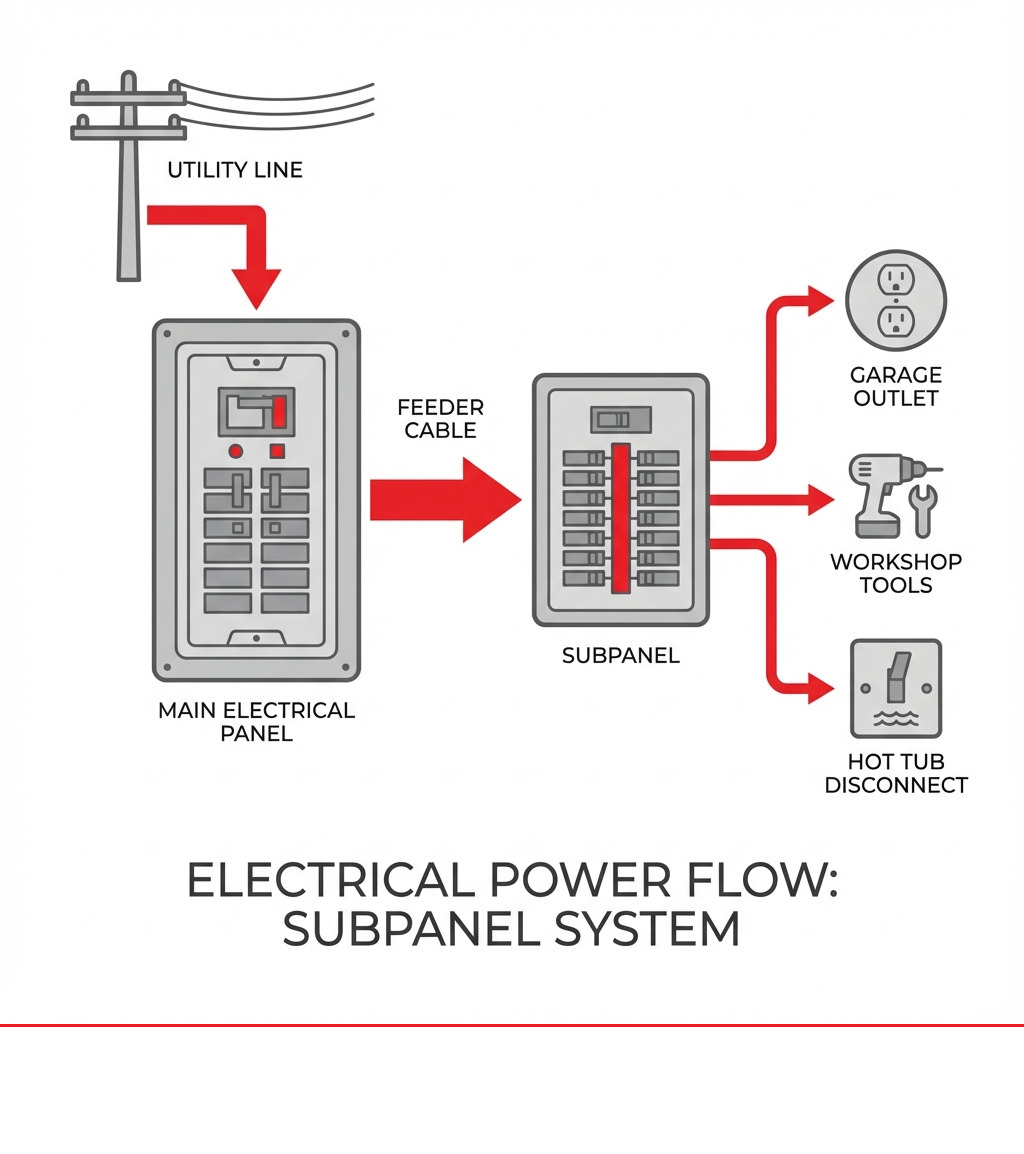
When we talk about your home’s electrical system, the main panel is the heart of it all. But sometimes, the heart needs a helping hand to reach all the extremities. That’s where a sub electric panel comes in. Think of your main electrical panel as the central post office for your entire home – it receives all the mail (electricity) from the city and sorts it for every address. A subpanel, then, is like a smaller, local branch post office. It takes a big chunk of mail from the main hub and then sorts it more efficiently for a specific neighborhood or building.
The key thing to understand is that a subpanel doesn’t add more electricity to your home’s overall system. Instead, it takes a portion of the existing power from your main panel and distributes it more effectively to a particular area. This helps us organize your electricity, make it more convenient, and ensure everything runs smoothly without overloading your main system.
The Main Panel: Your Home’s Electrical Hub
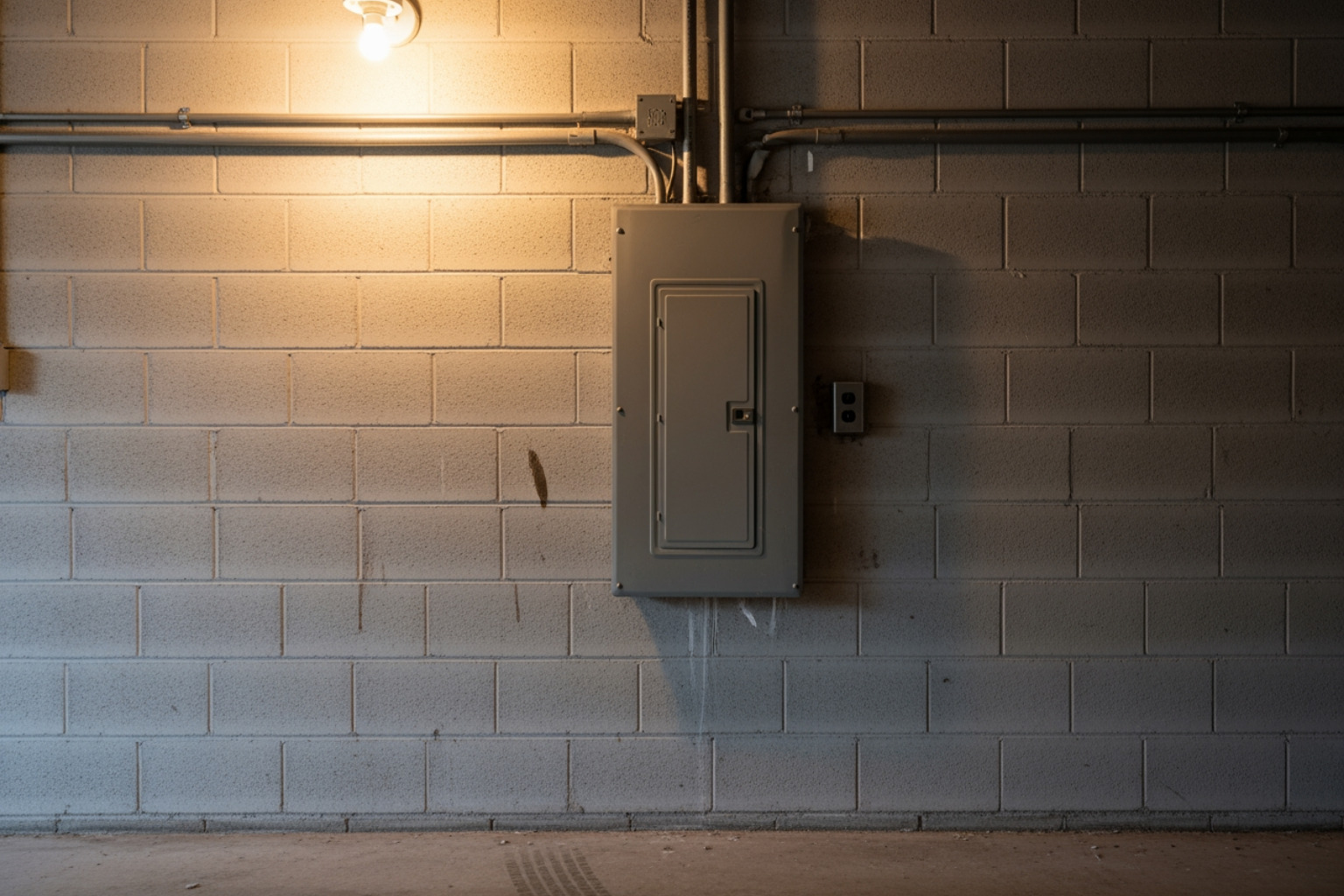
Your main electrical panel, also known as the main service panel, is the primary point where electricity enters your home from the utility company. It’s usually a large metal box, often found in your basement, garage, or utility room. This panel houses the main breaker, which is like the master switch for all the power in your house.
If you ever need to shut off all electricity to your home – say, in an emergency or for a major electrical project – that main breaker is where you’d do it. From this central hub, power is then distributed to all the individual circuits that run throughout your house, feeding your lights, outlets, and appliances. It’s the first line of defense against electrical surges and overloads, protecting your entire home.
The Subpanel: A Local Distribution Center
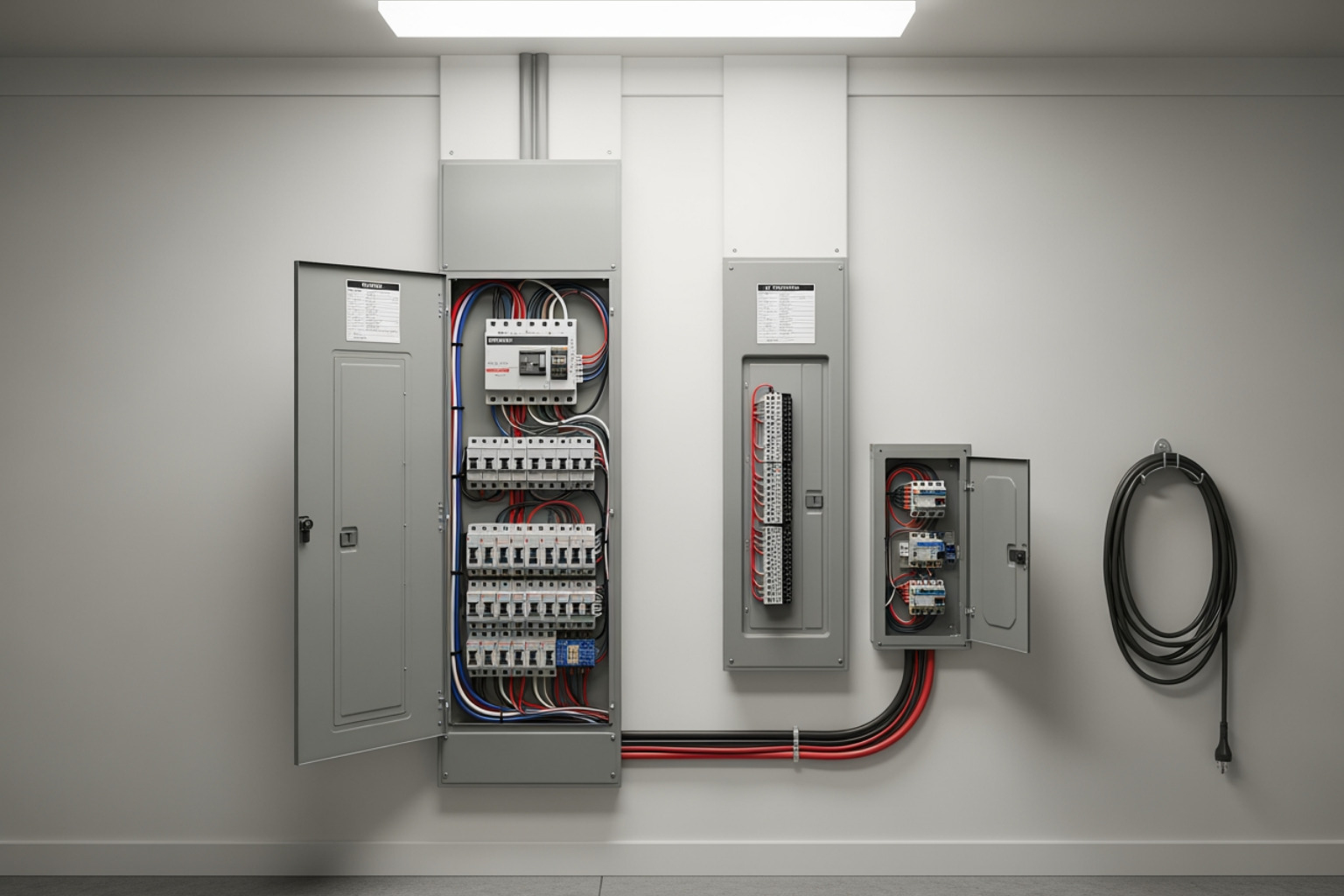
A sub electric panel is essentially a smaller version of your main panel, designed to extend your home’s electrical capabilities to a specific area. Unlike the main panel, which connects directly to the utility line, a subpanel is fed by a dedicated circuit breaker (usually a double-pole 240-volt breaker) located in your main panel.
This single circuit then gets divided into many smaller branch circuits within the subpanel itself. This allows us to put circuit breakers closer to where they’re needed, offering a more localized control center for specific appliances or areas. While a subpanel might have its own main breaker, it’s not the primary disconnect for your entire property; that role belongs to the main panel. Its smaller size and strategic placement make it incredibly convenient for managing power in specific zones.
Top 3 Reasons You Might Need a Subpanel
Over my years working with homeowners in Denver, Castle Rock, and beyond, I’ve seen countless situations where a sub electric panel became the perfect solution. Subpanels are added for three common reasons: space, convenience, and efficiency. These benefits often go hand-in-hand, especially as our homes become more electrified with new appliances, additions, and technology.
If you’re noticing any of the signs that your main electrical panel might be outdated or struggling to keep up, a subpanel could be the answer. You can learn more about those signs here: Signs Your Electrical Panel is Outdated.
1. You’ve Run Out of Room in Your Main Panel
This is perhaps the most common reason we install subpanels in older Denver homes. Modern living demands more electricity than houses built decades ago were designed for. Think about it: a kitchen remodel with new ovens and induction cooktops, a finished basement with a home theater, or simply adding more dedicated circuits for computers and entertainment systems.
If your main panel’s breaker slots are all full, and you can’t add any more circuits, a subpanel offers an ideal way to expand your capacity. It essentially gives you an “extension cord” for your breaker box, allowing us to add new circuits without having to replace your entire main panel. It’s a smart way to manage your growing electrical needs. If you’re curious about how to manage individual breakers, we have a guide on Changing a Breaker in Your Panel.
2. You Need Power in a Convenient, Far-Away Spot
Imagine you have a detached garage in Castle Pines where you want to set up a workshop, or a shed in Parker that needs power for tools and lighting. Running multiple individual circuits, often called “home runs,” all the way back to your main panel can be incredibly inefficient, costly, and result in long wire runs that are prone to voltage drop.
A sub electric panel allows us to bring a single, larger feeder cable from the main panel to that distant location. Then, at the subpanel, we can break that power down into multiple smaller circuits right where you need them. This not only saves on wiring costs and installation time but also means that if a breaker trips in your workshop, you can reset it right there, instead of walking all the way back to the main panel in your house. It’s all about making your electrical system work for your lifestyle. For more comprehensive upgrades, especially in commercial settings, consider our Panel & Circuit Upgrades in Denver.
3. You Want to Organize and Streamline Your Circuits
Beyond just adding space, subpanels are fantastic for organizing your electrical system. For instance, if you have a home theater setup with multiple components, or a kitchen with several high-demand appliances, dedicating a subpanel to that specific area can streamline your power distribution.
This compartmentalized power offers a few key advantages. It makes troubleshooting easier – if power goes out in your kitchen, you know exactly which subpanel to check. It also helps to isolate issues, preventing a tripped breaker in one area from affecting the rest of your home. This level of organization helps us manage electricity distribution more effectively, potentially even leading to more efficient energy utilization.
The Nuts and Bolts of a Sub Electric Panel Installation
Installing a sub electric panel is a precise job that requires a deep understanding of electrical systems, safety codes, and local regulations. This is definitely not a weekend DIY project. When we install a subpanel, we’re dealing with significant amounts of electricity, and improper installation can lead to serious hazards like fire or electrocution. That’s why professional installation is not just recommended, but often legally required, ensuring your system is safe and up to code.
Let’s look at the main components and how we approach a safe, professional installation.

Key Components of a Subpanel System
When we set up a subpanel, several critical components come together to ensure safe and efficient power distribution:
- The Subpanel Box (Load Center): This is the metal enclosure itself, housing the bus bars and circuit breakers. They come in various sizes, with different numbers of breaker slots (typically 4 to 24 slots are common).
- Double-Pole Feeder Breaker: This breaker lives in your main electrical panel. It’s a large 240-volt breaker that dedicates a specific amount of current (e.g., 60-amp, 100-amp) to feed the subpanel.
- 4-Wire Feeder Cable: This is the lifeline connecting your main panel to your subpanel. It typically contains two hot wires (carrying 120 volts each, for a total of 240 volts), one neutral wire, and one ground wire. Using the correct gauge for this cable is crucial to match the amperage of your feeder breaker.
- Hot Bus Bars: Inside the subpanel, these metal bars receive the 240-volt power from the feeder cable and distribute it to the individual circuit breakers you install.
- Separate Neutral and Ground Bus Bars: This is a critical safety feature in a subpanel. Unlike the main panel where neutral and ground are bonded together, in a subpanel, they must remain separate. We’ll dive into why this is so important next.
How a Pro Connects a Subpanel
When we install a sub electric panel for a homeowner in Centennial or Highlands Ranch, our process is meticulous, focusing on safety and code compliance.
- Connecting the Feeder Breaker: We start by installing the appropriate double-pole feeder breaker in an available slot in your main electrical panel. This breaker acts as the primary disconnect and overcurrent protection for the entire subpanel circuit.
- Running the 4-Wire Cable: Next, we run the 4-wire feeder cable from that new breaker in the main panel to the chosen location of the subpanel. The path of this cable is carefully planned to be safe, efficient, and hidden where possible, whether it’s through walls, conduit, or overhead. We always ensure the wire gauge is correct for the amperage of the circuit, preventing overheating and ensuring proper operation.
- Landing Wires in the Main Panel: Inside the main panel, the two hot wires from the feeder cable connect to the new double-pole breaker. The neutral wire connects to the main panel’s neutral bus bar, and the ground wire connects to the main panel’s ground bus bar.
- Landing Wires in the Subpanel: At the subpanel, the two hot wires connect to the subpanel’s hot bus bars. The neutral wire connects to the separate neutral bus bar in the subpanel, and the ground wire connects to the separate ground bus bar. This separation is paramount.
- Installing Branch Circuit Breakers: Once the feeder is connected and tested, we install the individual circuit breakers in the subpanel, connecting them to the hot bus bars and running new branch circuit wires to the lights, outlets, or appliances the subpanel will serve.
The Most Important Safety Step: Separating Neutral and Ground
This is one of the most crucial distinctions between a main panel and a sub electric panel, and it’s all about safety. In your main electrical panel, the neutral and ground wires are bonded together. This creates a single point for fault current to return to the utility and trip a breaker.
However, in a subpanel, the neutral and ground wires must be kept separate. Why? If they were bonded in the subpanel as well, it would create what we call “parallel paths” for current. This means that under a fault condition, current could flow on the ground wire back to the main panel, which is incredibly dangerous. It could energize metal components, creating a shock hazard, and might prevent the circuit breaker from tripping, leaving a dangerous situation unnoticed.
By keeping them separate, we ensure that if there’s a ground fault (a hot wire touching a metal casing, for example), the fault current flows only through the equipment grounding conductor back to the main panel. This direct path guarantees that the breaker trips correctly and quickly, eliminating the hazard. This adherence to proper grounding is a cornerstone of electrical safety. You can read more about the importance of proper grounding in general electrical systems.
Subpanel vs. Full Service Upgrade: Making the Right Call
One of the most common questions we get from homeowners in the Denver Metro Area is whether they need a sub electric panel or a full electrical service upgrade. It’s a critical distinction, and making the right call depends on your home’s overall electrical health and your future power needs.
The fundamental difference is this: a subpanel helps us distribute the power you already have more effectively, while a service upgrade adds more overall power (amperage) to your home. If your home has an older, smaller main service, like 60-amp or 100-amp, it might simply not have enough total electricity coming in to handle modern demands, even with a subpanel. A subpanel can’t create more power than your main service delivers.
Signs You Need a Full Electrical Service Upgrade
Sometimes, adding a subpanel isn’t enough, or it might just be putting a band-aid on a bigger problem. If you’re experiencing any of these issues, it’s a strong indicator that your home might need a full electrical service upgrade, not just a subpanel:
- Flickering lights: Especially when large appliances, like your AC or dryer, kick on. This suggests your system is struggling to deliver enough power.
- Constantly tripping the main breaker: If your main breaker (not just individual circuit breakers) frequently trips, it means your entire electrical system is being overloaded.
- Panel feels warm or has a burning smell: This is a serious warning sign! Heat and burning odors indicate overloaded circuits or loose connections, which are fire hazards.
- Relying heavily on extension cords: If you’re constantly using extension cords because you don’t have enough outlets or circuits, your electrical system is inadequate.
- Outdated panel types: If you have an old Federal Pacific Electric (FPE) or Zinsco panel, these are known fire hazards and should be replaced regardless of your power needs.
These signs point to a need for more fundamental changes to your electrical infrastructure. We’ve put together a detailed guide on Understanding Electrical Panel Upgrades: When and Why You Need One and another on Is Your Electrical Panel Outdated? Signs You Need an Upgrade in Denver.
When a Sub Electric Panel Is the Smarter Choice
If your main service is already adequately sized (typically 150-amp or 200-amp for most modern homes), and you’re just running out of physical space for breakers or need to power a specific, distant area, then a sub electric panel is often the smarter and more cost-effective choice.
For example, if you have a 200-amp main panel but want to add a dedicated circuit for an EV charger in your garage and all your main panel slots are full, a subpanel in the garage makes perfect sense. Similarly, for a new home addition in Castle Rock or a hot tub installation in Lone Tree, a subpanel can provide the necessary circuits without requiring a costly and extensive overhaul of your entire main electrical service. It’s about efficiently managing your existing power resources.
Safety, Costs, and Getting the Job Done Right
When it comes to electricity, safety is always our number one priority. Installing a sub electric panel is a complex job that carries significant risks if not done correctly. We’re talking about high voltage that can cause severe injury, fire, or even death. That’s why the National Electrical Code (NEC) has strict guidelines for these installations, and local municipalities in places like Aurora and Castle Rock require permits and inspections.
Why This Isn’t a Weekend DIY Project
As a Master Electrician, I can tell you that electrical work, especially involving panels, is not a weekend DIY project. There’s a reason electricians go through years of training and apprenticeship. The risks of improper installation are simply too high:
- Shock and Fire Hazards: Incorrect wiring can lead to overloaded circuits, short circuits, and ground faults, all of which can cause electrical fires or dangerous shocks.
- Code Violations: Without a professional, you risk violating local electrical codes, which can lead to failed inspections, fines, and issues with insurance coverage. Plus, it can make selling your home difficult down the road.
- Insurance Issues: If an electrical fire or incident occurs due and it’s found that an unpermitted or improperly installed electrical component was the cause, your homeowner’s insurance might deny your claim.
- Complexity: From calculating load requirements to properly separating neutral and ground wires, and ensuring correct wire gauges, the technical details are extensive. We’ve even seen cases of dangerous recalled panels like FPE and Zinsco that require expert handling: Electrical Panel Recall: FPE, Zinsco, and Aluminum Wiring Dangers.
Our team at Harmony Electric has the experience and expertise to handle these complex installations safely and correctly, the first time.
What to Expect for Installation Costs
The cost of installing a sub electric panel can vary quite a bit depending on several factors. It’s not a one-size-fits-all price, but we always provide clear, honest quotes before we start any work. Here are some of the things that influence the cost:
- Panel Amperage and Size: Larger subpanels with higher amperage ratings and more breaker slots will naturally cost more for materials.
- Distance from Main Panel: The further the subpanel is from your main panel, the more feeder cable is required, which impacts material and labor costs.
- Complexity of Wire Run: Running the feeder cable through finished walls, underground, or through difficult-to-access areas will increase labor time compared to an open basement or garage.
- Wall Materials: Drilling through concrete or brick is more labor-intensive than drywall.
- Permits and Inspections: These are standard costs associated with ensuring your installation meets local codes and safety standards.
While we can’t give an exact number here, we focus on providing quality work without upselling or unnecessary complexity. For a precise estimate custom to your home in Denver, Castle Pines, or any of our service areas, we’re always happy to provide a professional quote.
Powering Your Home the Right Way
Adding a sub electric panel can be a fantastic solution for expanding your home’s electrical capabilities, making your system more organized, and bringing power exactly where you need it. Whether you’re running out of space, powering a new addition, or setting up a dedicated workshop, a subpanel offers a safe and efficient way to manage your electricity.
But remember, this is a job for experienced professionals. The safety of your home and family depends on it. At Harmony Electric, we pride ourselves on doing the work right the first time, with clear communication, honest recommendations, and respect for your home. We’re here to ensure your electrical system is safe, reliable, and ready to meet all your needs.
If you’re in Castle Rock, Denver, or any of the surrounding communities and think a subpanel might be the right choice for your home, don’t hesitate to reach out. We’re happy to discuss your options and provide an expert assessment. Get a professional quote for your electrical panel upgrade in Castle Rock or for any electrical service you need. We’re here to help you power your home the right way.