Why Your Home’s Electrical Panel Matters More Than You Think
An electric panel for house power distribution is the most important electrical component most homeowners hardly think about until something acts up. It is the central hub where electricity from the utility enters your home and gets divided into circuits that power everything from your lights to your appliances.
Quick Answer: What You Need to Know About Electric Panels for Your House
- Size Matters: Most modern homes need a 200-amp panel to handle today’s electrical demands.
- Age Is Critical: Panels typically last 25-40 years before needing replacement.
- Common Sizes: 60A (older homes), 100A (minimum for most), 200A (current standard), 400A (large homes).
- Upgrade Signs: Frequent breaker trips, flickering lights, burning smells, or running out of circuit space.
- Average Cost: $1,500-$4,000 for a panel upgrade in the Denver area.
Think of your electrical panel as the brain of your home’s electrical system. It controls power to every room and outlet. When it is working properly, you do not notice it. When it is outdated or overloaded, you start to see flickering lights, tripped breakers, and, in the worst cases, unsafe conditions.
In my years working on homes around Denver, I have seen panels from the 1960s still in use, and I have seen panels from the 1990s that clearly need replacement. Age matters, but so does how you use your electrical system today.
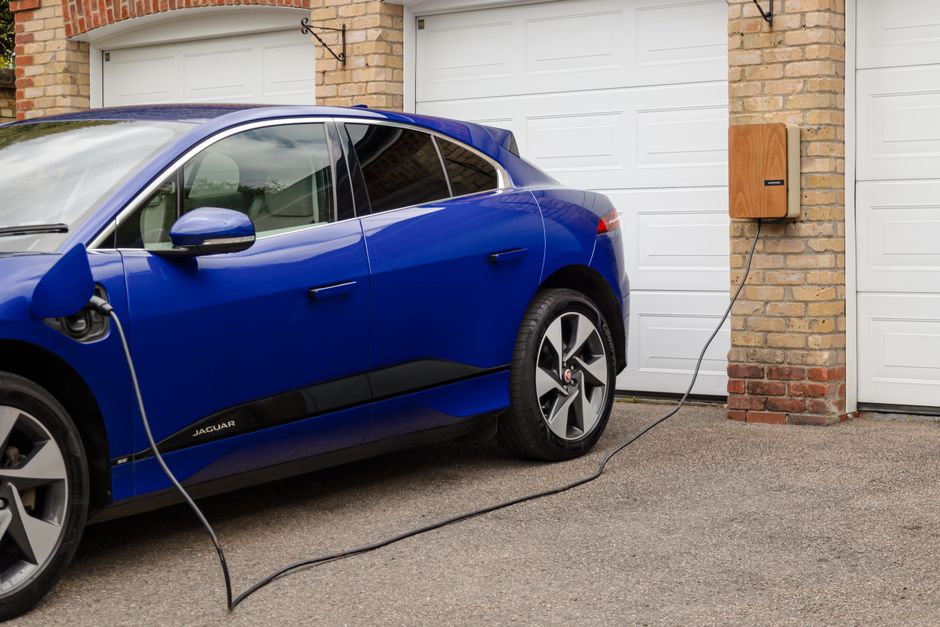
Modern life puts serious demands on electrical panels. We are charging electric vehicles, running multiple computers, and adding heat pumps, all things that were not common when many Denver-area homes were built. If your home was built before 2000 and you have never upgraded your panel, it is probably working harder than it was designed to.
This guide walks you through identifying warning signs, understanding sizing, and knowing when it is time to upgrade for safety and reliability.
Understanding Your Home’s Electrical Panel: The Basics
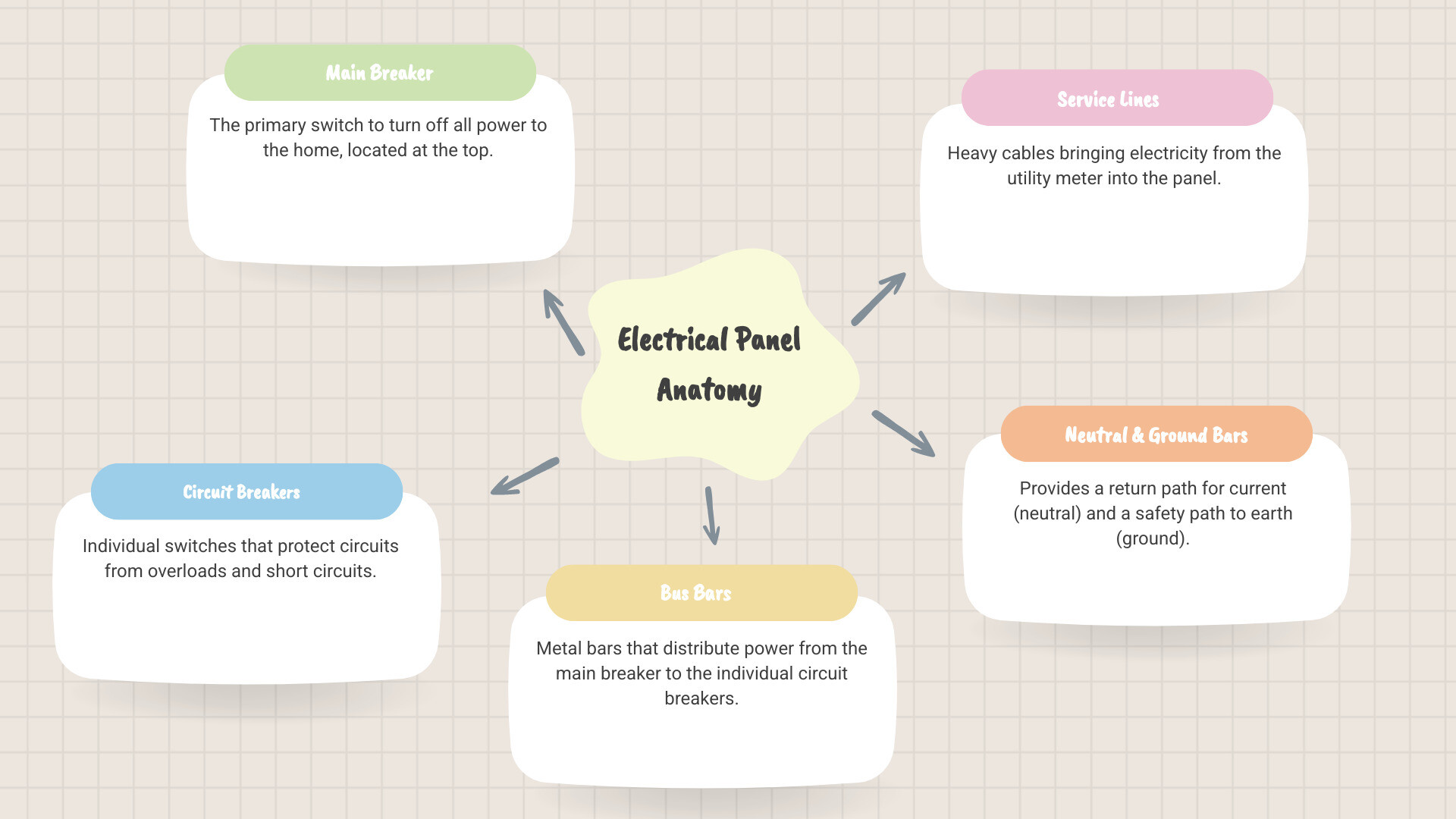
At its core, an electrical panel is the central control point for your home’s electrical system. It is often called a breaker box or service panel, but they all refer to the same thing: the place where electricity comes into your home and gets safely distributed.
Here is how it works in simple terms:
- Power distribution: The panel takes the main electrical feed from your utility and divides it into smaller, manageable circuits for specific areas or appliances.
- Protection from overloads: Each circuit has a breaker designed to trip and cut off power if too much electricity flows through it. This keeps wires from overheating, which can cause a fire.
- Centralized control: The panel lets you shut off power to individual circuits for repairs, or to the entire house using the main breaker.
Most homeowners rarely think about their panel, but it is constantly working to keep your home powered safely. Electrical panels typically last 25 to 40 years, but things like wear, moisture, and increased electrical demands can shorten that lifespan.
In older Denver homes, especially those built in the 60s, 70s, or 80s, I often see panels that have reached the end of their useful life. They were not designed for the volume of electronics we use today. Understanding the basics of your home’s electrical service panel is the first step toward a safer system.
Different Types of Residential Panels
The basic job is the same, but there are a few different types you might see around the Denver Metro Area:
- Main breaker panels: This is the most common type in modern homes. It has a single main breaker to shut off all power, plus individual breakers for each circuit.
- Subpanels: If your main panel is full or you need new circuits far away (like for a workshop or finished basement), a subpanel acts like a mini-panel. It draws power from the main panel to expand your system without a full replacement.
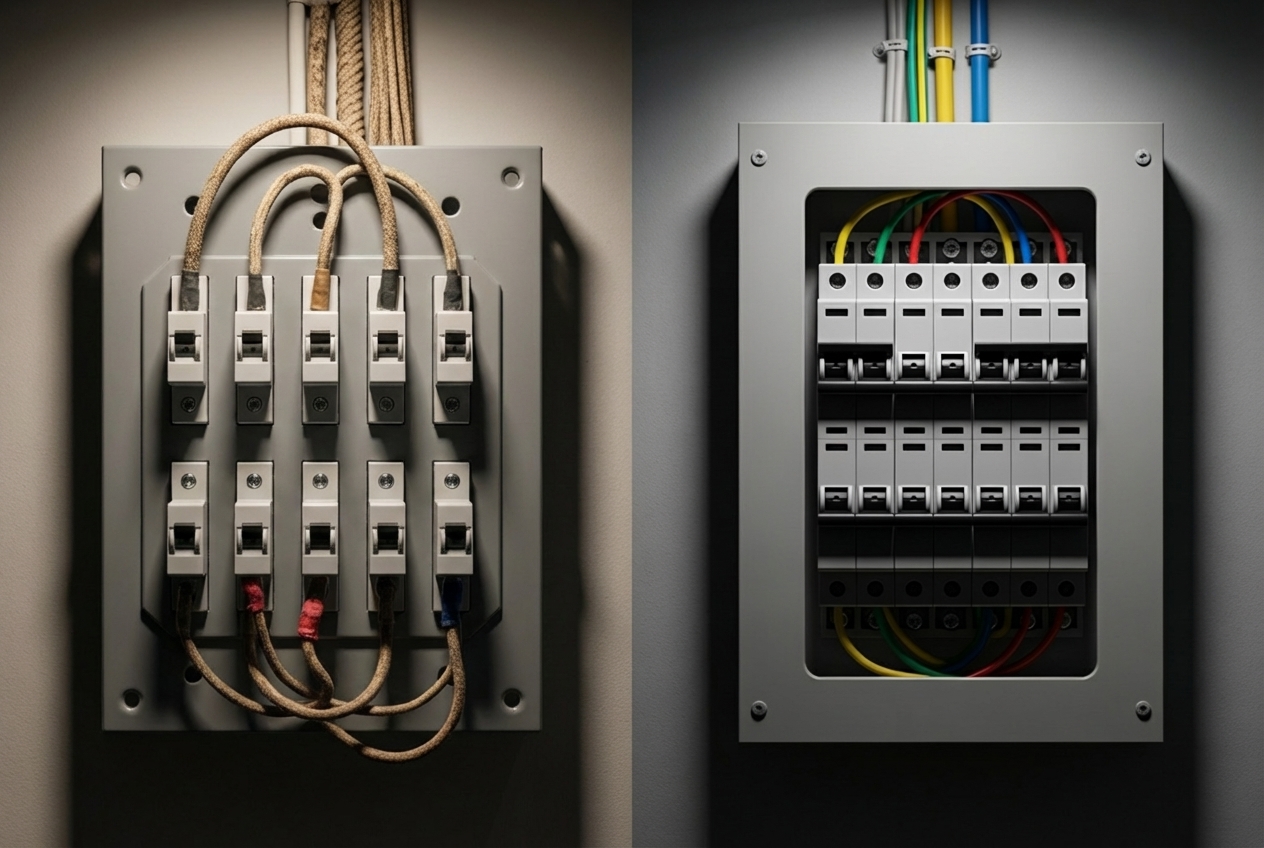
- Outdated fuse boxes: Homes built between 1950 and 1965 might have a fuse box. These use screw-in fuses and are not equipped for modern electrical demands, and they often pose a fire risk. I strongly recommend upgrading them when I come across them.
- Transfer switches for generators: This specialized panel lets you safely switch your home’s power source from the utility grid to a backup generator during an outage.
Where Is the Electrical Panel Typically Located in a Home?
The location of your electrical panel is usually determined by building codes and the layout of the house. In our service areas like Castle Pines or Lone Tree, I typically find them in a few common spots:
- Garages
- Basements
- Utility closets
- Hallways or pantries (less common)
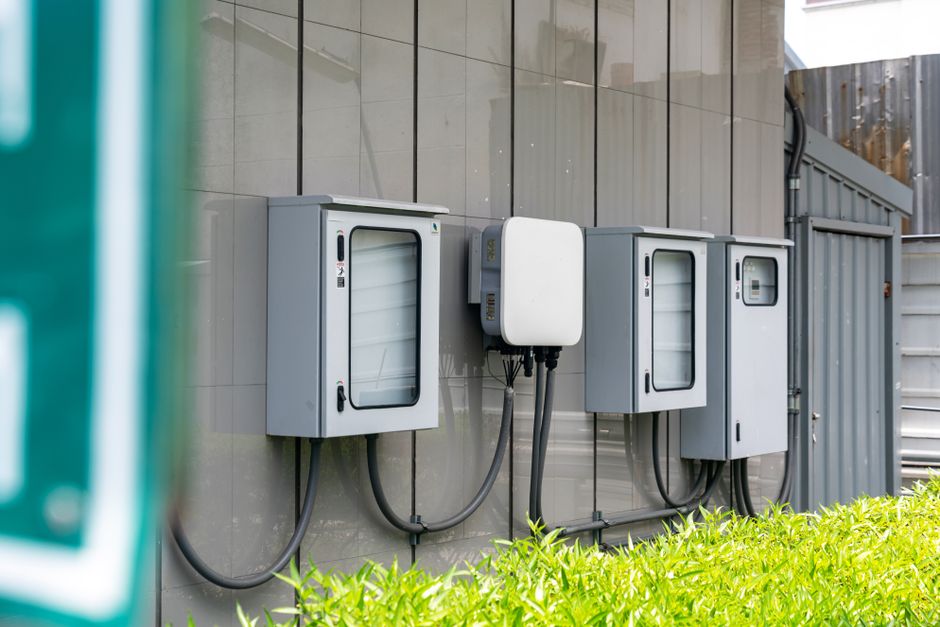
- Outdoors (less common in Colorado)
The key is that it needs to be easy to get to, free from obstructions, and in a dry, safe location so you or a first responder can reach it quickly in an emergency.
Choosing the Right Electric Panel for Your House: Sizing and Signs of an Upgrade
Choosing the right electric panel for house needs starts with thinking about “amperage” (amps), which is just a measure of how much electrical current your panel can handle. A higher amperage panel can deliver more electricity, similar to how a bigger water pipe can deliver more water.
Modern life demands more electricity for things like heat pumps, induction cooktops, and EV chargers. If your panel is not sized correctly, it will not keep up. You can usually find your panel’s amperage on the main breaker (the largest one, usually at the top) or on a label inside the panel door. If you are unsure, an electrician can quickly assess your setup.
Knowing your panel’s capacity is the first step. If you are seeing any signs of an outdated electrical panel, it is time for a closer look.
Common Sizes for an electric panel for house
Panel sizes are rated by amperage. Here is a quick rundown of common sizes:
| Amperage | Typical Home Age | Common Home Size | Appliances Supported | Limitations |
|---|---|---|---|---|
| 60A | 1950s-1960s | Small, <1000 sq ft | Basic lighting, small appliances | Very limited; unsafe for modern loads |
| 100A | 1960s-1980s | Medium, 1000-2000 sq ft | Standard appliances, central AC | Often insufficient for EV charging, heat pumps |
| 200A | 1980s-Present | Medium-Large, >2000 sq ft | All modern appliances, EV charger, heat pump | Standard for new construction; good for most homes |
| 400A | Large/Custom | Very large, multiple structures | Multiple EV chargers, large workshops | Complex installations; often for very high demand |
- 60-amp service: Found in many older Denver homes, these are inadequate and often unsafe for today’s needs. An upgrade is essential.
- 100-amp service: The bare minimum for a modern household. It often cannot support additions like an EV charger or a heat pump.
- 200-amp service: The standard for almost all new homes and major renovations. It provides solid capacity for modern appliances and future additions. For most fully electric homes, 200 amps is enough.
Telltale Signs Your Panel Is Overloaded or Outdated
Your panel will give you warnings when it is struggling. Ignoring them can be dangerous. These are the red flags I look for in Denver-area homes:
- Frequent breaker trips: If a breaker trips regularly when you use certain appliances, the circuit is overloaded. This usually points to an undersized system or a circuit that needs to be reworked.
- Flickering or dimming lights: If lights dim when an appliance like the AC kicks on, your system is having a hard time providing enough power.
- Burning smells or buzzing sounds: Any burning smell or persistent buzzing from your panel is a serious safety concern. Call an electrician immediately.
- Visible rust or corrosion: Rust or water stains mean moisture has gotten inside, which can lead to short circuits and unsafe conditions.
- Notorious outdated panels: Certain older brands, like Federal Pacific Electric (FPE) and Zinsco, have known design flaws that create a fire hazard. If you have one of these, an upgrade is critical for safety. Learn more about these notorious outdated panels like Federal Pacific Electric (FPE) and Zinsco.
- Running out of space for new circuits: If your panel has no empty slots for a new appliance or EV charger, you need more capacity, either with a subpanel or a full upgrade.
The Upgrade Process: Costs, Benefits, and Future-Proofing
Upgrading your electrical panel is a smart investment in your home’s safety, day-to-day function, and long-term plans. Here is why an upgrade is often the best choice:
- Better safety: Modern panels have advanced breakers (AFCIs and GFCIs) that greatly reduce the risk of electrical fires and shock.
- Support for modern demands: An upgraded panel can handle high-demand appliances like EV chargers and heat pumps without constant breaker trips.
- Stronger selling point: In a competitive market like Denver, a modern electrical system is a real plus for buyers.
- Home insurance: Some insurance companies push for electrical system updates, and an outdated panel can make it harder to get or keep coverage.
- Fewer disruptions: A properly sized panel means more stable power and fewer nuisance trips.
For more details, see our guide on understanding electrical panel upgrades.
What an Upgrade Costs in the Denver Area
In Colorado, the typical cost to replace an electrical panel usually falls between $1,500 and $4,000. Several factors can change the final price:
- Panel amperage: Upgrading to a higher capacity (for example, from 100A to 200A) costs more.
- Labor: A panel upgrade usually takes 8 to 20 hours, depending on how complex the job is.
- Condition of existing wiring: If wiring needs repair or changes to meet code, that adds to the cost.
- Moving the panel: Relocating a panel can add $800 to $3,000 or more.
- Permits and inspections: These are required for major electrical work and typically run $150 to $500.
Sometimes, you also need a “service upgrade,” which replaces the main wires from the utility to your home. This is a more extensive and costly job, and it is required when the existing service cannot handle the new panel’s higher amperage.
Rebates and tax credits
Incentives can help with the cost. The federal government offers an electrical panel upgrade tax credit for qualified upgrades (200 amps or more) installed with certain energy-efficient improvements. This can be a credit of 30% of the project cost, up to $600. State-level rebates may also be available.
Future-Proofing Your electric panel for house
When we upgrade a panel, we are getting your home ready for tomorrow, not just solving a problem today. That matters more than ever with the push toward home electrification.
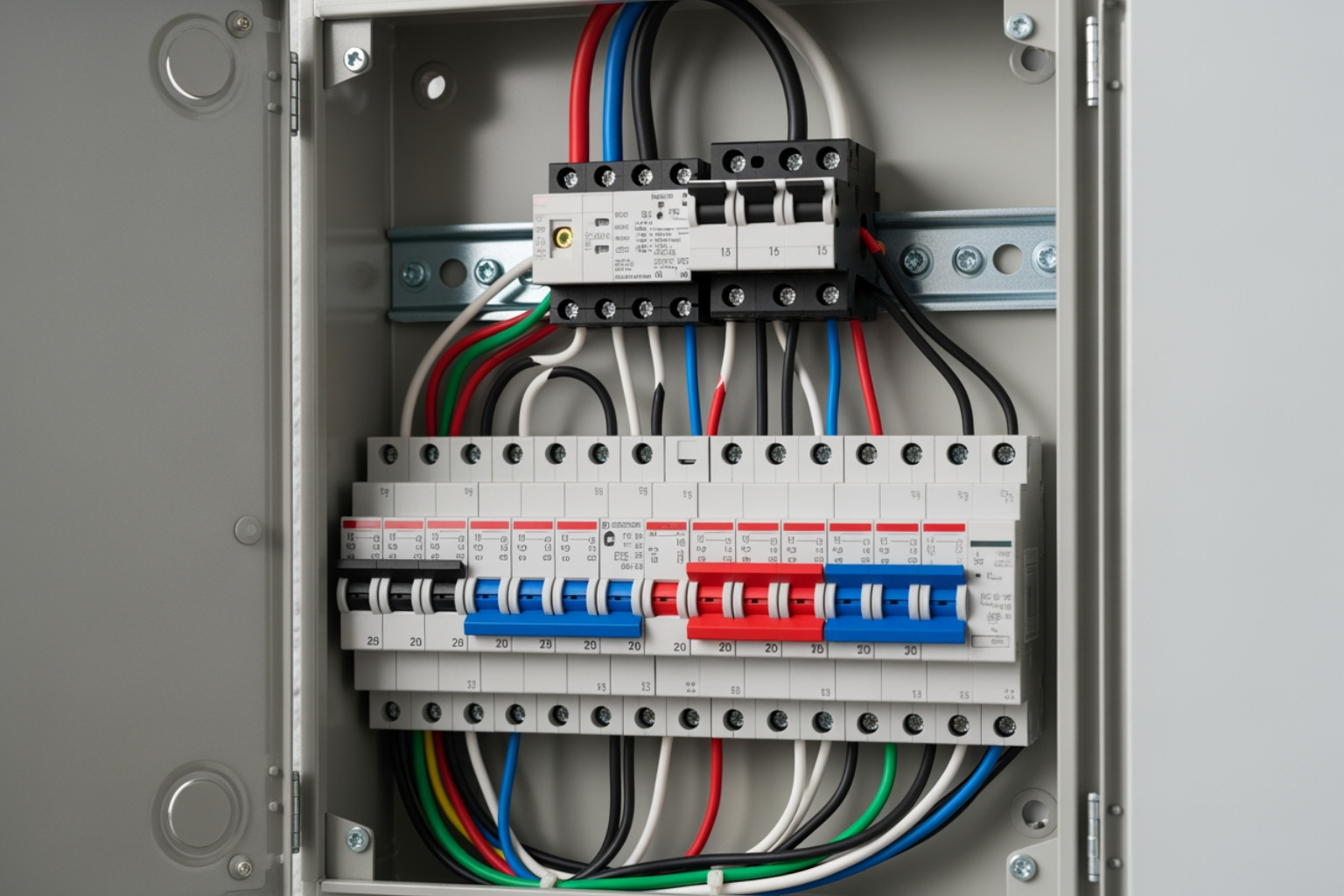
One newer option is the smart electrical panel. These panels integrate simple technology to give you more control and better insight into your home’s energy use.
Benefits include:
- Circuit-level monitoring: You can see how much electricity each circuit is using in real time and spot the big energy users.
- Remote control: You can turn individual circuits on or off from your smartphone.
- Load management: Smart panels can manage heavy loads for you, which is helpful in homes with solar and batteries. In some cases they can let you add a high-demand appliance like an EV charger without a full service upgrade.
- Easy integration: They are designed to work well with solar panels, batteries, and EV chargers. Our experience with high-demand appliances like a hot tub shows how crucial panel capacity and planning are.
Preparing for an all-electric home by replacing gas appliances with electric ones requires a solid electrical system. A 200-amp service is usually essential for these conversions. You can find a good overview of electrification needs and how your panel fits into that bigger picture.
A Master Electrician’s Guide to Panel Safety
I cannot stress this enough as a master electrician: your electrical panel is not a DIY project. It contains live, high-voltage electricity that can be lethal. Working inside it should always be left to a licensed professional.
Here is why I say that so strongly:
- Extreme danger: Even with the main breaker off, the large wires coming into the panel from the utility (the “service lugs”) are always live. Touching them can result in electrocution.
- Complex systems and codes: Electrical systems have a lot of small but important details, and there are strict codes that must be followed for safety. An improperly installed panel can be a fire hazard and may void your home insurance.
- Special tools and training: We use insulated tools, protective gear, and years of training to work safely. That is not something you can pick up from a quick video.
There are a few things you should know for your own safety, though:
- The main breaker vs. live lugs: Your main breaker shuts off power to the circuits inside your panel, but it does not shut off power to the panel itself. Those main service lugs stay energized.
- How to safely reset a tripped breaker: If a breaker trips, push it firmly to the “OFF” position, then back to “ON.” If it trips again immediately, do not force it. That usually means there is a problem on that circuit that needs a professional.
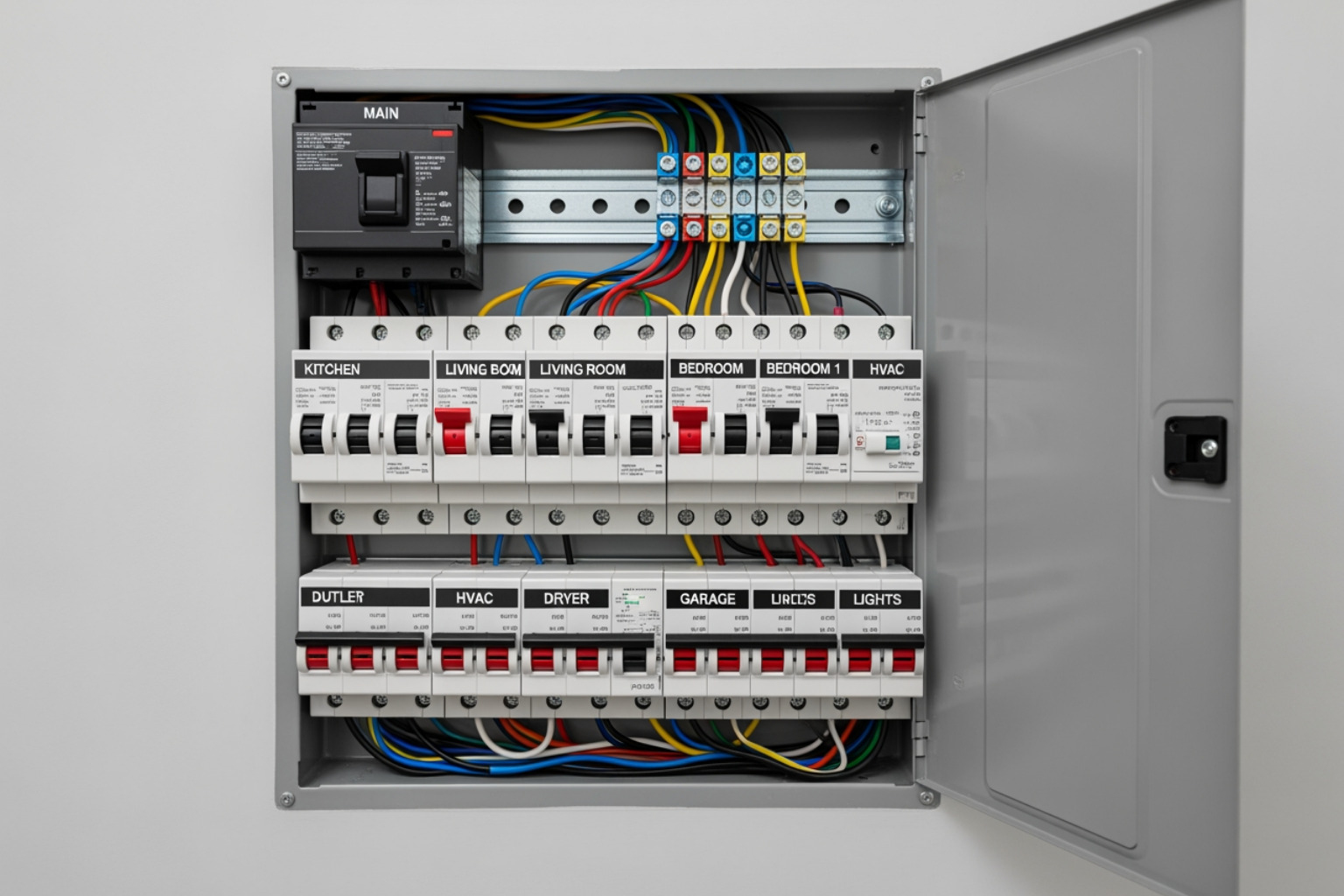
- The value of clear panel labels: Take the time to label your panel. Knowing which breaker controls which area is extremely helpful for troubleshooting, quick shutoffs, and emergency situations.
When something does not look or feel right with your panel, call a professional. It is never worth risking your safety to guess at what is going on inside that box.
Frequently Asked Questions about Home Electrical Panels
I get a lot of the same questions about electrical panels from homeowners in the Denver area. Here are some of the most common ones.
How long does an electrical panel last?
An electrical panel typically lasts 25 to 40 years. Damp conditions, extreme temperatures, or consistent overloading can shorten its life. Certain older brands like FPE and Zinsco had flaws that made them unsafe long before they reached that age range.
If your panel is over 20 to 25 years old, it is a good idea to have it inspected, especially if you are planning any major electrical additions.
Can I just add more breakers if my panel is full?
In most cases, no. If your panel has no empty slots, you cannot simply add more breakers and call it good.
Sometimes, special “tandem breakers” (two circuits in one slot) can be used, but only if the panel is designed for them and has enough overall amperage to handle the extra load.
Simply adding more circuits to an already maxed-out panel will lead to more trips and overload issues. The safer, more reliable options are:
- Installing a subpanel: This adds circuit capacity for a specific area, like a new workshop or finished basement.
- A full panel upgrade: This is the better long-term solution if your main panel is old, undersized, or you need a lot of new capacity for things like EV charging or a hot tub.
What is the difference between a panel upgrade and a service upgrade?
These terms are often mixed up, but they refer to two different jobs:
- Electrical panel upgrade: This replaces the physical breaker box inside your home. We install a new panel, usually with a higher amperage capacity (for example, going from 100 to 200 amps). This is done when the old panel is outdated, damaged, or full.
- Electrical service upgrade: This is a more extensive job that replaces the main electrical wires coming from the utility company to your meter and panel. A service upgrade increases the total amount of electricity available to your home. It is necessary when the existing wires are too small to support a new, higher-amperage panel.
If you are upgrading from 60 or 100 amps to 200 amps, you often need both a panel and a service upgrade. An electrician can look at your system and tell you exactly what is required in your specific situation.
Conclusion: Powering Your Home Safely for Years to Come
Your electric panel for house power is the unsung hero of your home, working tirelessly to keep everything running safely. But as our lives become more electrified, that silent workhorse needs to be able to keep up.
Matching your panel to your lifestyle isn’t just about convenience; it’s about the safety of your family and your home. Whether you’re adding an EV charger in Castle Rock or just seeing the signs of an aging system, understanding your panel is the first step toward a safer, more efficient home.
Professional installation is non-negotiable for safety and code compliance. As a master electrician serving the Denver area, my team at Harmony Electric ensures your panel is installed right the first time. We’re here to help you power your home safely for years to come.
If you’re in the Denver Metro Area, Castle Pines, Castle Rock, Centennial, Highlands Ranch, Parker, or Lone Tree, don’t hesitate to get a professional assessment of your electrical panel needs in Castle Rock and the surrounding areas.