Electrical Wiring for Beginners: Start With the Safe Basics
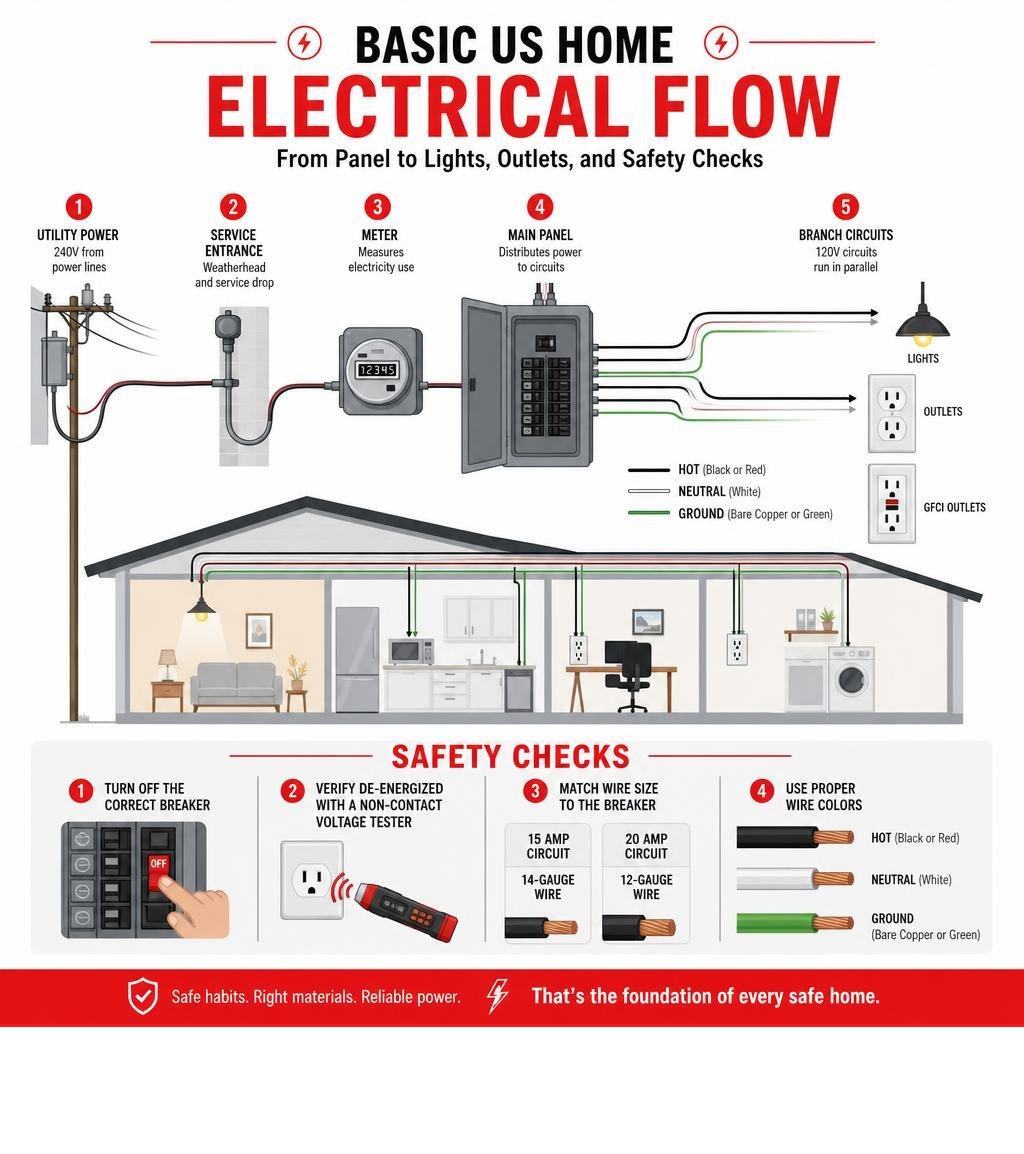
For electrical wiring for beginners, I start with three habits: turn off the correct breaker, verify the wires are de-energized with a non-contact voltage tester, and match the wire size to the breaker.
- Black or red wires are usually hot and carry power.
- White wires are neutral and carry current back to the panel.
- Bare copper or green wires are grounds, which provide a safer path during a fault.
- Use 14-gauge wire only on 15-amp circuits and 12-gauge wire on 20-amp circuits.
Most home circuits are 120 volts and run in parallel, so one failed outlet or light does not normally shut down everything else on the circuit. The details matter, though. A loose connection, overloaded circuit, or wrong wire-and-breaker match can create heat, arcing, or nuisance breaker trips.
I am Randy Harmuth, Master Electrician and owner of Harmony Electric, and I will walk through the practical basics I see homeowners need most in Denver-area homes.
How Electricity Flows: From the Service Head to Your Circuits
Electricity enters your house from the utility lines through an overhead service head or an underground feed. This feed supplies your home with 240-volt split-phase power through two separate 120-volt legs and a common neutral.
From the meter, power travels directly to the main breaker inside residential electrical panels. The main breaker acts as a central shut-off switch for the entire house. It distributes power across two metal bus bars running down the center of the panel.
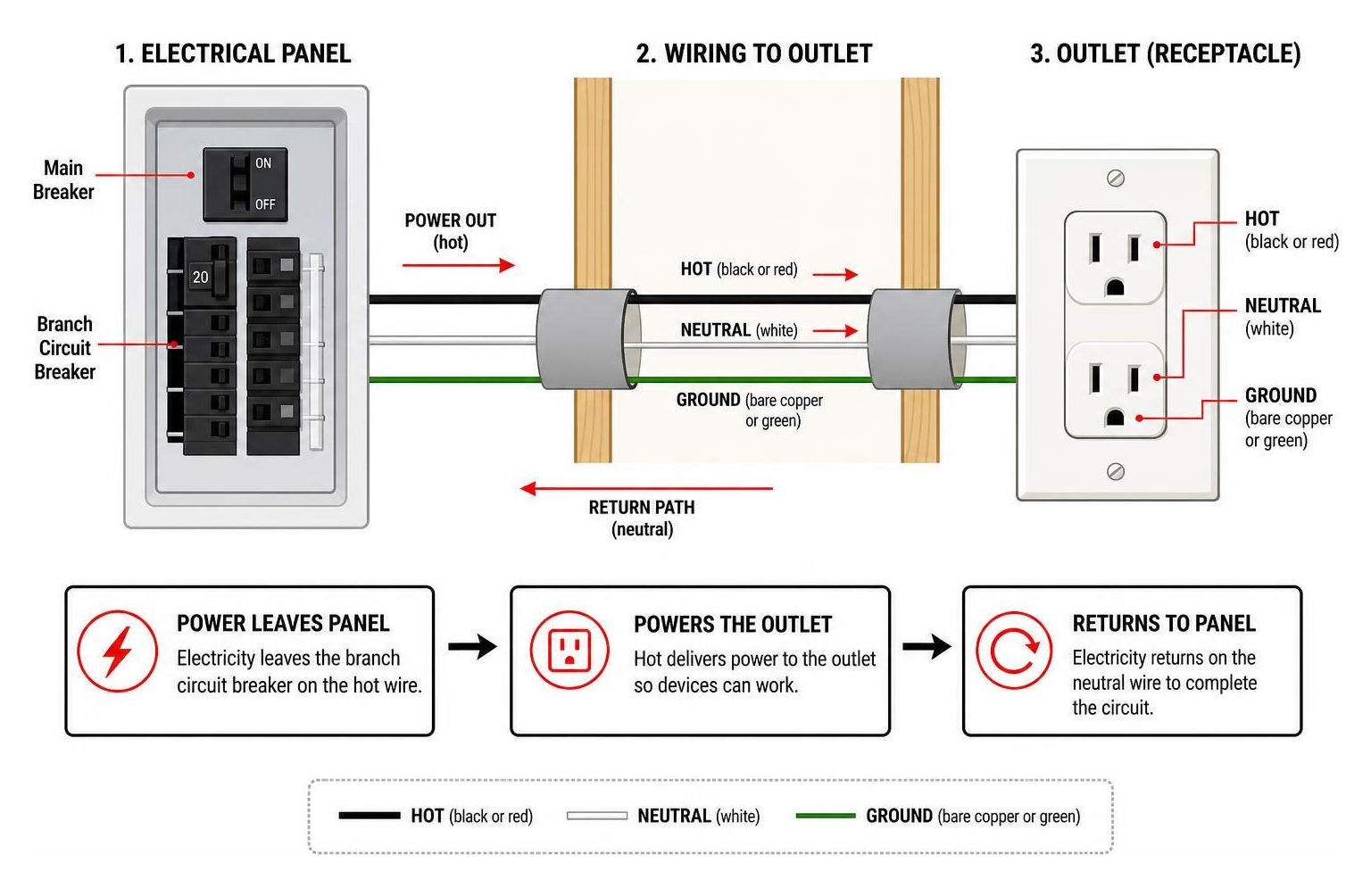
Individual branch circuit breakers snap onto these hot bus bars to feed specific areas of your home. A basic circuit is simply a continuous loop: electricity leaves the breaker on a hot wire, powers your connected lights or appliances, and returns along the neutral conductor to complete the loop.
Residential systems are wired in parallel rather than in series. This design ensures that every device receives the full 120 volts, and a single burned-out lamp will not cut power to the rest of the room.
Understanding Circuit Flow and Schematics
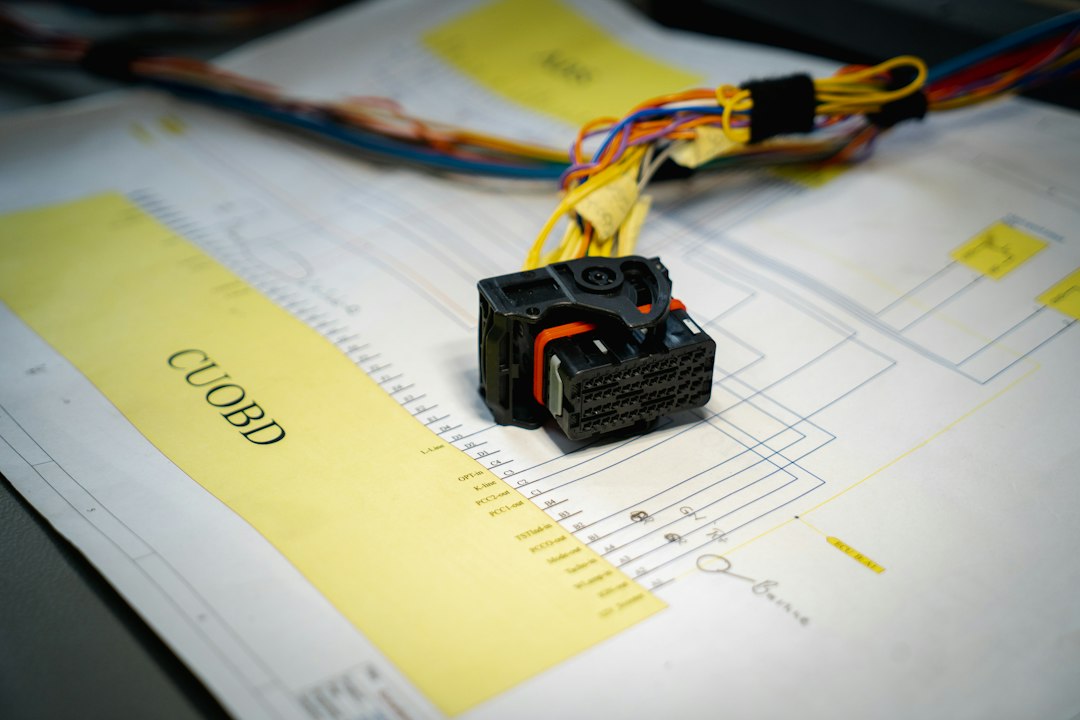
Reading a basic wiring diagram helps you visualize how individual devices receive and return power. By interpreting standard electrical symbols, you can trace lines representing hot, neutral, and ground conductors from their source straight to switches and receptacles.
When laying out a room, keep overall load limits in mind. A solid general rule for residential branch circuits is limiting runs to about 10 outlets or fixtures per circuit to avoid nuisance trips.
Core Safety Protocols and Electrical Wiring for Beginners
Safety is not just a single step; it is a habit of double-checking your work. In the field, I treat every wire as live until I have personally verified that it is de-energized.
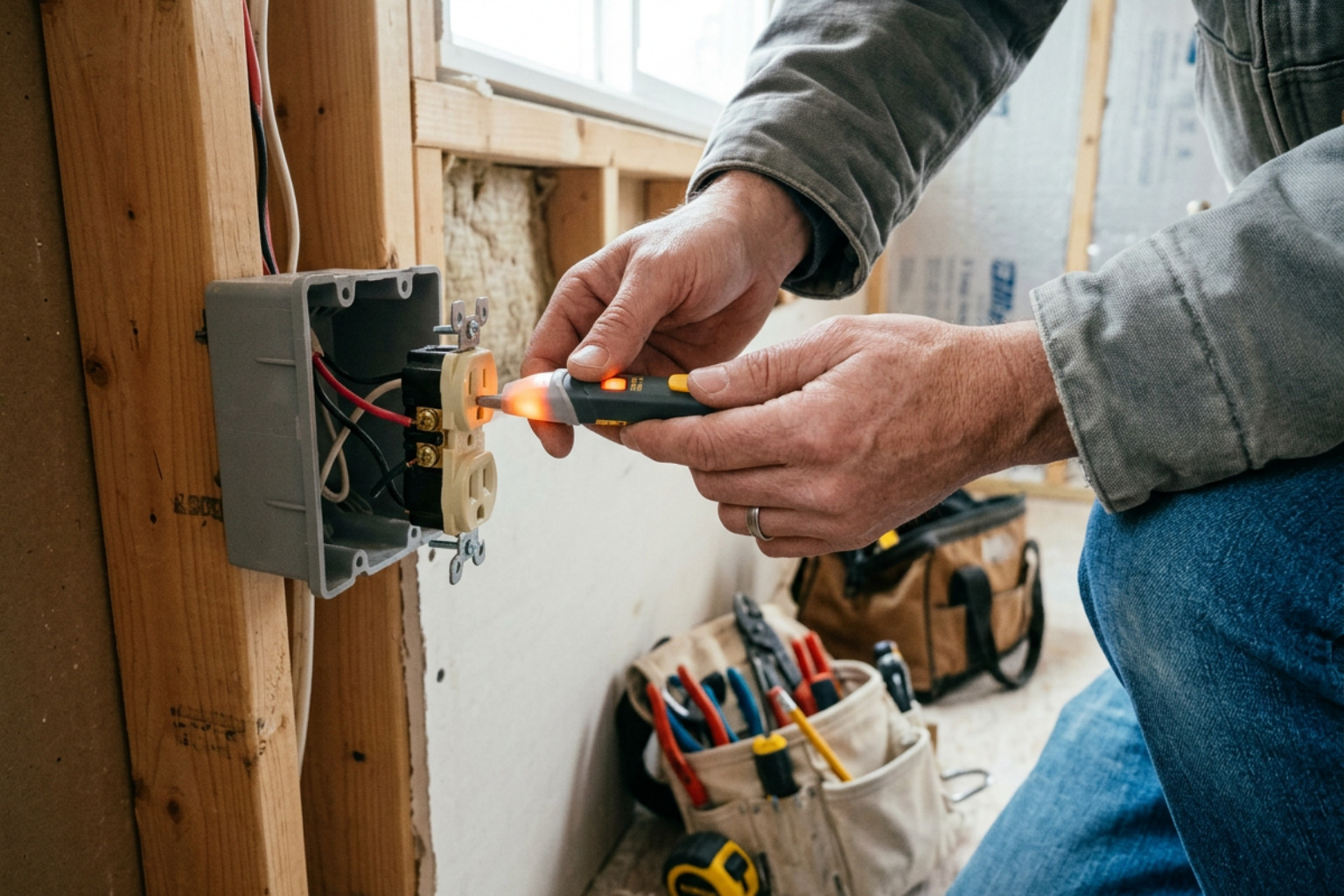
Before opening any device box, I start by switching off the corresponding breaker at the main panel. If multiple people are in the house, a piece of tape or a tag over the breaker handle helps keep someone from turning it back on while work is in progress.
Once the cover plate is removed, use a non-contact voltage tester to probe every wire entering the box. Test the tester on a known live outlet first, confirm the circuit you are working on is dead, and then test the tool again on the live source.
Essential Tools and Electrical Wiring for Beginners Preparation
Working with electricity requires a few specialized, insulated hand tools:
- Wire strippers: Used to remove outer sheathing and strip wire ends cleanly without nicking the copper.
- Needle-nose and linesman pliers: Essential for twisting conductors and shaping tight wire loops around screw terminals.
- Multi-bit screwdriver: Look for insulated handles rated for electrical work.
- Cable ripper and fish tape: Helpful for pulling non-metallic cable through framing and wall cavities.
- Twist-on wire connectors (wire nuts): Sized properly to join multiple conductors inside junction boxes.
- Grounding pigtails: Short lengths of bare or green wire used to ground switches and metal boxes securely.
Wire Gauges, Color Codes, and Ampacity Ratings
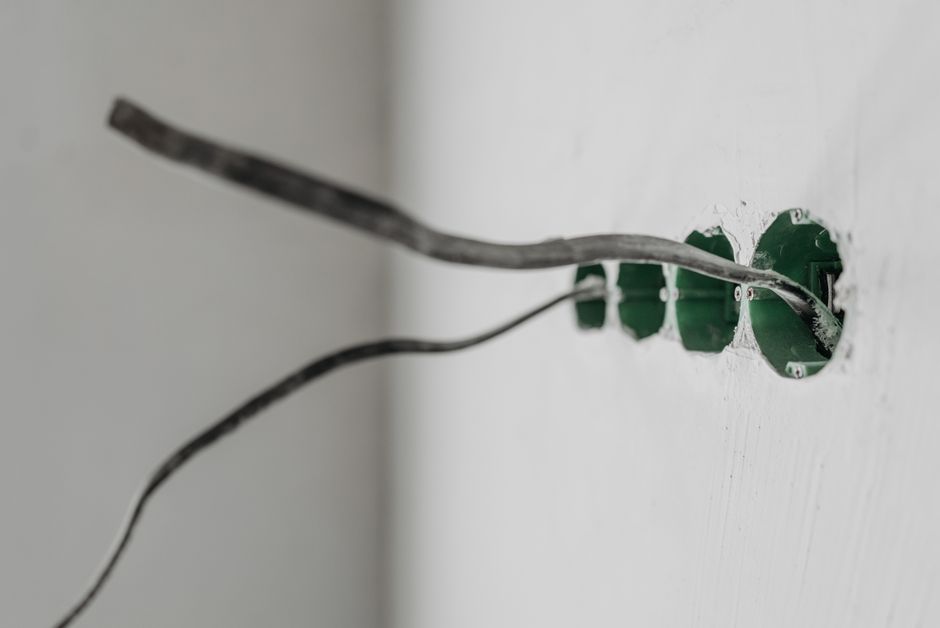
Modern residential wiring uses Non-Metallic sheathed cable, commonly called NM-B or Romex. Inside the outer plastic jacket, you will find insulated conductors and a bare copper ground.
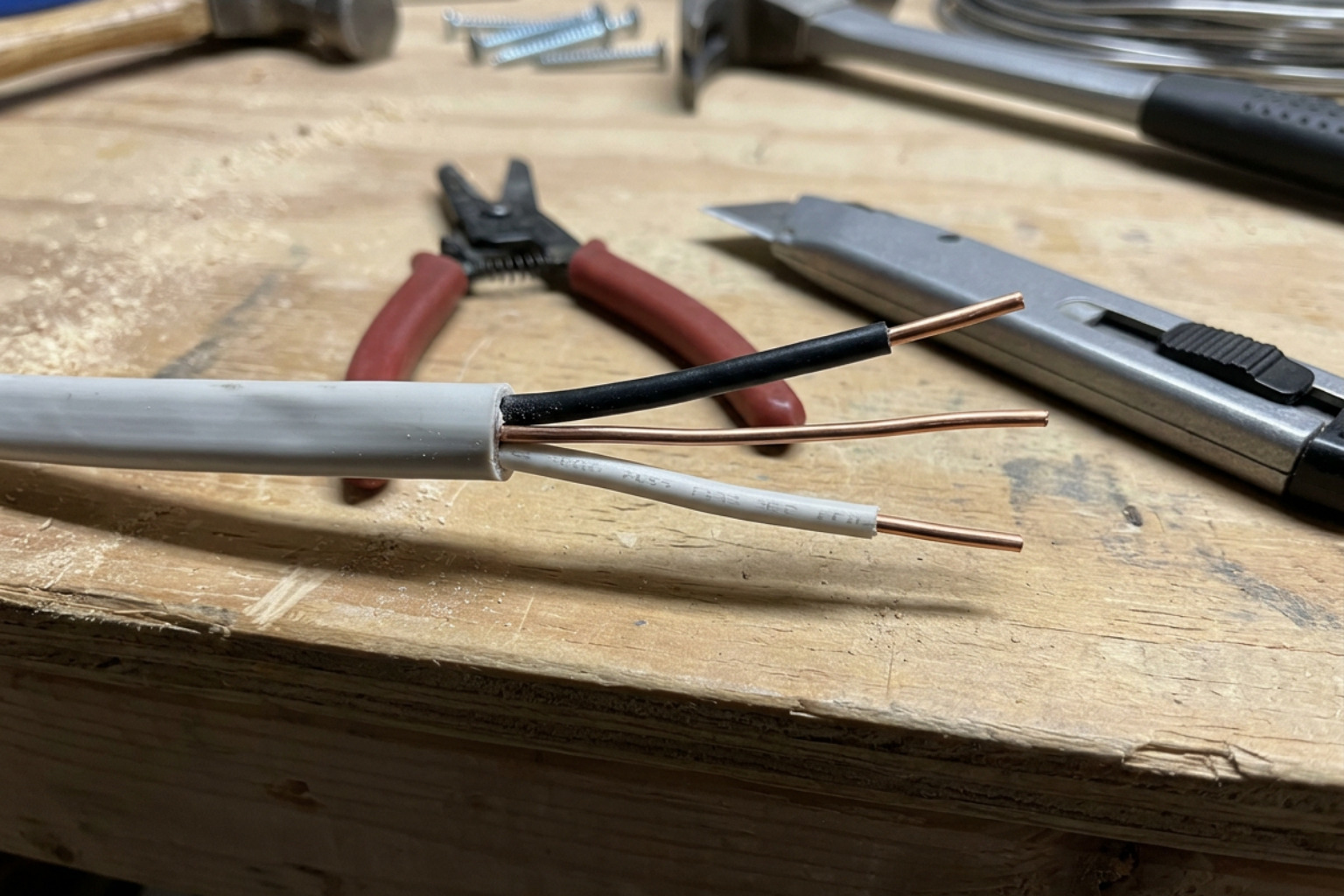
Wire thickness is measured using the American Wire Gauge (AWG) system. With gauge numbers, smaller numbers mean thicker copper and higher current-carrying capacity (ampacity).
| Wire Gauge | Sheath Color | Breaker Amperage | Common Household Uses |
|---|---|---|---|
| 14 AWG | White | 15 Amps | Bedroom lighting, general living room outlets |
| 12 AWG | Yellow | 20 Amps | Kitchen countertops, bathrooms, garage outlets |
| 10 AWG | Orange | 30 Amps | Electric water heaters, clothes dryers, AC units |
| 8 AWG | Black | 40-50 Amps | Electric ranges, high-output subpanels |
| 6 AWG | Black | 50-60 Amps | Electric ranges, EV chargers, large appliances |
Deciphering Conductor Color Codes
Every conductor color serves a specific role within a circuit:
- Black: The primary hot wire that carries 120-volt current from the breaker to the device.
- Red: A secondary hot wire used in 240-volt circuits or as a traveler wire in three-way switch setups.
- White: The neutral conductor that completes the circuit by carrying current back to the panel.
- Bare copper or green: The equipment ground conductor, which provides a safe path for fault current to trip the breaker.
When connecting outlets, black hot wires attach to brass-colored screw terminals, while white neutral wires attach to silver-colored screws.
Choosing the Right Wire Gauge for Your Circuit Breaker
Matching your wire gauge to your breaker amperage is one of the basics I check first. A 14/2 gauge wire is rated for a maximum of 15 amps and should not be paired with a 20-amp breaker. If a 15-amp wire is overloaded on a 20-amp breaker, the wire can overheat and melt its insulation before the breaker ever trips.
For larger household equipment like ranges, water heaters, and central air units, you will need 10, 8, or 6-gauge wire. You can learn more about dedicated lines by planning dedicated appliance circuits to ensure heavy loads remain completely isolated from standard lighting runs.
How to Wire Receptacles, Switches, and Multi-Device Runs
Clean connections inside your electrical boxes help keep devices reliable over time. Wires should protrude at least 3 inches past the front edge of the box to give you enough slack for clean, unforced splices.
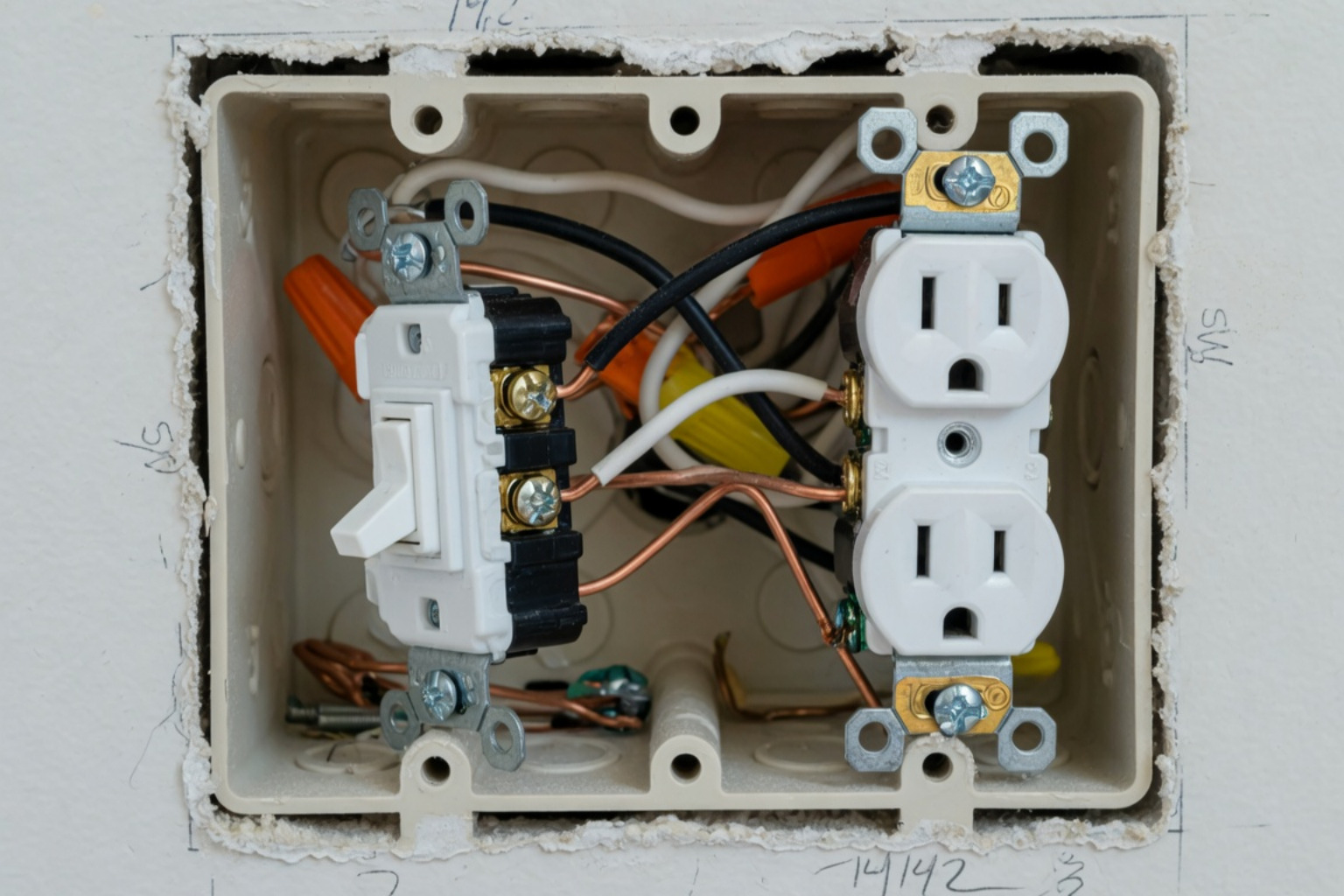
I use the side screw terminals rather than push-in “backstab” holes on the back of outlets. Backstab connections rely on small spring clips that loosen over time, leading to arcing and intermittent power loss. Bend your stripped wire into a clean “J” hook, hook it clockwise around the terminal screw, and tighten down firmly.
Wiring a Standard Duplex Wall Outlet
To wire a standard wall receptacle, attach the black hot wire to the brass terminal screw. Next, connect the white neutral wire to the silver terminal screw on the opposite side.
Connect the bare copper ground wire to the green grounding screw located at the bottom of the outlet yoke. If your box is metal, use a grounding pigtail to bond the box to the ground wire as well.
Wiring a Single-Pole Light Switch
A standard single-pole switch simply interrupts the flow of power on the hot wire. The white neutral wire does not connect to the switch itself; instead, it passes straight through the box using a wire nut to continue on to the light fixture.
Connect the incoming hot wire to one terminal screw on the switch, and attach the outgoing hot wire (the switch leg) to the other screw. Modern standards require running a neutral wire into almost all switch boxes, ensuring compatibility with future smart dimmers or timer switches.
Daisy-Chaining Multiple Outlets in a Branch Circuit
When powering a series of outlets along one wall, power travels into the first box and continues out to the next.
The most reliable way to connect daisy-chained outlets is by using pigtails. Join the incoming hot, outgoing hot, and a short 6-inch black pigtail wire with a wire nut, then connect that pigtail to the outlet’s brass screw. Repeat the exact same process for the neutral and ground wires. Pigtailing ensures that if this specific receptacle ever fails, power continues down the line to the rest of the room uninterrupted.
Protecting Your Home: GFCI, AFCI, and Code Compliance
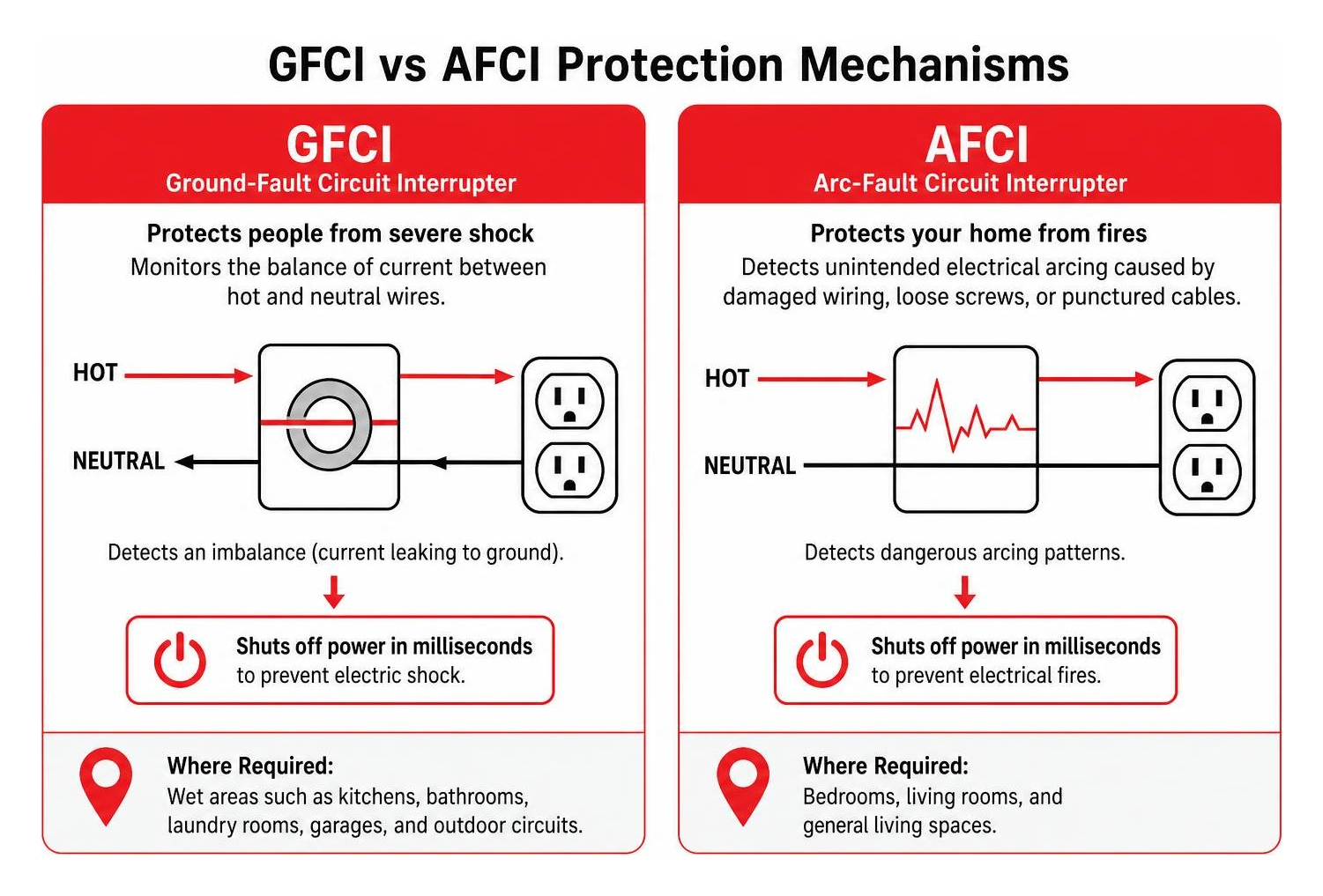
Modern electrical systems use specialized protective devices to reduce shock and fire risks. In my Denver-area work, understanding these devices makes navigating local residential electrical codes a lot less confusing:
- GFCI (Ground-Fault Circuit Interrupters): Designed to protect people from severe shock. GFCIs monitor the balance of current between hot and neutral wires, shutting off power in milliseconds if current leaks. You will commonly see them in wet or damp areas like kitchens, bathrooms, laundry rooms, garages, and outdoor circuits.
- AFCI (Arc-Fault Circuit Interrupters): Designed to reduce fire risk from arcing. AFCIs detect unintended electrical arcing caused by damaged wiring, loose screws, or punctured cables inside walls. They are common in bedrooms, living rooms, and general living spaces.
Permits, Building Codes, and Electrical Wiring for Beginners Compliance
In most Denver metro cities, permits and inspections are usually part of new electrical circuits, panel changes, or major remodeling work. A rough-in inspection checks boxes, cables, and grounds before walls are closed up with drywall, followed by a final inspection once devices are mounted.
If you are updating an older property or want an unbiased evaluation of your existing circuitry, scheduling professional home electrical inspections is the safest way to spot hidden hazards or unpermitted legacy work.
Frequently Asked Questions about Electrical Wiring
Can I mix 14-gauge and 12-gauge wire on the same circuit?
While it is physically possible to join them, it can create a confusing setup unless the entire circuit is protected by a 15-amp breaker. If someone installs a 20-amp breaker because they see 12-gauge wire at the panel, any 14-gauge wire hidden downstream can overheat.
Why do modern light switches require a neutral wire in the box?
Smart switches, motion sensors, and digital timers need a tiny amount of continuous power to operate their internal radios and microprocessors. The neutral wire provides the required return path for this standby current without leaking it onto the ground wire.
How do I know when a wiring project requires a professional electrician?
If your project involves running heavy 240-volt circuits, working inside the main service panel, or troubleshooting unexplained breaker trips, it is time to bring in a professional. You should also look into main electrical panel upgrades if your current service is undersized for modern loads like electric vehicle chargers or heat pumps.
Conclusion
Understanding basic home wiring gives you the confidence to replace a worn outlet, swap out a light fixture, or simply understand how power moves through your home. I recommend respecting the power behind your walls, using the right tools, double-checking your connections, and testing with a reliable voltage detector before touching conductors.
What I usually see in Denver homes is that knowing your limits is just as important as knowing how to strip a wire. When you run into complex routing, heavy 240-volt appliance feeds, or crowded panels, our team at Harmony Electric is here to help with clean, code-compliant professional residential electrical services.