Why Kitchen Island Outlets Changed in the 2023 NEC
2023 NEC island outlet requirements have changed in a big way, and if you’re planning a kitchen remodel or addition in the Denver area, you need to know what’s different.
Here’s what you need to know right now:
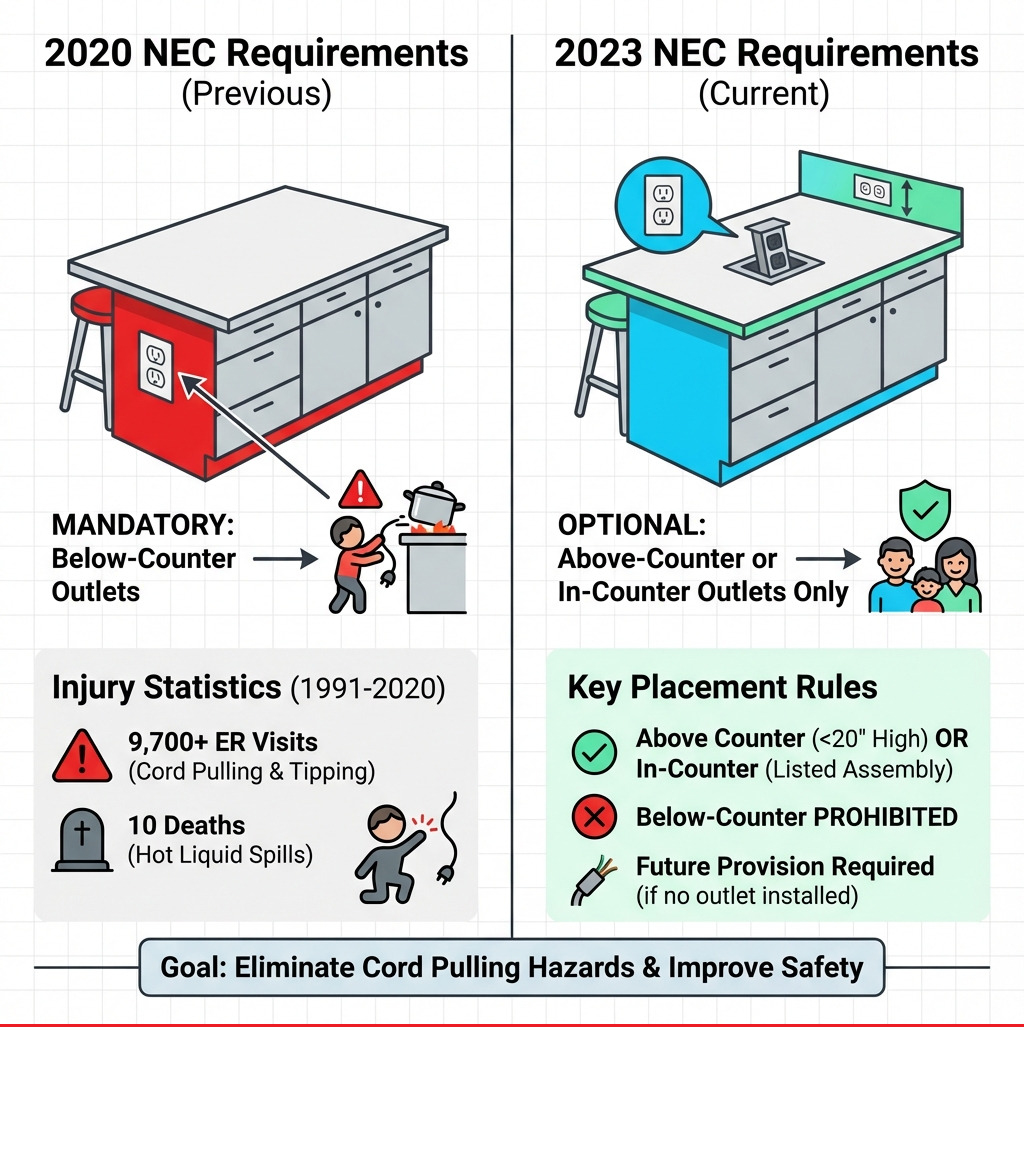
- No longer required – Outlets on islands and peninsulas are now optional (they were mandatory before)
- New placement rules – If you do install outlets, they must be on or above the countertop, not more than 20 inches high, or installed in the countertop using listed assemblies
- Below-counter outlets prohibited – You can no longer install outlets on the side of the island below the counter
- Future provisions required – If you don’t install an outlet, you must provide wiring or conduit for future installation
- GFCI protection still mandatory – Any island or peninsula outlets must be GFCI protected
I’ve been doing electrical work in Denver homes for years, and I’ll be honest—when I first heard about this change, I had mixed feelings. But after understanding the why behind it, it makes complete sense.
Between 1991 and 2020, about 9,700 people were treated in emergency rooms for injuries from pulling on cords plugged into outlets below island countertops. Ten of those incidents resulted in deaths. Most often? Kids yanking on appliance cords and pulling hot crockpots or griddles off the counter.
The 2023 National Electrical Code addressed this by making island outlets optional, but with strict rules about where they can go if you install them. The goal is simple: keep cords out of reach and eliminate that dangerous temptation.
Whether you’re building new, remodeling, or just trying to understand what’s compliant in your current kitchen, this guide will walk you through everything you need to know about the new rules—and what they mean for your Denver home.
Why the Big Change? The Safety Behind the New Rules
At Harmony Electric, we always put safety first. That’s why when the National Electrical Code (NEC) makes a significant change, we pay close attention. The 2023 NEC updates for kitchen island and peninsula outlets are a perfect example of the code evolving to address real-world safety concerns. This wasn’t a change made lightly; it was driven by compelling data and a clear goal: to make our kitchens safer, especially for children.
The primary reason for these revisions stems from alarming statistics compiled by the Consumer Product Safety Commission (CPSC). From 1991 to 2020, an estimated 9,700 people, many of them children, ended up in U.S. emergency departments due to injuries. These injuries often happened when people pulled on or ran into power cords plugged into receptacle outlets installed below island and peninsula work surfaces. Sadly, ten incidents even resulted in death, typically related to countertop cooking appliances tipping over and spilling their hot contents. Imagine a child pulling on a cord, and a hot crockpot or coffee maker comes crashing down – it’s a terrifying thought, and it’s precisely the kind of hazard the new code aims to eliminate.
The National Fire Protection Association (NFPA), which publishes the NEC, works tirelessly to develop standards that reduce hazards like these. They collaborate with experts from various fields to ensure the code remains relevant and effective in preventing injuries and loss. This particular change highlights the danger of dangling cords and the accessibility of outlets to small hands. It’s a proactive step to prevent accidents before they happen, making our homes safer places for families to gather and cook.
From Mandatory to Mindful: A Shift in Thinking
Prior to the 2023 NEC, the rules for island and peninsula receptacles were quite different. The 2020 NEC, for instance, required at least one receptacle outlet for the first 9 square feet of countertop or work surface on an island or peninsula, and an additional one for every subsequent 18 square feet. This meant that most kitchen islands, especially larger ones common in modern Denver homes, had to have outlets. These outlets were often placed on the sides of the island, below the countertop level.
The 2023 NEC marks a significant shift from this mandatory approach to a more mindful one. The requirement to install any receptacle outlet on islands and peninsulas has been removed entirely. Instead, the focus is now on safe placement. If you choose to have an outlet, it must be installed in a way that minimizes hazards. This includes a strict prohibition against installing outlets below the countertop or work surface. The idea is to move power access away from where cords can be easily snagged or pulled by curious children.
This change really encourages us to think differently about kitchen design. It’s not about taking away convenience, but about redesigning for safety first.
A Look at the Data: The Dangers of Below-Counter Outlets
Let’s dive a little deeper into those numbers, because they truly illustrate why this change was so important. That statistic of 9,700 people treated in emergency rooms between 1991 and 2020 isn’t just a number; it represents real people, often children, who suffered burns and other injuries.
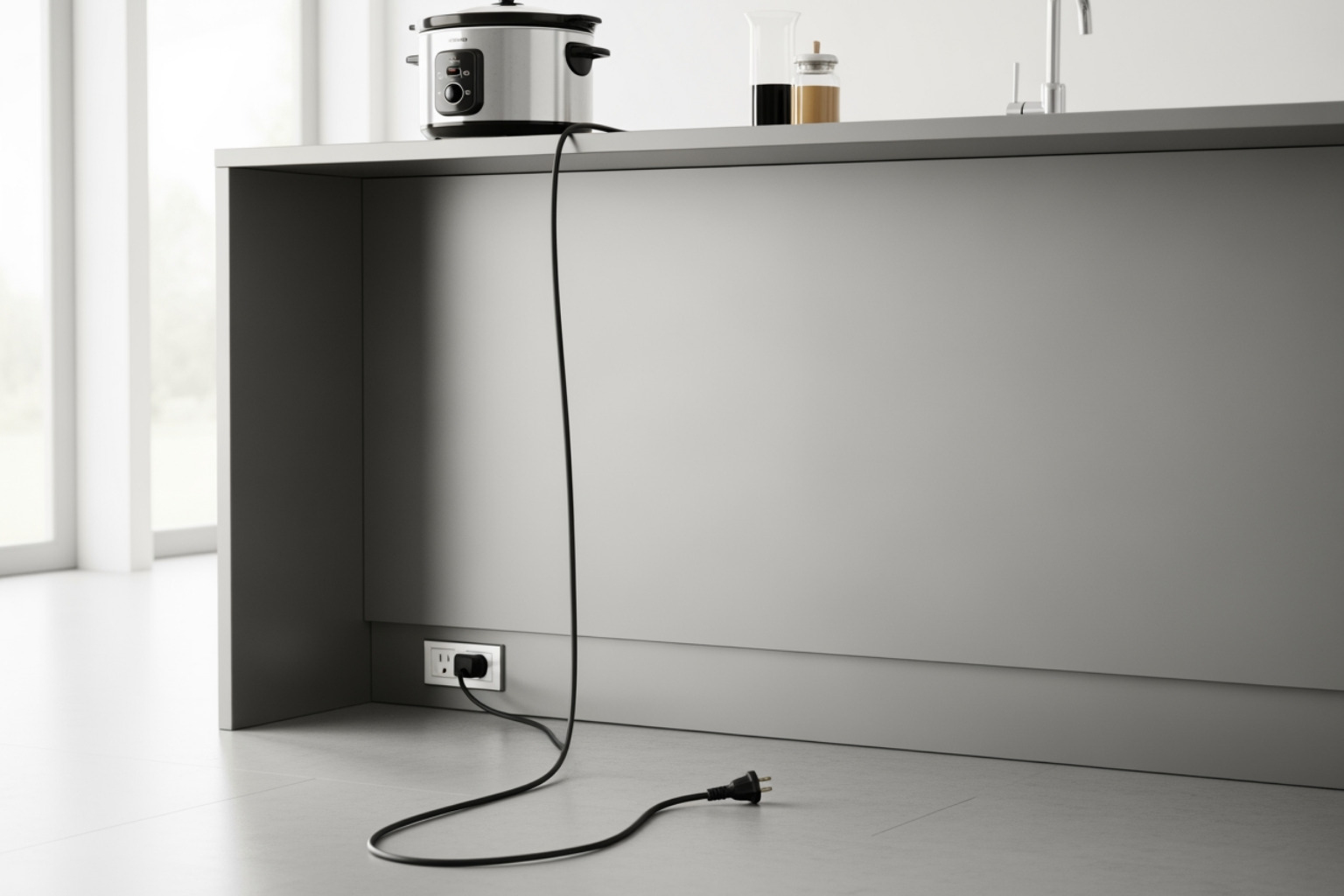
Think about it: a standard appliance cord is typically around 3 feet long. If an outlet is located on the side of an island, just a foot or so off the floor, that cord creates a perfect loop for someone to trip on. More dangerously, it puts the appliance within easy reach of a child who might pull on it. We’ve all seen kids grab onto things to steady themselves, or out of pure curiosity. When that “thing” is a cord connected to a hot coffeemaker, a blender, or a slow cooker, the consequences can be devastating. Ten incidents resulted in death related to countertop cooking appliances tipping and spilling – that’s ten too many.
These accidents were often due to:
- Dangling cord hazards: Cords plugged into low outlets create trip hazards for adults and easy-to-grab loops for children.
- Children pulling on cords: A child’s natural curiosity can lead them to pull on anything within reach, including appliance cords.
- Spilling hot appliances: When cords are pulled, appliances like crockpots, griddles, or kettles can tip over, spilling hot liquids or food, leading to severe burns.
The 2023 NEC’s decision to prohibit below-counter outlets directly addresses these scenarios. By requiring outlets to be on or above the countertop, it significantly reduces the likelihood of these types of “pull-over” accidents. It’s a clear-cut example of the code directly responding to a persistent, real-world safety problem.
Understanding the 2023 NEC Island Outlet Requirements
So, what exactly does the 2023 NEC say about island and peninsula outlets? The core of the change lies in Section 210.52(C). This section, which covers receptacle outlets for dwelling unit countertops and work surfaces, now makes receptacle outlets on islands and peninsulas optional. But here’s the kicker: if you do decide to install them, there are very specific rules about where and how they must be placed.
The general idea is that if an outlet is installed, it needs to be located where it’s less likely to contribute to cord-pulling accidents. This means a complete departure from the old practice of putting outlets on the side of the island. The code also introduces a crucial “provisions” rule, which we’ll get into shortly, for situations where no outlet is installed.
For electricians like us in Denver, this means a fresh approach to kitchen wiring. We need to be well-versed in these new rules to ensure every installation is compliant and safe. For homeowners, it means having a conversation with your designer and electrician early in the planning process to understand your options and make choices that suit your lifestyle while adhering to the latest safety standards.
Let’s look at a quick comparison of the key differences:
| Feature | 2020 NEC (Island/Peninsula) | 2023 NEC (Island/Peninsula) |
|---|---|---|
| Receptacle Requirement | Mandatory (based on countertop area/length) | Optional (not required, but if installed, new rules apply) |
| Placement Allowed | On or above countertop; In countertop; Below countertop | On or above countertop (max 20″ above); In countertop; In work surface |
| Below-Counter Outlets | Permitted (up to 12″ below countertop under conditions) | Prohibited |
| If No Receptacle Installed | No specific requirement for future provisions | Provisions for future addition required |
| Safety Rationale | Convenience, appliance use | Eliminate cord-pulling injuries, appliance tip-overs |
| Specific Code Section | 210.52(C)(2) and (C)(3) | 210.52(C)(3) (new language) |
What are the new rules for the placement of 2023 NEC island outlet requirements?
If you decide to install a receptacle outlet on your kitchen island or peninsula, the 2023 NEC is very clear about its placement. The primary goal is to keep the outlet and any plugged-in cords out of the danger zone.
Here’s how it breaks down:
- On or above the countertop: Receptacle outlets must be installed on or above the countertop or work surface. This means no more outlets hidden away on the side of the island base.
- 20-inch maximum height: If placed above the countertop, the receptacle cannot be more than 20 inches (500 mm) above the countertop or work surface. This keeps it accessible but still above the primary work area where cords might dangle.
- In-countertop assemblies: You can also install receptacles directly into the countertop or work surface. However, these must be using receptacle outlet assemblies specifically listed for such use. We’re talking about specialized solutions designed to be safely integrated into the surface.
One of the most practical and aesthetically pleasing solutions that meets these new requirements are pop-up outlets. These units are designed to sit flush with your countertop when not in use, and then they “pop up” when you need them. They’re UL-listed, often feature water-resistant designs (a must in a kitchen!), and come with tamper-resistant technology, which is great for homes with kids. This type of solution gives you the convenience of power without compromising the clean lines of your kitchen or creating a safety hazard.

Many of our Denver clients appreciate how these blend seamlessly into their high-end kitchen designs while still being fully compliant with the 2023 NEC island outlet requirements. You can even find options that include USB charging ports, which is a huge plus for modern living. To explore some of these innovative solutions, you can learn more about listed countertop receptacles.
What if I Don’t Install an Outlet? The “Provisions” Rule
This is a new and important part of the 2023 NEC. If you choose not to install a receptacle outlet on your kitchen island or peninsula, the code states that “provisions must be provided for the addition of a receptacle outlet in the future.”
Now, what exactly does “provisions” mean? This is where it gets a little interesting, and it can sometimes be subject to interpretation by your local Authority Having Jurisdiction (AHJ), which is typically your building inspector. However, the general understanding is that you need to make it reasonably easy to add an outlet later without tearing your entire kitchen apart.
Common ways to meet this “provisions” rule include:
- Conduit stub-up: Installing an empty conduit from the electrical panel (or a junction box within the island) up into the island cabinet, capped off and ready for wires to be pulled later.
- Junction box in cabinet: Running an electrical cable to an accessible junction box inside the island cabinet, leaving the wires capped and ready for a future receptacle installation.
The key here is “accessible.” It means that a future electrician should be able to connect and install an outlet without having to open up walls or permanently installed cabinetry. This planning ahead is a smart move for a few reasons. First, it ensures your home remains compliant with the code. Second, it adds value and flexibility. While you might not want an outlet now, a future homeowner might, and having the provisions in place makes that upgrade much simpler and less costly. It’s a bit like pre-wiring for speakers or network cables – you might not use it today, but you’ll be glad it’s there if you change your mind or sell your home.
When we work on kitchen remodels in Denver, we always discuss these provisions with our clients. It’s a small step during construction that can save a lot of headaches down the road.
What This Means for Your Denver Kitchen Remodel
For homeowners in Denver, these new 2023 NEC island outlet requirements have some real implications for kitchen remodels and new builds. The days of simply adding an outlet to the side of the island are behind us. Now, you have a conscious choice to make: do you want an outlet, and if so, where will it go? Or do you prefer a clean, outlet-free island, knowing that provisions are in place for the future?
This means working even more closely with your kitchen designers and electricians from the very beginning of your project. Aesthetics and function need to be balanced with code compliance. If you’re aiming for a sleek, minimalist look, an in-counter pop-up outlet might be the perfect compromise. If you use small appliances frequently, you’ll want to ensure convenient access to power.
One thing that hasn’t changed is the requirement for GFCI protection. Any outlet installed on an island or peninsula, just like other kitchen countertop outlets, must have Ground Fault Circuit Interrupter (GFCI) protection. This is crucial for preventing electric shock in areas where water and electricity are often in close proximity. We always ensure all kitchen outlets are properly GFCI protected to keep your family safe.
What I usually see in Denver homes is that most homeowners still want some power on their island. It’s such a central hub for everything from charging phones to blending smoothies. But they also appreciate the cleaner look and the improved safety of the new placement options. The key is to plan it out so it works for your family’s needs.
Navigating the 2023 NEC island outlet requirements as a Homeowner
Navigating these new rules as a homeowner can feel a bit technical, but it really boils down to making informed choices for your family and your home. Our goal at Harmony Electric is to simplify this for you.
Here are a few things to consider:
- Your lifestyle: How do you use your kitchen island? Do you regularly use small appliances like blenders, stand mixers, or coffee makers there? Do your kids do homework or charge devices at the island? Your daily habits will help determine if an outlet is necessary.
- Aesthetics vs. convenience: If you love the unbroken look of a pristine countertop, a flush-mount or pop-up outlet offers convenience without visual clutter. If you need constant access to power, a permanently mounted outlet might be more practical.
- Long-term safety: The core of these changes is safety. By choosing code-compliant placement, you’re actively reducing the risk of injuries in your home. No more worrying about dangling cords or hot appliances tipping over.
- Future flexibility: Even if you opt for no outlets now, ensuring the “provisions” are in place means your kitchen is adaptable. If you change your mind, or if a future buyer wants an outlet, the groundwork is already laid.
We’ve helped countless homeowners in Denver, Castle Pines, Highlands Ranch, and other surrounding communities make these decisions. We can walk you through the options, show you examples of compliant solutions, and help you choose what’s best for your home. It’s about balancing modern convenience with the highest standards of safety, ensuring your kitchen is not just beautiful, but also truly safe and functional for years to come.
Getting it Done Right in Your Kitchen
The 2023 NEC island outlet requirements represent a significant step forward in kitchen safety. While they might seem like a small detail in a large renovation project, they address very real and serious hazards. The shift from mandatory, potentially unsafe, below-counter outlets to optional, safely placed, on- or in-counter solutions is a win for homeowners, especially those with young children.
At Harmony Electric, we believe in doing the work right the first time. This means staying on top of the latest code changes, understanding the rationale behind them, and implementing solutions that are both safe and effective. We pride ourselves on clear communication, honest recommendations, and clean, high-quality electrical work. We’re not just installing wires; we’re ensuring your home’s electrical system supports your life safely and efficiently.
If you’re planning a kitchen project in the Denver area and want to ensure the electrical work is safe, compliant, and built to last, we can help. From understanding the new island outlet rules to full home rewiring and electrical panel upgrades, we handle it all. Contact us for your residential electrical service needs. We’re here to make sure your electrical system is as reliable and safe as it can be.