The Real Cost of Outdated Commercial Lighting (And What to Do About It)
Commercial LED installation is one of the smartest upgrades a Denver business can make right now. Here’s a quick look at what it involves and why it matters:
What you need to know at a glance:
| Factor | What to Expect |
|---|---|
| Energy savings | Up to 75% less electricity than older lighting |
| Payback period | Typically 18-24 months |
| LED lifespan | 50,000-100,000+ hours |
| Rebates available | Can cover 30-70% of project costs |
| Process | Site audit → design → install → testing |
Lighting accounts for roughly 20% of electricity use in commercial buildings across the U.S. That’s a big number — and most of it is waste from outdated fluorescent or metal halide systems.
What I see a lot in Denver businesses is lighting that was installed decades ago and never touched. It’s still running, sure. But it’s pulling two to three times more power than it needs to, burning out frequently, and quietly adding hundreds — sometimes thousands — of dollars to the monthly energy bill.
The good news? Switching to LED isn’t complicated when you have the right team handling it. And the savings start from day one.
This guide walks you through everything: fixture types, the installation process, rebates you can tap into, and how to find a contractor who actually knows what they’re doing.
Why Businesses are Switching to Commercial LED Installation
In my years working as a Master Electrician around the Denver Metro area, I’ve seen a lot of business owners hesitate to upgrade because they worry about the upfront cost. But once we sit down and look at the numbers, the hesitation usually disappears.
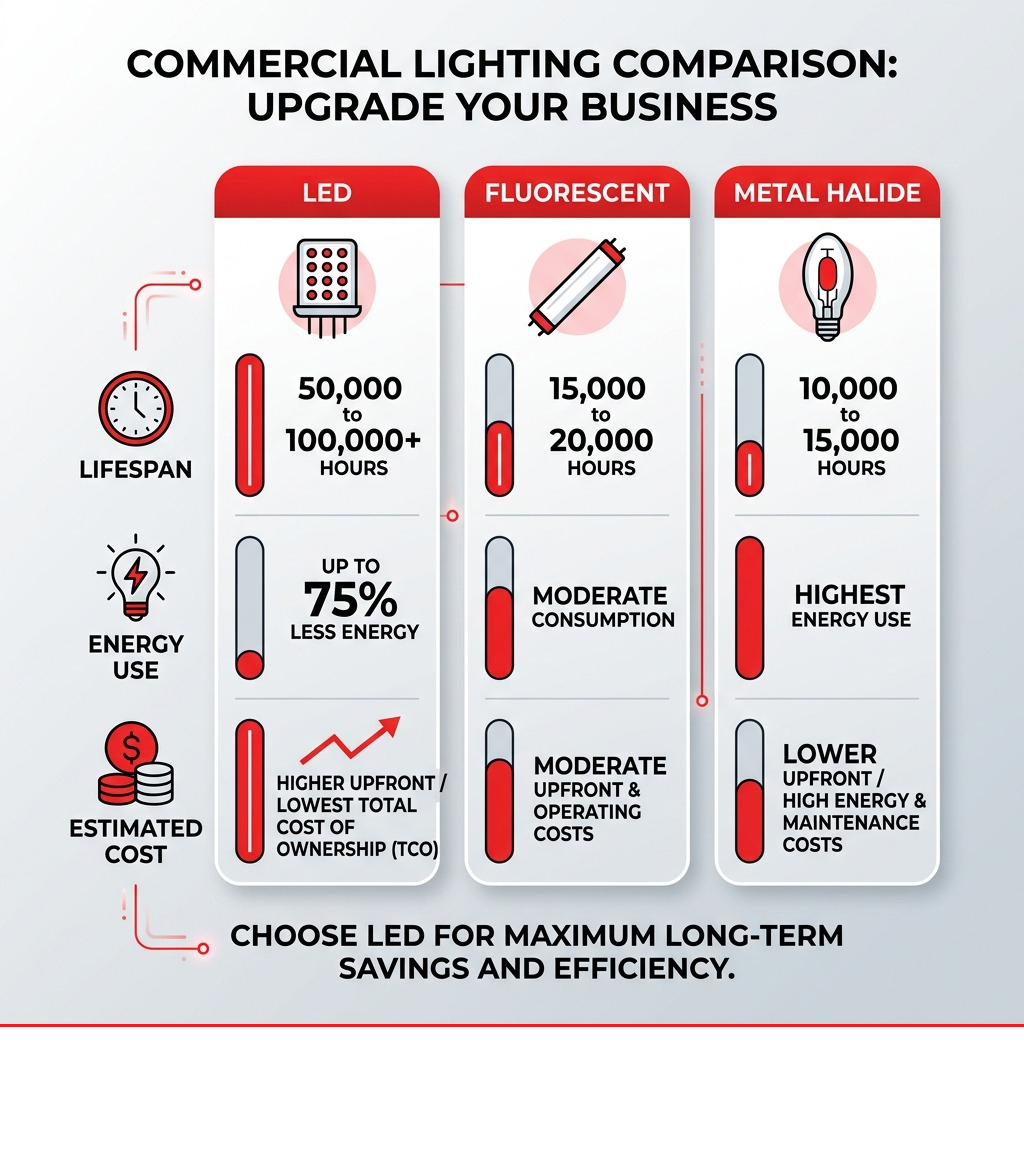
The most immediate benefit of a commercial led installation is the energy reduction. LEDs use up to 75% less energy than legacy systems like metal halides or old-school fluorescents. To put that in perspective, swapping out just one 400W metal halide fixture with a modern LED equivalent can save over $300 per year in electricity and maintenance costs alone. When you multiply that by 50 or 100 fixtures in a warehouse or retail space, you’re looking at serious capital staying in your pocket.
Beyond the monthly bill, there’s the “ladder factor.” Legacy lights burn out frequently. In a warehouse with 30-foot ceilings, changing a bulb isn’t just a chore; it requires renting a scissor lift and pulling a staff member off their actual job. LEDs last between 50,000 and 100,000+ hours. In a typical office setting, that’s nearly 20 years of maintenance-free light.

There’s also a massive environmental win here. Swapping one 400W metal halide for an LED cuts over 1,000 lbs of CO2 emissions annually. For companies in places like Castle Rock or Centennial looking to hit sustainability goals, lighting upgrades for commercial properties are the lowest-hanging fruit.
| Feature | LED | Metal Halide | Fluorescent |
|---|---|---|---|
| Lifespan | 50k – 100k Hours | 6k – 15k Hours | 10k – 20k Hours |
| Wattage (Equiv.) | 150W | 400W | 131W |
| Heat Emission | Very Low | Very High | Medium |
| Warm-up Time | Instant | 10-20 Minutes | 1-2 Minutes |
Understanding Fixture Types and Technical Specs
When we talk about “commercial lights,” it’s not a one-size-fits-all situation. The fixture we’d use in a Highlands Ranch retail shop is completely different from what we’d put in a Parker manufacturing plant.
- High Bay & Low Bay: These are the workhorses of the industrial world. High bays are designed for ceilings over 20 feet. They pack a punch with lumen outputs ranging from 15,000 to 100,000+. Low bays are for that 12-to-20-foot range. You’ll often see “UFO” style high bays for open areas or linear versions for warehouse aisles.
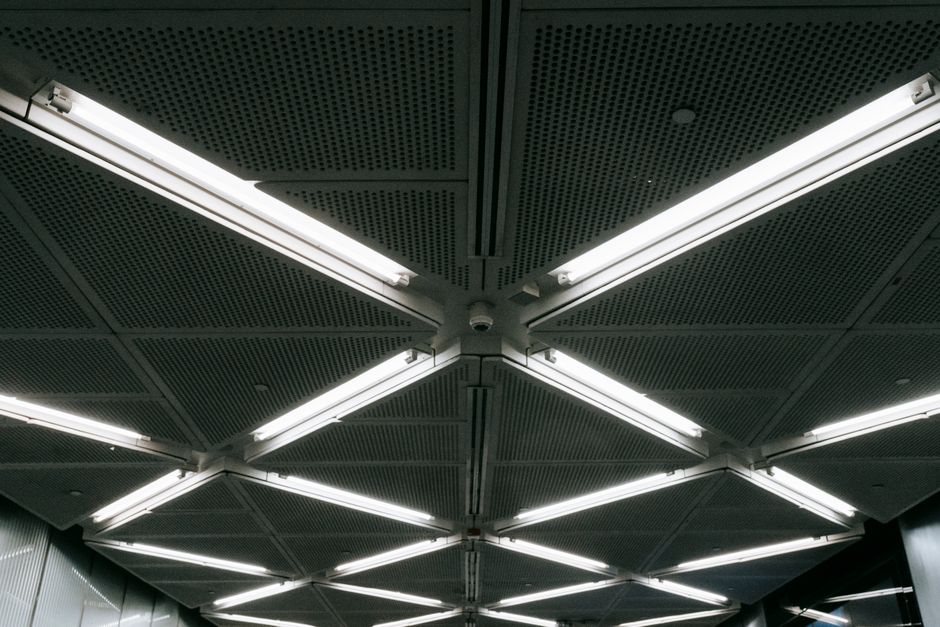
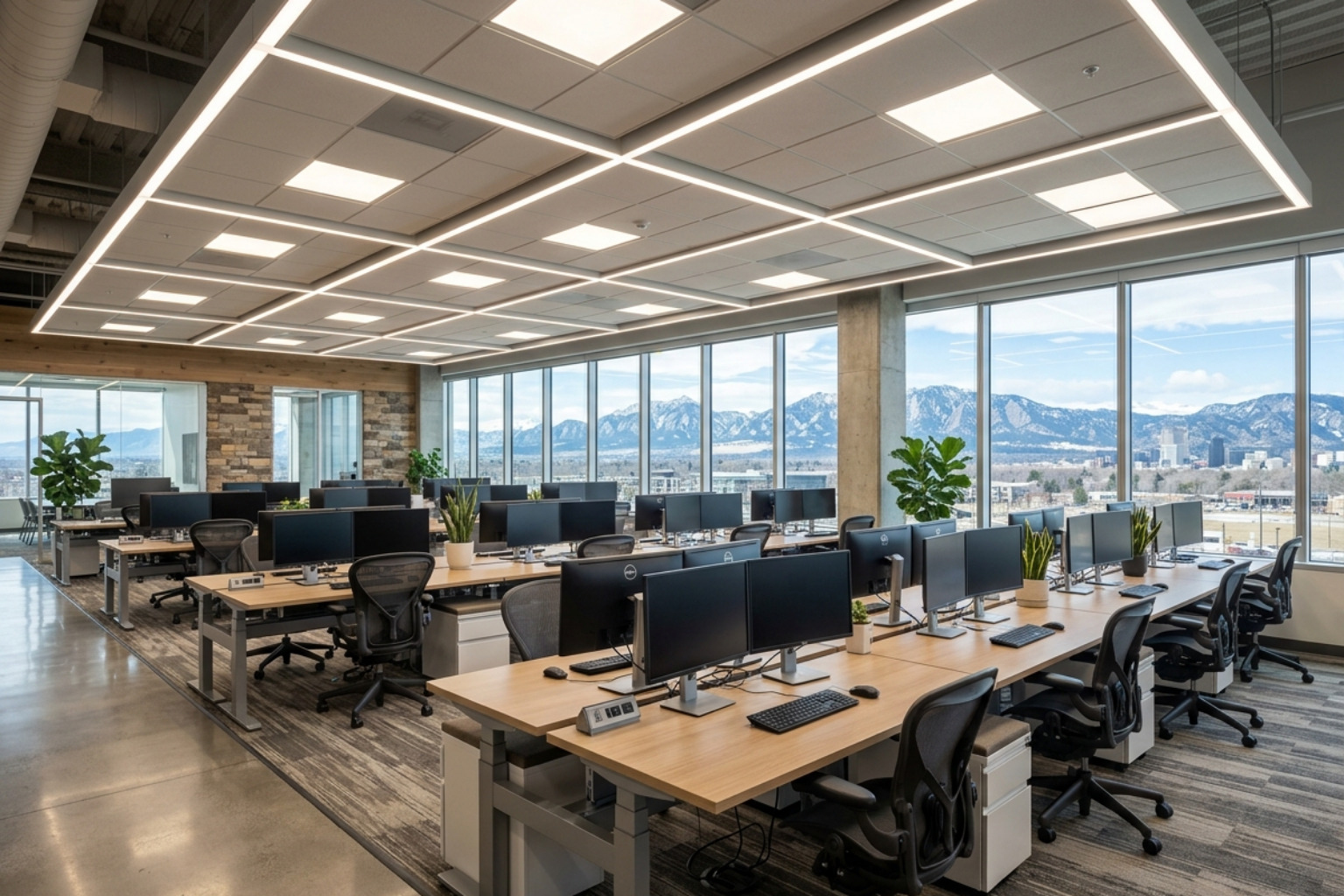
- LED Troffers & Panels: These are the flat, rectangular lights you see in most Denver offices. Modern 2×4 LED panels are incredibly slim and often come with “selectable” settings, meaning we can adjust the brightness and color tone right on the fixture before we pop it into the ceiling grid.
- Wall Packs: These are mounted on the outside of buildings for security and parking lot visibility. They’re built to be tough and weather-resistant.
One thing I always tell my customers is to stop looking at wattage and start looking at lumens. In the old days, wattage told you how bright a bulb was. With LEDs, wattage only tells you how much power it uses. Lumens tell you the actual light output. We aim for high “efficacy”—basically getting the most light for the least amount of power. For more technical details on industrial efficiency and standards, the U.S. Department of Energy provides comprehensive resources on LED technology.
We also consider the Color Rendering Index (CRI). A higher CRI (80 or 90+) means colors look more natural and vibrant. This is huge for retail stores where you want your products to pop, or for workspaces where visual accuracy prevents mistakes.
The Professional Installation Process
A successful commercial led installation starts long before we pull a single wire. It starts with an audit. We walk your space to see what you have, how high the ceilings are, and where the “dark spots” are currently located.
For larger projects, we use something called photometric design. Using specialized software like AGi32, we create a digital “heat map” of your building. This shows us exactly where the light will land on the floor before we even order the fixtures. It ensures you don’t end up with “hot spots” (areas that are too bright) or “cave effects” (dark corners). This is a standard part of a professional office electrical setup in Denver.
The physical install usually follows these steps:
- Safety First: We lock out the power and set up safe access, whether that’s ladders or lifts.
- Removal: We carefully take down the old, heavy fixtures. If they contain mercury (like old fluorescents), they have to be recycled properly.
- Wiring & Mounting: We install the new LED drivers and fixtures. We ensure everything is grounded and secured to the building’s structure—not just the ceiling grid.
- Testing: We don’t just flip the switch and leave. We check for flicker, verify the dimming controls, and ensure the emergency backup batteries are charging.
Planning Your Commercial LED Installation for Maximum Impact
Good lighting isn’t just about brightness; it’s about uniformity. You want the light level to be consistent across the whole room so your eyes don’t have to constantly adjust as you walk around. We measure this in “foot candles”—a fancy term for how much light is hitting a square foot of surface.
In a retail store wiring project in Denver, we might use narrow beam angles to highlight specific displays and wider angles for general walkways. We also watch out for glare. There’s nothing worse than a bright LED reflecting off a computer screen or a shiny floor, so we choose diffusers and lens types that keep the light comfortable for your team.
Financial Incentives and Smart Systems
One of the best parts of my job is helping Denver business owners find money to pay for their upgrades. Most local utility companies offer massive rebates for switching to energy-efficient lighting. These rebates often cover 30% to 60% of the total project cost.
To qualify for these, the fixtures usually need to be DLC Qualified (DesignLights Consortium). This is a third-party certification that proves the light is high-quality and efficient. We handle the paperwork and ensure the products we select meet these standards so you get your money back faster.
There are also federal tax benefits. The 179D tax deduction can provide significant write-offs for energy-efficient building improvements.
To squeeze even more savings out of your commercial led installation, we often integrate smart controls:
- Occupancy Sensors: Lights turn off automatically when a room is empty.
- Daylight Harvesting: Sensors detect how much natural sun is coming through the windows and dim the LEDs accordingly.
- Scheduling: We can program the system to dim down after business hours.
These controls can add another 20-40% in energy savings on top of the LED upgrade itself. You can find more details on these integrated commercial services on our main service page.
Choosing the Right Partner for Your Project
Commercial electrical work is a different beast than residential. The voltages are higher (often 277V or 480V), the systems are more complex, and the safety risks are greater. This is why you need a Master Electrician who understands National Electrical Code (NEC) compliance inside and out.
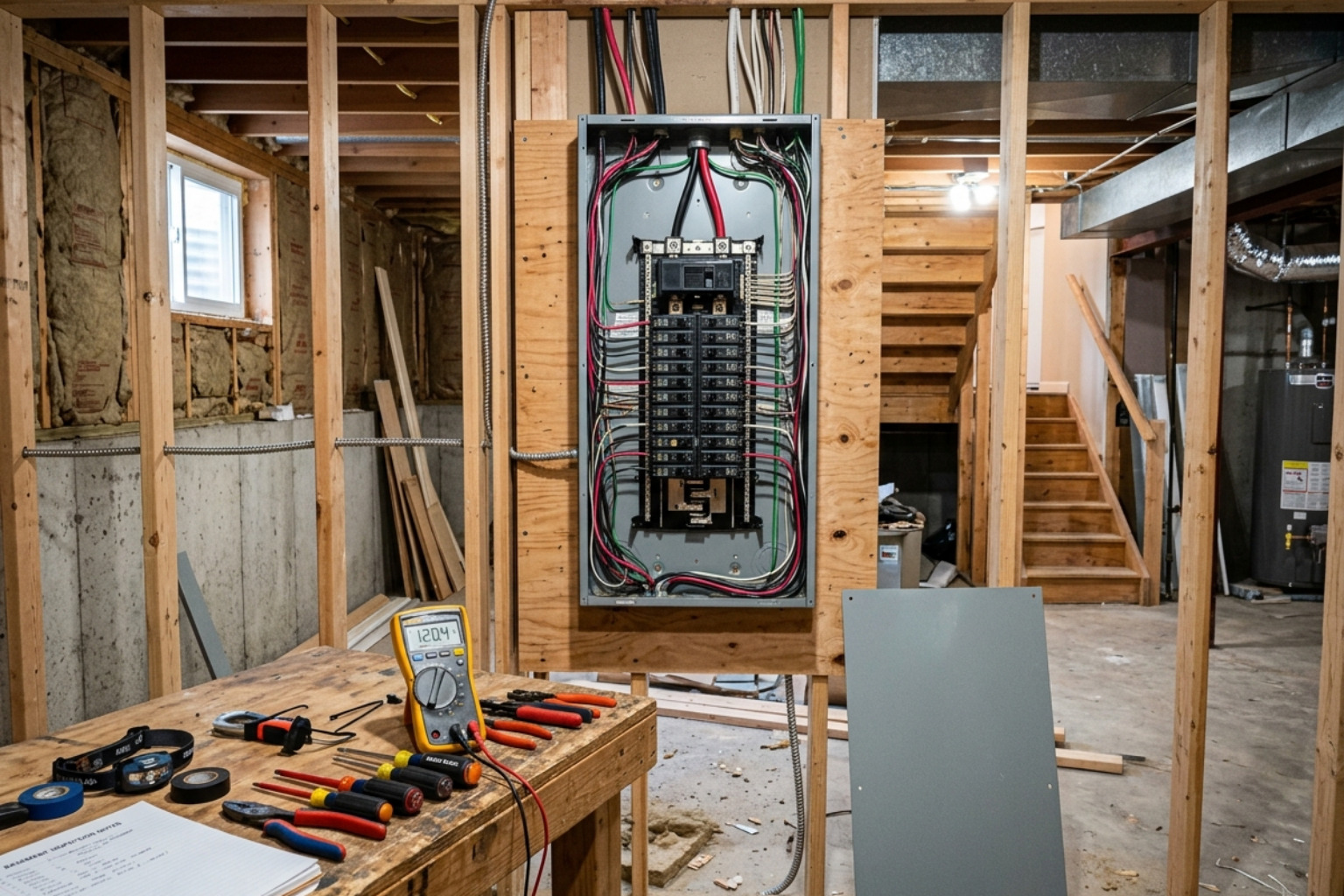
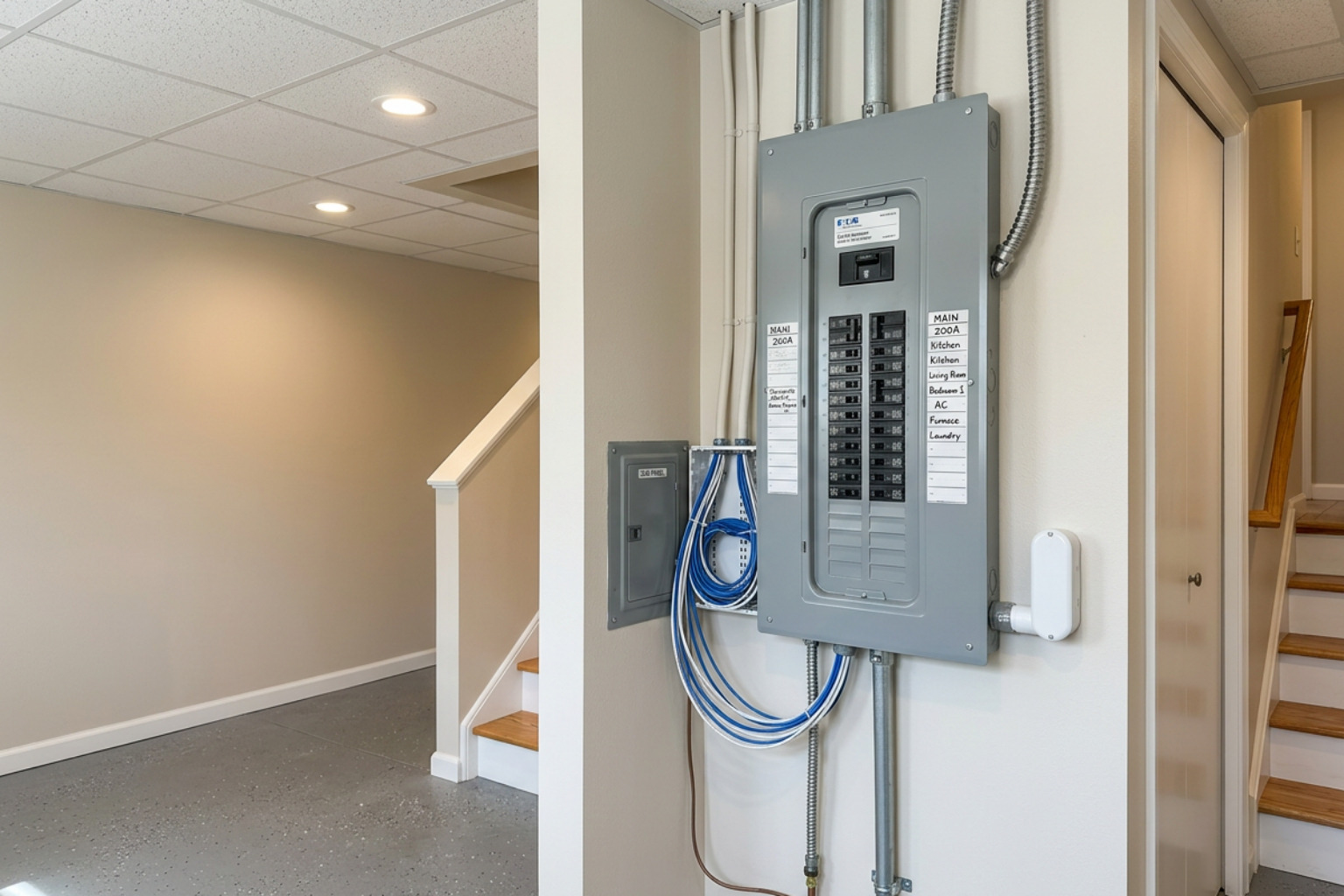
When you’re looking for a partner, don’t just look for the lowest bid. Look for someone who understands the “why” behind the design. An amateur might just swap bulbs, but a pro will look at your panel circuit upgrades in Denver to make sure your infrastructure can handle the new system and any future growth.
What to Look for in a Commercial LED Installation Partner
You want a “turnkey” solution. That means the contractor handles everything: the audit, the design, the rebate paperwork, the install, and the final walkthrough.
Here in the Denver Metro area—from Castle Pines to Lone Tree—businesses have unique needs. You need someone who knows the local building departments and utility programs. At Harmony Electric, we focus on doing the work right the first time. We don’t believe in upselling you on things you don’t need, but we do believe in quality. That’s why we offer a lifetime workmanship guarantee on select installations. If you’re doing a tenant build-out, you need a team that communicates clearly and shows up on time.
Frequently Asked Questions
Will an LED upgrade interrupt my daily business operations?
We get this question a lot. We know you can’t just shut down your business for three days. What we usually do is work in phases. We can tackle one section of a warehouse or office at a time, or we can schedule the work for off-hours or weekends. Our goal is to be “invisible” so your team can keep working while we make the magic happen.
How long do commercial LED fixtures actually last?
Most commercial-grade LEDs are rated for at least 50,000 hours. If you run your lights 10 hours a day, 5 days a week, that’s about 19 years. High-end fixtures can even go up to 100,000 hours. Compare that to an old metal halide bulb that might start dimming or flickering after just two years, and the choice becomes pretty clear.
Can I use LED fixtures for outdoor security and parking lots?
Absolutely. In fact, parking lots are one of the best places for an upgrade. LED wall packs and pole lights provide much better “color rendering,” which means your security cameras can see faces and license plates much more clearly than they can under those old, orange-tinted high-pressure sodium lights. Plus, they turn on instantly—no more waiting 15 minutes for the lights to warm up after a power flicker.
Conclusion
Upgrading your business with a commercial led installation isn’t just a maintenance task—it’s a long-term investment in your company’s profitability and safety. Between the massive energy savings, the utility rebates, and the fact that you’ll rarely have to climb a ladder again, the ROI speaks for itself.
At Harmony Electric, we take pride in helping our neighbors in Denver, Highlands Ranch, and the surrounding areas modernize their spaces. Whether you’re looking to brighten up a retail floor or need a full warehouse retrofit, we bring the expertise of a Master Electrician to every job. We keep things simple, honest, and high-quality.
Ready to see how much you could save? We’re here to help with your commercial lighting installation. Give us a call, and let’s talk about how to get your business out of the dark ages and into the light.