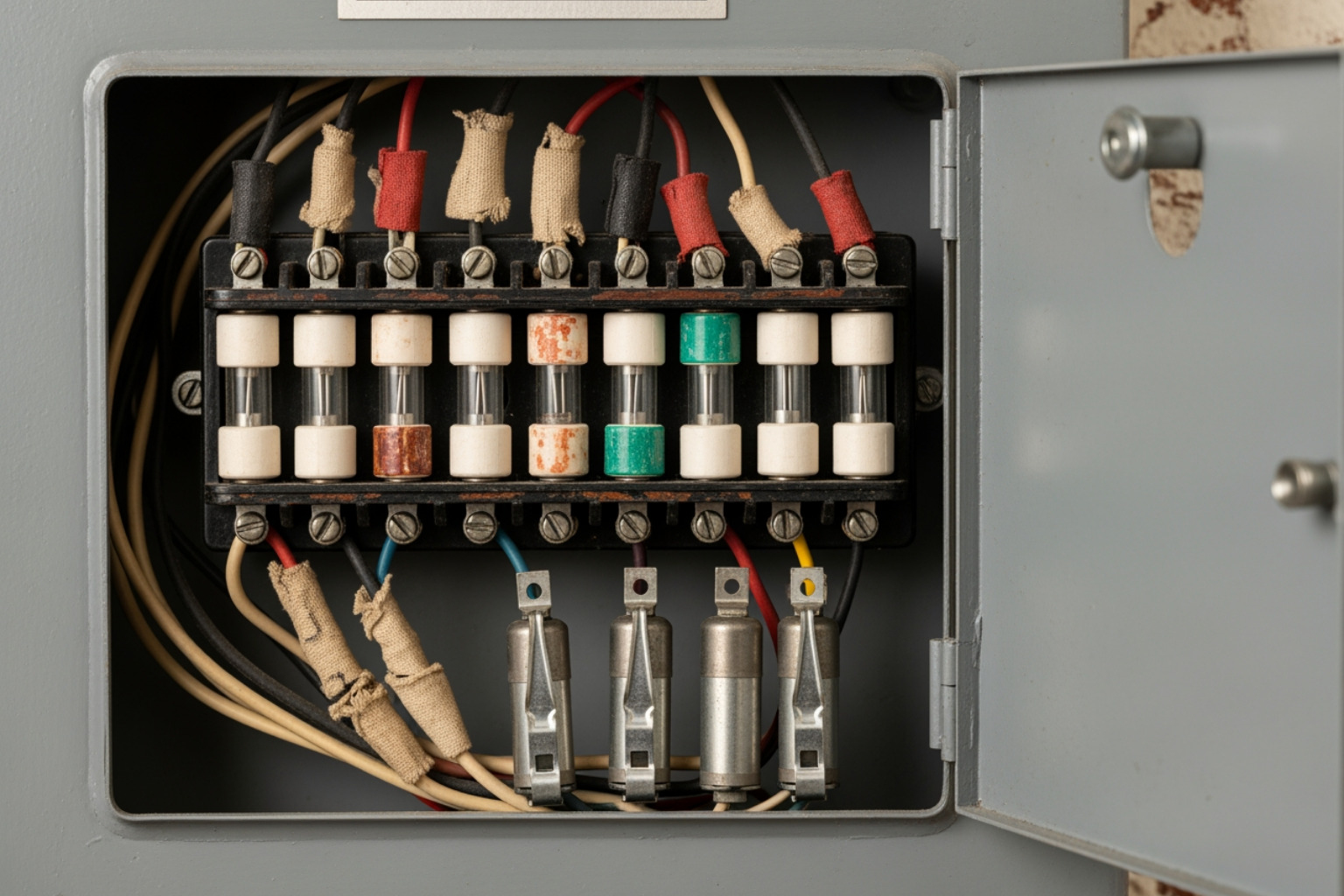
What an Electric Panel Fuse Actually Does (And Why You Might Have One)
If you’re dealing with an electric panel fuse in your home, you’re probably wondering what it is, how it works, and whether you should still have one. Here’s the quick answer:
What is an electric panel fuse?
- A safety device that melts and breaks the electrical circuit when there’s an overload
- Found in older homes, typically built before the 1960s
- Must be replaced after it “blows” (unlike circuit breakers, which can be reset)
- Protects your home’s wiring from overheating and fire
Key differences from circuit breakers:
- Fuses melt and must be replaced
- Circuit breakers trip and can be flipped back on
- Fuses are one-time use, breakers are reusable
- Most modern homes use breakers, not fuses
Many people call that metal box on the wall a “fuse box” even when it contains circuit breakers. I see this all the time in Denver homes. If your house was built after the 1970s, you probably have breakers. But many older homes still have actual fuse boxes, and they work just fine—as long as you use them correctly.
What I usually see in older Denver homes is one of two things: either someone is nervous about their old fuse box and wants to know if it’s safe, or they’re trying to figure out why a fuse keeps blowing. Both are good reasons to learn more about how these systems work.
What’s Their Main Job?
The main job of a fuse or circuit breaker is to protect your home’s wiring and prevent electrical fires. They do this by stopping the flow of electricity when a circuit is compromised by one of two common issues:
- Overloads: This happens when you try to draw too much electricity through a circuit. Imagine plugging in a toaster, a microwave, and a coffee maker all on the same kitchen outlet. If the circuit isn’t designed for that much power, it gets “overloaded.” Without protection, the wires would heat up, melt their insulation, and potentially start a fire.
- Short Circuits: This is a more sudden and dangerous surge of electricity. It occurs when a “hot” wire accidentally touches a “neutral” or “ground” wire, creating an unintended path for electricity. This causes a massive, instantaneous rush of current that can be thousands of times greater than normal.
When an overload or short circuit happens, the fuse or breaker immediately interrupts the flow of electricity, preventing damage to your wiring and keeping your home safe from fire.
It’s important to know that while they protect your wiring, standard fuses and breakers are not designed to protect you from electrical shock. That’s a different job for special types of breakers we’ll cover later. Their purpose is to safeguard the electrical infrastructure of your home.
How They Work Differently
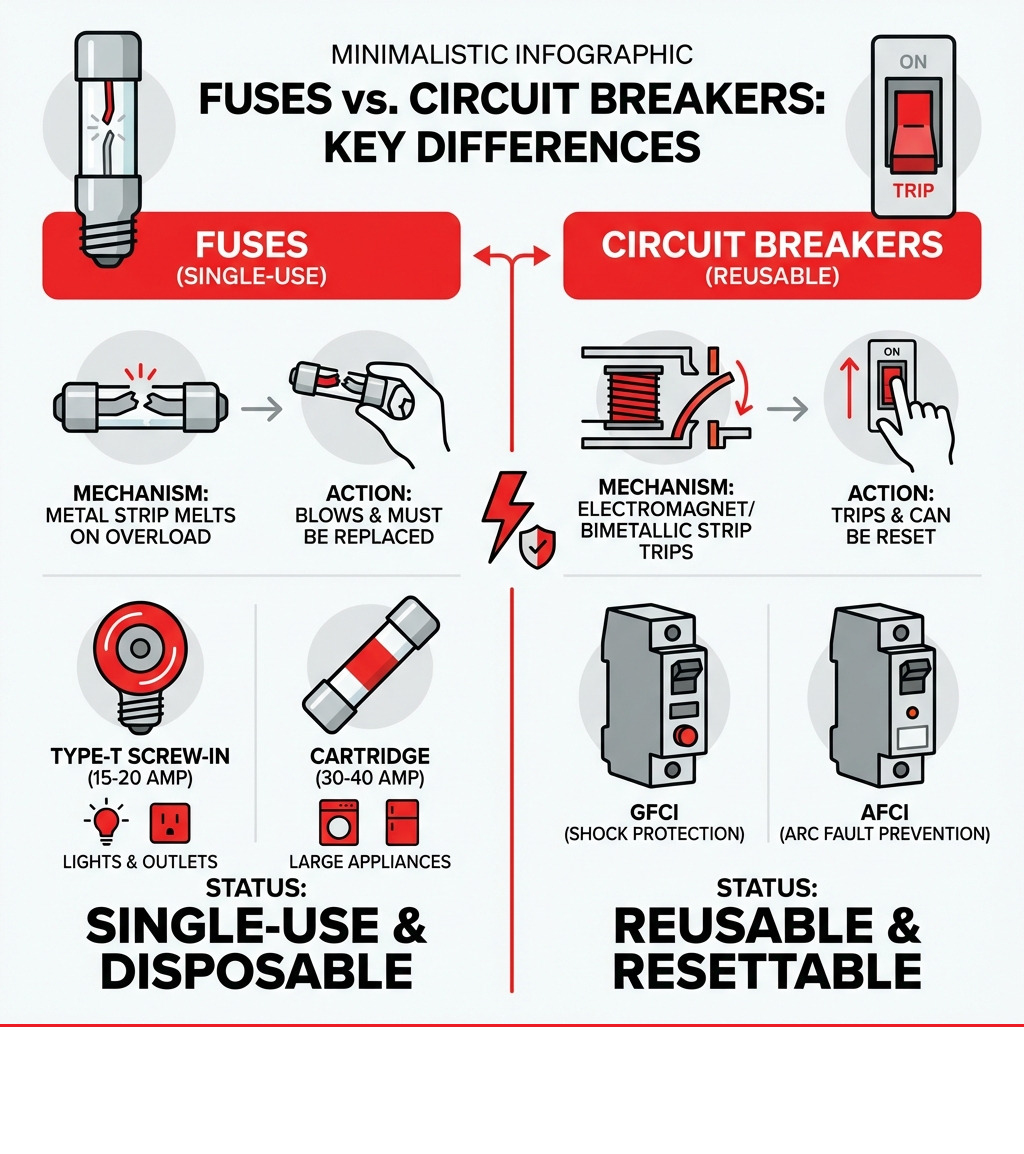
While their purpose is the same, the way fuses and circuit breakers achieve their goal is quite different. Understanding these differences can help you manage your home’s electricity more effectively, especially if you live in an older home with a fuse box.
Let’s break down the key operational differences:
| Feature | Fuse | Circuit Breaker |
|---|---|---|
| Operation | Contains a thin metal strip that melts (or “blows”) when overheated by excessive current. | Uses an electromagnet or a bimetallic strip to detect overcurrent, which then trips a mechanical switch. |
| Reusability | Single-use. Once it blows, the metal strip is broken, and the fuse must be replaced. | Reusable. When it trips, a switch flips to the “off” position. It can be manually reset by flipping it back “on.” |
| Reset/Replace | Requires physically removing the blown fuse and installing a new one of the correct amperage. | Requires flipping a switch. |
| Cost | Lower initial cost per unit, but ongoing replacement costs can add up. | Higher initial cost per unit, but no replacement cost after a trip. |
| Convenience | Less convenient, as you need to have spare fuses on hand and know how to replace them safely. | More convenient, as you simply reset the switch. |
| Safety | Effective, but carries a risk of user error (e.g., installing the wrong size fuse). | Generally considered safer due to ease of reset and reduced chance of improper sizing by the homeowner. |
| Mechanism | Relies on the “Joule effect” – heat generated by resistance melts the conductor. | Relies on thermal (bimetallic strip) and/or magnetic (electromagnet) principles to trigger the trip mechanism. |
As you can see, the main distinction is that fuses are a one-and-done solution, while circuit breakers are resettable. In many older houses around here, homeowners are still replacing fuses. While it’s a valid way to protect your circuits, the inconvenience is often why people consider upgrading.
Living with an Electric Panel Fuse Box: What You Need to Know
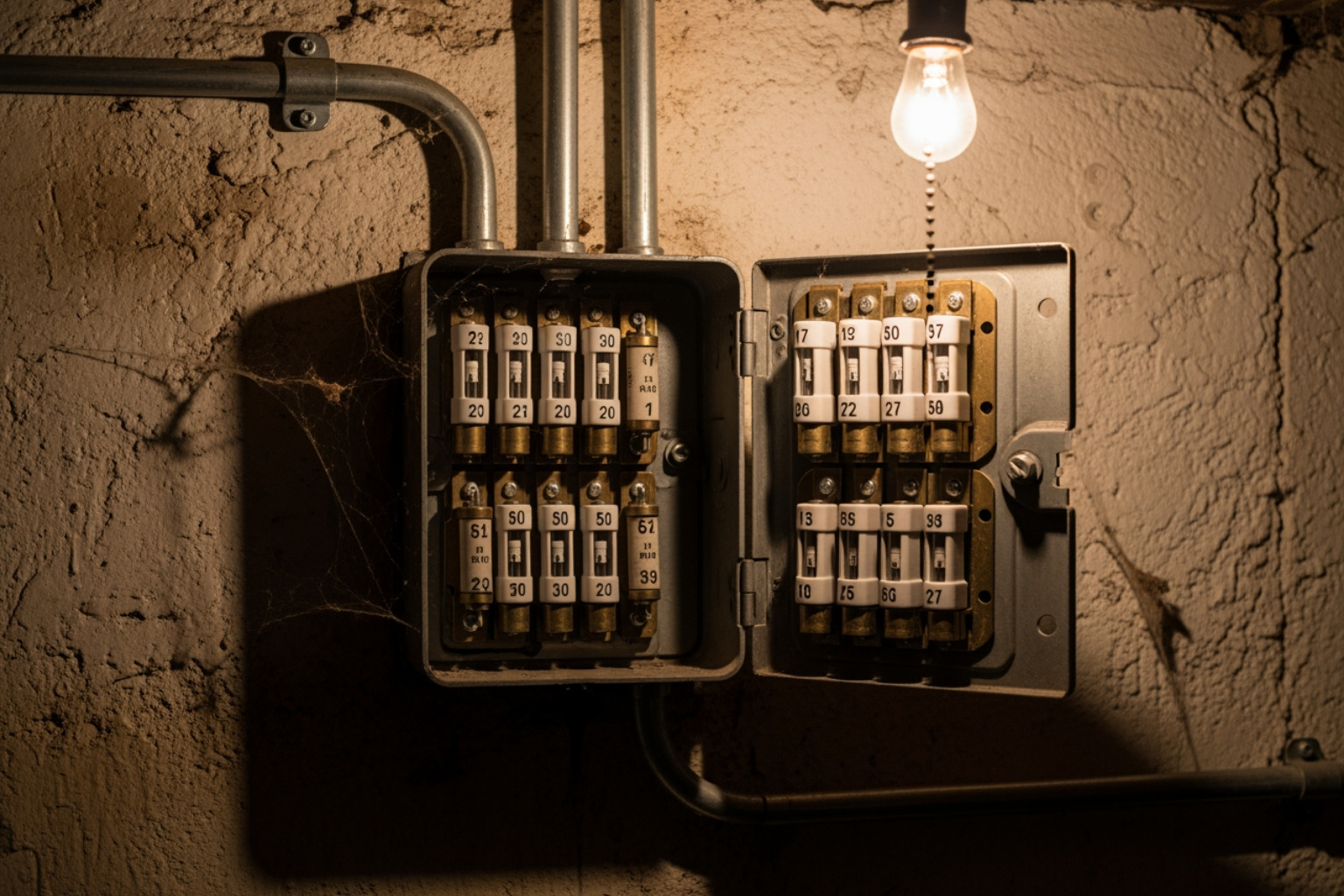
If your home in Denver, Castle Rock, or Highlands Ranch was built before the 1960s, there’s a good chance you have an electric panel fuse box. These were the standard for decades, and while they did their job, they come with their own set of considerations compared to modern circuit breaker panels.
Common Types of Fuses in Older Denver Homes
When you open an old fuse box, you’ll typically find a few different types of fuses. Knowing what’s what can help you identify what you’re dealing with:
- Plug Fuses (Screw-in Fuses): These are the most common type, looking a bit like light bulbs with a metal base that screws into a socket.
- Type-T (Edison-base): These are the original screw-in fuses. Their main problem is that you could screw in a fuse of the wrong amperage (e.g., a 30-amp fuse in a 15-amp circuit), creating a serious fire hazard.
- Type-S (Tamper-resistant or Fustat): These were an improvement. They use an adapter that screws into the socket first, and then only a Type-S fuse of the correct amperage can be screwed in. This prevents over-fusing.
- Amperage Ratings: You’ll usually see clear numbers on the fuse itself:
- 15-amp fuses: Used for general lighting and standard outlet circuits. A circuit for lights and plugs should never have a fuse larger than 15 amps.
- 20-amp fuses: Often used for baseboard heaters and hot water tanks.
- 30-amp fuses: Typically for electric dryers and some air conditioning units.
- Cartridge Fuses: These are cylindrical fuses found protecting higher-amperage circuits, like the main power. They fit into metal clips instead of a screw-in base. Electric stoves, for example, typically use 40-amp cartridge fuses.
How to Tell if an Electric Panel Fuse is Blown
It’s a common scenario: the lights go out in one part of your house, and you suspect a blown electric panel fuse. Here’s how you can usually tell and what to do:
- Visual Inspection (for screw-in fuses):
- Carefully unscrew the suspected fuse.
- Look through the small glass window on top. If the metal filament inside is broken, melted, or the glass is scorched, the fuse is blown.
- Power Outage in One Area: If only a specific room or set of outlets has lost power, that’s a strong indicator the fuse for that circuit has blown.
- Using a Multimeter (for cartridge fuses or less obvious plug fuses):
- This requires caution and basic electrical knowledge. If you’re not comfortable, please call us.
- With the main power to the fuse box off, use a multimeter set to continuity or ohms.
- Touch the probes to each end of the fuse. A reading (or beep) means the fuse is good. No reading means it’s blown.
Safety Precautions for Checking a Fuse:
- Turn off appliances: Unplug or turn off all appliances and lights on the affected circuit before you touch the fuse box.
- Stand on a dry surface: Ensure your hands and feet are dry, and ideally, stand on a rubber mat or wear rubber-soled shoes.
- Use a flashlight: If it’s dark, use a flashlight, not a candle.
- Turn off the main switch: For absolute safety, turn off the main switch on the fuse box before checking or replacing any fuses.
- Never substitute: Never use anything other than the correct fuse (like a coin or foil) to replace a blown fuse. This bypasses the safety mechanism and is extremely dangerous.
The Dangers of an Old Electric Panel Fuse System
While fuse boxes are designed for safety, many older systems in places like Lone Tree and Parker come with inherent risks, especially if they haven’t been properly maintained.
- Fire Hazards from Over-Fusing: This is the biggest problem we see. A fuse that keeps blowing is a warning sign of an overloaded circuit or a wiring issue. The real danger occurs when someone replaces a 15-amp fuse with a 20-amp or 30-amp version (or even a penny) out of frustration. The wiring, which is only rated for 15 amps, can then overheat, melt its insulation, and start a fire. The Healthy Housing Reference Manual Chapter 11: Electricity underscores the importance of preventing such electrical hazards.
- Outdated Panels and Deterioration: Some older fuse panel brands, like Commander and CEB, have known issues. Commander fuse panels, manufactured from the mid-60s to early 80s, are no longer CSA certified. These panels can deteriorate over time. CEB brand electrical fuse panels have even been identified as fire hazards.
- Insurance Concerns: We’ve heard from homeowners in the Denver Metro Area that certain insurance companies may refuse coverage or charge higher premiums for homes with specific outdated fuse panels due to the increased risk of electrical fires.
- Lack of Modern Safety Features: Fuse boxes simply don’t offer the advanced protection that modern circuit breakers do, such as Ground Fault Circuit Interrupters (GFCIs) for shock protection or Arc Fault Circuit Interrupters (AFCIs) for preventing arc fires.
If you’re noticing any of these concerns, or if you simply have an older fuse box, it’s a good idea to consider an upgrade. We often help homeowners in Castle Pines and Centennial assess their current systems.
Signs It’s Time for an Upgrade
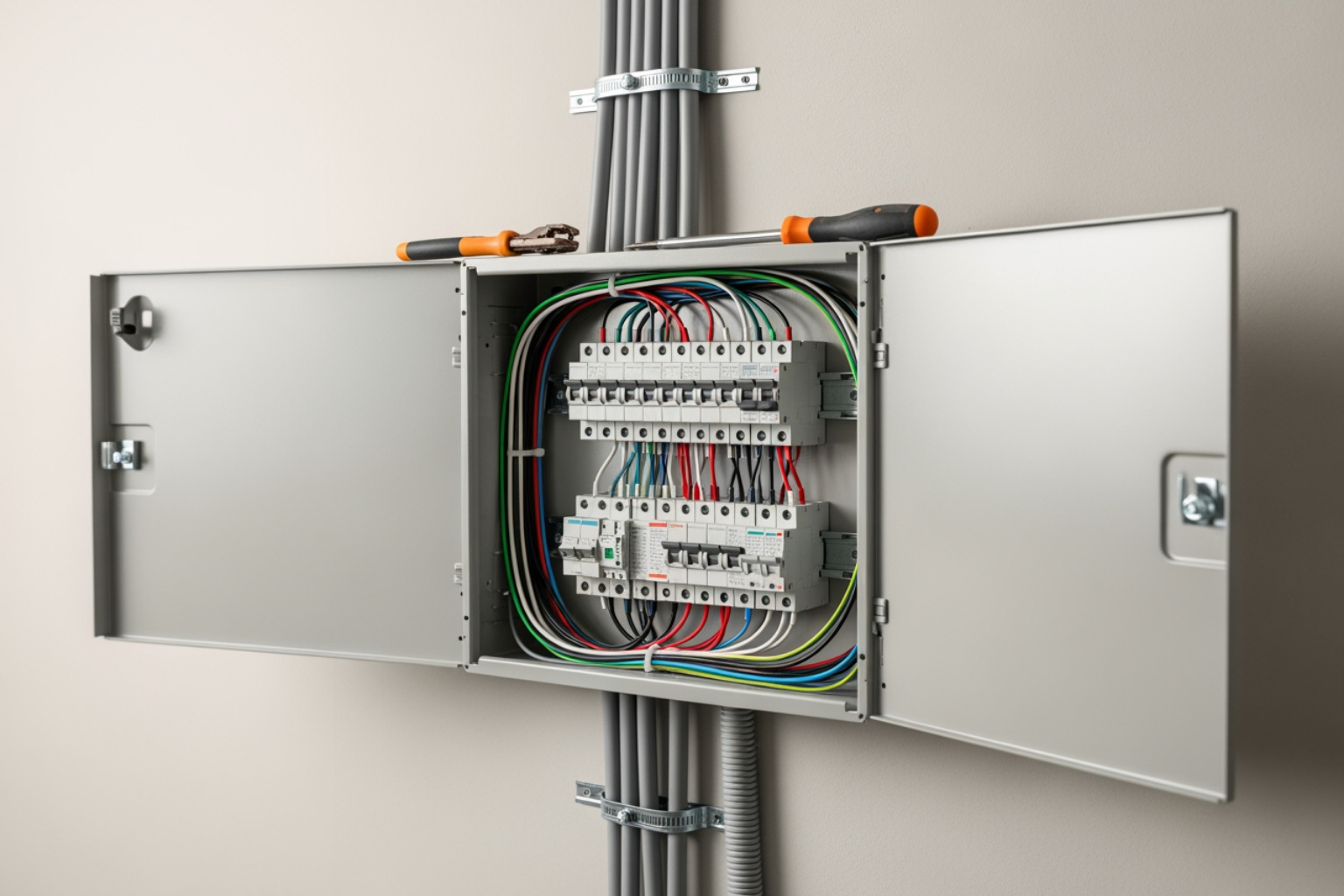
Even if you don’t have an old fuse box, your current electrical panel might be showing signs that it’s struggling to keep up with modern demands. Recognizing these signals is crucial for safety and convenience.
Here are some common indicators that it might be time to consider an electrical panel upgrade:
- Flickering or Dimming Lights: If your lights flicker when major appliances (like your refrigerator or AC) turn on, it often means your system is struggling to deliver enough power.
- Breakers Trip Frequently: Constantly resetting a circuit breaker is a clear sign of an overloaded circuit or an undersized panel. A fuse that keeps blowing is an even stronger indicator.
- Panel Corrosion or Damage: Rust, water stains, or visible damage on or around your electrical panel are red flags that can compromise its integrity.
- Burning Smell or Scorching: Any unusual smells (like burning plastic) or scorch marks on the breakers or panel door require immediate attention from a professional. This is a serious fire hazard.
- Insufficient Power for Modern Needs: Homes built decades ago weren’t designed for the number of electronics we use today. If you’re adding new tech, your old panel might not handle it.
- Home Renovations or Additions: If you’re planning a major remodel, adding new rooms, or a finished basement, your electrical needs will increase, likely requiring an upgrade.
- Adding Major Appliances: Installing an EV charger, hot tub, large AC unit, or a tankless water heater often requires dedicated, higher-amperage circuits that older panels can’t provide. We handle EV charger installations and hot tub wiring for many homes in the Denver area, and panel upgrades are frequently part of the project.
How Much Does a Panel Upgrade Cost?
When considering an upgrade, the cost is one of the first questions homeowners ask. Prices vary based on your home and the scope of work, but we can provide a general idea based on projects in the Denver area.
- Standard Panel Upgrade: A typical panel upgrade, replacing your existing panel with a new, higher-capacity circuit breaker panel, usually costs between $1200-$1700. This often includes replacing the main breaker and ensuring all circuits are properly connected.
- Panel Retrofit: For apartments, condos, or situations where minimizing wall disruption is critical, a panel retrofit can be an option. This involves replacing the internal components of a fuse box with breaker hardware and typically costs about $900.
Factors that can influence the final cost include:
- Amperage Increase: Upgrading from a 60-amp or 100-amp service to a 200-amp or 400-amp service.
- Additional Wiring: If new circuits need to be run for modern appliances or additions.
- Permits and Inspections: These are always necessary for panel work in our service areas to ensure the work meets local codes.
- Accessibility: How easy or difficult it is for our electricians to access your current panel and service lines.
We believe in clear communication and will always provide a detailed, honest estimate explaining the work involved.
Is Your Panel Big Enough for Modern Life?
The electrical demands of our homes have skyrocketed. What was once sufficient amperage is often inadequate today. This is a common challenge for homeowners in older neighborhoods across Denver, Castle Rock, and Highlands Ranch.
Let’s look at typical amperage needs:
- 100-amp service: Once the standard, 100 amps may be too little for most households today, especially if you’re running multiple appliances, computers, and charging devices.
- 150-amp service: A home that runs multiple appliances at the same time will often need 150 amps of electricity to avoid strain on the system.
- 200-amp standard: A home with heavier energy demands or a house that is nearly 2,000 square feet may need 200 amps. This is the minimum standard for most modern homes.
- 400-amp for large homes: Large homes with high-energy needs, workshops, or outbuildings will typically require 400 amps to run smoothly.
If you’re unsure about your panel’s capacity, the amperage is often listed on the main breaker or a label inside the panel door. For older panels, it’s always best to have a qualified electrician confirm the capacity. We often help homeowners in Centennial and Parker assess if their current electrical panel can meet their growing needs.
A Quick Guide to Modern Breaker Panels
Stepping into a home with a modern circuit breaker panel is a different experience than dealing with an old fuse box. These panels are designed for increased safety, convenience, and the ability to handle the robust electrical demands of today’s homes.
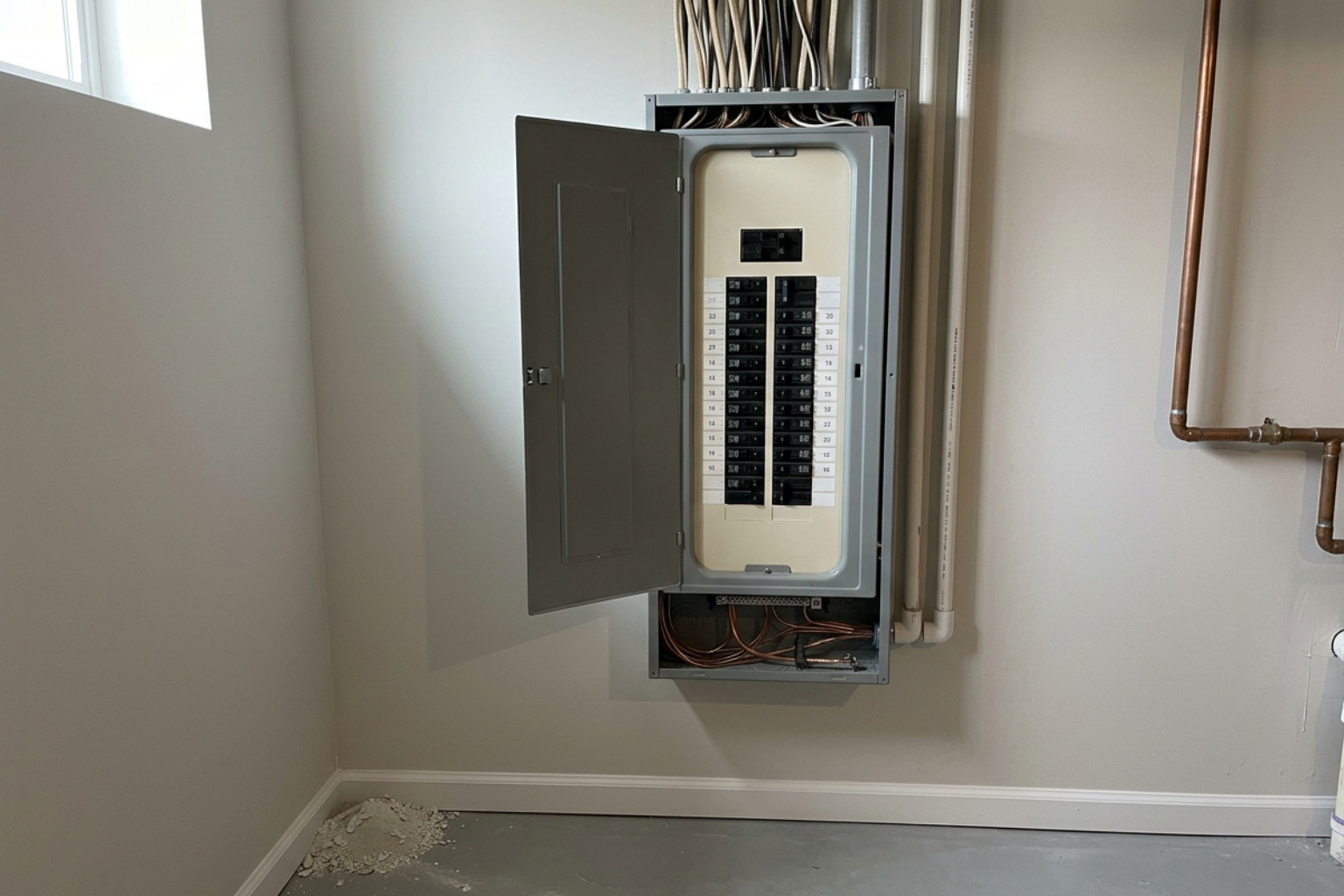
A circuit breaker panel is the central hub where electricity from the utility company enters your home and is then distributed to various circuits. Instead of fuses, it uses individual circuit breakers—switches that trip when an overload or short circuit occurs, and can simply be reset.
Here’s a quick look at some common terms you might encounter:
- Main Breaker: This is usually a large switch at the top of the panel that controls all electricity to your home.
- Circuit Breakers: These are the individual switches that protect specific circuits (e.g., your kitchen outlets, bedroom lights, or washing machine).
- Sub-panel: Sometimes, a home’s main panel might be full, or you might need a dedicated panel for a specific area like a garage, workshop, or a new addition. A sub-panel draws power from the main panel but has its own set of breakers to distribute power locally. We often install these for hot tubs or separate workshops in the Lone Tree and Castle Pines areas.
- Main Lug Panel: This type of panel doesn’t have a main breaker of its own. Instead, the main disconnect is typically located elsewhere, often at the meter outside your home. These are less common for primary residential service panels but are sometimes used for sub-panels.
- Transfer Switch: If you have a backup generator, a transfer switch is a critical component. It allows you to safely switch your home’s electrical load from the utility grid to your generator during a power outage, and back again.
The beauty of a modern circuit breaker panel is its ease of use. When a circuit overloads, the breaker trips, and you can usually identify it by a switch that’s halfway between “on” and “off.” A simple flip to “off” and then back to “on” usually restores power, provided the underlying issue (like too many appliances) has been addressed.
Different Breakers for Different Jobs
Not all circuit breakers are created equal. Different types are designed to protect against specific electrical hazards, making your home even safer.
- Single-pole breakers: These are the most common type, typically rated for 15 or 20 amps. They control 120-volt circuits, which power your standard wall outlets, lights, and small appliances. They protect one “hot” wire.
- Double-pole breakers: These are wider, taking up two slots in the panel, and are typically rated for 30, 40, or 50 amps. They control 240-volt circuits, which are needed for larger appliances like electric clothes dryers, ovens, central air conditioning units, and hot tubs. They protect two “hot” wires simultaneously.
- GFCI breakers (Ground Fault Circuit Interrupter): These are special breakers that offer protection against ground faults, which can lead to severe electric shock. We’ll dive into these more in the next section.
- AFCI breakers (Arc Fault Circuit Interrupter): These are another type of specialized breaker designed to prevent electrical fires caused by dangerous arcing. We’ll also cover these in more detail shortly.
- Dual-function breakers: These combine both GFCI and AFCI protection in a single unit, offering comprehensive safety for a circuit.
When we’re changing a breaker in an electrical panel, use the correct type and amperage for the circuit it’s protecting.
What are GFCI and AFCI Breakers?
These two breakers are crucial for modern electrical safety, offering protection that a standard breaker or electric panel fuse can’t. They are often required by code for new construction and renovations in the Denver area.
- Ground Fault Circuit Interrupter (GFCI):
- Function: GFCIs protect people from severe electric shocks. They detect tiny “leaks” in the current—for example, if electricity is passing through a person to the ground—and trip almost instantaneously.
- Where you’ll find them: GFCIs are required in areas where water is present, like kitchens, bathrooms, laundry rooms, garages, and outdoor outlets. When we install hot tubs in areas like Castle Rock or Lone Tree, GFCI protection is a non-negotiable safety feature.
- Arc Fault Circuit Interrupter (AFCI):
- Function: AFCIs prevent electrical fires. They detect dangerous electrical arcs (sparks) in damaged wiring that can ignite insulation. They can distinguish between harmless arcs (from a light switch) and dangerous ones, tripping the circuit before a fire starts.
- Where you’ll find them: AFCIs are typically required in living areas like bedrooms, living rooms, and dens, providing an extra layer of fire protection.
Many newer homes and renovated properties in the Denver area feature these advanced breakers, providing peace of mind knowing that your electrical system is equipped with the latest safety technology.
Taking the Next Step for a Safer Home
Whether you have an old fuse box or a breaker panel that’s seen better days, the most important thing is that your electrical system is safe and reliable. Understanding what you have is the first step. If you’re seeing any of the warning signs we talked about, or you’re just not sure about the state of your panel, it’s always best to have a professional take a look. At Harmony Electric, we can help you figure out the safest and most practical solution for your home.