Why Understanding Electrical Symbols Matters for Every Property Owner
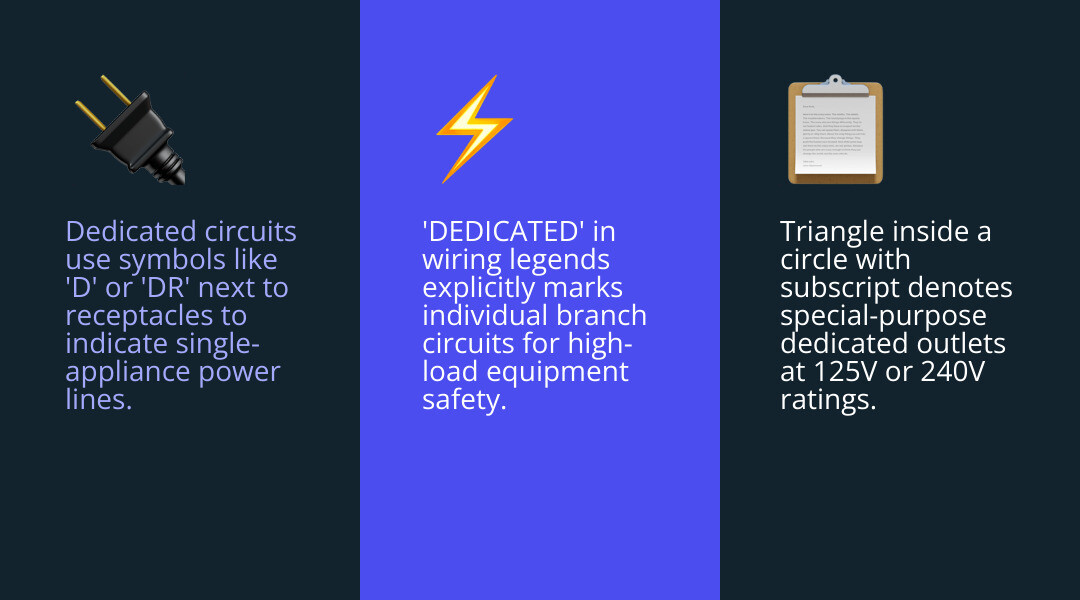
A dedicated circuit symbol appears on electrical blueprints as a shorthand notation—typically a “D” or “DR” next to a receptacle, or a triangle inside a circle with specific subscript letters—to indicate that outlet serves just one appliance or piece of equipment on its own individual branch circuit.
Quick Reference: Common Dedicated Circuit Symbol Notations
- D = Dedicated device on individual branch circuit
- DR = Dedicated Circuit Receptacle
- Triangle inside circle with subscript = Special-purpose outlet (includes dedicated receptacles)
- “DEDICATED” in wiring legend = Explicitly marked as single-purpose circuit (often at 125V or 240V)
I’m Randy Harmuth, and I’ve been doing electrical work in Denver homes and businesses for years. One thing I see all the time is confusion when property owners look at electrical plans—whether it’s for a remodel, an EV charger installation, or troubleshooting why a breaker keeps tripping.
Those little symbols and abbreviations aren’t just electrician code. They tell you exactly how your building’s power is organized, which circuits can handle what loads, and where you might run into trouble if you plug in one too many devices.
When you understand what a dedicated circuit symbol means, you can spot whether your refrigerator, HVAC system, or hot tub has the safe, individual power line it needs. You’ll also know when it’s time to call a professional instead of risking an overload or a code violation.
In older Denver homes especially, I often find shared circuits powering equipment that really should be on dedicated lines. That’s not just inconvenient when breakers trip—it’s a safety issue.
Let’s walk through what these symbols actually mean, where you’ll find them, and why they matter for keeping your property safe and up to code.
Dedicated circuit symbol glossary:
- NEC dedicated circuit requirements
- NEC 422
- 2023 NEC island outlet requirements
What Exactly is a Dedicated Circuit?
When we talk about an individual branch circuit, we’re talking about a “dedicated” line of power. Think of it like a private lane on I-25 during rush hour—it’s reserved for one specific vehicle so it can get where it’s going without getting stuck in traffic. In your home, a dedicated circuit is a wire that runs from your breaker panel directly to a single appliance or outlet, without stopping to power anything else along the way.
The main reason we use these is for safety and performance. Most outlets in your living room or bedroom are on “general purpose” circuits. This means one breaker might control five or six outlets. If you plug in a vacuum while the TV and a lamp are on, you’re fine. But if you try to run a high-draw appliance like a microwave or a space heater on that same shared line, you’ll likely trip the breaker.
By following NEC Dedicated Circuit Requirements, we ensure that heavy-duty equipment has its own “bucket” of power to draw from. This prevents overloads that can lead to electrical fires. It also helps your appliances last longer. Motors, like the ones in your refrigerator or AC unit, don’t like “dirty” power or voltage drops that happen when other devices on the same line turn on and off.
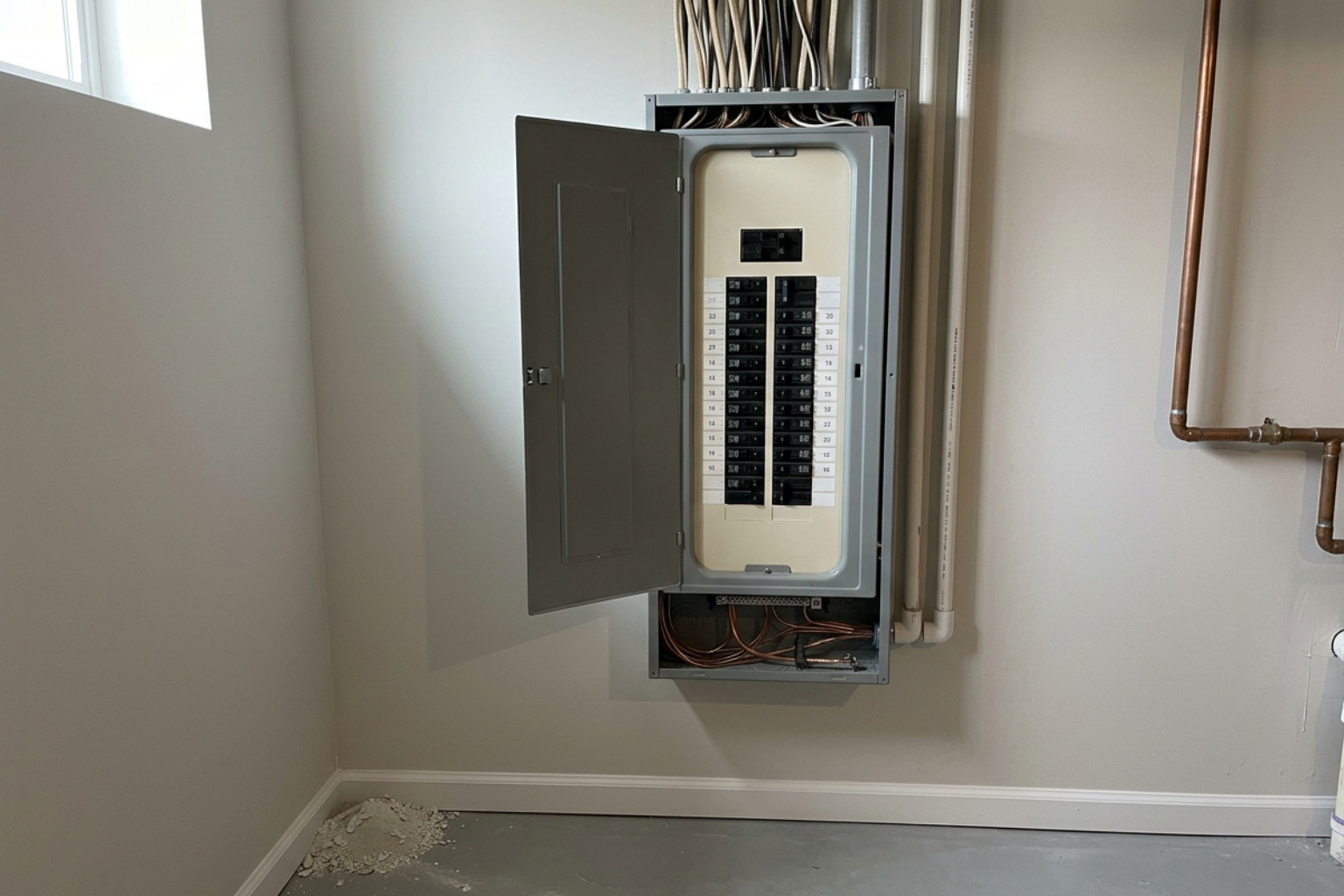
In our Denver area projects, we focus on breaker panel organization. When every heavy hitter in your house has its own labeled breaker, troubleshooting becomes much simpler. You won’t be left wondering why the kitchen lights went out just because the toaster oven was working too hard.
Decoding the dedicated circuit symbol on Your Blueprints
Looking at an electrical plan for the first time can feel like trying to read a map of a different planet. However, once you know what to look for, the dedicated circuit symbol stands out pretty clearly. In professional engineering legends, you’ll often see a standard receptacle symbol (a circle with two parallel lines) with a capital “D” or the abbreviation “DR” right next to it.
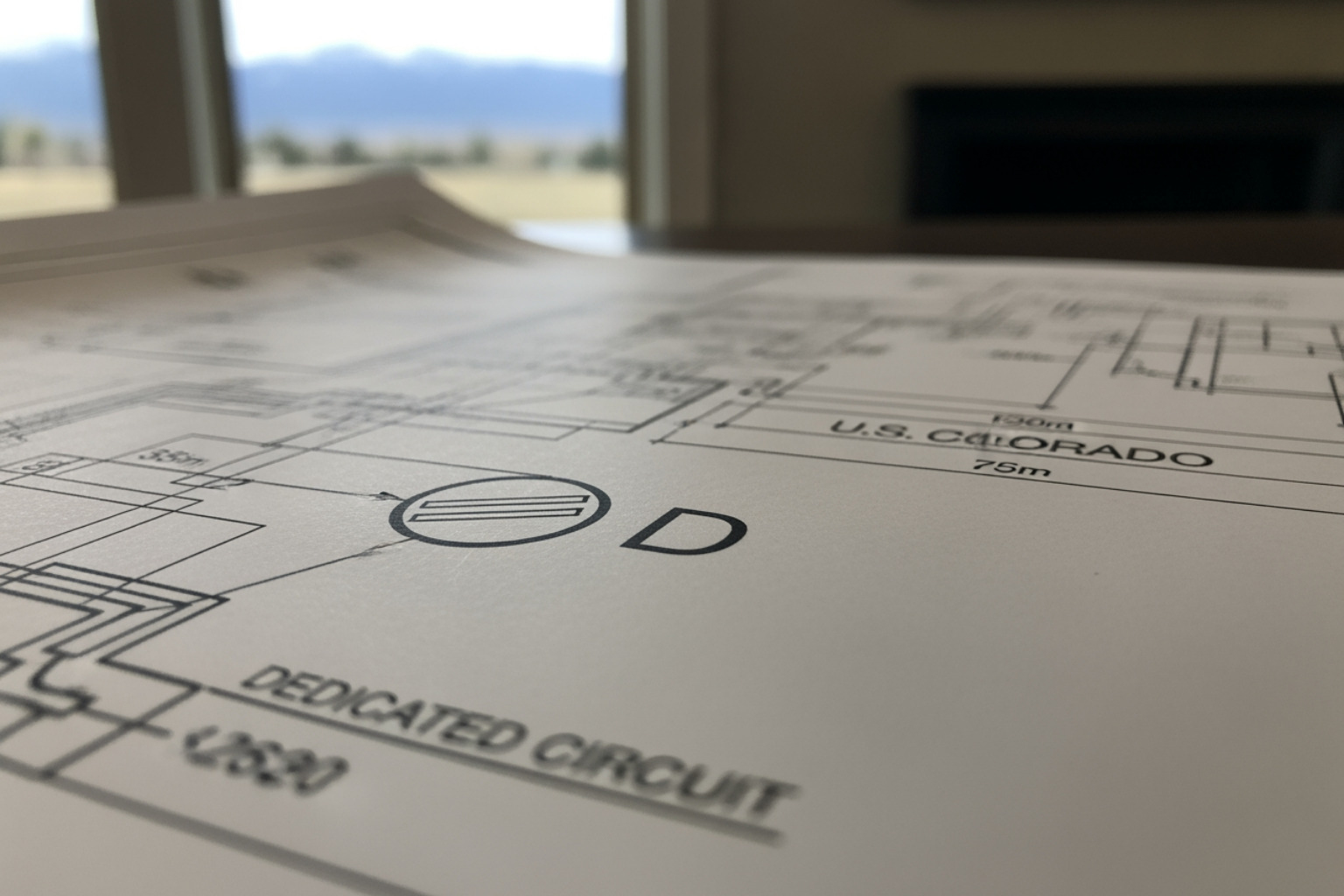
According to the Typical Electrical Drawing Symbols and Conventions, a very common way to represent a dedicated or special-purpose outlet is a triangle placed inside a circle. This tells the electrician that this isn’t just a standard wall plug. There might be a small subscript letter next to it—like “M” for microwave or “DW” for dishwasher—to tell us exactly what goes there.
Every set of plans should have a “Wiring Legend” or “Symbol List.” This is the Rosetta Stone for your project. It might specify something like “DUPLEX RECEPTACLE OUTLET: 125V, DEDICATED.” This shorthand is vital for consistency. Whether you’re in Castle Rock or Centennial, these symbols allow any qualified electrician to look at the drawing and know exactly how to pull the wire.
Identifying a dedicated circuit symbol for High-Load Appliances
Not all dedicated circuits are created equal. Some are your standard 125V outlets, but others are high-voltage 240V branch circuits. You’ll often see these for dedicated circuit commercial equipment or large home appliances like electric dryers and ranges.
On a blueprint, these are usually marked with specific amperage ratings. For example, you might see “20A” or “30A” noted near the symbol. For motor loads, like a sump pump or an HVAC compressor, the symbol might be connected to a specific equipment tag that references a “Schedule” on another page. That schedule will list the exact voltage, phase, and breaker size required. In high-rise projects like the ones we see in downtown Denver, these schedules can include dozens of dedicated lines for elevators and fire pumps, sometimes requiring massive breakers like 225A to handle the load.
How the dedicated circuit symbol Differs from Standard Outlets
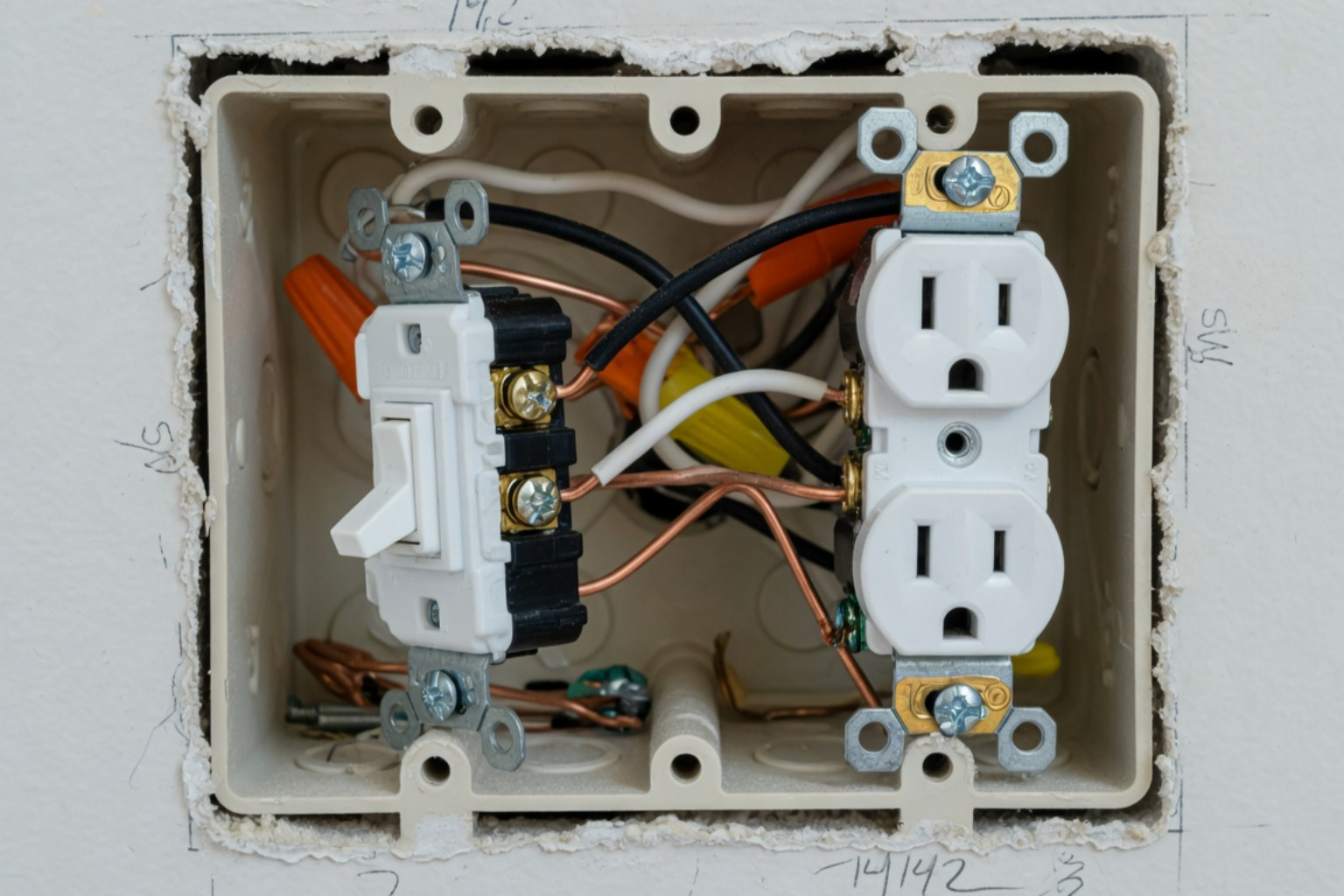
The biggest mistake I see people make is assuming every “plug” on a drawing is the same. A standard duplex receptacle is just a circle with two lines. A quad receptacle (four plugs in one box) might have two circles or a circle with a “4” next to it.
But a dedicated circuit is different because of where that wire goes. Here is a quick breakdown:
| Feature | Standard Duplex Receptacle | Dedicated Circuit Receptacle |
|---|---|---|
| Blueprint Symbol | Circle with two parallel lines | Circle with “D”, “DR”, or Triangle |
| Wiring Path | Loops through multiple outlets | Home run straight to the panel |
| Common Use | Lamps, phone chargers, laptops | Refrigerator, Microwave, EV Charger |
| Breaker Type | Usually 15A or 20A shared | Sized specifically for the appliance |
Sometimes you’ll see an “IG” notation, which stands for Isolated Ground. These are often dedicated circuits used for sensitive electronics or hospital equipment to prevent electrical “noise” from interfering with the device.
Common Equipment That Requires a Dedicated Line
In a modern home, the list of things that need their own circuit is longer than most people think. If you’re planning a kitchen remodel in Highlands Ranch or building an addition in Parker, you need to account for these “power hogs.”
Here are the most common items that require a dedicated line:
- Kitchen Heavyweights: Refrigerators, dishwashers, microwaves, and garbage disposals.
- Laundry: Washing machines and electric dryers (which need a 240V line).
- Climate Control: Central AC units, furnaces, and even some large space heaters.
- Home Maintenance: Sump pumps (essential for many Denver basements) and central vacuum systems.
- Luxury & Tech: Hot tubs, saunas, and EV charging stations.
- Commercial/Safety: Elevators, fire pumps, and large HVAC chillers.
For example, we recently worked on a project where a homeowner was frustrated that their kitchen lights flickered every time the refrigerator kicked on. The fix was simple: the fridge was sharing a circuit with the lights. By installing a dedicated line—just as the dedicated circuit symbol on a proper plan would have indicated—the problem disappeared instantly.
Why These Symbols Matter for Safety and Code
Following the dedicated circuit symbol isn’t just about making sure your toast doesn’t get cold; it’s about fire prevention. The National Electrical Code (NEC) exists for a reason. When a circuit is overloaded, the wires get hot. Over time, that heat can degrade the insulation, leading to arcs and fires.
By identifying the correct Electronic symbol and installing the circuit properly, we manage “voltage drop.” This is a technical way of saying the electricity loses its “push” if the wire is too long or carrying too much. Proper wire sizing and dedicated lines ensure your appliances get the full 120V or 240V they need to run efficiently.
In the Denver Metro Area, building codes are strictly enforced to ensure safety. When we do an electrical panel upgrade, we make sure all dedicated lines are clearly labeled. If a fire pump or an elevator in a commercial building doesn’t have its own dedicated, properly fused circuit, it could fail during an emergency—and that’s a risk no one should take.
Frequently Asked Questions about Dedicated Circuits
What does the “DR” symbol mean on my electrical plan?
“DR” stands for Dedicated Receptacle. It’s a signal to the electrician that this specific outlet needs its own wire running all the way back to the breaker panel. It shouldn’t be “daisy-chained” to any other outlets or lights.
Can I plug multiple items into a dedicated outlet?
Technically, if it’s a duplex outlet, you can physically plug two things in. However, you shouldn’t. The circuit was designed and the breaker was sized for one specific appliance. Adding a second high-draw item (like plugging a toaster into the same outlet as your fridge) defeats the purpose and will likely trip the breaker.
Why does my refrigerator need its own circuit?
Refrigerators have compressors that draw a lot of “inrush” current when they start up. If they share a circuit, that sudden draw can cause voltage drops for other devices. More importantly, if another device on a shared circuit trips the breaker while you’re at work, your fridge stays off, and your food spoils. A dedicated circuit keeps your milk cold and your electronics safe.
Conclusion
Understanding the dedicated circuit symbol is the first step in ensuring your home or business is powered safely and efficiently. Whether you’re looking at blueprints for a new build in Lone Tree or just trying to figure out why your older home in Denver can’t handle a new treadmill, those symbols tell the story.
At Harmony Electric, we take these details seriously. Led by Randy Harmuth, our team of experts handles everything from simple repairs to complex commercial power solutions. We serve the entire Denver Metro Area, including Castle Pines, Centennial, and beyond.
What sets us apart is our commitment to doing the work right the first time. We don’t believe in upselling or making things more complicated than they need to be. We just want your electrical system to be safe, reliable, and up to code. That’s why we offer a lifetime workmanship guarantee on select installations like EV chargers and hot tub wiring.
If you’re ready to upgrade your panel or need a pro to look at your electrical plans, we’re here to help. We offer honest recommendations and clear communication every step of the way.
Contact us for Professional Electrical Services in Denver today and let’s make sure your property’s “secret language” is translated into a safe, powerful reality.