If you are adding a hot tub in Colorado, the permit side of the project is worth sorting out before anyone starts running wire, pouring concrete, or setting the spa in place.
I’m Randy Harmuth, Master Electrician and owner of Harmony Electric. We wire hot tubs throughout Parker, Castle Rock, Denver, and the South Denver metro. One of the easiest ways to avoid delays is to figure out which permits and inspections apply before the installation is underway.
The important thing to know is that there is not one single hot tub permit process for every Colorado homeowner. State electrical rules establish minimum electrical standards, while the city, town, county, or other authority that has jurisdiction over the property may control the permit application, building requirements, and inspection process.
Do You Need a Permit for a Hot Tub in Colorado?
In many Colorado jurisdictions, yes. A hot tub project commonly involves permitted electrical work, and some cities or towns also require a building or residential permit for the hot tub itself.
For example, Parker specifically lists hot tubs among projects that require permits, and it also requires permits for electrical alterations and upgrades. Castle Rock likewise lists hot tubs as common home projects that require a building permit.
That does not mean the application is identical everywhere. Your first step is to identify the authority having jurisdiction for the property and confirm what that office requires for the specific project.
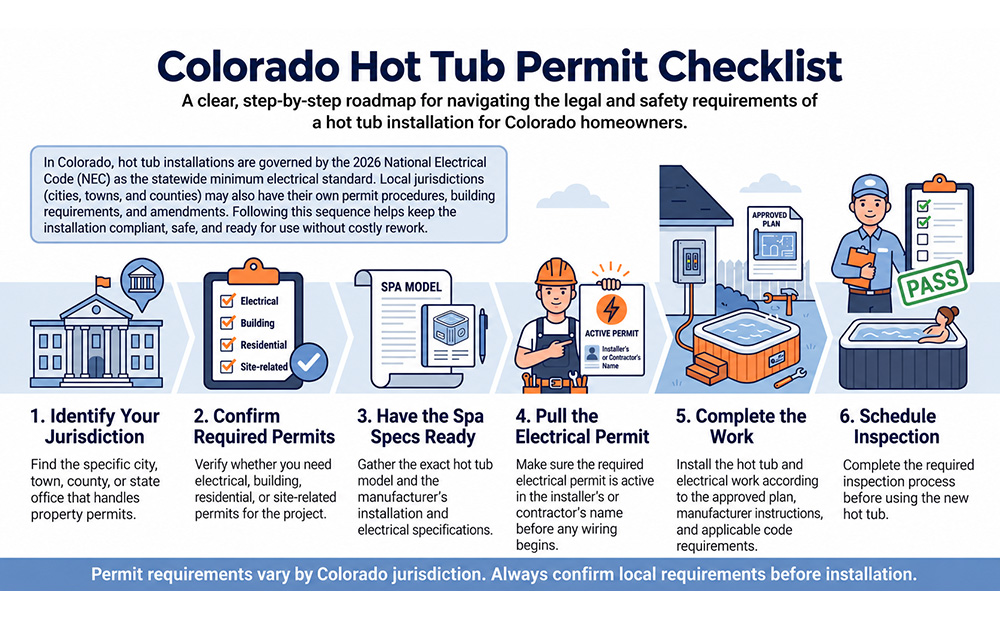
Colorado Hot Tub Permit Checklist
Before installation starts, work through these items:
- Confirm which city, town, county, or state authority issues permits for the property
- Confirm whether the project needs a hot tub, building, residential, or other site-related permit in addition to the electrical permit
- Have the exact hot tub make and model available
- Get the manufacturer’s current electrical and installation specifications
- Ensure the electrical permit is issued to the qualified homeowner or registered electrical contractor performing the work before wiring begins.
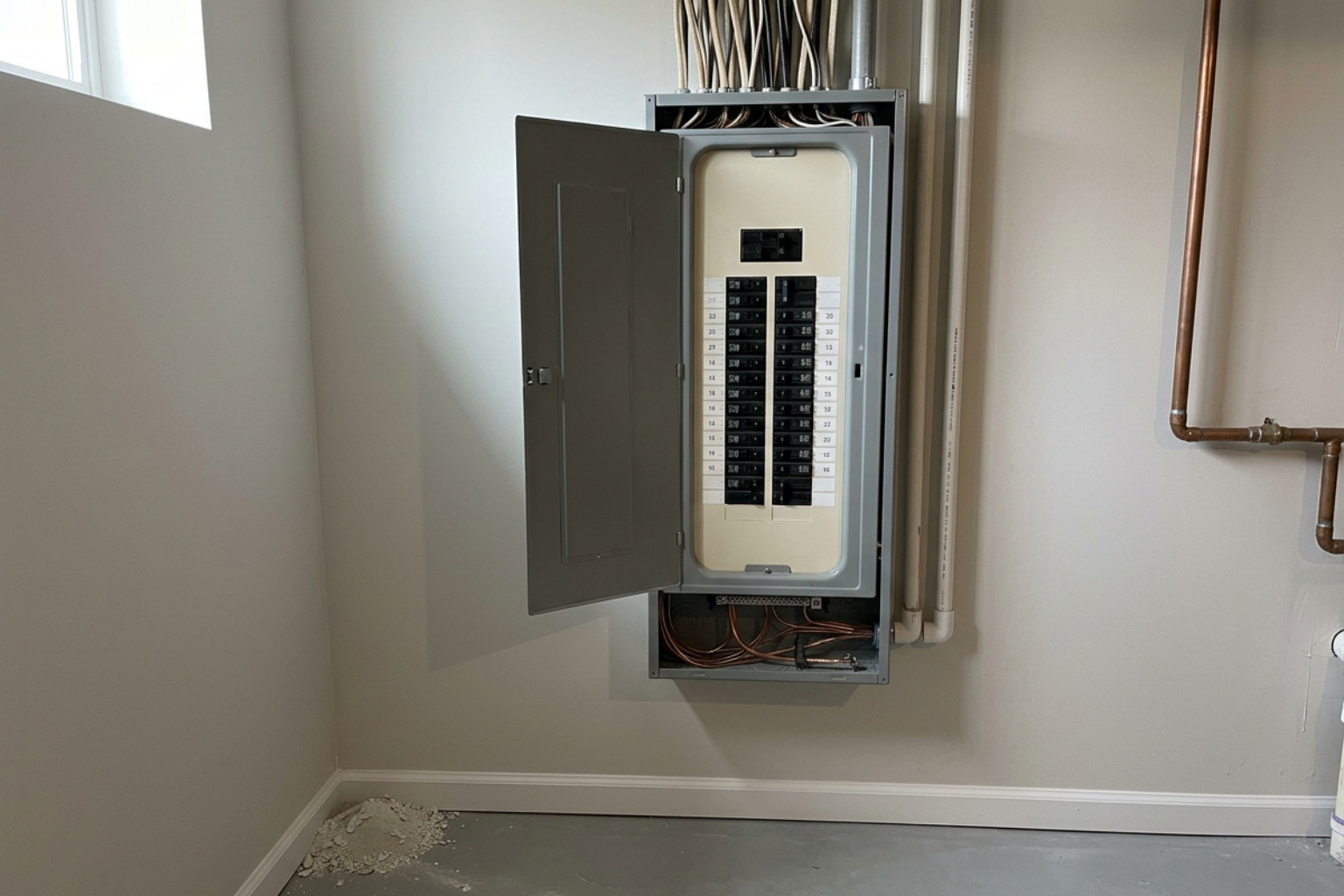
- Have the electrical panel evaluated for breaker space and capacity
- Plan the circuit, GFCI protection, disconnect, wiring route, and equipment location from the actual spa requirements
- Confirm whether the pad, deck, barriers, setbacks, or other site work creates additional permit requirements
- Do not begin permitted electrical work before the required permit is in place
- Schedule the required inspections and leave the work accessible for the inspector
- Keep the approved permit and inspection records with your project documents
Start With the Exact Hot Tub Model
The permit and electrical plan are much easier when we know exactly which spa is being installed. Hot tubs vary in voltage, circuit requirements, equipment layout, disconnect planning, and installation instructions.
If you are still choosing a spa, Colorado Custom Spas has a hot tub selection you can review before the electrical plan is finalized.
Once you have selected the model, use the manufacturer’s current installation specifications rather than a generic chart or assumptions from another hot tub. The electrician and permit office may need those specifications to confirm the installation.
The Electrical Permit Should Match Who Is Doing the Work
Colorado’s State Electrical Board rules are very clear about who may hold the wiring permit. The permit is issued in the name of the qualified applicant or the registered electrical contractor performing the electrical work.
If a homeowner pulls a permit to perform their own electrical work, a contractor cannot later perform the work under that homeowner permit. The contractor doing the electrical work must secure the appropriate permit in the contractor’s name.
The same rules also state that electrical work started before the permit is purchased can be subject to twice the prescribed permit fee. That is a good reason to handle the paperwork before the electrical installation begins.
State source: Colorado State Electrical Board, 3 CCR 710-1, Rule 1.9.
What the Electrical Inspector Is Looking For
A hot tub inspection is more than a paperwork step. The inspector is checking that the electrical installation meets the applicable code and is safe for use around water.
Depending on the spa and the installation, that may include:
- The dedicated branch circuit and breaker arrangement
- GFCI protection
- The maintenance disconnect
- Approved outdoor wiring methods and equipment
- Grounding and bonding where applicable
- Clearances around the spa and electrical equipment
- The equipment listing and manufacturer instructions
- The condition and capacity of the existing electrical system where it affects the new work
The exact requirements still depend on the model and the code being enforced by the authority having jurisdiction. That is why our hot tub electrical installation work starts with the actual spa specifications and the property’s electrical system.
Colorado’s Electrical Code Is the Starting Point
Colorado’s State Electrical Board incorporates the 2026 National Electrical Code as the statewide minimum electrical standard. The Board’s rules also cover electrical permits, inspections, and verification of licenses and registrations.
Local jurisdictions may have their own adopted building codes, permit procedures, amendments, or later electrical code editions. The permit office for the property is the final source for what must be submitted and which inspections are required.
Code source: Colorado State Electrical Board, 3 CCR 710-1.
Local Permit Requirements Can Be Different
This is where homeowners can get tripped up. A neighbor in another city may have gone through a different process even if the hot tubs are similar.
Parker explicitly identifies hot tubs as permitted work and directs homeowners through its Building Division. Castle Rock also lists hot tubs among common projects that require a building permit and directs applicants through its own permitting system.
Those are good examples of why I recommend checking the property’s exact jurisdiction before planning around someone else’s permit experience.
Local examples: Town of Parker permit requirements and Town of Castle Rock homeowner building permits.
Do You Need a Separate Building Permit?
Possibly. The electrical permit covers the electrical work, but the hot tub itself, foundation, deck, barrier, structural work, or other site changes may create separate building or residential permit requirements.
If the hot tub is going on a deck, in a recessed installation, next to a retaining wall, or as part of a larger backyard project, confirm those requirements before construction starts. Do not assume the electrical permit covers every part of the job.
What to Have Ready Before Applying
Permit offices vary, but having the project information organized makes the process easier. I would have these items ready:
- Property address and jurisdiction
- Hot tub manufacturer and model
- Manufacturer installation and electrical specifications
- Proposed hot tub location
- Electrical panel location and service information
- Proposed route from the panel to the spa
- Disconnect location
- Information about any new concrete, deck, structural, or barrier work
- Contractor information when the jurisdiction requires it
The permit office may ask for additional information based on the property or installation.
Plan the Inspection Before the Backyard Is Finished
The State Electrical Board rules require reasonable access to the inspection area. In practical terms, do not cover, bury, close in, or landscape over work that still needs to be inspected.
Depending on the project, the authority may require an inspection before certain work is concealed and a final inspection after the installation is complete. Confirm the inspection sequence with the permit office so the project does not have to be opened back up later.
Buying From Colorado Custom Spas?
Harmony Electric works with Colorado Custom Spas on hot tub installations throughout the Denver metro area. When we have the actual spa model and specifications ahead of time, we can plan the electrical work and permitting around the equipment that is really being installed.
If you are purchasing from them, our Colorado Custom Spas installation page explains how we handle the electrical side of the project before delivery and final hookup.
Frequently Asked Questions About Colorado Hot Tub Permits
Does every hot tub in Colorado need the same permit?
No. Electrical work must meet applicable electrical rules, but the overall permit process depends on the authority having jurisdiction over the property. Some jurisdictions also require a building or residential permit for the hot tub.
Who pulls the electrical permit for a hot tub?
The permit must be associated with the qualified applicant or registered electrical contractor performing the work. If you hire an electrical contractor, the contractor should not perform the work under a homeowner permit.
Can electrical work start before the permit is issued?
Do not plan on it. Colorado State Electrical Board rules state that work beginning before purchase of the required electrical permit can be subject to twice the prescribed permit fee.
Does a hot tub permit include the electrical permit?
Not always. Some jurisdictions separate the building or residential permit from the electrical permit. Confirm which permits apply to the property before work starts.
Will I need an inspection?
Permitted electrical work is subject to inspection. The exact inspection sequence is set by the authority handling the permit.
Do I need a permit for a plug-and-play hot tub?
Do not assume the answer is no just because the spa plugs into a receptacle. The local permit office should confirm whether the hot tub installation itself requires a permit and whether any new electrical work is being performed.
Can Harmony Electric help with the permit process?
Yes. For the electrical work we perform, we confirm the applicable requirements for the property and coordinate the electrical permit and inspection process as required by the jurisdiction.
Get the Permit Plan Sorted Out Before Installation Day
The permit process is much easier when it is handled as part of the installation plan rather than as an afterthought.
If you are installing a hot tub in Parker, Castle Rock, Castle Pines, Centennial, Littleton, Highlands Ranch, Denver, or another nearby community, I can review the spa specifications, evaluate your electrical panel, confirm the electrical requirements, and help get the electrical side ready for inspection.
That means fewer surprises between delivery day and the first time you actually get to use the hot tub.